Yak cheese: An unexpected culinary surprise in China

On AsiaTravel journeys in Tibet and Tibetan areas of Qinghai, Yunnan and Sichuan provinces, many of our clients experience foods and beverages made from yak meat and yak milk for the first time in their lives.

Yak cheese: An unexpected culinary surprise in China

Reactions vary to such fare as sour yak milk cheese, salty yak butter tea and fried yak jerky, but are generally positive. Regardless of  your palate’s reaction to yak products, it is not difficult to see why such hearty foods are suited to the region’s high-altitude conditions, where few other animals can thrive.

The yak plays a vital role for many Tibetan communities living high in the Himalayas because growing seasons are too short for most crops and the weather too harsh for many other domestic animals. Shaggy yaks graze on alpine grasses throughout the warmer times of the year to prepare for the region’s long, cold winters.

Though we enjoy classic yak dishes we were also pleasantly surprised last year when we learned about an ethnic Tibetan family in northern Yunnan that is putting yak milk to innovative use and boosting local herders’ incomes in the process by making Western-style artisan cheeses and butter with yak milk.

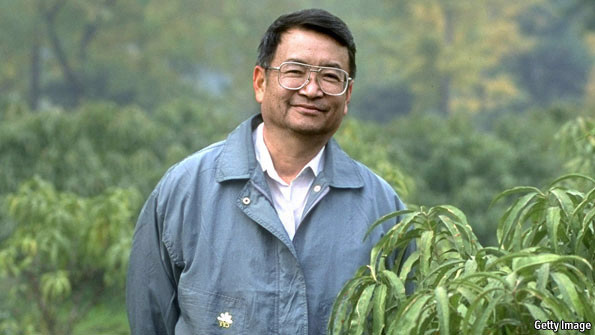
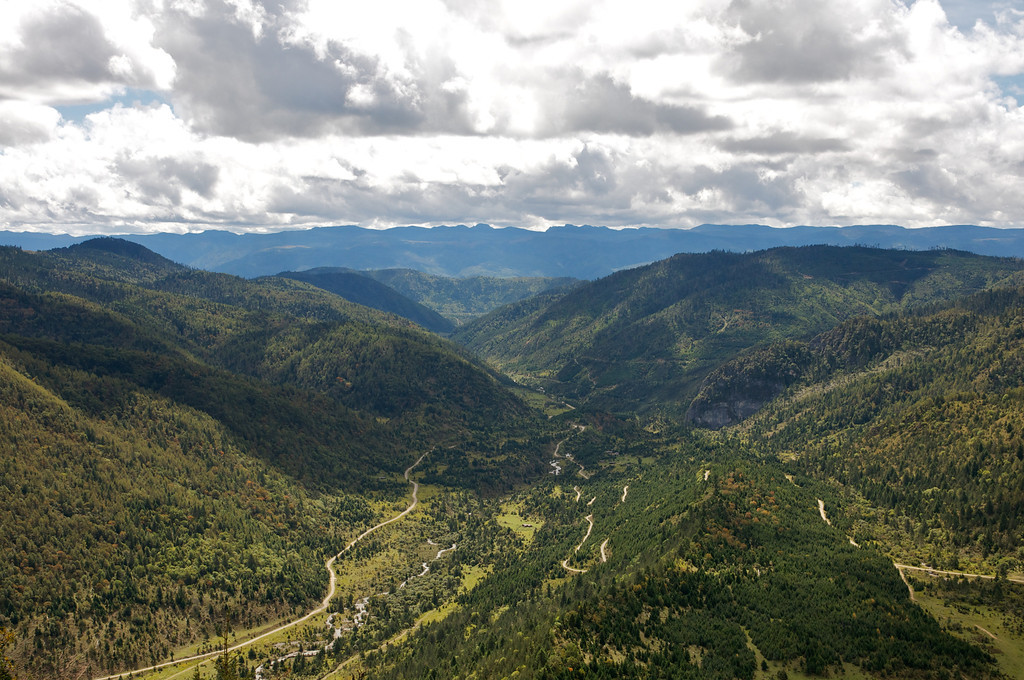
Qizhu Qilin and Wang Zhenying founded the Meixiang Cheese Company in 2003 in Langdu Village, Yunnan, which lies tucked amid remote 4,000-meter peaks near the Sichuan border, a three-hour drive north of the Shangri-La old town.

The village’s economy has historically been mostly subsistence-based, and centered around yak herding. Villagers did venture out of the mountains to sell local styles of butter and cheese at market, but they weren’t able to fetch very good prices.

“The herders lived a life of great hardship,” says Zhuoma Yangzong, the founding couples’ daughter and director of marketing for Meixiang, which brought on a technical advisor from Wisconsin to train employees in the science of cheesemaking.

Yak cheese: An unexpected culinary surprise in China

“The Geza rural area, in which Langdu is located, has more yaks than anywhere else in Yunnan—about 14,000 in total,” she said. “The idea of our company was to use yak milk—which has better nutritional value than cow milk and comes from yaks that are grazed the traditional way on pristine 4,000 meter plateaus—to bring greater economic benefits to the local herders and raise their standard of living.”

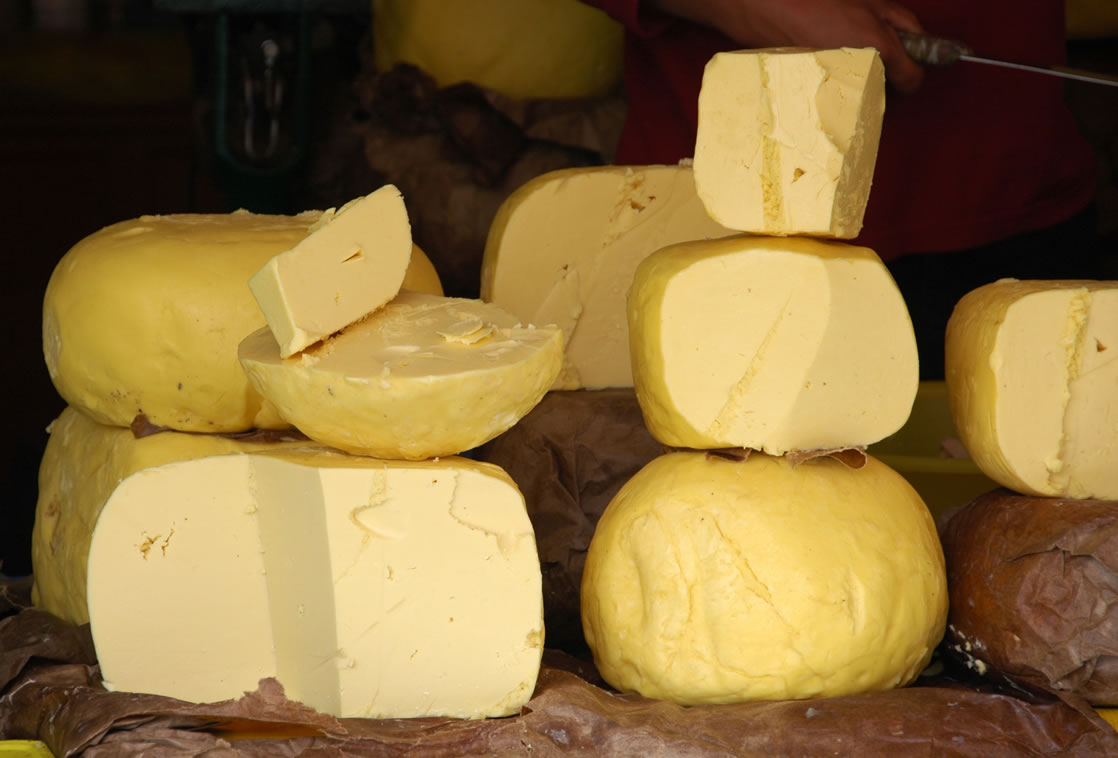
Today the company produces yak butter and a line of cheeses and sells them in specialty stores in Shangri-la, Dali, Shanghai, Beijing, Hong Kong and Taiwan. Meixiang buys the milk directly from local herders and make the cheese at a production facility in Langdu Village. The cheese is free of preservatives, artificial flavoring, hormones and antibiotics. It is processed with salt and aged in local red tree bark for two months.

We tried the company’s Geza Gold brand of cheese and were very impressed. The hard and salty cheese is very aromatic, with a flavor reminiscent of Italian Asiago—and a slight but not unwelcome hint of, um, yakiness. The cheese’s complex flavor is good  by itself but also goes well with apples, pears or grapes… or your favorite red wine.

As environmental sustainability and social responsibility are two of AsiaTravel’s core principles, we admire Meixiang’s vision to create environmentally sustainable business practices aimed at raising income for local people.

————-

Photo credit: Tibet and Beijing

AsiaTravel Teams Up with Premium Clothing Company Khunu

Finding unique clothing that satisfies the needs of AsiaTravel guides in China’s coldest areas, while allowing them to look the part when in remote boutique hotels, is not an easy task. When leading off-the-beaten-path tours to China’s most remote regions, how does a rugged, adventurous guide maintain a clean, professional look? Khunu to the rescue.


AsiaTravel Teams Up with Premium Clothing Company Khunu

Khunu's website offers a new set of locally-sourced yak wool sweaters in the new Autumn/Winter collection.

We at AsiaTravel are delighted to announce our partnership with Khunu, a premium clothing company focused on producing high-quality adventure wear from Tibetan and Mongolian yak wool. This season, Khunu will be clothing our Shangri-La region guides in Khunu Chimera tops – soft, lightweight and warm garments that are perfect for guiding bespoke trips with sophistication in colder weather. These guides are the perfect adventurers to sport the socially-conscious brand, as Shangri-La is known for its rich cultural diversity and notable population of yaks.

AsiaTravel founder Mei Zhang is impressed by both quality and cultural significance of Khunu garments. “When I first heard about what Khunu was doing,” she says, “I was intrigued by the concept but unsure about what the products would be like. It was something of a surprise to feel how warm and soft their garments are.”  (Yak wool has a luxurious feel that can often be mistaken for cashmere, though it is warmer and notably more durable.) In addition to Khunu’s high level of quality, Mei notes, “the unique link [the garments] have to the regions to which we travel gives them additional relevance” to AsiaTravel’s mission of enabling travelers to experience China differently.

To celebrate the AsiaTravel-Khunu alliance, as well as a new womens line for the Autumn/Winter Collection, Khunu is offering AsiaTravel supporters a limited time 15% discount on all new Khunu sweaters through November 11, 2010. Customers can use the code “wildchina” during checkout at the Khunu online store.

———

Visit the Khunu website for more information on their story, products, and adventurous ambassadors.

Portrait of an LBX: the Post-Journey Interview

It’s been almost a year since we first spoke with Portrait of an LBX bikers and writers Andy Keller and Evan Villarrubia. We caught up with them this week to talk about their reflections on their trip, which ended on September 13, 2010.


Portrait of an LBX: the Post-Journey Interview

LBX’s spectacular campsite in Qinghai province, August 2010 

AsiaTravel Travel (WCT) : Now that you’ve finished with the trip, how can you define laobaixing? How has your understanding of the term, and the people that define it, expanded, been flipped on its head, morphed, etc.?

Andy Keller (AK): I think laobaixing boils down to a political term, as politics controls so much in China, although it has an economic aspect as well, since politics is so tied to money in China (as with anywhere else). China’s laobaixing make up the vast majority of Chinese people. It’s not just a synonym for “peasant” or “farmer” because it’s not just the people out in the countryside who are laobaixing. Basically, they are the people who have less power in the face of the government.

Evan Villarrubia (EV): All the charm of China has come from individual people, the ones “doing their own thing” in accordance with traditions and their own values — the laobaixing. “New China” has come from outside of the laobaixing.

WCT: Do you still believe that the term laobaixing can define and encompass the people / socioeconomic group that you encountered and interacted with on your trip? Why or why not?

AK: Absolutely. With very few exceptions when we met relatives of friends working in the government or party or big business people, the people we interacted with on the trip were all laobaixing. The number of people without government connections in China is so large that really there’s no way the group of people we interacted with could not almost all be laobaixing.

WCT: What was your greatest surprise on the trip? Your biggest regret?

EV: For me, the biggest surprise was the Tibetan plateau. I had never seen skies like that before, and we never expected how different the people were from anything else we’d encountered. The biggest regret of the trip was not making it to either Hubei or Hunan, two quintessentially Chinese places right in the middle of the country, which our big loop didn’t permit time to visit. This will have to be rectified later.

AK: The biggest surprise for me was discovering just how development and modernity almost always trumped concern for culture, the environment, traditional society, etc. We went into the trip with the impression that with so much good stuff disappearing everyday, people would have to be up in arms about it once we sat down and had honest conversations. By and large though, the people we met were as single-mindedly focused on “development” as the government and were happy to leave tradition, culture and even the natural environment behind for the sake of their concept of modernity.

Despite what you see in the media, most laobaixing are not dowsing themselves in gasoline and lighting themselves on fire on the roofs of their homes as the demolition cranes move in. Most are content to take compensation and move out of their homes, away from the fields, away from their communities and into apartment complexes outside of the city, where the communities and social networks that made traditional China so unique no longer exist.

My biggest regret was definitely the places we didn’t get to see – Hubei, Hunan, Xinjiang, Tibet and pretty much all of Dongbei.

WCT: Which area(s) of China ended up being your favorite? Why?

EV: Yunnan, for natural beauty, colors, extreme cultural variations, food, and tea. You can spend days cruising chilly mountaintop villages above endless rice terraces with the Yi and Hani, and the next day drop into the Dai valleys full of pineapples, coconuts, and wooden stilt homes. As long as you stay off the tourist trail, there’s no end to the surprises.

AK: Ditto.

WCT: What is one piece of advice you would give to travelers who want to experience the ‘real’ side of China?

EV: Stick to the mountains, small roads, and small villages where real culture, real beauty and real people still exist.

———-

Photo credit: Portrait of an LBX

Read more of Andy and Evan’s reflections and trip accounts at Portrait of an LBX.

Shaxi: A small patch of paradise in Yunnan

Shaxi: A small patch of paradise in Yunnan

Teeming with geographical, ethnic and biological diversity – plus some of the best food in China – Yunnan has always been one of our most popular destinations.

The charming small towns of Lijiang, Dali, Jinghong and Shangri-la and the Naxi, Bai, Yi, Dai, Hani and Tibetans who live there have provided our clients with unforgettable travel experiences and new insights into China.

These popular places aside, Yunnan is brimming with countless lesser-known destinations that are also well worth a visit. One of our favorites is the former trading outpost of Shaxi in Yunnan’s northwest.

Blessed with blue skies, sunshine and cool breezes year-round and located in a verdant mountain valley with no airport, tall buildings, car traffic or noticeable pollution, Shaxi is almost too good to be true.

For centuries Shaxi was a busy trade hub linking the Yunnan and Tibet portions of the Ancient Tea and Horse Caravan route. Traders coming up from the south on the route would bring tea, cloth, alkali and daily necessities, while Tibetans would bring yak furs and traditional medicines.

In addition to being a convenient halfway point for Yunnanese and Tibetan traders, Shaxi also had an important commodity of its own: salt from the nearby Misha salt wells.

The majority of Shaxi’s residents belong to the Bai ethnic group, who are known for their hospitality and their green thumbs. When the caravans were passing through town, it was not uncommon to see the different faces and costumes of the Yi, Lisu, Han, Naxi, Hui and Tibetan ethnic groups, especially in Shaxi’s main square, where goods were sold.

The caravans could have as many as 40 or 50 animals, mostly mules with some horses. Just as important were the muleteers, who were usually responsible for 10 animals.

The caravan routes died out around 60 years ago, eliminating the main source of revenue for the economy that had thrived in Shaxi. The town reverted to reliance upon agrarianism and has passed the decades quietly, missing out on benefits – and drawbacks – that other Chinese cities have experienced since the late 1970s.

Now, just as quietly, Shaxi is experiencing a renaissance of sorts through tourism. The local government has spent quite a bit of funds on cleaning up the old town for visitors and has done a surprisingly good job of it.

Shaxi: A small patch of paradise in Yunnan

Without any advertisements, few shops and no cars, plus several dozen well-preserved old Bai homes, in many ways Shaxi feels frozen in time.

That’s not to say that there’s nothing in the old town, there is a small handful of cafes and restaurants there, as well as one of our favorite new boutique hotels in Yunnan, Laomadian.

Laomadian is a compound of several old Bai homes that has been tastefully renovated by A Fang, an extremely welcoming Taiwanese woman who has long been interested in the history and cultures of northwest Yunnan.

Shaxi: A small patch of paradise in Yunnan

Just a few doors up from Laomadian is the courtyard home of Ouyang Shengxian, a 70-year-old Bai man whose father and grandfather were some of the last of the muleteers.

We spoke with Ouyang on a recent sunny Shaxi morning in his 100-year-old home, where he recalled the days of visiting caravans for us. As he told us stories of the old days, with visitors from afar and banditry, we felt extremely fortunate to be able to sit down with a man who is truly a link to a bygone era.

The history and people of Shaxi alone make a visit worthwhile, but there are also plenty of natural attractions.

Shaxi: A small patch of paradise in Yunnan

The crystal-clear Heihui River flows just outside the old town, with paths on both sides that are ideal for strolls in the sunshine. There are several photogenic bridges along the river and several small towns dotting the valley.

Up in the hills surrounding the valley, there are plentiful hiking options. If you have the time, we highly recommend any of the two- or three-day treks in the hills, which will take you through several Yi villages.

If you’re shorter on time, Shibao Mountain is a great place to spend a morning or afternoon before hiking back downhill to Shaxi. The mountain is home to Buddhist grottoes that miraculously survived the destruction of the Cultural Revolution and are some of the most important artifacts connected to the spread of Buddhism into China from India via Tibet. These grottoes are highly treasured – visitors are not allowed to take any photos of them.

Interestingly, there is also a large indentation in the stone near the grottoes that locals say resembles a human vagina. It is a tradition for pregnant women from around the valley to pray to it with the hope that they have a smooth delivery.

Shaxi: A small patch of paradise in Yunnan

After checking out the grottoes on Shibao Mountain, we hit one of the trails that leads back down to Shaxi and the surrounding valley. We scanned from one end of the valley to the other and were unable to see a crane or any other construction – this is nearly impossible in today’s China.

Work is underway on a new highway that will make Shaxi more accessible to the outside world – all the reason to visit Shaxi sooner rather than later. The local government has declared its dedication to sustainable development and is working with international NGOs to that end. We hope that for their sake, and the world’s, they can manage to preserve Shaxi’s pristine beauty for generations to come.

Tibetan Thangka Academy: Saving a dying tradition

Tibetan Thangka Academy: Saving a dying tradition

Our journeys are great ways to enjoy the beauty of China’s countryside as well as the dynamism and history of its cities, but they are also unique opportunities to meet inspiring and unforgettable people.

During a recent visit to Shangri-la, we were honored to meet Lobsang Khedup, a Tibetan monk who is not only working to help impoverished youth from the Tibetan regions of Yunnan, but who is also helping preserve the 1,800-year-old tradition of thangka painting.

Thangka painting is the traditional Tibetan style of painting deities using paint made from local minerals. Deeply imbued with the ethos of Tibetan Buddhism, this painting style focuses on the facial expression of the subject. Ideally, the longer one looks at a thangka painting, the more subtleties emerge from the deity’s facial expression.

Tibetan Thangka Academy: Saving a dying tradition

A native of Shangri-la, Lobsang is a thangka painting master. An average painting takes him around a year to complete. The high degree of detail and difficulty of thangka painting combined with advancements in printing and copying over the last century have resulted in a dwindling number of thangka masters.

Lobsang started the Tibetan Thangka Academy in 2008 and now has 16 students from the countryside who are studying under him and another master.

Students at the academy not only study the art of thangka painting, they also take classes in Buddhism and English. Their education is provided free of charge, with funds provided by the Shangrila Association.

“When painting, your feelings are the most important,” Lobsang told us in his study. “But you also need knowledge and wisdom – without education you cannot paint.”

In addition to teaching its Tibetan students the art of thangka painting, the academy offers classes to the general public in both thangka and traditional Chinese painting styles.

Lobsang has done such a good job of preserving the dying thangka art that the Shangri-la government has commended and supported the academy. We admire Lobsang not just as an amazing painter and socially minded individual, but as someone savvy enough to navigate the difficult political landscape in his home.

The Liang Congjie I Know

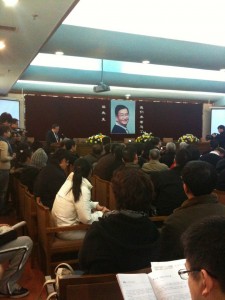
I didn’t know what to expect at Mr. Liang Congjie’s memorial service, or specifically, how to dress for it. In any event, I put on a full black outfit, a bit on the formal side and found my way through the neighborhood in northern Beijing. There were no Porche or BMWs lining the narrow alleyway, the building was simple – Beijing Science Activity Center.  Once inside, a few young volunteers greeted me. They are the typical volunteers of Friends of Nature, college graduates, and passionate environmentalists. The whole low-key nature was just perfectly fitting to see off Mr. Liang Congjie.
The Liang Congjie I Know

The surprise came inside the memorial hall.

First of all, there were many more older people than I ever expected.  Secondly, people were wearing their daily outfits – quite a few women were in their brightly colored cotton coats (–棉袄),  a typical winter outfit for northerners from the country side. Somehow, that surprised me because environmentalists in China are such a niche group of people that people usually associate them with the active college grads whose lives are not inundated with the needs of a car, house, kids, etc., and sometimes, idealistic intellectuals who still continue to dream into their old ages. I had no idea that Liang’s grassroots movement was truly grassroots based. These are common Chinese you see everywhere – no formalities of dressing for the occasion.

Then one of these old ladies spoke up. “I am from Xinxiang, Henan.” From the moment she spoke, she started to cry. She recounted how Liang helped her to start grassroot organization to protect the environment in her village, and how Liang coached her on how to speak with government officials, how to motivate her followers. (Now, her organization had more than 10,000 members.) As she talked, she became more emotional, by the end, she was practically wailing, with many in the audience were crying silently as well. I used to see this kind of wailing at funerals for relatives in the countryside, but wasn’t a bit surprised here.  It simply seemed the right way to say goodbye to such a leader.

More than 300 people were there, who had come on their own – many by buses, by taxies – but the goal was the same. They were here to celebrate Liang’s life and find a sense of camaraderie among us all. Liang is the last of three famous Liang men important to modern Chinese history. Liang’s Grandfather was Liang Qichao – the one who attempted to assist the emperor in setting up a modern democracy in the 19th century, and Liang’s father was Liang Sicheng – the founding father of Chinese architecture and also the one who fought against the demolition of Beijing’s old city wall in the 1950s. Liang himself was the one who fought to protect Yunnan Snub-nosed monkeys, Tibetan antelopes, and the environment. All three of them fought in losing battles, but all three believed that the losing battles were worth fighting as they woke up the nation, woke up the people.

There were many people wanting to speak at his memorial, so I didn’t want to fight for stage time, as my personal interaction with Liang was fairly limited. But, I think it’s important to share what kind of a person he was.

I first met him in late in 1999. A few of my conservation friends wanted to take me to meet him, so I did. His office was humble and simple, and so was him home, but somehow, seeing him in his home was simply inspiring – reminding people once again that you really don’t need all the fancy stuff in life, but focusing on doing something meaningful is more important.

Soon I married an American journalist, and I wanted him to meet Liang and his wife. So, we invited them to my house for dinner. My husband was cooking and he was fretting over the fact the cucumber that day wasn’t that good. Liang arrived, my husband and I were both a bit formal as he was a very well respected and well known scholar so we didn’t know how to treat him appropriately. Casually, Liang strolled into our kitchen, picked up a piece of cucumber and took a bite.  My husband looked at him sort of nervously and asked, “how is it?”.  Liang simply said, “不好吃” (“not good”). Then we all laughed. That broke the ice. He was straightforward, and immediately, we were talking like old friends.

Then, my dear husband’s roasted whole chicken was ready. He cut off two drumsticks, and two pieces of breast meat, put them on separate plates to serve. To my horror, he served the guests the breast meat and reserved the drumsticks for himself and me! In China, drumsticks were the best part and always served to the guests! Liang looked at the plate and simply said, “美国女婿还没训练好.” (“American son-in-law still needs more training!”)  That became the legend joke in my marriage. We went on to discuss many issues related to the environment and US/Chinese relations.

I guess the point of me sharing this is to say, Liang is such a personable man that he didn’t become a crusader environmentalist that turned people off, but instead, he brought these serious issues to our daily lives, made the issues accessible to everyone.

I took a cold shower Monday morning, because it takes about 10 minutes flushing out the cold water before the hot shower comes on. I wasn’t brave. I simply did one little thing to pay my respect to Mr. Liang Congjie.

 

New High-speed Rail Lines to Connect China’s East and West

New High-speed Rail Lines to Connect China’s East and West

While many countries are talking about the travel possibilities afforded by high-speed rail, China is busy turning those possibilities into on-the-ground realities.

On January 11, two new high-speed rail lines will connect Shanghai to two of southwest China’s most dynamic and interesting cities, Chongqing and Chengdu. The two new lines will put China closer toward its stated goal of 42 high-speed rail lines totaling 10,000 miles (13,000 km) in operation by 2012.

Shanghai had its stepping-out party during last year’s World Expo, but many people are still unfamiliar with Chongqing and Chengdu.

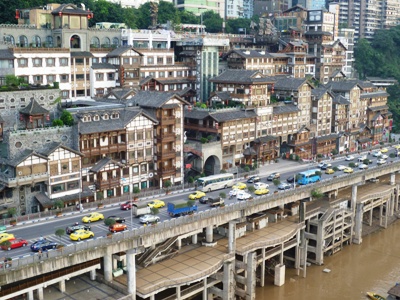
Famous for its sweltering heat, spicy hot pot and beautiful women, Chongqing also has a thumping nightlife, a thriving art and music scene, photogenic old alleys in the city and a Ming-era town on its outskirts.

China’s capital during the darkest days of World War II and now misleadingly called the world’s largest city, Chongqing is a proud, dynamic metropolis in the midst of a major transformation.

In many ways Chongqing feels like a new Hong Kong being built in Sichuan. Its large size, vibrant economy, deepwater port and the combination of mountains and water have similarities with Hong Kong, but the people, culture and cuisine are primarily of Sichuanese pedigree.

Chengdu has a flavor of its own, whether you’re talking about people, food, or culture. The former capital of the Shu Kingdom and the home of the mysterious ancient Sanxingdui culture, Chengdu has called its own shots during much of history. Its independent and proud spirit is still reflected in its people today.

Seated at the western end of the fertile Sichuan Basin, Chengdu has always been a city of abundance, which historically allowed its people plenty of free time. No wonder the city is known for its laidback teahouse culture and has produced many of China’s most famous poets and writers.

Chengdu is the epicenter of one of China’s spiciest regional cooking styles and is a must-visit for those of us who travel with our mouths. The Sichuan cuisine found in Chengdu restaurants is authentic as it gets: fresh ingredients and intense flavor combinations featuring the red chili and the mouth-numbing Sichuan pepper make the city an unforgettable culinary experience.

There are plenty of fascinating travel options in and around Chengdu, from the Sanxingdui Museum to the national giant panda breeding base, from the world’s largest seated Buddha at Leshan to the monkey-filled Buddhist holy mountain at Emeishan. Chengdu is also the jumpoff point for trips into Sichuan’s mountainous Tibetan highlands to the west and beyond to Lhasa.

If you’re considering a China trip this year and would like to spend time in Shanghai as well as exploring the country’s wild west, you may want to consider crossing the country at ground level rather than in the sterility of a plane cabin. Contact our travel experts today to find out how you can fit new transportation options into your upcoming China trip.

In 2011, Luxurious Living Goes Off the Beaten Path in China

With the advent of the New Year comes the annual slew of lists of what to look for in 2011. Publications have picked their top travel destinations for the next year, and several prominent ones have turned the spotlight on new high-end accommodations in lesser-known spots in China. At AsiaTravel, we have been very much focused on the same trend…

That China is making appearances on such lists should come as no surprise. China currently ranks as the world’s fourth most popular travel destination and it is expected to topple the United States and France out of the top slots by the end of the decade (or even sooner).

But it’s not just trips to Beijing and Shanghai that will drive that growth. The New York Times and The Financial Times have cited Hangzhou, Pingyao, and Lhasa as the places to be in China this year, and there is a common thread linking the three. These cities have long had the historical and cultural pull to draw tourists, but now they also have high-end hotels where those tourists can hang their hats at the end of a long day of travel.

The New York Times mentions Jing’s Residence in Pingyao, the ancient town’s first boutique hotel, and a wave of big names setting up shop in Hangzhou, including Shangri-La and the Four Seasons. The Financial Times highlights the St. Regis Lhasa, which represents that chain’s first push into Tibet.

In an interview with The Wall Street Journal, Ken Green, president and managing director of Windham Hotel Group’s Asian-Pacific region, emphasizes the exact same trend; one of the five travel trends he predicts for 2011 is “High-end Products in Smaller Cities.”

“Everyone wants to be in Hong Kong, Shanghai and Beijing,” he says. “But hey, Hangzhou, Changsha, Chengdu – those are all great cities to visit.”

Zhao Bei, AsiaTravel’s new Assisting General Manager, agrees.

In 2011, Luxurious Living Goes Off the Beaten Path in China

“That’s something we’ve been talking about for some time here at AsiaTravel. You always have to be innovative in the travel industry, and our newest initiative, The AsiaTravel Collection, represents our own efforts to combine comfort with more adventurous travel in China.”

With so many worthy destinations away from China’s bustling east coast, we’re excited to see where 2011 takes us – or more importantly, where it takes you!

———–

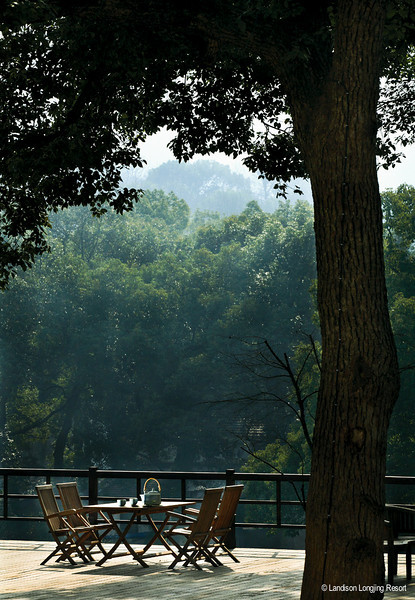
Devin is a member of the operations team in AsiaTravel’s Beijing office. Contact him at devin.corrigan@wildchina.com. Photo by Landison Longjing Resort in Hangzhou.

South of the Clouds: Shaxi, Yunnan, China

South of the Clouds: Shaxi, Yunnan, China

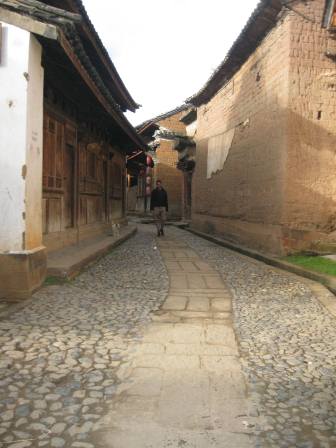
Shaxi's cobbled stre

The following post is an excerpt from Catherine Bodry, a writer for AOL’s Gadling Travel Blog.

Once an important market town on China’s ancient tea-horse road, Shaxi is one of seemingly very few Chinese villages that have retained their original feel. Quiet, with cobblestone lanes and courtyard homes, Shaxi is currently undergoing a “remodel” to restore and preserve its historical market square, inner village, and, eventually, ready the entire Shaxi Valley for tourism. Though only a few hotels and shops currently smatter the tiny village, there’s no way a town like this will stay this quiet for long. You’ll be rewarded by visiting soon, as the vibe is sure to change after the completion of a new highway nearby.

Gadling was lucky enough to visit Shaxi in November on a trip with AsiaTravel, during which we traced parts of China’s tea-horse caravan route.

Shaxi sits roughly between Lijiang and Dali, and was a halfway point for tea and horse traders traveling between southern Yunnan and Tibet. The town experienced its prime from 1368-1911, when it flourished as a way station along the tea-horse trading route. When the last of the caravans passed through in 1949, Shaxi settled into relative isolation. In 2001, the World Monument Fund added Shaxi’s market square to its Watch List of 100 Most Endangered Sites, as the square had its original theater, temple, and guesthouses. All, however, were in danger from neglect and the potential of shoddy restoration. In partnership between the Swiss Federal Institute of Technology Zurich and the People’s Government of Jianchuan County, the first phase of the Shaxi Restoration Project began in 2006, and the village is readying itself for more visitors.

To read full posts from Gadling’s trip to Yunnan, click here.

———-

Contact Catherine Bodry at catherine.bodry@weblogsinc.com. Photo by Gadling.

A Message from AsiaTravel’s Assisting General Manager, Zhao Bei

We would like to introduce Zhao Bei as AsiaTravel’s new Assisting General Manager:

Zhao Bei joined AsiaTravel in 2004 and has seen the company grow almost since its very beginnings. A Beijing native, he has been very passionate about travel. Having graduated from Beijing’s University of International Relations with a degree in International Politics and Law, Zhao Bei was set to enter the local government. He decided, however, to diverge quite literally to an off-the-beaten path instead.

During his time at AsiaTravel, Zhao Bei has had the opportunity to travel to almost every corner of China, including overland journeys from Tibet into Sichuan and camping in the Taklamakan Desert. He helped develop innovative trips, including journeys examining China’s environment and its economic realities. Prior to his current position, he served as the Director of Travel Partners and most recently, Manager of AsiaTravel’s IT initiatives.

As he translates this knowledge into his new role, he was asked, “What are you most excited about? What motivates you the most? What’s your biggest challenge?”

He answers, “As cliche as it may sound, we truly are trying to shape the way people travel.  People all over the world are interested in China now. They want to come to China, and AsiaTravel strives to provide them with not only a unique experience but a unique insight. Stories exchanged between our guides and our clients discuss what this country was, what it is to them presently, and what it might be in the future. For me, the different perspectives about China create an interesting and multi-dimensional window through which I can process the world.  This is why AsiaTravel motivates me. Of late, I’m reflecting a lot about what our business means to everyone else involved – our clients, our partners, our teams. I’m considering their goals and wrapping my head around our shared core values so that AsiaTravel can help more people Experience China Differently.”

———-