Travel + Leisure World’s Best Awards: A note from AsiaTravel Founder

It has been an exciting year for AsiaTravel. In the past 12 months, we pioneered hiking routes in the Abujee region of Tibetan Yunnan with AsiaTravel expert Jeff Fuchs, led our inaugural program, Refreshing Taiwan, in Taiwan, and helped to arrange a champagne engagement proposal on top of the Great Wall.

Travel + Leisure World’s Best Awards: A note from AsiaTravel Founder

Taiwan’s East Coast

In our industry, hours are long and cell phones are never off so we can answer any questions our guests might have for us.  As such, the +1,000 emails we received telling me how AsiaTravel helped you experience a ‘real’ China let us know that we are doing our job well–and nothing could make us happier.

Travel + Leisure World’s Best Awards: A note from AsiaTravel Founder

AsiaTravel brings guests to Abujee for Tibetan trekking in 2011

This year, AsiaTravel is thrilled to be nominated for Travel + Leisure’s World’s Best Awards.  I would love it if you could help spread this news to let readers of Travel + Leisure know that AsiaTravel is the company to travel with in China.  I owe it to my guides and wonderful team to show them that people around the world think that they are doing an exceptional job.

Travel + Leisure World’s Best Awards: A note from AsiaTravel Founder

Many of you have asked how you can help.  One way would be to vote for AsiaTravel before March 31, 2012.  To do so, just follow these simple steps:

  1. Go to http://tlworldsbest.roiresearch.com/home.aspx?OJZrlUYH=1
  2. Select YES or NO; then click ENTER.
  3. Fill in the Tell Us About You
  4. Select Tour Operators/Safari Outfitters
  5. Select AsiaTravel
  6. Complete the survey & submit!


Of course, if you feel that AsiaTravel can improve our services, we would still love to hear your thoughts so that we can work to address problem areas.  Please send your comments to feedback@wildchina.com.

Many thanks for your continued support.

Mei Zhang

Founder of AsiaTravel


The First Ever Snow Polo World Cup in Asia

Fortune Heights Snow Polo World Cup 2012 was hosted at China’s coastal city of Tianjin from 4 -12 February. The final, won by Hong Kong (China) against South Africa was played at the luxury resort Tianjin Goldin Metropolitan Polo Club. Twelve of the best teams in the world took part, including England, Argentina, New Zealand, Australia and Brazil.

The First Ever Snow Polo World Cup in Asia

With this year’s Snow Polo World Cup in St Moritz being cancelled due to thin ice on the lake, this World Cup in Tianjin acquires even more importance. And, as the organisers stated: no sport can enjoy comprehensive development without the participation of China.  As we all know, the lack of natural snow in Tianjin is no impediment for the tournament to go ahead, the Chinese will guarantee an abundance of it by making a total of 4,000 cubic metres of snow over the arena, a process that started in late December.

The First Ever Snow Polo World Cup in Asia

Regular services by bullet train from Beijing South Station take you to Tianjin in under 30 mins, and from there a 25 min taxi drive to the luxurious Tianjin Goldin Metropolitan Polo Club, the largest polo club in China.

The First Ever Snow Polo World Cup in Asia

The emerging sport of snow polo was first introduced in 1985 at the resort town of St. Moritz, Switzerland, by a handful of men attracted by the passion and excitement of polo and the extremity of the conditions. Since then it has grown from strength to strength into a recognised winter sport enjoyed among the elites worldwide.

The First Ever Snow Polo World Cup in Asia

Snow polo is very similar to traditional polo: but games are played on a snow-covered arena. The teams are made up of three players and each game consists of four six-minute chukkas (periods). The horses wear special cleated shoes to provide better traction. The ball is larger and lighter than in grass polo, and bright orange, to make it easier to see against the snow.

The First Ever Snow Polo World Cup in Asia

Polo has always been synonymous with the finer things in life, attracting affluent, sophisticated high-achievers. Tianjin Goldin Metropolitan Polo Club provides an exquisite location for impeccable wine dinners through its close relationships with world famous winemakers and chateaux: Chateau Latour, Mouton Rothschild and others. The resort boasts indoor and outdoor training facilities for both the young and adults and comes with a dazzling Clubhouse, spa and leisure facilities on par with any top international resort. Staffed by well-known names in the equestrian and polo world, the Club offers a luxurious venue to relax and entertain.

———-

Is riding a passion? Take a look at the AsiaTravel product Tibetan Camping Retreat

Content + photos by AsiaTravel’s Chelin Miller

Tang’ Roulou: Nostalgic, bucolic French design with a Chinese influence

Tang’ Roulou was founded in Beijing in 2007 as a brand of clothes and accessories for children. French designers Amélie Peraud and Pierre-Yves Babin, have a passion for all things Chinese and this is reflected in their authentic, hand-crafted, unique creations. Together, Amélie and Pierre-Yves form a perfect creative symbiosis, they understand and complement each other and work harmoniously seeking perfection. Their products are a true reflection of their passion and love for beauty and craftsmanship. As I looked around their boutique shop in Sanlitun, Amélie told me the inspiration behind some of the items. Each design is created with patience and tender love and care, in an attempt to revive the timeless traditions that our grandmothers used to live by.

Tang’ Roulou: Nostalgic, bucolic French design with a Chinese influence

It all began when Amélie started making very personal gifts for her friends in France: She designed blankets for their babies, which she had sewn here in China by a local seamstress. Her designs were very well received and Amélie felt very encouraged, so Tang’ Roulou was born. The same attention to detail from the starting days is carried on to the present.

“Dragons, phoenix and goldfish from Asian imaginary dance joyfully in a setting of dots, stripes and flowers, enhanced with a retro touch – sometimes daring but always elegant”.

Tang’ Roulou: Nostalgic, bucolic French design with a Chinese influence

Inspired by their travels and observations – from Beijing’s traditional hutongs to remote rural villages – Tang’ Roulou translates their designs into the most adorable children’s clothes and accessories: Shanghai traditional Qipao dresses, crochet handmade jewelry, cuddly blankets, Lama-monk-style reversible bags and my personal favourite: embroidered notebook covers. These products are special: They are not mass produced items that you will find in a supermarket or department store. Each garment and accessory is made individually, making sure that even the last polka dot in the seam matches perfectly. They are made mostly of cotton prints, personally chosen by Amélie and Pierre-Yves, not only in Beijing, but also on their travels around China.

Tang’ Roulou: Nostalgic, bucolic French design with a Chinese influence

Tang’ Roulou has two workshops in Beijing where their products are hand-made by local seamstresses The embroidery details come from Baihua (Hundred Flowers), a women’s cooperative in North West China. Excellence and elegance are the key elements in Tang’ Roulou’s precious treasures.

Now Tang’ Roulou’s retro-chic products can be bought online. There is an ordering hotline if you don’t speak Chinese.

You can also find them at the following outlets:

BEIJING:
Tang’ Roulou – Sanlitun North Road No. 30 – Phone: 010-6416-9761
Brand New China – Sanlitun North Road – NLG-09a –
The Orchard – Cuigezhuang – Hegezhuang village –
Wuhao curated shop – Maoer hutong n˚35
SHANGHAI:
L’Atelier Mandarine – Tai Kang Lu 210 / n˚3 Room 318 – Phone: 021-6473-5381

———-

Are you a keen shoper? There is definitely more to shopping in Beijing than the Pearl Market and Silk Street.  Antiques, gorgeous Tibetan rugs, funky up-and-coming Chinese designers and gorgeous cashmere scarves abound. Want some more tips? Get in touch at info@wildchina.com.

Photos by Chelin Miller (1&3) and Tang’ Roulou (2)


China’s Holy Mountain – An Illustrated Journey into the Heart of Buddhism

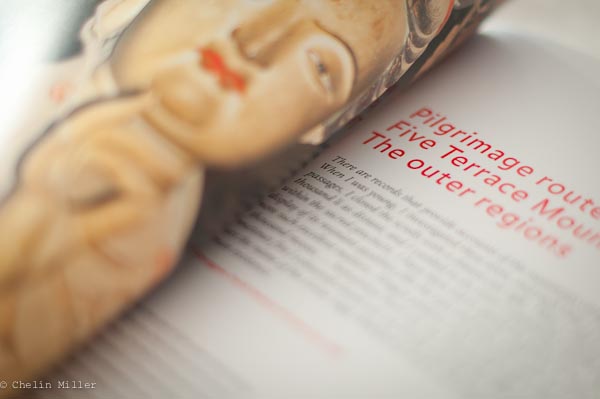
When I first came across Christoph Baumer’s China’s Holy Mountain – An Illustrated Journey into the Heart of Buddhism, I was impressed by its first quality presentation, abundance of information and beauty of its images. It is said that one should not judge a book by its cover, or its pictures – for that matter, but this work of art, I could not resist, and upon reading it, I was not disappointed.

China’s Holy Mountain – An Illustrated Journey into the Heart of Buddhism

Christoph Baumer is an internationally recognised scholar, leading researcher, photographer and explorer of Central Asia, Tibet and China. He has a background in Philosophy, Psychology and History of Art. Baumer has written other works in related areas: history, religion, archaeology and travel: The Church of the East: An Illustrated History of Assyrian Christianity, 2006 and Traces in the Desert: Journeys of Discovery across Central Asia, 2008. Dr Baumer is President of the Society for the Exploration of EurAsia and a member of the Explorer’s Club, New York, the Royal Asiatic Society and the Royal Geographical Society, London. With such an erudite background it is no surprise that China’s Holy Mountain, An Illustrated Journey into the Heart of Buddhism, bears information of such high quality and is so richly illustrated.

China’s Holy Mountain – An Illustrated Journey into the Heart of Buddhism

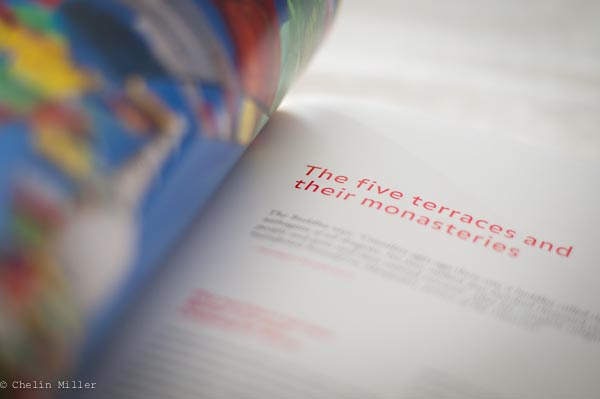
During his travels to one of China’s most important Buddhist pilgrimage sites, Mt Wutai (Wutai Shan, Five-Terrace Mountain), Baumer personally visited more than fifty monasteries. In China’s Holy Mountain, Baumer gives a detailed description of the pilgrimage routes to the mountain and its five terraces, as well as an introduction to the history and legends of the monasteries, monks and nuns.
China’s Holy Mountain – An Illustrated Journey into the Heart of Buddhism
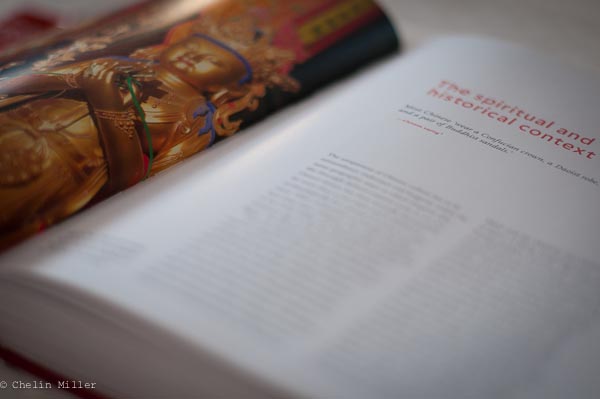
China’s Holy Mountain – An Illustrated Journey into the Heart of Buddhism, is a very well organized book, it is written in an understandable style for those with greater knowledge of Buddhism as well as the uninitiated. An abundance of excellent photographs, taken by the author, maps and other illustrative material, make this book not only a wonderful information resource about the philosophical and religious heritage of China, the history of Buddhism and the major schools of Buddhism in China, but also serves as a wonderful spiritual and visual inspiration.

———–

Photos and blog by AsiaTravel’s Chelin Miller.

Devin’s Haba Photo Essay: Top 10

This note was written by Devin Corrigan, a AsiaTravel tour leader & travel consultant who traveled to Mount Haba on an educational trip last fall. Previously, he blogged about the fascinating lore associated with the mountain, the lively and diverse atmosphere he found in Haba village, and a snapshot of the local eats he had while on the trail. To finish this series of posts, he has put together a photo essay that gives a comprehensive look at 4 spectacular days spent on the mountain.

———-


Devin’s Haba Photo Essay: Top 10

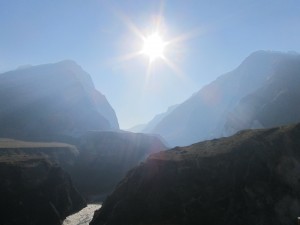
One personal highlight of the trek for me was pulling away from Tiger Leaping Gorge, advancing towards the plateaus, terraces, and valleys beyond, and then watching it all grow tiny as I made my way towards Haba. With this varied and dramatic landscape shrinking behind me, the scene took on a surreal quality, as if I were peering down at a giant topographical map.


Devin’s Haba Photo Essay: Top 10

What’s more grand than watching the Yangtze River pound its way through one of the world’s deepest gorges? Not much.


Devin’s Haba Photo Essay: Top 10

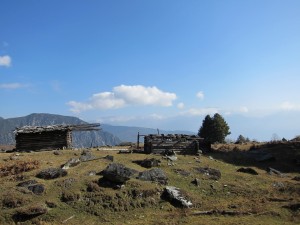
There’s something to be said for trekking out into areas remote enough that they are completely devoid of any signs of civilization. But I liked running into these wood-storage sheds; reminders of humanity, yes, but with no indication as to which century we were in.


Devin’s Haba Photo Essay: Top 10

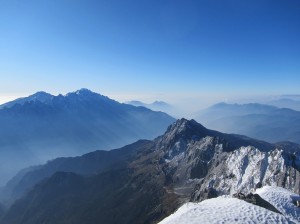
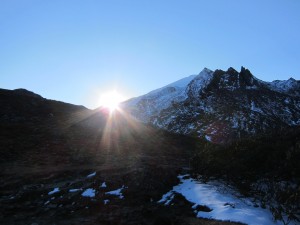
It’s stunning how much you can see from the top of the Haba summit: the three sacred mountains of Daocheng in Sichuan, Mt. Kawa Karpo on the Tibetan border, and countless other peaks stretching in every direction. My favorite view was Haba’s neighbor (and brother), Jade Dragon Snow Mountain (5,596m). The mountain sat just to the southeast, with the day’s nascent sun rays streaming over the massive Tiger Leaping Gorge below.


Devin’s Haba Photo Essay: Top 10

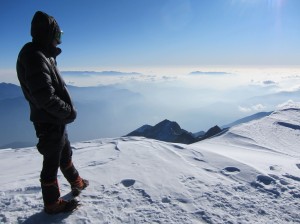
The experience of standing atop Haba can’t quite be put into words. I’ll just say that the feeling of walking halfway up to the cruising altitude of a 747 is one I won’t soon forget, and it says something that Xiao He, my guide, still pauses to silently soak in an experience he’s had hundreds of times before.


Devin’s Haba Photo Essay: Top 10

To my mind, there are few emotions more primal than waiting for the sun to come up so you can be warm again.


Devin’s Haba Photo Essay: Top 10

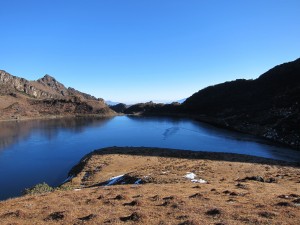
Black Lake, at 4,200 meters, is true to its name — from the summit, I could see the menacing dark puddle far below. Up close on a clear day, however, it looks like that Yunnan blue has spilled right out of the sky.


Devin’s Haba Photo Essay: Top 10

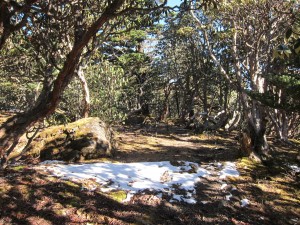
I passed through this stretch of forest after descending from Black Lake. At this point, I’ve just plunged back below the tree line; all of a sudden my nostrils are filled with pungent pine and my ears the chirping of birds. It was not until then that I realized how effectively the high altitude rid my environment of sounds and smells for the previous two days.


Devin’s Haba Photo Essay: Top 10

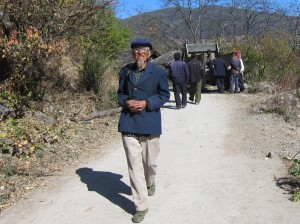
The elderly villagers stroll around Haba, hands clasped, more cracked and weathered than the rocky mountain faces above.


Devin’s Haba Photo Essay: Top 10

The smell of pine fades, the smell of wood stoves overtakes, and I know Haba village is close. I would not trade my time up on the mountain for anything, but it sure is nice to be back in this warm and hospitable place.

———-

Interested in learning more about climbing Haba? Get in touch at info@wildchina.com.

National Geographic 50 Tours of a Lifetime: AsiaTravel’s Tea & Horse

AsiaTravel is thrilled to announce that Tea and Horse was selected by National Geographic Traveler as one of the top 50 Tours of a Lifetime.

National Geographic 50 Tours of a Lifetime: AsiaTravel’s Tea & Horse

The most daunting trade route in the world, passing through the mightiest mountain range on Earth, the Ancient Tea and Horse Caravan Road linked the fertile emerald teas of Yunnan and Sichuan to the arid landscapes of the Tibetan Plateau, serving as a vital route for isolated tribes who referred to it as the “Eternal Road.” Remaining a virtual mystery to the West for over a millennium, the Road, its history and cultures are now at long last revealed in all of its stunning diversity.


National Geographic 50 Tours of a Lifetime: AsiaTravel’s Tea & Horse

The McGregors on AsiaTravel’s Tea & Horse

Join Jeff Fuchs, the first westerner to have ever traveled the entire 5,000-kilometer (3,100-mile) route, on a trip to Yunnan retracing portions of the Road, sampling teas at their origin and studying the road’s impact on ethnic minority villagers. In contrast to our shorter, private journey, Retracing the Ancient Tea & Horse Caravan Trail: Yunnan, this small group departure (8-16 people) is a 10-day expedition led by Fuchs, who shares his unparalleled expertise on the diverse teas, cultures and landscapes along the historic trail.

National Geographic 50 Tours of a Lifetime: AsiaTravel’s Tea & Horse

We begin in China’s far southwest, in subtropical Xishuangbanna, the original source of all tea, before heading north up the Ancient Tea and Horse Caravan Road to a former trading post, Shaxi, and further north to Lijiang, a UNESCO World Heritage Site, finally ending in the mountainous Tibetan region of “Shangri-La.” Along the way, we hike through tea tree forests, participate in tea ceremonies and converse with traders and villagers.

This 10-day adventure leaves takes place Sep 12-21, 2012. Reserve your place today before the trip fills up! To get in touch with a AsiaTravel travel specialists, please get in touch at info@wildchina.com.

———-
To read more about this journey, check out its press features in the South China Morning Post, Time Out Beijing & Dubai, and AOL Gadling.

AsiaTravel featured in Action Asia

AsiaTravel was recently featured n the May/June 2012 edition of Action Asia for our current summer offerings in Tibet.

AsiaTravel featured in Action Asia

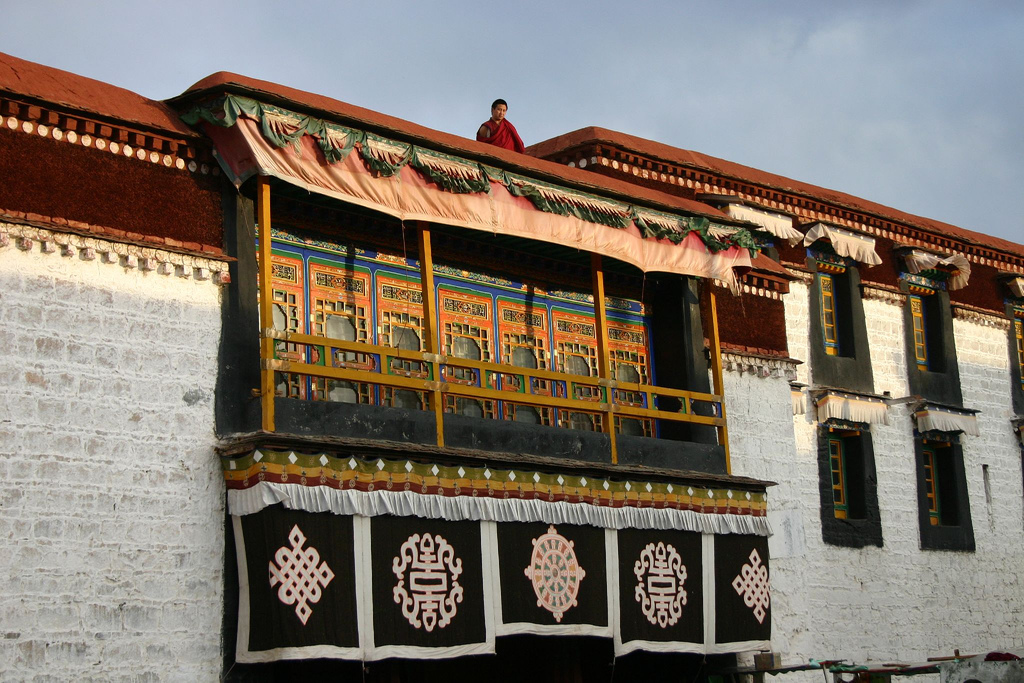
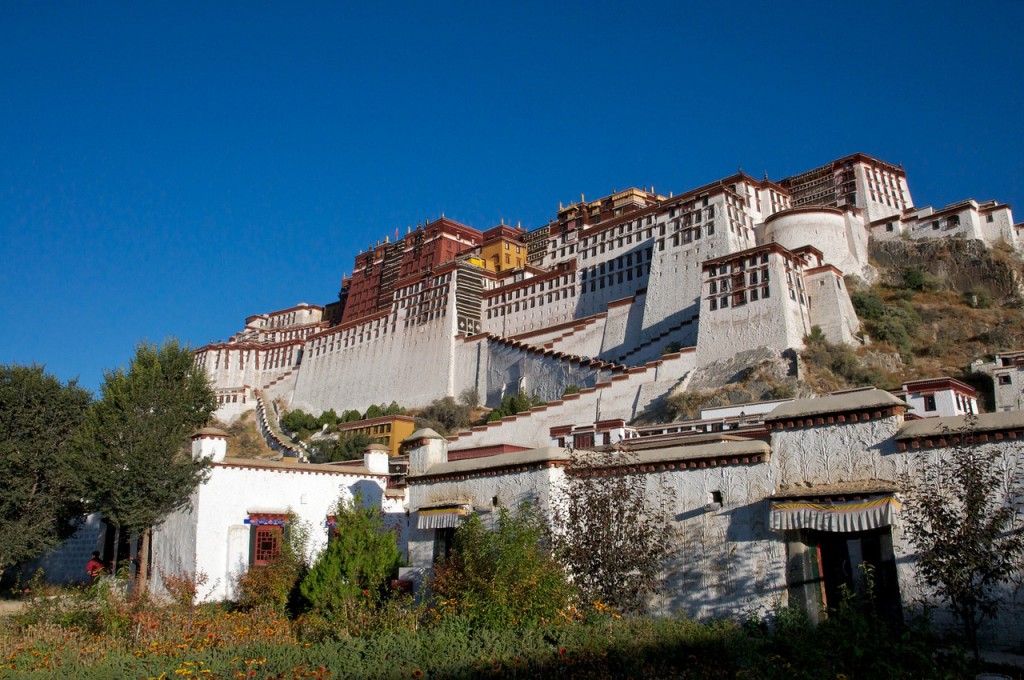
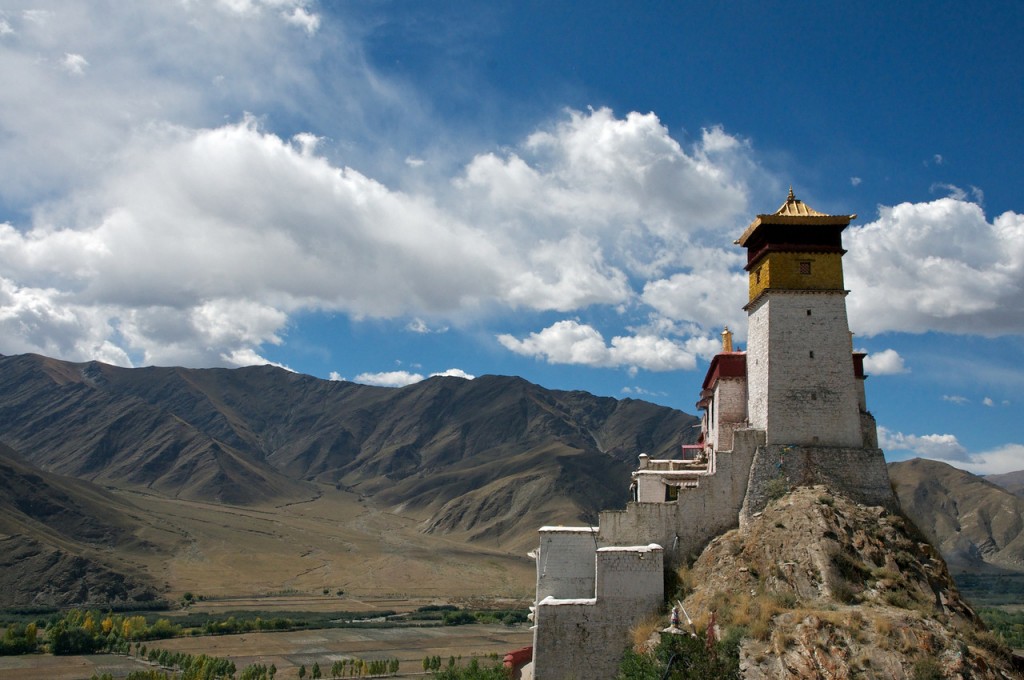
This summer, AsiaTravel has many exciting trips traveling to Tibet.  The first is Family Adventures in Tibet: On the Roof of the World. This journey specially designed for families offers an adventurous and interactive look at Tibet: you’ll sip yak butter tea with a local Tibetan family; witness monks debate sacred texts in one of Tibetan Buddhism’s most revered monasteries; and even print your own prayer flags. Join us on an unforgettable vacation as you embark on your dream trip to Tibet with your family.

AsiaTravel featured in Action Asia

Since 2001, AsiaTravel has been the leader in cultural immersion and adventure expeditions for student travel in China.  This year, AsiaTravel is thrilled to be leading a select group of 2012 AsiaTravel Student Expedition Explorers to Beijing, Yunnan and Tibet to experience elements of community service, physical challenge and cultural immersion.

On the 26-day journey, students begin in Beijing, where Imperial history collides with hyper-modernity.  In addition to exploring the not-to-be-missed sights of China’s capital, they will climb an unrestored section of the Great Wall and spend the night barbequing and camping out alongside one of the wonders of the world. In the southwestern province of Yunnan, we’ll trek through Tiger Leaping Gorge, a spectacular natural wonder where we meet local residents caught in the midst of China’s struggle to balance environmental concerns with economic demands.  Finally, spend three days trekking in Tibet, the former home of the Dalai Lama and one of the most spiritual places in the world.

AsiaTravel featured in Action Asia

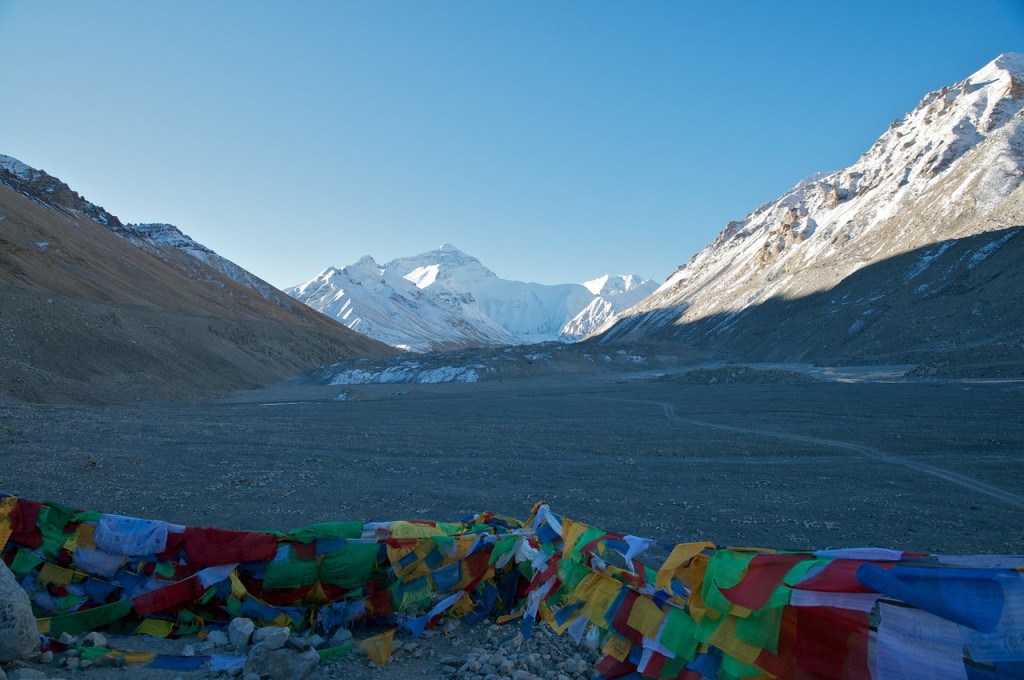
And last but not least, Journey to Base Camp is a lifelong dream for many adventure travelers. Beginning with the early British expeditions in the 1920s, Everest has held a magical allure with its imposing snow caps and stunning panoramic views. Yet, given the physical endurance required to approach Everest from the south side in Nepal, this dream is often unattainable. We invite you to live the dream in an adventure unlike any other: exploring Mt. Everest Base Camp from the north side, in Tibet, the Roof of the World.

This program is specially designed for adventure seekers looking to explore Tibet’s breathtaking natural landscapes as well as its deep spirituality and rich culture. We visit the major monasteries, temples and sacred Tibetan Buddhist sites of Lhasa before embarking on the incredible overland drive through central Tibet to Nepal. Approaching Everest Base Camp by car, we set up tented camps on the north side and hike further up to explore the majestic mountain. Our journey ends at a trading post between Tibet and Nepal, allowing travelers to continue to Kathmandu.

———-

Interested in learning more? Get in touch with info@wildchina.com.