Jewish Tours of China

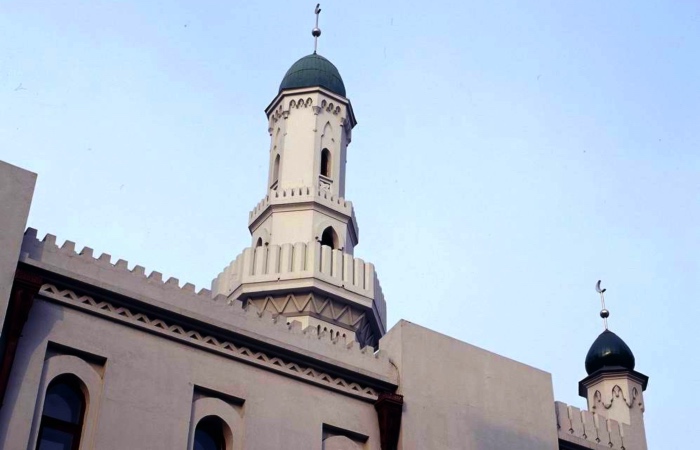
With a history of Jewish immigration spanning to the days of the Silk Road, there has been a presence of Judaism in China since the imperial times of the Tang Dynasty (618-907). 

Arriving from Western Asia along ancient trade routes, as well as by sea and via the Trans-Siberian railway, China has often been regarded as a place of sanctuary and prosperity for Jewish people. Sadly, it has also been one of persecution.  Read on to delve deeper into the history of Judaism in China, and find out why AsiaTravel is the only choice when it comes to planning a customized Jewish tour of China.

Jewish Tours of China

Must-Visit City: Harbin

Top of the list and an absolute must-see on any Jewish tour of China is Harbin, an icy city in China’s North-eastern province of Heilongjiang. Harbin is a multicultural hub that has been influenced by an eclectic mix of Russian, Korean, and Mongolian immigrants.

After the Russian Revolution, 20,000 Jews fled and settled in Harbin, creating a well-established community with synagogues, hospitals, and schools. Just meander up and down Central Street, and soak up the sights and smells of an Eastern-European past, with authentic architecture from both the Russian and Jewish communities lining this bustling street. A large majority of the Jewish community left Harbin for Shanghai or abroad during later years. The Harbin New Synagogue has been turned into a museum of Jewish culture.

Jewish Tours of China

Must-Visit City: Shanghai

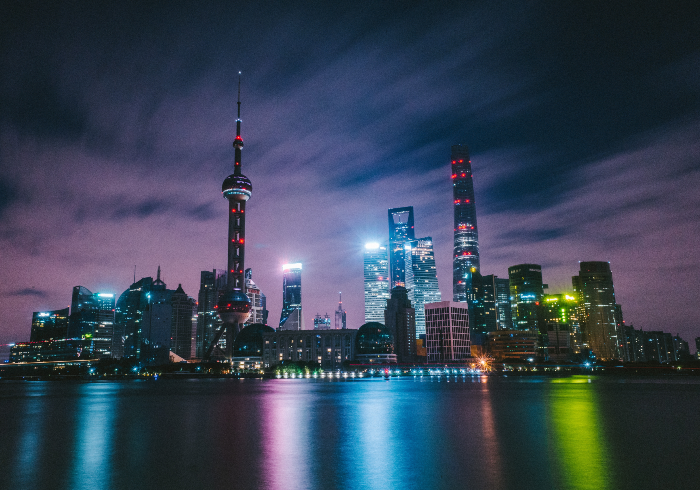
As well as showcasing an impressive array of glitzy high rises and colonial architecture, Shanghai has also played a considerable part in China’s Jewish history. By the outbreak of the Second World War, Shanghai was the largest sanctuary for European refugees fleeing Nazi persecution. Sadly, it was not long until the Japanese occupation of China forced these refugees to live in a designated area, which later on became known as the Shanghai Ghetto.

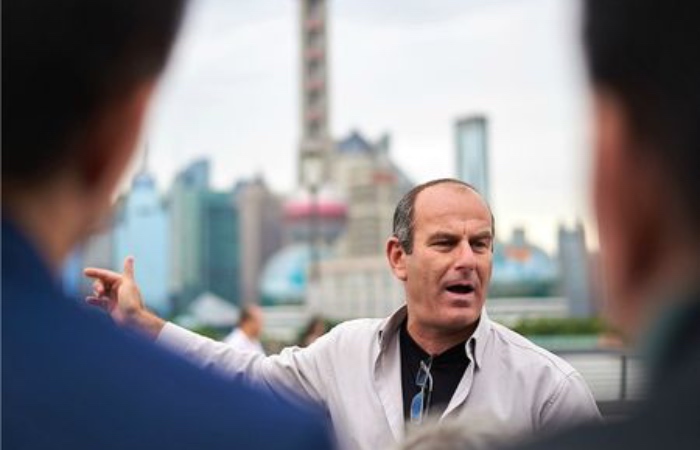
In the capable hands of our Jewish expert, Dvir Bargal, you will be transported down the tracks of time and see for yourself the daily lives of Jewish people under these conditions. You’ll gain a deeper appreciation for the ways the Jewish community managed to thrive despite the odds. One such example is the impressive Children’s Palace, once a mansion belonging to a Jewish family from Baghdad that now offers educational and recreational activities for children.

Jewish Tours of China

Why Choose AsiaTravel for Your Jewish Tour of China? 

While Harbin and Shanghai offer up the lion’s share of Jewish culture in China, we’ll also show you other areas of interest, such as the Xiaobailuo District of Tianjin, another area of Jewish resettlement. We think of the practicalities too. We’ll prepare appropriate meals, luxury hotels that are not sky-rises, as well as leisure days for Shabbat.  

Although much of China’s Jewish population left for the US and Australia following the Second World War, remnants of a rich Jewish culture are still to be found within the Middle Kingdom, from tasty snacks to lasting architecture.

Get in touch with one of our experienced travel designers and find out how to rediscover a portion of Jewish history during a trip to this fascinating and diverse country.

4 Facts about Yunnan

Yunnan might not be a province in China you’re familiar with, so it might come as a surprise when we tell you it’s a destination that belongs on any China travel list. 

AsiaTravel Founder Mei Zhang hails from the region and it’s a place that has always held a special place in our hearts. In Yunnan, you’ll find spiritual and cultural sites, beautiful scenery, tasty dishes, and much more! And it’s inevitable really, that you’d find so much diversity in an area that’s larger than Germany.

Here are four facts about Yunnan that will inspire your China travel.

4 Facts about Yunnan

RELATED READING: Top 5 Things to Do in Dali and Lijiang

Yunnan has some of China’s most breathtaking sights

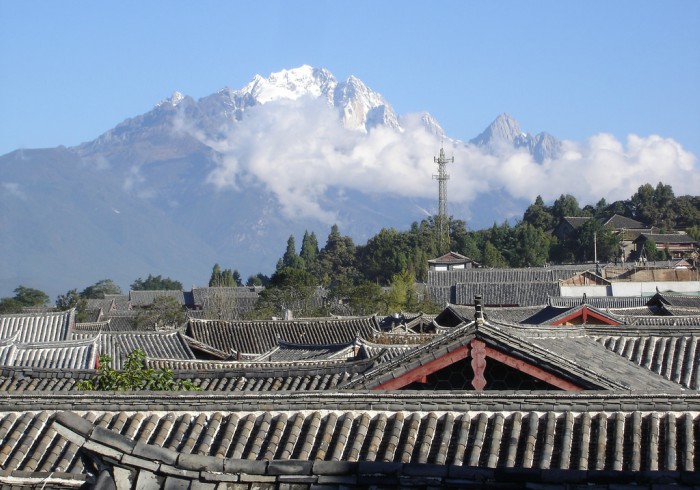
You’ll find breathtaking landscapes all across Yunnan, from carefully tended rice terraces and serene lakes to sky-high mountain ranges. One such mountain range is Yulong, home to the Jade Dragon Snow Mountain. This mountain range is a sanctuary for rare animals and plants and you’ll find a number of Yi ethnic minority villages in the area. On a AsiaTravel journey, we’ll help you to meet with a local shaman there who will bless your journey.

The Yuanyang rice terraces are also a must-see in the right season. Each terrace is meticulously cared for and you’ll notice that each small section will vary in color, sometimes dramatically, from those around it.

4 Facts about Yunnan

RELATED READING: 4 Best Hotels in Shangri-La

You can experience Tibetan culture without the restrictions

Yunnan shares a border with the Tibetan Autonomous Region (TAR) on its western side, and Tibetan culture has seeped through over time. If you don’t want to deal with the hassle of getting a permit to visit the TAR then Yunnan might be a good option.

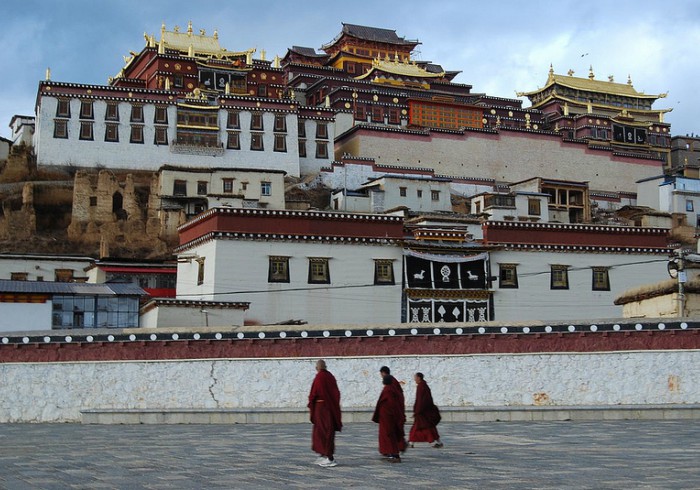
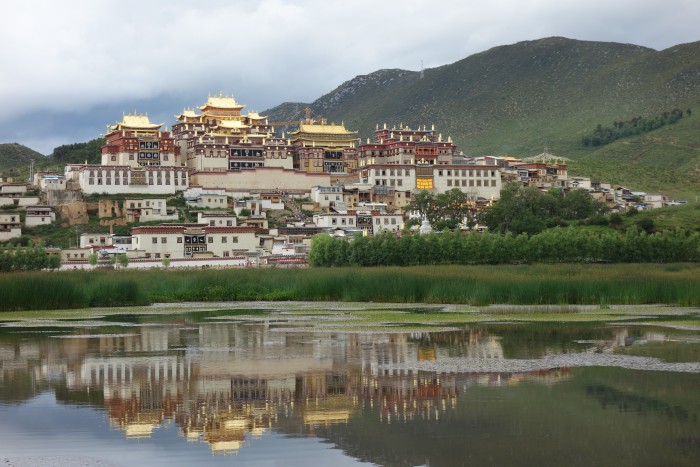
Dozens of temples are sprinkled across the land and in the western part of Shangri-La, you can find monks and Lamas chanting sutras at Gadan Dongshulin Temple. Songzanlin Monastery is also well-worth a visit to see Tibetan Buddhist culture. 

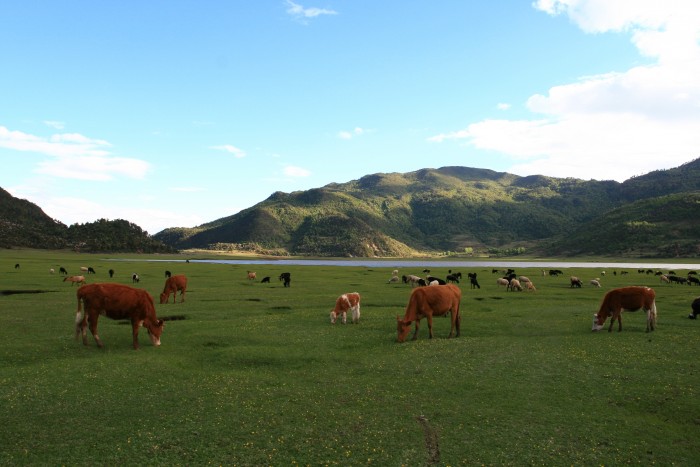
Abujee is another area of Yunnan where you can see Tibetan life in action. In this remote area, you’ll walk alongside Tibetan and Yi herders tending to their flocks and can even sit down with them for a cup of salty yak butter tea.

4 Facts about Yunnan

RELATED READING: Take the High-Speed Rail to Yunnan

Yunnan is home to 25 ethnic minorities

Yunnan is one of the most culturally diverse provinces in China and is home to more than 25 ethnic minority groups. Witness the song and dance of each, see their traditional clothes, and try their delectable dishes. Three of the most prominent groups you’ll find are the Bai, Naxi, and Mosuo, each with their own unique style and customs. If you’re into the social sciences, you’ll find the variety fascinating – many of the cultures are matriarchal!

4 Facts about Yunnan

RELATED READING: Yunnan Food According to Mei Zhang

Photo Credit: Elizabeth Phung

Yunnan is home to its own unique cuisine

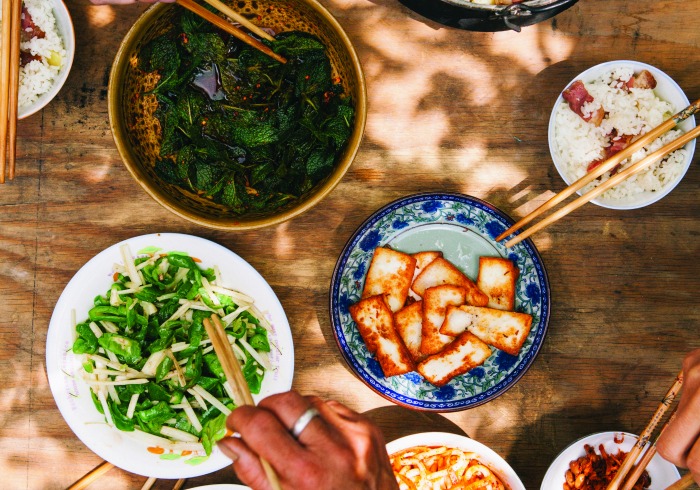
The flavors and techniques used in Yunnan cuisine are a blend of famously spicy Sichuan food in the north, light and seafood oriented cooking in eastern China, and fresh Thai flavors in the South. Farmers bring produce down from the mountains and locals visit the market at least once (sometimes twice) a day to ensure they get the freshest ingredients. 

One of the most well-known regional dishes is “Crossing the Bridge Noodles” and there are several stories explaining the name. If you’d like to learn more about Yunnan cuisine, AsiaTravel founder Mei Zhang’s first book, Travels through Dali: with a leg of ham, serves as a great introduction.

Yunnan is a province with a little bit of everything. Food, nature, and culture are all one of a kind in this area of China. Are you ready to embark on a journey through this incredible province?

Feature Image Photo credit: Wilson Loo on Visualhunt.com / CC BY-NC-ND

Kunming: Visa-Free Travel You Say?

Kunming is the latest city to join the ranks of visa-free travel in China. A scheme that has been rolled out to a number of major cities in recent years, the visa-free permit gives the budding adventurer 144 hours (6 days) to touch down in, and explore, a city and its nearby environs. To qualify for visa exemption, you must be in transit from your point of origin to another country besides China. In other words, it must be a layover and you have to have the documents to prove your onward travel.

When you check in for your flight to Kunming, you’ll need to let the airline know that you’re planning to stay visa-free. Then, when you arrive, follow the “visa-free stay” signs in immigration. You’ll fill out a slightly longer entry card than normal, and your 144 hours will begin at 00:00 hours the next day.

Here’s all you need to know to get the most out of visa-free travel in Kunming.


Kunming: Visa-Free Travel

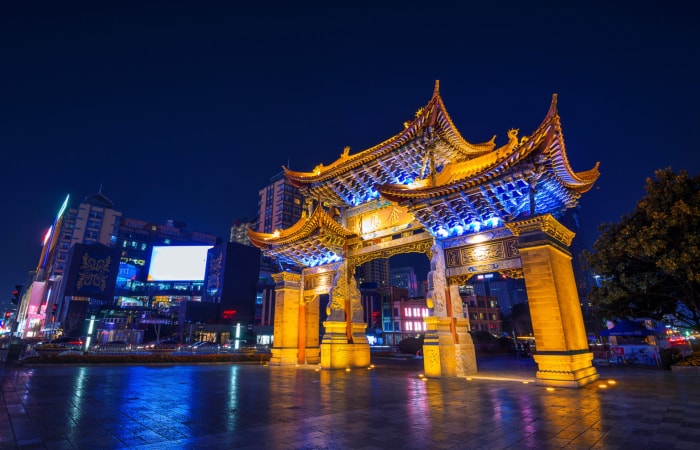
Often referred to as the ‘City of Eternal Spring’ for its temperate climate year-round, Kunming is the capital city of Yunnan province, a lush and culturally diverse region in China’s southwest. A major metropolis by any standards, Kunming is markedly more cosmopolitan than the rest of Yunnan province. The city has evolved a bohemian, artsy vibe, with a growing number of independent galleries, cultural centers, and cafés. 

Kunming is also a pretty well-connected city, making travel to and from the area easy. In fact, many AsiaTravel travelers use Kunming as a jumping off point for other parts of Yunnan, as well as a welcome addition to travels through Southeast Asia.


Kunming: Visa-Free Travel You Say?

Photo by Fuchsia Dunlop


Kunming Visa-Free Travel: Where to Eat?

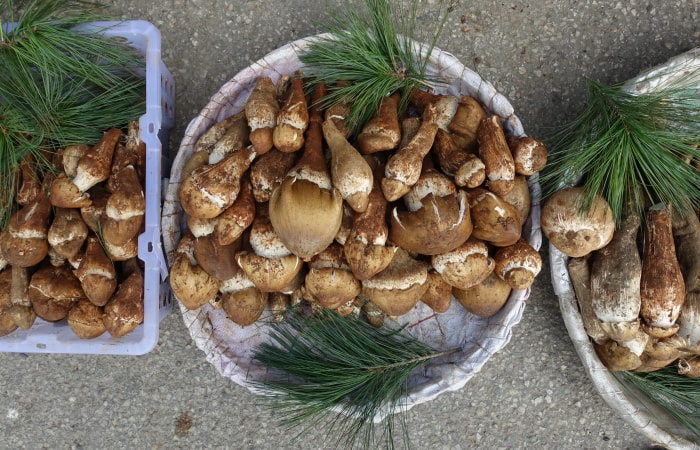
As you’ll be staying within the city limits for the duration of the 144-hour visa, we’re sure you’ll be dying to know all the best eateries and hangouts that show off the best of what the region has to offer. Making its way onto Fuchsia Dunlop’s Yunnan Gastronomic Tour for very good reason, Kunming boasts a burgeoning culinary scene, combining Chinese tradition with the spices and exoticism of Southeast Asia. While mushroom hotpot is something of a specialty in Kunming, you’ll find delicacies at every turn with restaurants to match. A firm favorite of ours is the ancient Shiping Hall (石屏会馆), where you can enjoy chili fish in a beautiful traditional courtyard – the restaurant itself is 300 years old. Alternatively, head over to the 1910 South Train Station (1910 火车南站) to sample a more modern twist on Yunnan cuisine.

Top tip: Yunnan is China’s center of coffee cultivation, and many of Kunming’s cafes use local beans. Be sure to try a cup (or two) as you explore the city.


Kunming: Visa-Free Travel You Say?


Kunming Visa-Free Travel: What to Do?

With bellies satiated, what should you do in Kunming? Well, when you’re not filling up on tasty treats or enjoying the natural feel of the city, why not jump on the cable car and head up Sleeping Beauty Mountain where you will be rewarded with stunning views and the chance to see Dragon Gate, a collection of beautiful temples jutting out of the cliff face.

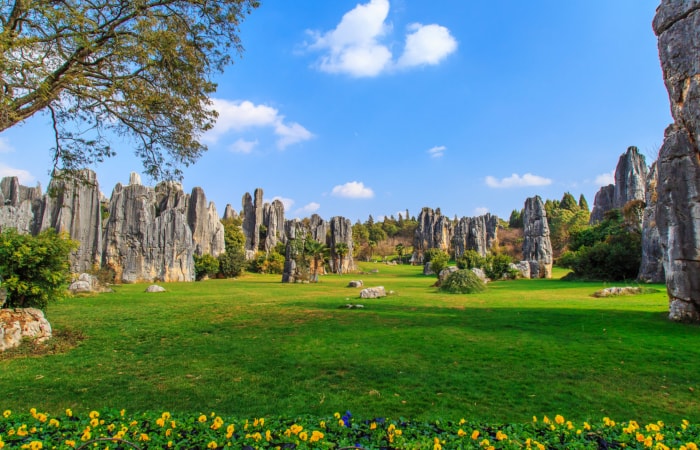
Sticking with the rocky theme, Kunming’s Stone Forest is well worth a visit too, boasting impressive limestone formations. But, be warned, the early bird catches the worm with this one, as it is a firm favorite amongst domestic tourists.


Kunming: Visa-Free Travel You Say?


Kunming Visa-Free Travel: Where to Stay?

And finally, where to rest our weary traveler heads? A city that is laced with the beauty of nature throughout, there are plenty of choices when it comes to finding a room with a view in Kunming. Our personal favorite is the Green Lake Hotel. While the clue is in the name, this hotel boasts great views over Green Lake Park, as well as enjoying a prime location within walking distance of Kunming Old Town, and more restaurants and cafés than you can shake a stick at. It has all the modern conveniences and services you’d want, including a swimming pool to relax in after a long day of soaking up the sights.

So, if it’s a lengthy layover you’ve found yourself with, or you are on the hunt for a trip extension with a bit of a twist, consider Kunming – a vibrant destination with none of the visa hassles.

3 Best Hotels in Lhasa

Lhasa, the capital of the Tibetan Autonomous Region, sits high up on the Tibetan Plateau. In the Tibetan language, Lhasa means ‘Holy Land’ and the city is a center of Tibetan Buddhist life and culture. 

Staying in Lhasa gives you a convenient lodging from which to view city sights like the Potala Palace and Jokhang Temple. And from a Lhasa hotel base, out of city attractions including crystal-clear lakes and Tibetan monasteries are also easily accessible. 

3 Best Hotels in Lhasa

RELATED READING: Top 5 Reasons Why You Should Visit Lhasa

Best Hotels in Lhasa – Songtsam Hotel, Lhasa

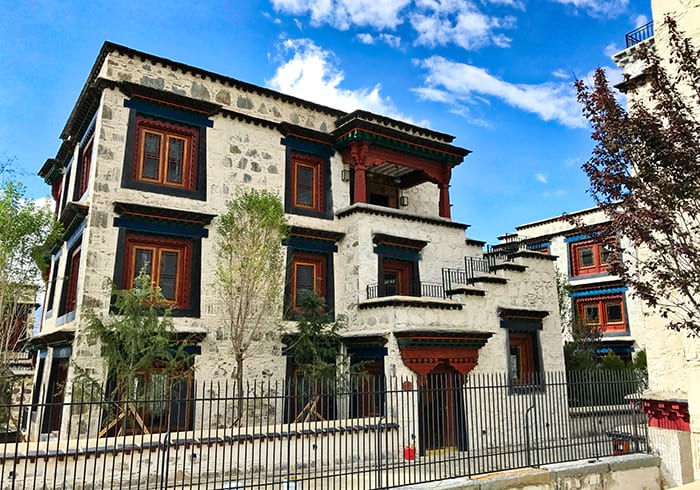
China’s home-grown Songtsam brand offers luxury, boutique accommodation in the country’s Tibetan regions. The brand prides itself on being part of the local community and immerses guests in local culture. Songtsam’s newest venture in Lhasa opened in 2017 and is well located approximately 15 minutes by taxi from downtown – giving a tranquil environment to retreat to. The Songtsam Chokyi Lingka, to give its full name, oozes Tibetan culture with the same philosophy of architecture as found in Lhasa’s Potala Palace. This shows up in the use of stone, wood and local earth in the building.

The Norbulingka Palace was used for design inspiration and the property even features handmade curtains from a local artisan. This is the perfect hotel for lovers of boutique touches in Tibetan style and, it even has oxygen supplies for those needing to adjust to Lhasa’s high altitude.

3 Best Hotels in Lhasa

RELATED READING: Where Can I Visit Tibetan Buddhist Monks?

Best Hotels in Lhasa – St Regis Lhasa

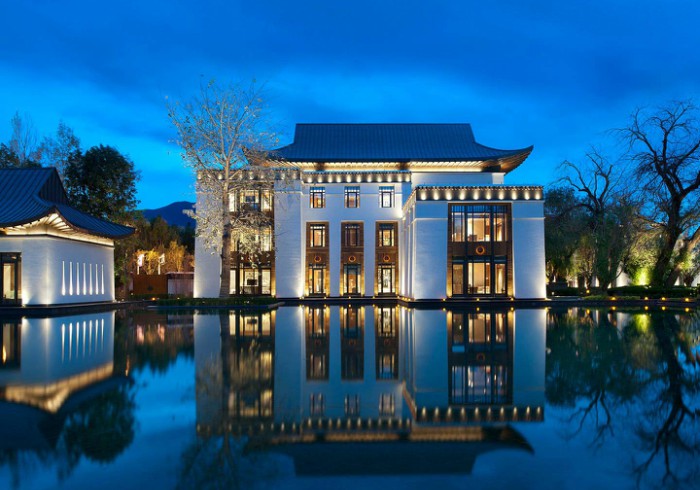
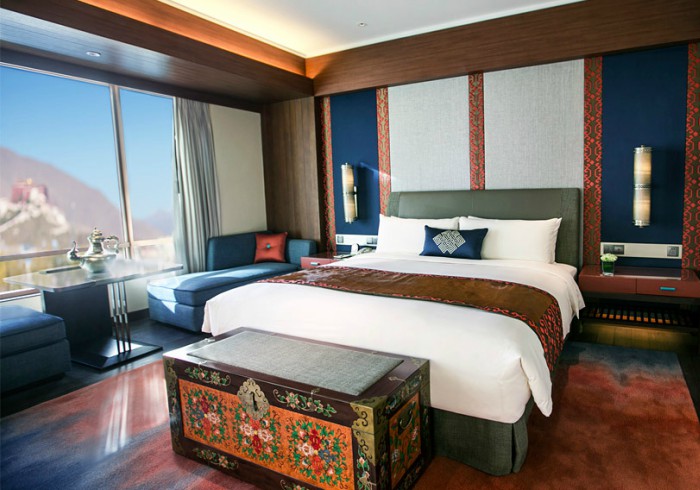
This Starwood Group luxury resort hotel is an alternative to Tibetan boutique style, offering what might be best regarded as “contemporary classic” western style. The St. Regis was the first international luxury brand hotel in the Tibetan Autonomous Region and it’s located in the heart of downtown, just minutes away from the Potala Palace.

In the St Regis, you’ll constantly find yourself transfixed by the surrounding mountains. The opulence reaches a harmonious, earth-toned crescendo in the dining spaces, of which there are three: visit Si Zi Kang for high-concept Tibetan plates, Yan Ting for a range of regional Chinese cuisines, and Social for the buffet. 

3 Best Hotels in Lhasa

RELATED READING: Do I Need a Permit to Visit Tibet?

Best Hotels in Lhasa – The Shangri-La Lhasa

Shangri-La Hotels are a well-known luxury brand with properties all around China. The Shangri-La Lhasa is in the city center on Lingkor Road and Norbulingka Road, near the historic Potala Palace. In each room, you’ll be greeted by a copy of James Hiltons’ Lost Horizon, a classic book about adventuring in the wonders of the Orient on the Tibetan Plateau.

The hotel covers a large area, and the grounds are lovely to walk around. Guests will find that rooms are decorated in Tibetan style and many overlook the magnificent mountains and the Potala Palace. Like other quality hotels, oxygen rooms and medical services are available to assist adjustment to altitude.

Whether you’re craving five-star luxury or are curious about Tibetan design, Lhasa’s hotel options are sure to delight visitors of all kinds. When you travel with AsiaTravel, we not only help you find the hotel that’s perfect for your travel style, we’ll organize a private guide and driver who will help create a truly life-changing trip.

What the Everest Base Camp Closure Means

Featured Image by Neil Young on Flickr.

The Everest Base Camp Closure

Looming at an enormous 8,844m, the mighty Mount Everest stands at the highest point on Earth, straddling both Nepal and the Tibetan Autonomous Region (T.A.R). While Everest Base Camp has gained worldwide fame as the launching point for adventurous mountaineers, it is far less known that there are in fact two Everest Base Camps found on either side of the peak (one camp in T.A.R. and the other in Nepal). With easier access to the mountain and even more stunning views, T.A.R’s base camp has attracted more and more visitors each year. Sadly, this has come at a cost, leading to the camp’s indefinite closure. With so many visitors still hoping to catch a glimpse of this majestic mountain, what does the closure actually mean for our intrepid travelers?

What the Everest Base Camp Closure Means

The Everest Basecamp | Image by lampertron on Flickr

T.A.R. is open as usual

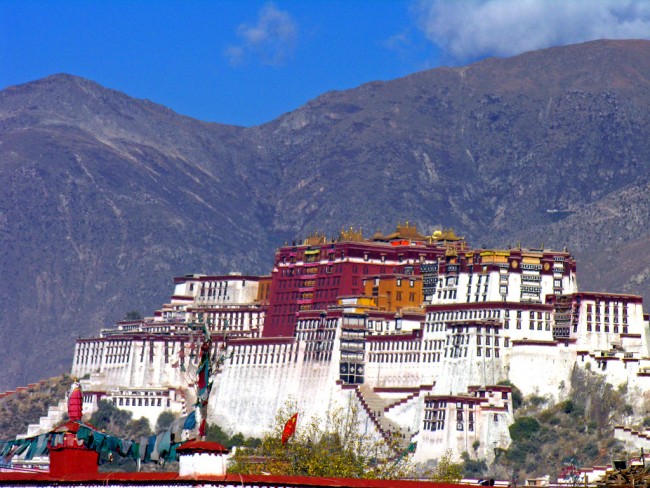
Don’t let the closure of Everest Base Camp put you off – the Tibet Autonomous Region is open to visitors as usual and the chance to visit this stunning corner of the world is not be missed! As per usual, the T.A.R. will be open to foreign tourists after the Tibetan New Year which falls at the end of February. Tibet is an enchanting land filled with jutting peaks, expansive plateaus, and rich cultural traditions. Whether it’s marveling at Lhasa’s Potala Palace or enjoying the wide-open expanses of this untouched region, the T.A.R. is a stunning destination that will grant you a greater appreciation for the Buddhist religion.

What the Everest Base Camp Closure Means

The Potala Palace in Lhasa | Image by Dennis Jarvis on Flickr

High altitudes are still within reach…

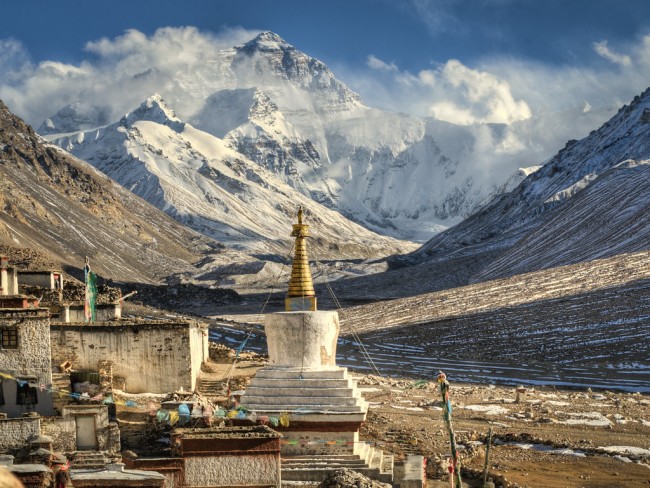
While base camp sits at a whopping 5,200m above sea level, you still might find yourself short for breath at the close-by Rongbuk Monastery. At 4,980m, the view can be quite literally breathtaking. The (relatively) easy access to this side of the mountain (the Nepal side requires a two-week trek to reach base camp) means you can take things at a slower pace to enjoy the experience and get yourselves acclimatized to the altitude. In the past, the Rongbuk Monastery was home to several hundred monks and nuns, with the remote location lending itself to undisturbed meditation and a tranquil way of life. With as few as 35 monks currently living at the monastery, their doors are open for the weary traveler to enjoy a peaceful overnight stay at the feet of one of the world’s seven natural wonders.     

What the Everest Base Camp Closure Means

Rongbuk Monastery | Image by Göran Höglund (Kartläsarn) on Flickr

Related Reading: Remote Getaways to Escape the Hustle and Bustle of China

The route does not change.

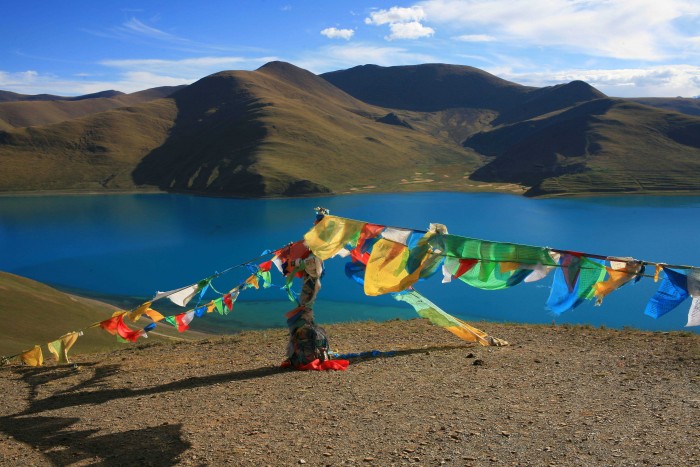
For those not intent on climbing the summit, the Mount Everest route does not really change. What makes the Mount Everest experience begins long before this lofty peak is in sight. From the shores of the holy Yamdrok Lake to stepping back in time in the Old City of Gyantse, our Mount Everest route will take you on a journey through this beautiful landscape all the way to the Rongbuk Monastery. Although the very last leg is no longer accessible, the monastery itself still boasts some world-class views and is the perfect end to an incredible journey.

What the Everest Base Camp Closure Means

Yamdrok Lake

Related Reading: Top Five Challenging Hikes in China

As advocates for sustainable tourism, we feel great shame for the indefinite closure of the Everest Base Camp, especially due to the reasons. However, we are encouraged for the future. As you can see, the Tibetan Autonomous Region is a spectacular natural area that is just begging to be explored. Who knows, maybe this experience shall prompt greater efforts for green and viable forms of tourism in the future. Get in touch now to start planning your ultimate Tibetan adventure. 

Unearthing China’s History One Site at a Time: An Archaeological Adventure With Dr. Ye Wa

For anyone curious about one of the world’s oldest civilizations and those who love learning about and experiencing history, we developed one of our new expert-led adventures through the living museum that is China just for you. Aptly titled History Unearthed: An Archaeological Journey Through China with Dr. Ye Wa, this antiquity-steeped odyssey will have the more creative among us imagining what Indiana Jones might feel like were he exploring Asia today. For the rest, you’ll enjoy a firsthand experience of how the Middle Kingdom’s most storied and significant historical locations exist today, receive expert insight into what life was like during each site’s heyday, and learn how the two are inextricably linked.

Introducing The Expert: Dr. Ye Wa

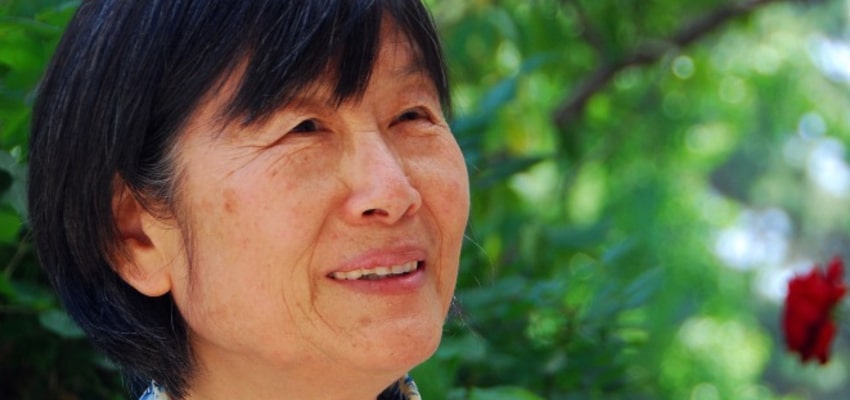
Dr. Ye Wa is an expert in archaeology, the co-director of the International Field School of Archaeology at Yangguanzhai in Shaanxi, China since 2010, and the perfect guide for your archaeological tour through the Middle Kingdom. After obtaining her bachelor’s degree in Xi’an, China, Dr.Ye Wa crossed the Pacific to continue her studies in the United States, where she earned a Master of Anthropology from the University of Oregon and a Ph.D. in Archaeology from UCLA. Specializing in the Neolithic Period and Tang Dynasty mortuary practices, she is the ideal guide to accompany you on your journey through the tombs, ancient dwellings, grottoes, and other timeworn treasures along the Silk Road. Currently, Dr. Ye Wa is focusing her efforts on understanding ethnoarchaeological approaches, Neolithic settlement patterns, and the relationship between patterns and specialized pottery production.
Unearthing China’s History One Site at a Time: An Archaeological Adventure With Dr. Ye Wa

Dr. Ye Wa | Image by AsiaTravel

What You’ll Uncover: Journey Rundown

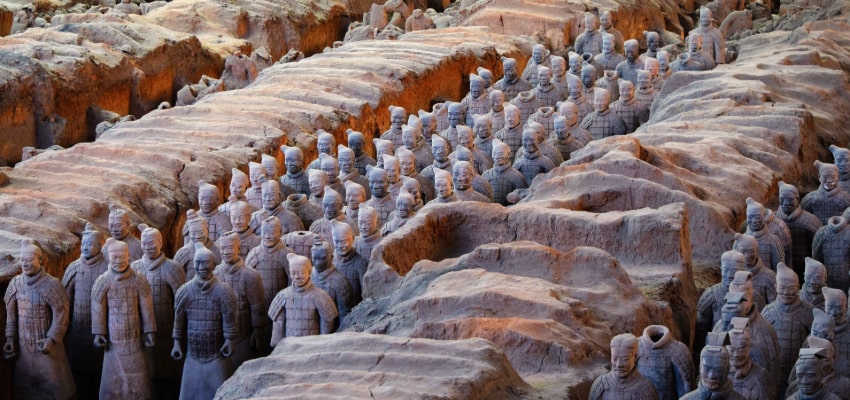
For the first three days, you will delve into the culturally and historically significant region in and around modern-day Xi’an. From the unflinching Terracotta Warriors to Yangguanzhai (one of the most consequential archaeological discoveries in China over the past decade), this ancient capital city is filled to the brim with millennia-old cultural traditions and an enthralling collection of mausoleums and settlements still being unearthed. Luckily for all the history buffs along for the adventure, you’ll get to do a deep dive into your fair share, enjoying a mix of curator-led tours and enlightening conversations. For more present-day delights, you’ll hear the call for sunset prayers as you wander through the Muslim Quarter on the way to the Grand Mosque, tasting local delicacies along the way. During your explorations, you’ll also have the privilege of sitting down for meals with the director of Yangguanzhai, the former chief archaeologist of the Terracotta Army, and another leading archaeologist in the area.
Unearthing China’s History One Site at a Time: An Archaeological Adventure With Dr. Ye Wa

The Terracotta Warriors in Xi’an 

RELATED READING: Xi’an Tours: More Than Terracotta Warriors

Comfortably early on the fourth day, you will jump on a speeding bullet train to head to your next major destination: Tianshui. Crossing into Gansu Province, you’ll enter the heart of China’s Silk Road history. As the stretch of land connecting the illustrious trade route to the west, the far western province is a treasure trove littered with the remnants of civilizations past. Along with ivory and precious metals, Silk Road caravans brought Buddhism to China For the rest of your journey, you’ll be delving deep into the mysteries that have been hidden by the sands of time.

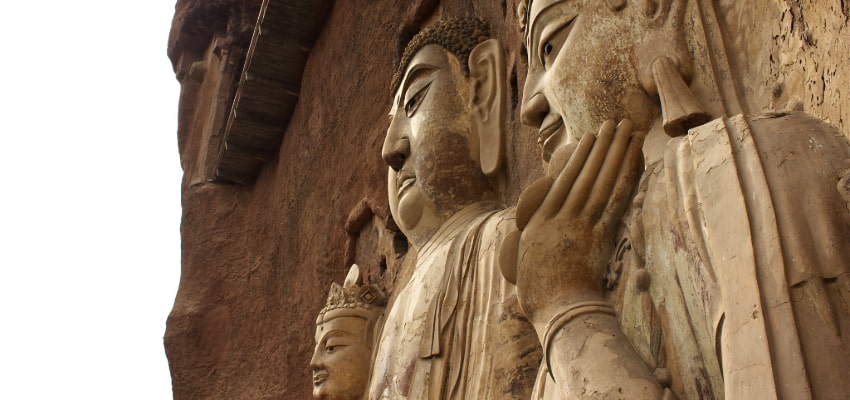
Before heading to your accommodations, however, you’ll first be whisked off to the mysterious, impressive, and unquestionably beautiful Maijishan Grottoes. Here, a stunning collection of over 7,000 Buddhist statues and murals have been boldly inscribed precariously high up on a hillside rockface resting just a few miles south of the ancient merchant route. To fully marvel at the craftsmanship that went into creating the relics, you’ll muster up your courage and mount a set of walkways that cling to the side of the cliffs. For your bravery, you’ll be rewarded with breathtaking views of an astounding array of sculptures of every shape and size (some with the original pigment still intact) as well as of the valley below. And don’t fret – the pathways, though a bit intimidating, are newly built and your luggage will be watched over the entire time so you can enjoy the Buddhist wonders unencumbered. Then, after soaking up the history, you will have the evening to explore or relax at your leisure.
Unearthing China’s History One Site at a Time: An Archaeological Adventure With Dr. Ye Wa

The Maijishan Grottoes |  Image by kahumphrey via Flickr

On the following day, you and your fellow history-loving travel companions will set out by train for Lanzhou, the capital of Gansu Province. There, you’ll uncover the traces of cultures dating back more than 5,000 years at the Gansu Provincial Museum before sitting down to dinner with the curator. Before continuing on in your journey west, a day trip to gaze upon the Maitreya Buddha, which towers to almost 100 feet tall, will leave you feeling humbled by both time and the steadfast commitment of the bygone disciples. 

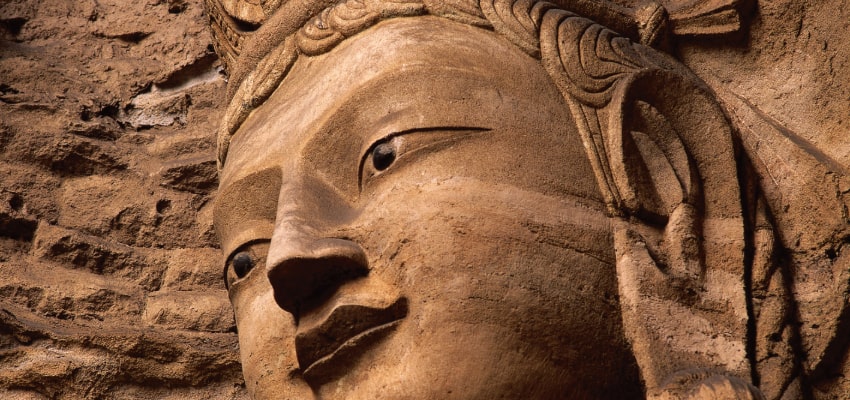
Finally, you will voyage to the desert sanctuary of Dunhuang for the remainder of your archaeological adventure. Against the backdrop of unforgiving, rolling dunes, you can almost imagine the Silk Road caravans, overflowing with camels, textiles, spices, and gold as they plod across the sand. Like the traders of old, you’ll pass by Yangguan, a major landmark along the merchant route and one of the Great Wall’s most crucial western strongholds, and visit the ancient city of Suoyang, both of which now lie in ruins. At the Mogao Grottoes, you’ll enjoy behind-the-scenes access and stand in awe of what is considered the pinnacle of Buddhist art which is housed across a mind-boggling 492 grottoes, the fruits of a millennium of labor.

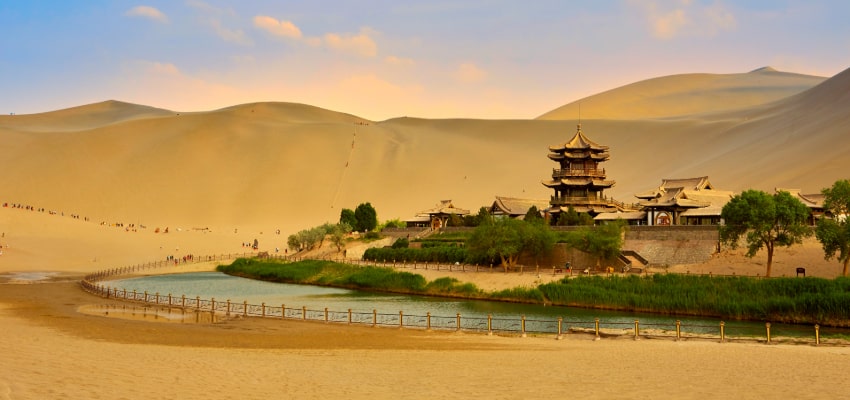
To deepen your understanding of Buddhism’s influence here and the area’s rich history, you’ll also meet with Neil Schmid (one of the leading authorities on medieval Buddhism’s visual culture), dine with Dunhuang scholars, sit down with the Getty Museum team to discuss Mogao conservation effort, and examine the Buddhist frescoes and statues of the Yulin Caves.  Lastly, before you wrap up your Silk Road journey, you’ll take to the sands, exploring the oasis of Crescent Moon Lake and following in the footsteps of Marco Polo at the rumbling, whistling Mingsha Sand Dunes.
Unearthing China’s History One Site at a Time: An Archaeological Adventure With Dr. Ye Wa

Mogao Grottoes

RELATED READING: 4 Must-Sees Along the Silk Road in China

Conversations With The Past: An Expert Discussion Series

Throughout your 10-day journey, you will be treated to three meals with Dr. Ye Wa and a variety of other experts you will meet along the way. These interactive, enlightening conversations will help to deepen your understanding of and give context for sites you encounter during your Silk Road explorations. 

The Silk Road Before the Silk Trade: Communications Between the East and West Prior to the 4th Century A.D.

Join Dr. Ye Wa and the director of Yangguanzhai for lunch to discuss how the eastern and western worlds communicated prior to the Silk Road’s heyday and the role it played in establishing and nurturing relations and commerce between the two during its early days (relatively speaking, of course – the trade route was established in 130 B.C. and used until 1453 A.D.). This conversation will center around one of the largest Neolithic archaeological dig sites in China: Yangguanzhai. Covering an area of over 800,000 square meters, the site has been selected twice (2013 and 2017) as one of China’s top ten most significant archaeological discoveries. 
Unearthing China’s History One Site at a Time: An Archaeological Adventure With Dr. Ye Wa

Crescent Moon Lake in Dunhuang’s Mingsha Sand Dunes

Monks and Merchants: Buddhist Grottoes Along the Silk Road

Sit down for dinner with Dr. Ye Wa and the curator of the Gansu Provincial Museum to talk about how Buddhism found its way into China the same way ivory, gold, and silver did: with the merchants, traders, and caravans on the Great Silk Road. Its influence can be found in the Buddhist grottoes that are littered along the ancient route and the enduring art that lies within. 

Conservation of Silk Road Treasures

Dine with Dr. Ye Wa, local scholars from the Dunhuang Research Academy, and members of the Getty Museum team to discuss their joint conservation and sustainable tourism efforts to protect the splendor of the Mogao Grottoes and promote them as a destination for years to come. 

So, if watching Indiana Jones ever gave you a serious case of archaeologist envy or if anthropology was your favorite class in school, this is definitely the AsiaTravel adventure for you. Not only will you go home with a suitcase full of curios, a headful of unforgettable memories, and some new friends who are fellow history buffs, but you’ll get to learn about one of the world’s oldest and longest civilizations through the eyes of not just your renowned expert and trip guide, but also the experts you meet throughout your journey. 

History Unearthed: An Archaeological Journey Through China with Dr. Ye Wa departs Sunday, May 10, 2020. If this you’re ready to uncover China’s mysteries and travel to the sites of some of the Middle Kingdom’s most illustrious histories on this archaeology small group tour, please reach out to learn more. We can’t wait to see you along the ancient Silk Road.  

Earth Day: Track pandas and monkeys as part of new conservation efforts

Featured Image by Aaron Berkovich, AsiaTravel Explorer Grant Applicant 2016.

49 years ago, Earth Day was established as a worldwide event to recognize the importance of political action and civic participation in protecting our world from the negative impacts of human activity. Here at AsiaTravel, our goal of responsible and sustainable travel includes providing our guests with a greater understanding of environmental and wildlife issues. Because we love China so much, we want to ensure everything about its natural beauty and history is protected for many, many generations to come.

This year, Earth Day focuses on protecting species. From whales to trees, pandas to bees, the diversity of wildlife throughout the world is threatened because of human activity. The goals of the Day include educating and raising awareness about current rates of extinction, as well as the threats that exist to species around the world. It’s all about how we, as a global community, can protect the Earth’s wildlife.


Protecting Species in China

There are hundreds of plant and animal species that are threatened in China. Conservation of just two of these – the giant panda and snub-nosed monkey populations – is a small but crucial part of the movement to protect our Earth and her species. So, this Earth Day, read more about these two animals that need our help in China and how you can be involved with their protection.

Giant Pandas

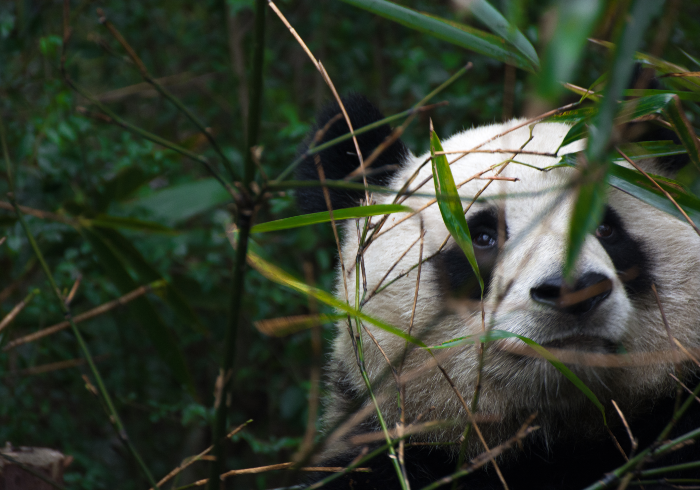
An emblem of wildlife protection (literally) around the world, giant pandas represent a rallying cry for species preservation. With around 1,800 giant pandas left in the wild, the need to protect and nourish one of China’s national treasures is of paramount importance to help safeguard this extraordinary creature.

Originally widespread throughout China and neighboring countries, giant pandas are now found almost exclusively in the bamboo forests of western China. While it may seem ‘easy’ to protect a species that is undeniably adorable, it has taken an incredible amount of time and resources to bring the panda population in China back from the brink of possible extinction. 

Earth Day: Track pandas and monkeys as part of new conservation efforts

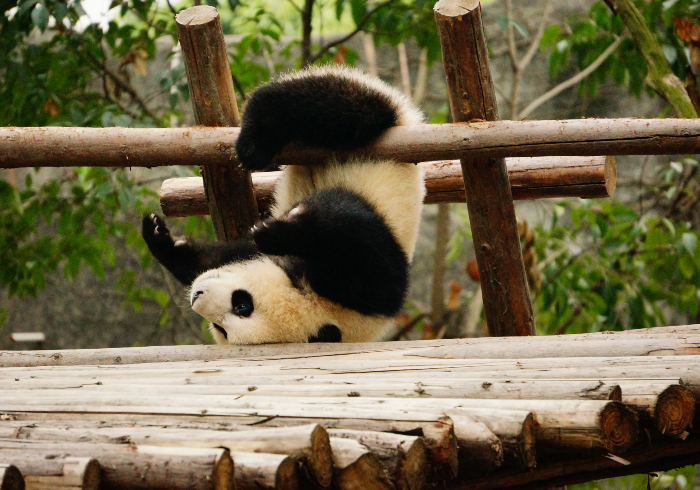
These cute and cuddly cubs need our help to thrive in the wild | Image by Andrew and Annemarie on Flickr

In 2016, the International Union for Conservation of Nature (IUCN) reclassified pandas from ‘endangered’ to ‘vulnerable’. While this classification still falls within the broader definition of ‘threatened’, the removal of pandas from the endangered list was made possible due to the numerous programs that exist within China, including breeding centers, reserves, and research facilities.

Although giant pandas have a very limited breeding period each year, prefer to subsist on just one type of (relatively un-nutritious) food, and have natural habitats which have been destroyed by a variety of human incursions, the intense care that has gone into these black-and-white fluff balls has enabled their population to rebound in recent years. The fight for their protection is far from over, but the success of this iconic Chinese bear shows what is possible for species around the world – even if the reproductive odds are stacked against them.

Snub-Nosed Monkeys

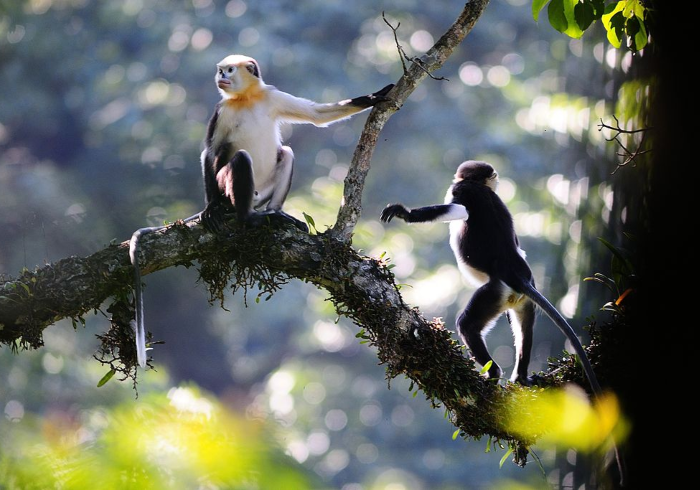
Like pandas, snub-nosed monkeys have a rather limited habitat, made worse by the incursion of human settlements. Found mostly in the snow-capped, forested regions of Sichuan, Gansu, Shaanxi, and Hubei, these nose-bone-less primates also have their favorite foods, meaning any destruction to those particular food sources (like clearing forests or even harvesting dead trees) can drastically reduce the availability of resources for the monkeys.

Earth Day: Track pandas and monkeys as part of new conservation effortsTonkin Snub-Nosed Monkeys | Image by Quyet Le on Flickr
Related Reading: Take a trip to see the monkeys in Sichuan

Reserves have been established throughout central and southwest China, with one area even going so far as to feed the monkeys. Although a controversial move, as Dr. Long Yongcheng – a preeminent primatologist that specializes in the snub-nosed monkey – explained to AsiaTravel’s founder Mei Zhang: “This is a window for people to get to know the snub-nosed monkeys. If no one knows, then no one cares. The purpose of feeding is to educate and influence more people to care about a beautiful species that’s worthy of our care.”


Witness the conservation for yourself

Sustainable travel has been part of our mission since AsiaTravel was born on the sacred slopes of Mount Kailash 19 years ago. We’re proud of the green practices we have in place and continue to seek new and innovative ways to showcase and protect China’s heritage, both natural and manmade. Creating journeys to showcase the immense diversity of wildlife throughout China is what we do best, and we do that by ensuring protection, conservation, and education are prominent aspects of each of our customized adventures.

Earth Day: Track pandas and monkeys as part of new conservation efforts

A wild panda hiding amid her favorite food in Chengdu | Image: Aki Yang

Today, we are pleased to announce the launch of our brand-new journey in the Wolong Nature Reserve. The trip, focusing on the protection and conservation of giant pandas in the wild, allows guests to track giant pandas, volunteer at the Wolong Panda Center as a panda keeper for the day, take a night safari into the forest to see other nocturnal animals, and learn the basics of panda conservation from expert guides. This new expedition into the lush mountains of Wolong allows visitors a rare and intimate view into the process behind protecting pandas. 

For those looking for even more species spotting, AsiaTravel’s tour through Sichuan offers an animal adventure like no other. Hike through the primeval forests of Jiuzhaigou, a reserve that protects no less than 1,600 golden snub-nosed monkeys, and see the incredible primates in the wild. You’ll also be treated to an evening drive to see creatures of the night and, of course, the chance to venture into a 100,000-acre sanctuary that contains one of the most diverse and intact ecosystems in Asia. Contact us now to experience wildlife conservation first hand and learn more about AsiaTravel’s other conservation efforts. 

For more ways to get involved with panda protection, or to donate to conservation efforts in Chengdu, visit the Chengdu Research Base or read more from the World Wildlife Fund. 

For more information on other endangered species in China, including snub-nosed monkeys and ways to get involved, visit China’s Wildlife Conservation Society and WWF China. 

Five Mistakes to Avoid When Traveling in China With Your Family

Originally posted on Caixin Global


The end of the year is nearing, and before that, the great migration of Golden Week. If you are like me, you bought flights months ago for your winter, if not also summer, travel. Now you can no longer delay planning what to do with your kids once you land. Having done this a few times — and many more times for my clients — here is my hard-learned advice for traveling China with your family. 


1. Don’t try to cover all of China in one trip

A typical family itinerary includes Beijing for the Forbidden City and the Great Wall, Xi’an for the Terracotta Army, Chengdu for the pandas, and Shanghai for Disney. Don’t do this if you know you can afford another trip to China later on. Yes, these are all important cities with classic sites, but in the summer all these locations are hot, hot, hot — nearly 40 degrees Celsius (104 degrees Fahrenheit). It’s miserable enough just to walk straight through the Forbidden City, a mere kilometer walk. But with all the side visits inside the palace, that walk can stretch into four hours under the sun. You are guaranteed a whiny child — who will possibly turn into a thirty-pound weight for you to carry — in no time. When visiting all these classic sights day after day, your China trip can turn into drudgery for everyone involved in no time. The best thing to do is to visit one major city like Beijing, and then fly off to Yunnan or Tibet to spend the second half of the trip cooling off, where temperatures are likely to be closer to 25 degrees Celsius during the day.


Five Mistakes to Avoid When Traveling in China With Your Family

Image by Chastagner Thierry via Unsplash


2. Don’t wait until July or August to travel

China’s school year generally finishes in mid-July, a full month after schools in the US. Take advantage of this window and go to China in mid- or late-June, and leave China by mid-July. Most Chinese students only get to travel in the summer as well, so train tickets, plane tickets, and even entrance tickets to sights like the Forbidden City can sell out quickly. If you can, go to China early rather than late. Then plan to send your kids to summer camps later in July and August.


3. Don’t cover too many sights in one day

I have three kids: one 16-year-old boy and two girls aged 13 and 10. The 16-year-old is on a completely different schedule, so I often take my two girls to travel together. Anytime we go anywhere, they ask me to promise one thing beforehand: Not to do too many touristy things. When we were in Rome, we agreed to do one two- to three-hour tour every day, but after that, be free to roam. It was the best decision, as we took the touring part as a daily lesson in history or art, and dedicated the rest of our time to vacationing. Even in China, where we lived for many years, I am ashamed to say that we haven’t visited that many must-see sights.


Five Mistakes to Avoid When Traveling in China With Your Family

Image by Ray Rui via Unsplash


So on this trip, we will visit the Temple of Heaven, and maybe the Forbidden City – but that’s it. In our free time, I will install WeChat on their phones and link their WeChat Pay to my bank card, so that they can walk around the neighborhood and buy ice cream or chips with their phones. I will also install a bike-sharing app so that we can all ride bikes around to shop or to go to the movies.

This is the new China I want them to experience, the one that’s modern and changing fast. While my Apple Pay is often refused in the US, you can walk around China for an entire two weeks with just a phone. WeChat Pay requires the app to be tied to a Chinese bank account, but it’s worth the trouble to open an account at a local bank in Beijing, even if it’s just for 10 days. The formerly cash-only society is now completely cashless, and that’s what I want my kids to be exposed to – not just the touristy sites.


4. Don’t ban social media

If I could ban Instagram and Snapchat from my kids’ phones, I would. But in China, I install a VPN to help them stay on their favorite platforms. A few things won’t work in China: Gmail, Facebook, YouTube, Netflix, Instagram, Twitter, and Snapchat. As for Facebook and Twitter, my kids couldn’t care less – those are old-fashioned anyway. But Instagram and Snapchat are their lifelines to friends at home. The grim prospect of losing touch dampens their enthusiasm for China, so I promise them a VPN to sweeten the deal. A VPN is an app you can download to your phone that helps you access sites that are unavailable in China, and they cost around $15 a month (although if you’re in China for a shorter trip, most apps have a free trial period). It sounds complicated, but once it’s installed, it’s fairly simple to use. I want to encourage my girls to post and share what surprises them or what entertains them in China. This way, they tend to be more observant of their surroundings.


5. Don’t be frugal

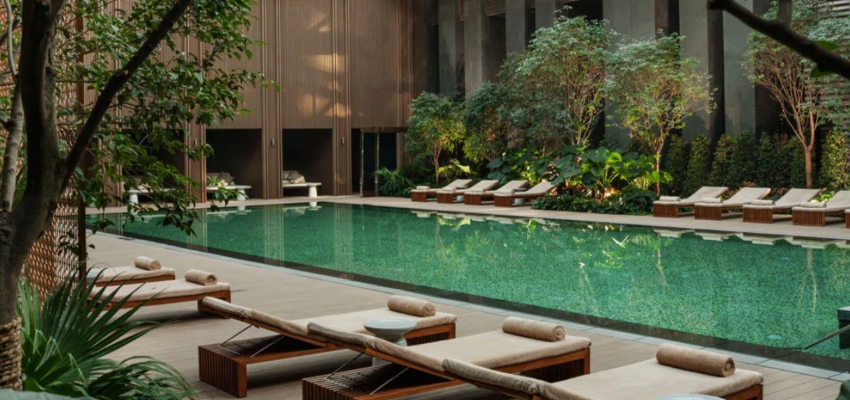
Every time I return to China, I am amazed by what a bargain Chinese luxury hotels are. In New York, $250 will get me a room at the Residence Inn in Jersey City. But in China, I can stay at the Ritz-Carlton in downtown Shanghai for the same price, where there is a nice pool to splash around in to cool off. 


Five Mistakes to Avoid When Traveling in China With Your Family

Image by Rosewood Beijing


There is a Chinese saying that goes: “Be frugal at home, but spend generously on the road.” I abide by this completely. When at home, and you have a nice kitchen and fresh produce from the farmers’ market, there is no need to eat out unless it’s a special occasion. But when you’re on the road, spending a few nights at a luxurious hotel with amazing breakfast buffet, and a gorgeous pool, your kids will love their China trip. It costs a little more, but the experience is worth a lot more. So why not?


Mei Zhang is the founder of AsiaTravel and author of Travels Through Dali With a Leg of Ham, out via Penguin Books. Follow Mei’s travels on Instagram at @wildchinamei.

Introducing Our Newest Journey Across Yunnan

While the fabled city of Shangri-La is said to be hidden somewhere deep in the mountains of Tibet, the real-life city actually lies in the southwestern province of Yunnan. Our newest journey was designed to allow you to truly drink in the experiences of this region – never hustling you along, but rather letting the trip leisurely unfold so the area’s atmosphere and nuances can be truly be appreciated. After all, there are some things that can’t be told – only experienced at a slower pace. 

To introduce our new expedition across Yunnan, we’re sharing some of the places you’ll go and the people you’ll meet along the way. 

First Stop: Lijiang

Located in Yunnan, meaning “South of the Clouds”, Lijiang is found just south of the Tibetan Plateau. This is one of China’s most diverse regions featuring a kaleidoscope of cultures, ecologies, and terrains.

If you’re only able to spend a single night here, you’re selling yourself short. To truly discover this ancient town, we suggest you enjoy a few different experiences outside of wandering through Lijiang’s old town. Lijiang is an excellent jumping off point for the serene landscapes and friendly villages just outside of town. 

After exploring the Old Town, load up and journey just outside Wenhai Valley to spend an afternoon with meeting a Shaman of a local Yi village. On the way, we’ll stretch our legs with a stroll through the valley, accompanied only by open fields and grazing yak.  While China has caught up with many parts of the developed world in their city centers, there are still pockets of the old culture scattered around and this is certainly one of them. Here, you’ll learn about the local people’s animist faith as the shaman-cum-chief shares his views on religion, village life, and the modern world.

Introducing Our Newest Journey Across Yunnan

Wenhai Valley | Image by AsiaTravel

There’s also the option of Baisha Old Town, where you’ll be shown how to make a bronze tea set and have the opportunity to share a meal with a local family. Other travelers in this area have said that it was the people that really stood out to them, so we’ve taken special care to make interacting with the residents, whether a Shaman or a family, a key part of the experience.

Next Stop: Tacheng

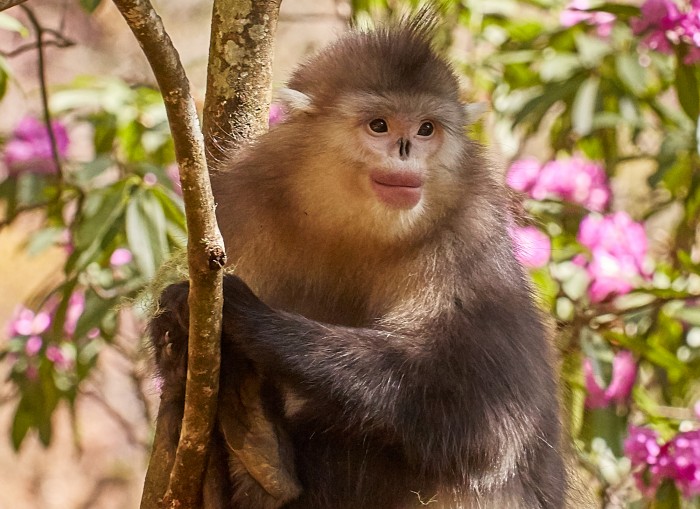
Only four hours away from Shangri-La, Tacheng is home to one of the strangest, most adorable creatures you’re likely to find on a trip: the Snub-Nosed Monkey. Unfortunately, they have become endangered as a result of their exceptionally soft fur and people believing that their bones have medicinal properties. Luckily, a sanctuary has been established to help protect these lovable animals. Delight in their antics while wandering through the conservatory and basking in its natural beauty.

Beyond wildlife, you will also have the opportunity to visit a family and learn about their lives as they share stories over fresh soy milk and tofu. We find that some of the most interesting experiences can be simply seeing and hearing how people from another culture live while figuratively breaking bread with them.

Introducing Our Newest Journey Across Yunnan

 Snub-Nosed Monkey in Yunnan | Image by AsiaTravel Client Karen Ahn

If you’re up for it, there is also a famous cave near Elephant Trunk Mountain which is said to have been home to the Buddha on his path to enlightenment. Join the pilgrimage to this holy site and visit a temple that was built there by over one thousand followers.

Grand Finale: Shangri-La

While Shangri-La is a mythical city, it also became a literal city when Zhongdian officially changed its name to match that from James Hilton’s famous novel, Lost Horizon.  Located about 3,200m above sea level, the city is surrounded by snow-capped mountains, primeval forests, and several bodies of water.

On your adventures through Shangri-La, visit the Songzanlin Monastery, known to resemble the former palace of the Dalai Lama in Lhasa. Home to over 700 monks, it is the biggest Tibetan monastery in Yunnan. While there, step away from your typical way of life as you watch monks debate theology and philosophy.

Introducing Our Newest Journey Across Yunnan

The Songzanlin Monastery in Shangri-La | Image by AsiaTravel Client Steve Frazier

If nature is more your thing, soak up the sounds of the wild on a hike around Pudacuo National Park and explore the park’s numerous cobalt lakes, lushly forested mountains, endless grasslands, and flowing rivers. Though the region may be small – it only covers 0.7% of China’s landmass – it is one of the most biodiverse regions on the planet and contains over 20% of the country’s plant species and almost 100 endangered animal species. Truly a nature lover’s dream!

If you’re eager to slow down and delve into this diverse corner of the world, we invite you to look at our new Dreaming of Shangri-La: Yunnan’s Tibetan Valleys journey is for you. From mingling with shamans and monks to discovering ancient villages and verdant natural spaces, each experience in this veritable paradise will surely spark a lust for deeper connections on your future adventures.

What is the 798 Art District in Beijing?

Featured Image by drnan tu on Flickr 

When people think of Beijing, many things likely come to mind: the Great Wall, Forbidden City, Temple of Heaven. But how many people think of the city’s art scene? In fact, there is actually a thriving artist community mere minutes from the heart of the country’s government which strives to push the limits of society and normalcy.

The soul of this art scene is found in what’s known as the 798 District or, alternatively, the Dashanzi Art District (DAD for short). Originally constructed as part of 156 “joint factory” projects aimed at building then-modern electronic joint components, including the area’s namesake 798 factory, the project was greenlit in 1952 with the help of East Germany.

What is the 798 Art District in Beijing?Picture by Anthony G. Reyes on Flickr

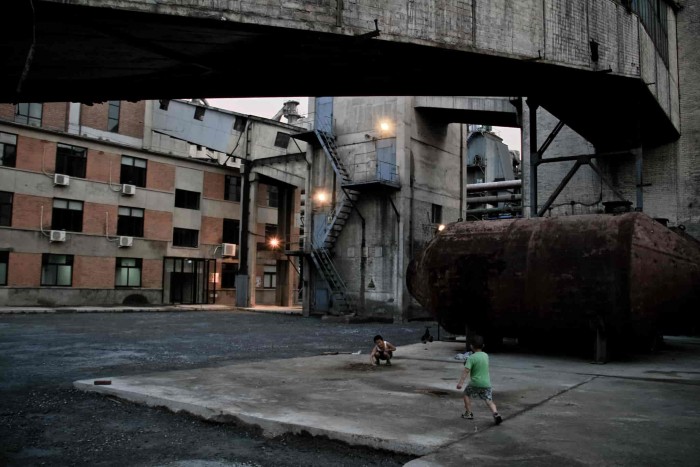
From your first step into the district, Germany’s influence is apparent. Specifically, the Germans were tasked with the duty of drawing up building specifications, so much of the area’s architecture is reminiscent of a European style. Upon its completion in 1957, the factory quickly became known as one of the best places to work in all of China. Employing between ten and twenty thousand individuals, workers received a plethora of benefits including extracurricular activities, cheap living (only about 1/30th of their income), an orchestra, literary clubs, and publications. This was true luxury. Unfortunately, nothing gold can stay. Economic reforms made by Deng Xiaoping in the 1980s coupled with a lack of governmental support led to 798’s gradual decline and the factory was eventually made useless.

What is the 798 Art District in Beijing?

Industrial Architecture in 798 | Picture by La Priz on Flickr

As luck would have it, during the shuttering, the local artists’ community happened to be looking for a home at the same time. Since their avant-garde style was typically frowned upon by the government, the artists had been looking for locations on the fringes of society, and 798 fit the bill. It was eventually adopted by the art community in the mid-to-late 1990s and early 2000s. An almost overnight success, the inaugural exhibition in 2002 pulled in over 1,000 people, signaling the beginning of the area’s renaissance.

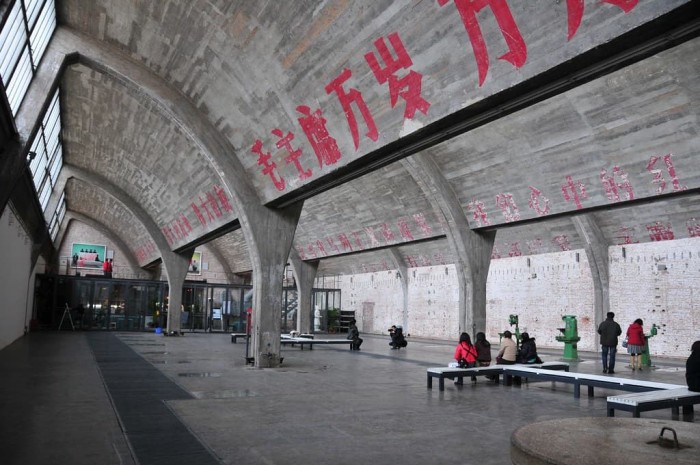
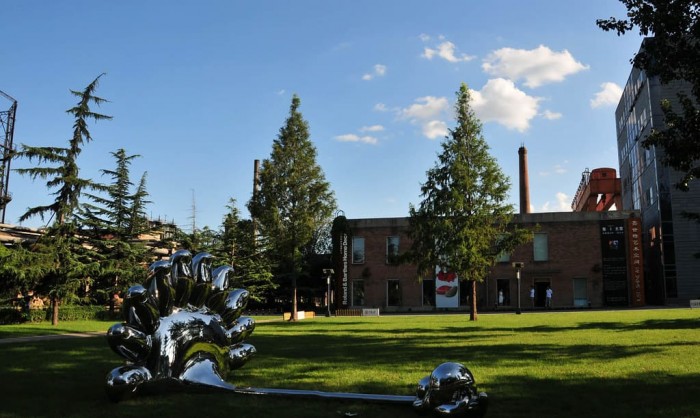
Over time, word of mouth attracted artists and designers from around the country to come and work in the buildings. With an industrial feel, tremendous chimneys, and practical, high-arched ceilings, it was the perfect home for all manner of creatives. Adding to the historical feel of the district, the Maoist slogans of bygone eras, which were once painted on the ceilings in large red letters to motivate workers, remain and now serve as what some have described as “Mao kitsch.”

What is the 798 Art District in Beijing?Maoist Slogans in 798 | Picture by: drnan tu on Flickr
As with most successful art communities, the popularity of the district led to significant gentrification. The formerly low-rent area experienced not only an influx of artists but also people with money wanting to take part in the revelry. With this money came galleries, lofts, publishing firms, high-end tailor shops, cafes, and many more unexpected additions. By 2003, thirty artists and organizations had already set up studios or offices while a waiting list of 200 more wished to move in.

Despite its success, every now and again the area came under threat due to its strategic location between the city center and Beijing airport. As property values continued to increase, pressure came to demolish the area and convert the land into something more profitable, most recently in 2007. Luckily for art lovers everywhere, it was eventually decided that the area would remain a special art zone. And in 2009, the area was refurbished and renovated making it as good as new.

Today, visitors to the district are able to enjoy large-scale sculptures in the area’s open spaces, take in regular fashion shows, and experience a variety of other cultural events. What was once a small, abandoned factory area has now become one of the most visited areas in Beijing – coming in 3rd after the Forbidden City and Great Wall.

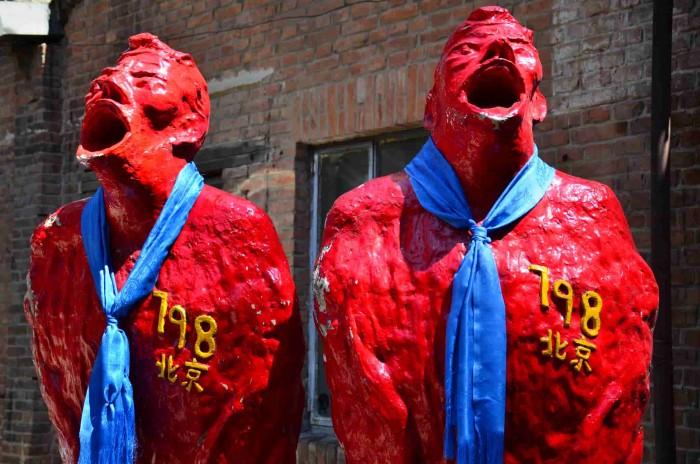
What is the 798 Art District in Beijing?Sculptures and Galleries in 798 | Picture by: drnan tu on Flickr

So, if you find yourself in Beijing’s 798 Art District, don’t be surprised if you see everything from giant murals of King Kong to Dali-esque sculptures or other exhibits that defy description. And if you enjoy artistic expression in all its forms, 798 should definitely be on your itinerary.