Enjoy the Suite Comforts of Home at the Hilton Beijing

With the large range of accommodation options available to you in Beijing, sometimes it’s the little things that help you decide – like the finishing touches of the Imperial and Chairman Suites at the Hilton Beijing in Chaoyang district. This hotel lives up to the Hilton name, and then some, and is located in the city’s embassy district, not far from Beijing’s financial centers and the bustling nightlife and dining options of Sanlitun.


Enjoy the Suite Comforts of Home at the Hilton Beijing

The Hilton Beijing’s Imperial Suite

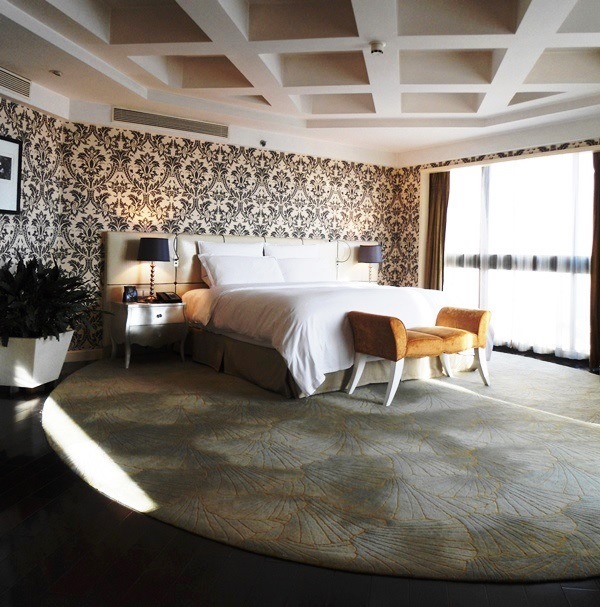
The Hilton Beijing offers nine distinct suites–but our favorites are the Chairman Suite and spacious Imperial Suite that even boasts a zen-life relaxation room! These suites each have a large kitchen with separate access for the private chef and staff, available around the clock to prepare everything from an authentic Chinese dinner after a long day, to an opulent formal dinner party for eight people in the Chairman Suite and 15 in the Imperial.

Chairman Suite:

Enjoy the Suite Comforts of Home at the Hilton Beijing

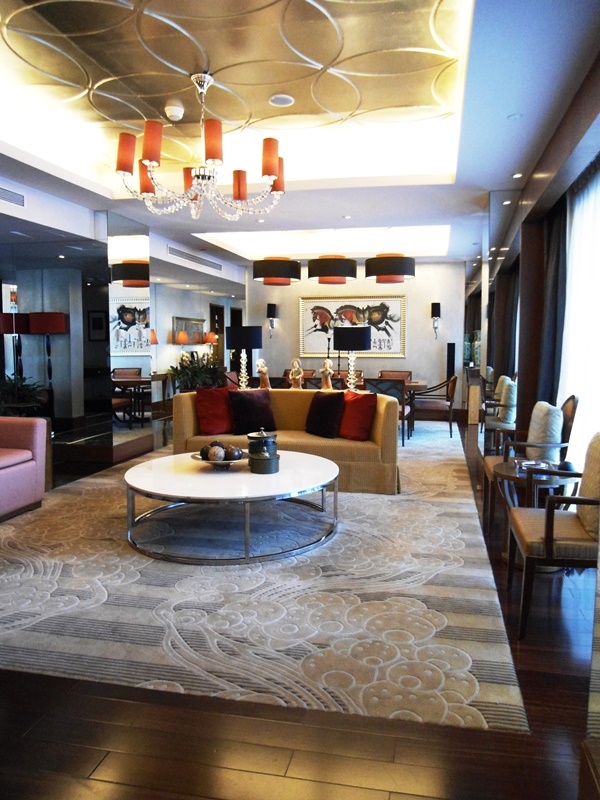
The living area of the Chairman Suite

Enjoy the Suite Comforts of Home at the Hilton Beijing

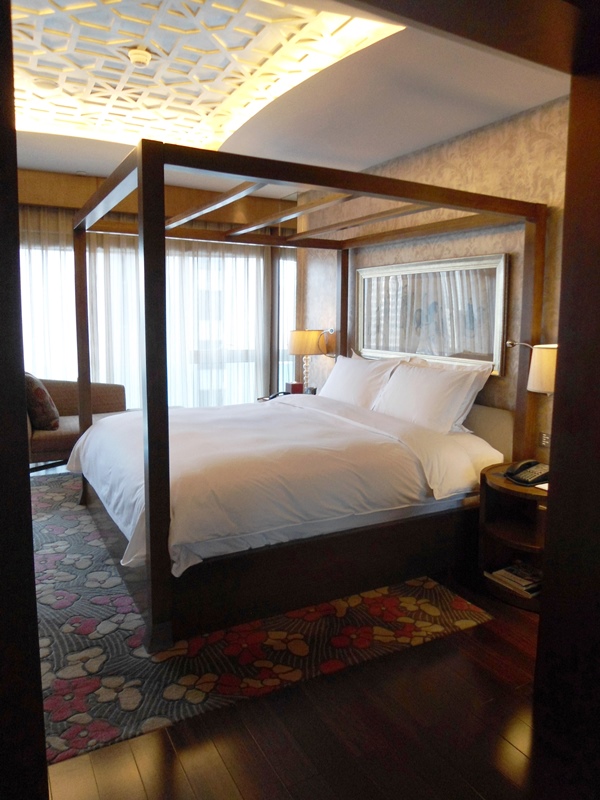
Bedroom of the Chairman Suite


Relax in style in this 165m² suite located on the ninth floor of the executive tower, offering executive lounge access and complimentary breakfast. The contemporary design and state-of-the-art amenities convey a sense of blissful comfort, and to unwind you can enjoy a movie on the plasma TV with a heart-pumping Bang & Olufsen sound system that completes the ultimate in-home theater experience.


Imperial Suite:

Enjoy the Suite Comforts of Home at the Hilton Beijing

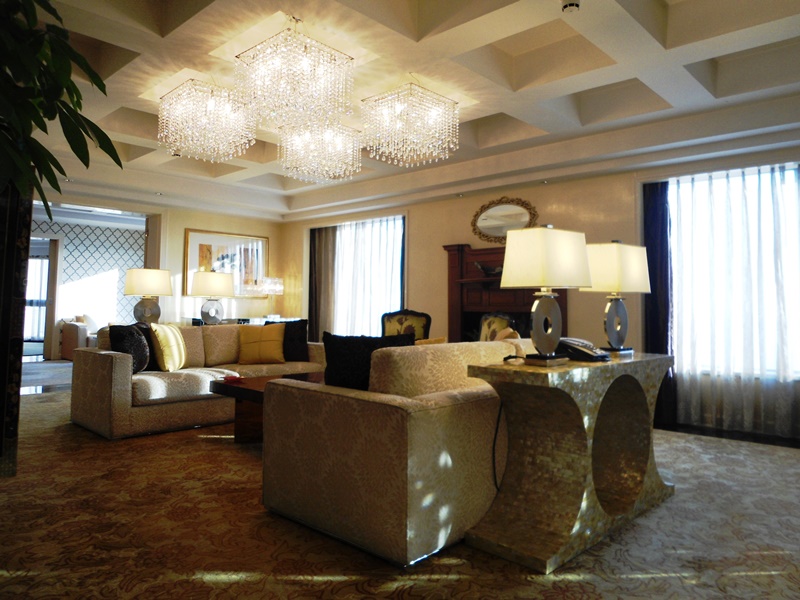
Living space in the Imperial Suite


This suite is called Imperial for a reason. At 200m² and located on the top floor of the main tower, this superbly crafted suite offers great views of Beijing, while the interior combines modern technology with a touch of local Chinese flair. The spacious dining and living area is perfect for hosting a private reception, while the separated bedroom and office provides a personal space to recharge from a busy day.

In addition to these suites, the Hilton Beijing offers three dining options, a lounge, and a funky bar serving signature cocktails and delicious Champagnes. There is a large health club, spa, and even a Tony & Guy salon located in the main lobby. For meetings, it is an ideal location with 12 function rooms, including the city’s first 360 degree round infinity ballroom.

We recommend the five-star Hilton Beijing for both business and leisure travelers. It is located a quick 30 minute car ride from the airport and offers easy access to the Great Wall, the Forbidden City, major shopping and entertainment and more!

_____

Discover Beijing with us on a private Beijing tour.

Looking for more hotel recommendations? Don’t hesitate to send us an email with your questions at info@wildchina.com!


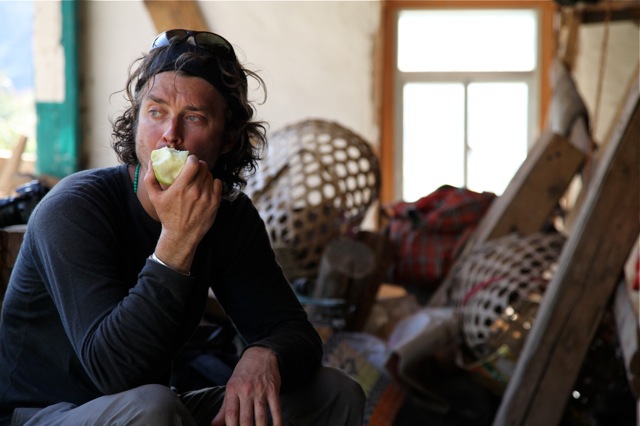
It’s all about the tea…AsiaTravel Expert Jeff Fuchs

Musings from AsiaTravel Explorer and Expert Jeff Fuchs on the importance of the Ancient Tea & Horse Caravan Road, and why we should all bump it up on our travel list…

It’s all about the tea…AsiaTravel Expert Jeff Fuchs

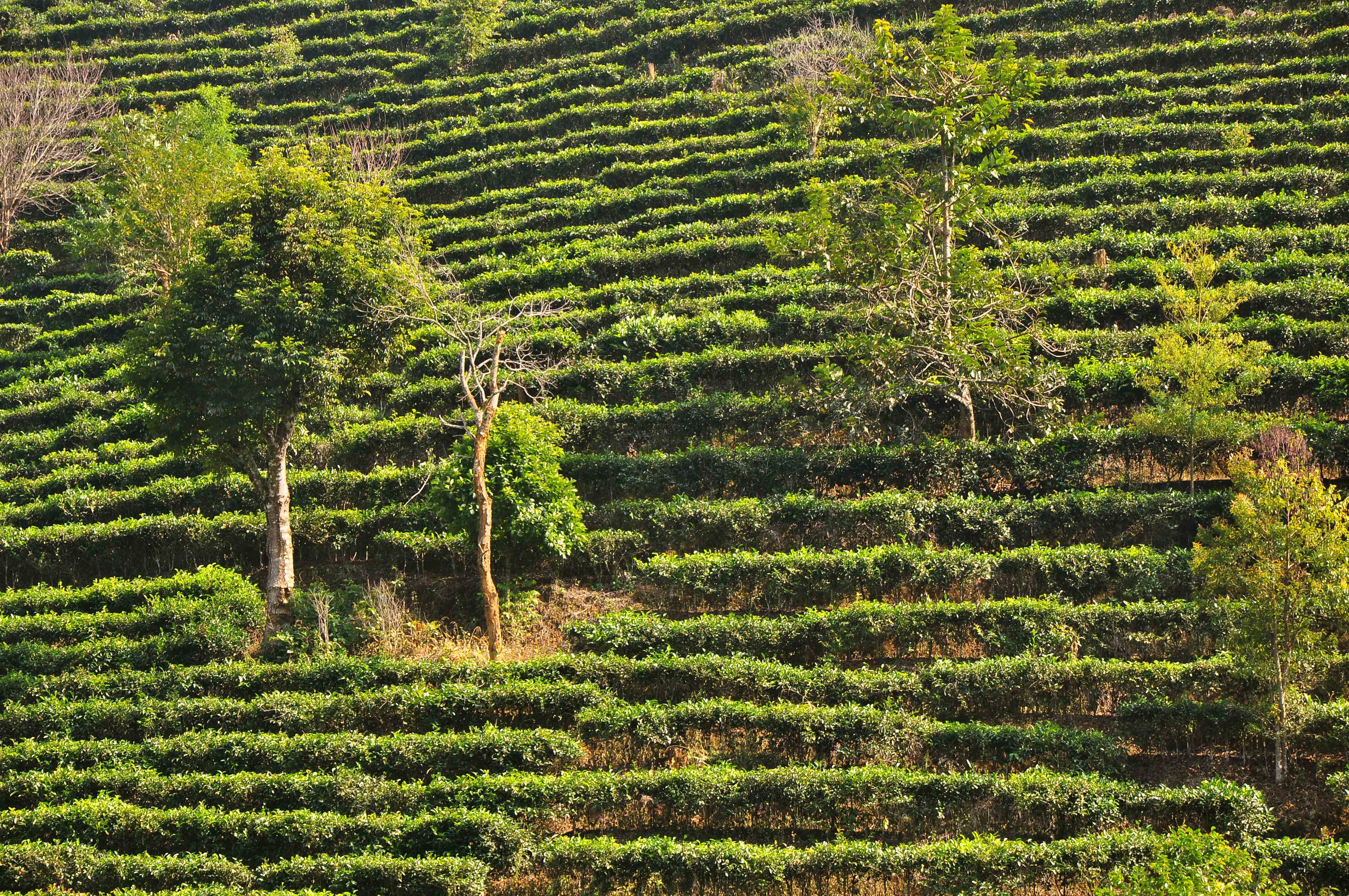
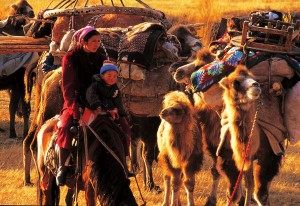
The Ancient Tea & Horse Caravan Road has long held the attention of explorers and vagabonds alike for the fact that it represents one of the globe’s great and daunting adventures. A cultural odyssey as much as a physically demanding pathway that brought tea, salt, horses, and all manner of goods from the fringes of the old dynastical empires into and onto the Tibetan Plateau. Pre-dating the Silk Road, the Tea & Horse Caravan Road and its meandering pathways through indigenous zones, ancient tea forests, and stunning geographies offer up a deeper look into the very historical fabric of southwest China, Tibet, and beyond.

Across snow passes, over some of the planet’s great waterways, the route takes in three- dozen cultures, two dozen languages…all with their own histories with tea and the great trade route.

Tea figured greatly upon this ‘highway through the sky’ as it was – and to some extent remains – one of the great panaceas and commodities of time. Tea was more a fuel and medicine to the ancient tribes and its safe transport was one of the great vitals of the trade world.

It’s all about the tea…AsiaTravel Expert Jeff Fuchs

This AsiaTravel journey along the Ancient Tea & Horse Caravan Road seeks to dig into and take the journey back to its roots. Authentic touches of exploration off the beaten path, serious tea-highs from some of the planet’s purest ancient tree teas, and home stays that are entirely integral with delving deeper into a culture and land are on offer. Walking through some of the oldest tea forests on the planet, and then sampling them in a cup bind the leaf to its drinker and by extension to any that partake in a cup.

It’s all about the tea…AsiaTravel Expert Jeff Fuchs

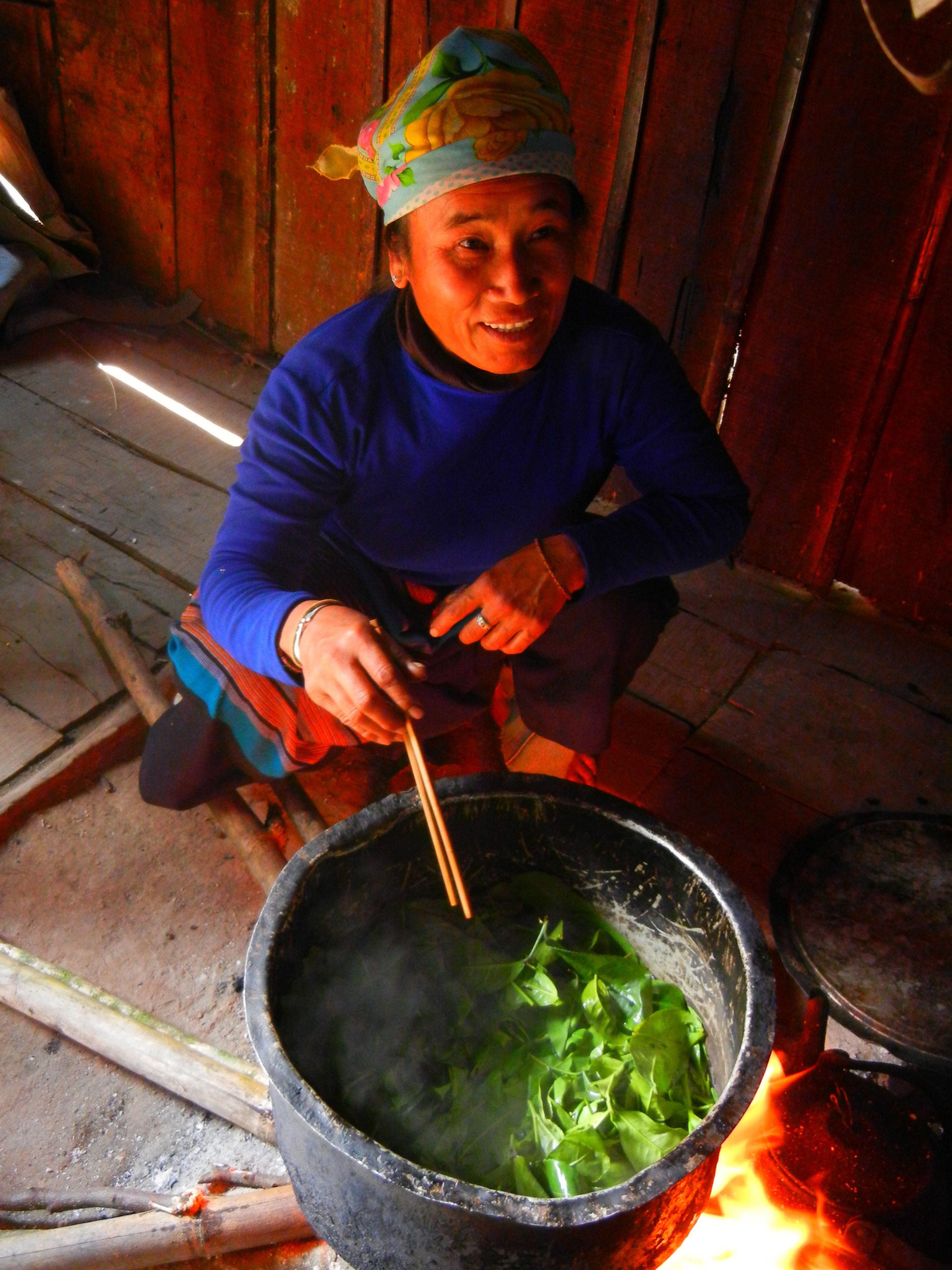
We’ve enhanced sections to take you deeper still into Yunnan’s diversity and created more of a full-on adventure. Daily tea samplings, from fresh bitter harvests, to locally prepared specialties (including the Tibetan’s famed and pungent butter tea) from local regions.

I’m delighted that this journey has continued and been intensified to add a more authentic feel that reflects life and travel upon the Tea & Horse Caravan Road. In traveling upon this most ancient of trade routes, it is important to retain some of the original feel of travel, life, and interaction for our guests.

It is vital that such a journey keep its vitality and spontaneity. It is only in this kind of travel and attention to detail that a route’s history, legend, and truths can remain intact.

All photos by Jeff Fuchs

_____

If Jeff’s descriptions of tea got your heart beating a little faster, check out the itinerary & October dates for the 2014 trip here. If you want to read more about Jeff and his travels, check out his blog here. And finally, if you have any questions, shoot us an email here: info@wildchina.com


China Travel: Discover Mount Emei in Sichuan

Check out this on the road experience from AsiaTravel’s travel product design manager, Colleen O’Connor, and discover an unknown trail situated deep in Emei’s sacred mountain range, just waiting to be explored…by you!

We traveled to Sichuan with one main goal in mind: to find more exciting, adventurous routes accessible for you to Experience China Differently! For today, our destination included a little-known hiking trail along Sichuan’s Emei Mountain, one of China’s four sacred Buddhist Mountains. The name “Emei” literally translates to “delicate eyebrows,” deriving from two of the mountain’s peaks—Ten Thousand Buddha Summit and Golden Summit—resembling the curvature of one’s brow. On this hike, we planned to follow along Emei’s brow into mountainous terrain, bamboo groves, and an isolated temple.

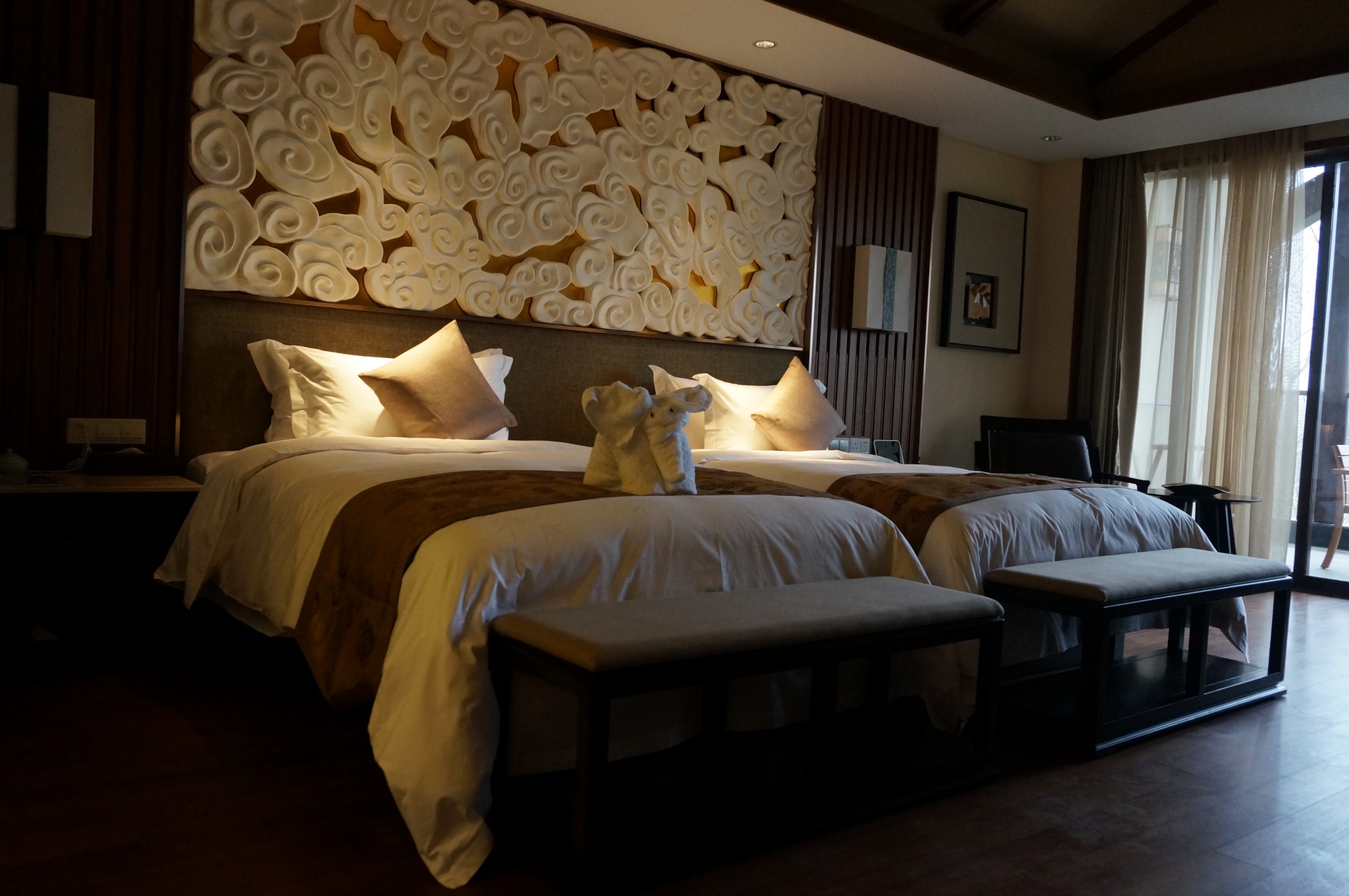
The night before, Rebecca, AsiaTravel’s Operations Manager, and I spent the night at the luxurious Anantara Emei Resort & Spa, a recently opened 5-star hotel nestled along the foothills of the Tibetan Plateau. After packing our daypacks, we left the comforts of our spacious double room and scooted along by private cart, passing the resort’s outdoor hot spring and colorful flower gardens to the main lobby.
China Travel: Discover Mount Emei in Sichuan

Double Room at Emei Resort & Spa

We met our friendly Sichuan guides at the dining hall for a continental breakfast, boasting a wide array of Western and Chinese breakfast foods. After filling our stomachs, we hopped into an SUV to begin our 2-hour ride through remote villages and twisting mountain roads into the heart of Emei’s mountain range. Our first plan of action was to meet our local guide, who would lead the hike.

As the morning mist hovered over the country road, our driver drove slowly to avoid residents walking along the road’s edge. Through the window, I saw men carrying plows with dirt still hanging of the metal grips from yesterday’s farm work. The women carried empty woven baskets, preparing for a day of vegetable picking…a glimpse of an ordinary morning in rural Sichuan.

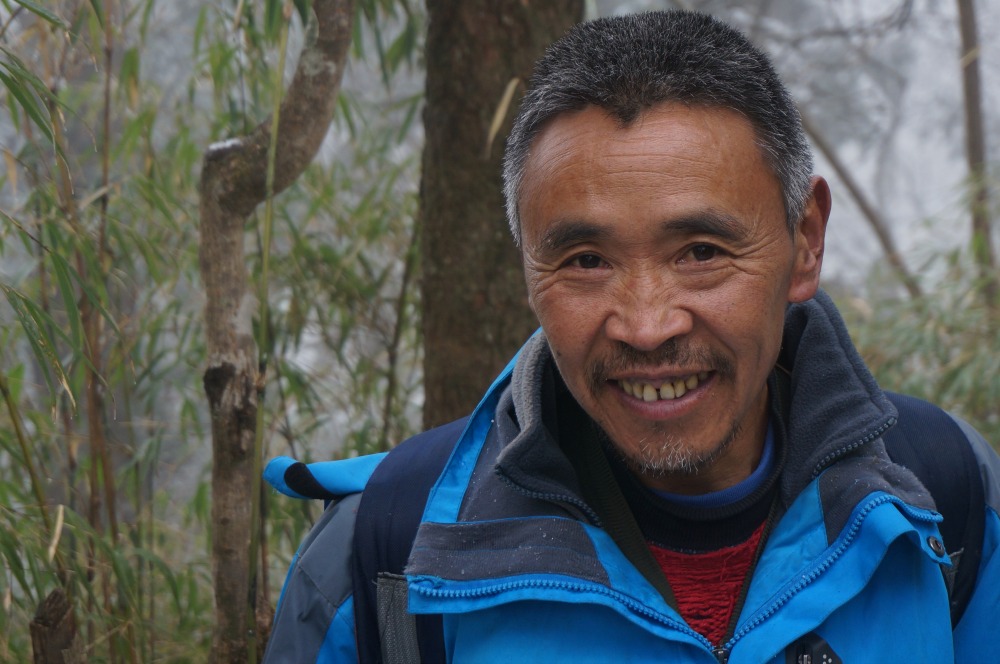
After two hours, we ascended one last bend along a cliff face before meeting our guide at a local home. His own home is situated far above in the mountains and inaccessible by road. So, he met us in the middle. He looked into the SUV, with a sweet-smelling pipe in hand, and grinned, “You ge laowai day” “There’s a foreigner!”
China Travel: Discover Mount Emei in Sichuan

Mr. Yue, our friendly Emei Mountain Guide

He put his pipe away and jumped in, while guiding the driver through dirt roads along towering cliffs and tiny hillside villages to our hike’s starting point, a slow moving river. The car slid to a muddy stop and we stepped out into a valley with a river trailing between the surrounding alpine mountains. After a night of light rainfall, the refreshing scent of wet pine was all around.

We said goodbye to our driver and followed our guide as he hopped as light as a feather over the stones placed in the river, beginning our trek into Emei Mountain. The hike started with a gradual incline to a wooden hut, surrounded by tilled land. Our guide explained that this little farm cultivated a type of root used for traditional Chinese medicine. As we took off our warm layers, the traditional medicine farmer came out of the hut to meet us, striking up a conversation with our guide, who was his close friend and neighbor.

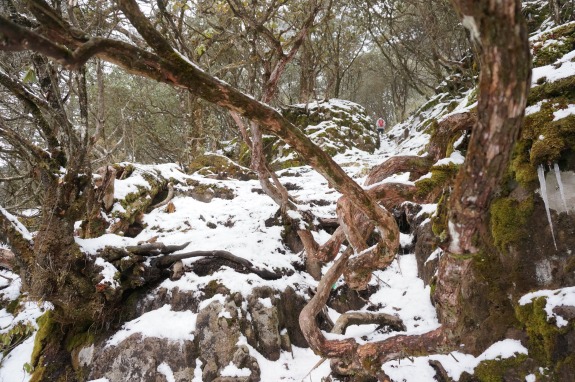
We said our farewells and continued our way into a sea of bamboo groves. Being the end of March, late winter’s yellowish green tint took up most of the scenery’s color, except for the refreshing and vibrant green bamboo leaves that encircled the trail. Towering pines, shedding birch trees, and tangles of other tree types added to the mountainous flora.
China Travel: Discover Mount Emei in Sichuan

Hiking through a tangle of trees and fresh moss (March scenery, we recommend you hike this trail in either spring or fall)

While exploring this unbeaten trail, I felt a sense of adventure and excitement for what would come next. Possibly another a unique bird, animal prints, or a mountainside vista? Thinking about the possibilities led to pondering over the other, more developed side of the mountain. How would it compare? I had heard it is equally beautiful, but also touristy with thousands of tourists visiting each day, hiking up a plethora of stone steps. The back trail, on the other hand, was the opposite, with hillside villages, dirt paths, and an intimate feeling of you with nature.
China Travel: Discover Mount Emei in Sichuan

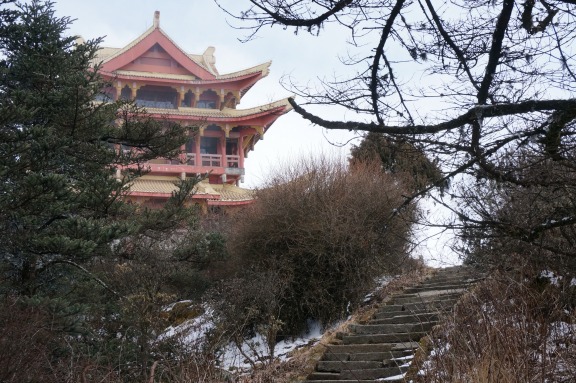
Beyond the steps emerged the Ten Thousand Buddha Temple

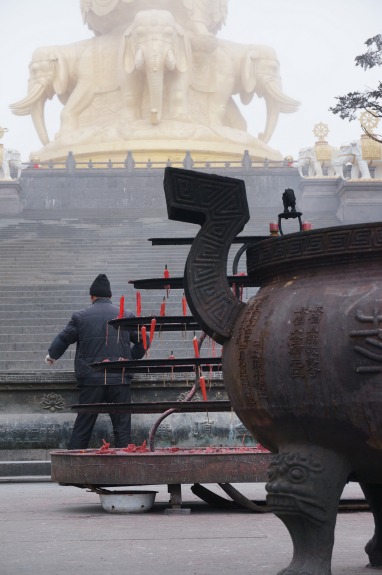
After six hours of hiking, we finally reached the Ten Thousand Buddha summit, the highest point of Emei at 3,099 meters (10,167 feet). On the peak resides an isolated temple surrounded by clouds and sky, situated in a quiet, hard to access portion of the national park. It was the perfect place to rest and eat lunch. I gazed into the distance, peaking through pockets of mist and seeing the bluest of blue skies hiding beneath. I felt as if I was high in the air, one with the sky. The nearby Golden Pagoda, a larger than life golden statue of Samantabhadra, shimmered in the distance, waiting for us to visit.

After lunch, we set off to finish the rest of the trek, which was primarily flat as we followed an old train line that once led tourists to the temple. The line is now closed after an earthquake years back. We finally made it to the Golden Pagoda, ending our fun-filled day of adventure.
China Travel: Discover Mount Emei in Sichuan

The hike ended at the shimmering Golden Pagoda

This trek is for hiking-lovers, or for those who want to bring out the adventurer within, and witness a very real side of Sichuan’s countryside and will be at the tip of your fingertips by September 2014 after roads are fully accessible.

Experience Emei Mountain Differently with AsiaTravel!

[Photos taken by Colleen O’Connor]

_____

What did you think? If Colleen’s descriptions of hiking Emei Mountain got you excited, check out other fun, new activities available in Sichuan in the Into the Heart of China’s Panda Country itinerary here. If you have any questions, shoot us an email at info@wildchina.com


Sixth Year in a Row! Travel+Leisure Names Mei Zhang Top Travel Agent for China

When booking a trip, the travel company you choose can make the difference between an ordinary or extraordinary travel experience. To guide travelers in the right direction, the editors of Travel + Leisure assess hundreds of travel agents around the world and select the best to make up their annual list of “A-list Top Travel Specialists”. AsiaTravel’s founder, Mei Zhang, is featured on their 2014 list for her standard-setting services in China travel. The elite list features 133 of the world’s top advisors, arranged by location of expertise.

“There’s a reason we use the term advisor to describe the members of our 2014 A-List,” said Travel + Leisure News Editor and “Trip Doctor” columnist Amy Farley. “These destination experts offer much more than booking services. They offer insider insights, unparalleled access, the ability to create a seamless itinerary, and value.”

Sixth Year in a Row! Travel+Leisure Names Mei Zhang Top Travel Agent for China Sixth Year in a Row! Travel+Leisure Names Mei Zhang Top Travel Agent for China

Mei can now add this accolade to her list of awards and recognitions, which include:Travel + Leisure’s   2009-2012 A-Lists of Top Travel Agents, Condé Nast Traveler Top Travel Specialist in 2010 and 2011, and The Daily Beast’s 2012 list of Women in the World. Riding on Mei’s 14 years of experience in the luxury travel industry, AsiaTravel provides both insider access to China and personalized service. AsiaTravel’s specialties are China, Tibet and custom luxury itineraries.

According to Mei, she “witnessed the push and pull between economic development and conservation of both nature and culture in Yunnan.” This push and pull inspired her to create AsiaTravel to provide people with a sophisticated version of Chinese culture and nature through first-hand travel.

AsiaTravel has also received acknowledgments for our luxury travel services, which set the bar for tailored, authentic travel experiences. In 2009 National Geographic selected AsiaTravel as one of Adventure Magazine’s Best Adventure Travel Companies on Earth, Traveler Magazine’s 50 Tours of a Lifetime, and Harvard Business Reviewed named AsiaTravel “a leader in its field.”

Travel + Leisure’s thirteenth annual A-list will be featured in the September issue of Travel + Leisure and on travelandleisure.com. Congratulations Mei!

 —

Be inspired by our newest luxury tours.

Yunnan’s Ancient Tea & Horse Caravan Road

Where in China can you experience a mix of history, culture, and nature?      
You can explore some of China’s most diverse cultures, ecology, and landscapes in Yunnan Province, just south of the Tibetan Plateau. Yunnan features green low-lying valleys, white-capped mountains, and a vast assortment of ethnic communities. This diverse terrain is home to the beginning of The Ancient Tea and Horse Caravan Road, or “The Silk Road of Southern China”.

The 3,100-mile route of the Ancient Tea and Horse Caravan Road started in Southern China, passed through Tibet, Burma, Nepal, and ended in India. China’s desire to import horses from Tibet and Tibet’s desire to import tea from China was the main motivation of the trade along the Tea and Horse Caravan Road. Traveling this route was difficult due to its diverse terrain, and one minor misstep could be fatal for both trader and animals.

Yunnan’s Ancient Tea & Horse Caravan Road

Today, the Tea and Horse Caravan Road attracts people from all over the world with its assorted teas, mixed cultures, stunning landscapes, and ancient centers of trade. By traveling along this route, travelers can experience both ancient and modern China by learning about the culture of local ethnic communities, hiking in the ancient tea tree forests, and exploring the scenic mountain, rivers and valleys.

How can you get there?
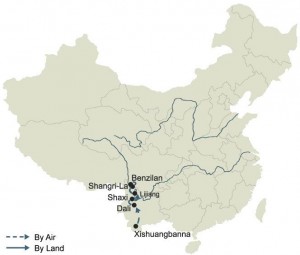
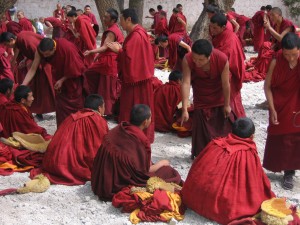
AsiaTravel can take you on a 13 day journey along the route of the Ancient Tea and Horse Caravan Road in Yunnan. The first stop, Xishuangbanna, is the original place of pu’erh tea production. In Xishuangbanna, you can buy premium pu’erh tea at Menghai market, meet the descendants of the first tea cultivators, and stay in an Aini Village homestay. We pass through Dali as we follow the route through sloping valleys, golden barley and canola fields to Shaxi. After Shaxi, we see Lijiang’s Old Town and the legendary Yangtze River on our way to Shangri-La. In Shangri-La, we explore Songzanlin Monastery, the largest Tibetan lamasery in Yunnan, the Napahai Lake, and visit a nearby artisan village.

Yunnan’s Ancient Tea & Horse Caravan Road

Are you a spontaneous planner?
Join us this October in Yunnan! This is our last small group trip of the year, led by Jeff Fuchs, the first Westerner to have ever traveled the whole road. Our journey to China’s  Ancient Tea and Horse Caravan Road begins October 15 and ends October 24. If you’re interested in retracing the steps of those who traveled this ancient road, contact info@wildchina.com.

Like to make plans in advance?
If you’re interested in tea or Yunnan cuisine, keep your eyes open for our 2015 small group departures which include a tea-based journey of China and Taiwan with Jeff Fuchs and a special gastronomic tour of Yunnan with expert Fuchsia Dunlop.


Stand In The Majestic Roof of the World:Tibet

Why Tibet?
People have many kinds of travel styles and adventure levels: some people like to get away and relax on a beach, some seek thrills like bungee jumping or scuba diving, while others enjoy visiting historic sites and learning new information. Here at AsiaTravel, we like to keep our adventure level high and our travel style a mix of exploration and luxury. One place that brings out our adventurous side is Tibet.
Tibet is not the first place that pops in your head when planning a trip to China. It is very different from the China you see on TV or in the media. The mountain ranges that surround it make it one of the most secluded regions on earth, giving this region its own cuisine, faith, and landscape. Along with rich history, Tibet has some of China’s most striking natural scenery, including vast grasslands, blue lakes and sky-high mountains as well a great amount of sacred sites, including monasteries, nunneries, and palaces. If you’re interested in viewing sacred sites or beautiful nature, Tibet should be on your list of travel destinations.

“Rich or poor, all come full of devotion and with no inner misgivings to lay their offerings before the gods and to pray for their blessing. Is there any people so uniformly attached to their religion and so obedient to it in their daily life? I have always envied the Tibetans their simple faith, for all my life I have been a seeker.”
― Heinrich Harrer, Seven Years in Tibet

Religion-Tsedang:
Buddhism developed in Tibet and the surrounding Himalayan region in the beginning of the 7th century. Tibet’s long history of Buddhism has inspired the building of many religious sites. In Tibet’s largest city, Tsedang, you can find Buddhist monasteries, monuments, tombs and royal burial sites. Samye Monastery, the oldest standing Tibetan Buddhist monastery, is a Tibet highlight. Samye is both a monastery and a village and used to be a school for Tibetan Buddhism. Some Tibetan Buddhists travel on foot for weeks to reach this popular pilgrimage destination.

Note: Out of respect, always walk around Tibetan Buddhist religious sites or monastery in a clockwise direction and don’t climb onto statues or other sacred objects

Stand In The Majestic Roof of the World:Tibet

“Tibet has not yet been infested by the worst disease of modern life, the everlasting rush. No one overworks here. Officials have an easy life. They turn up at the office late in the morning and leave for their homes early in the afternoon.” ― Heinrich Harrer, Seven Years in Tibet

Culture-Lhasa:
Tibetans live a easygoing life. They like music, games, and dancing. In Tibet you can participate in a nightly dance with locals, sample yak cheese, yoghurt, or butter, while sipping on the national drink, salted butter tea.
Tibet’s richest cultural marvels are found in Tibet’s capital, Lhasa. Buddhism is not just a religious belief, for many it is a way of life. Lhasa has been the center of Tibet’s political, religious, economic and cultural activities since the Fifth Dalai Lama moved the capital here in 1642.
This city is home to Potala Palace. This palace has served as both the winter residence of each Dalai Lama and the religious and political center of Tibet for 300 years. In 1645, it was built without either nails or the use of wheeled equipment. Today, it provides dormitories for the staff of the Dalai Lama schools, chapels, print house and tombs.

 Stand In The Majestic Roof of the World:Tibet

“The country through which we had been travelling for days has an original beauty. Wide plains were diversified by stretches of hilly country with low passes.We often had to wade through swift running ice-cold brooks. It has long since we had seen a glacier, but as we were approaching the tasam at Barka, a chain of glaciers gleaming in the sunshine came into view. The landscape was dominated by the 25,000-foot peak of Gurla Mandhata; less striking, but far more famous, was the sacred Mount Kailash, 3,000 feet lower, which stands in majestic isolation apart from the Himalayan range.”
― Heinrich Harrer, Seven Years in Tibet

Landscape-Gyantse:
Tibetans view the environment as a place where humans and nature coexist and overconsumption of resources is looked down upon. Because of these Buddhist beliefs, the nature in Tibet is pure and well preserved. Gyantse is a great city to visit if you enjoy nature. Located 14,500 feet above sea level, the turquoise Yamdrok Lake is a famous stop for Tibetans and travelers. While visiting Yamdrok Lake in Gyantse, you can see views of Mount Donang Sangwari (17,400 feet) and the white peaks of Nojin Gangzang (23,000 feet). Be careful of altitude sickness; the mountains in Tibet average 22,960 feet high, earning the nickname “Roof of the World”.

The land, faith, and culture make Tibet an unforgettable experience.

In October, AsiaTravel is going on a journey to Tibet. On our Soul of Tibet trip, we explores sacred sites and nature, while experiencing Tibetan Buddhism. Want to up your adventure level? Contact info@AsiaTravel.com for more information.


Along China’s Silk Road


When you first heard of the Silk Road, you might have had romantic ideas of a smooth road made out of silk. In reality, the Silk Road is not even a road at all but an ancient network of trading routes that linked China all the way to the Mediterranean Sea. Also, the road is not paved in silk and was far from a smooth journey in historic times. Judy Bonavia describes it well below:
“The early trade in silk was carried on against incredible odds by great caravans of merchants and animals traveling over some of the most inhospitable territory on Earth, including searing, waterless deserts and snowbound mountain passes. Beginning at the magnificent ancient Chinese city of Chang’an (Xi’an), the route took traders westward along the Hexi Corridor to the giant barrier of the Great Wall, then either orth or south of the Taklamakan Desert to Kashgar before continuing on to India and Iran, or farther to the great cities of Constantinople, Damascus and Baghdad. For today’s traveler, it is not only the weight of history that makes the Silk Road intriguing, but the incredible diversity of scenery and ethnic people along the way.” The Silk Road: Xi’an to Kashgar

The Silk Road earned its title because silk made up a large proportion of trade along this route. Originating in China, silk-making was China’s well-guarded secret for almost 2,000 years. Silk was so valuable to people that prices were calculated in lengths of silk, just like they had been calculated in pounds of gold. It even became a currency used in trade with foreign countries.

Silk was not the only good traded on the Silk Road-people traded bronze, bamboo products, teas, medicine, and porcelain. There were many available routes to travel; ome were shorter and more dangerous, while others were longer and safer. Most of the things traded along the Silk Road were luxury items because the profit, to some, was worth the risk.

Along China’s Silk Road

People exchanged religion, culture, philosophy, and art along the Silk Road. The route connected merchants, monks, and nomads from around the world and was an ancient highway for globalization. Innovative ideas that were traded along the route, like grape winemaking and paper money, are still in use today. By allowing people to make their first contact with distant civilizations, the Silk Road helped lay the foundations for the modern world.

Today, these ancient routes aren’t used to trade goods and ideas with other countries. Instead, the Silk Road is traveled by people who want to see the land and learn about the history and culture of the region. Most of the Silk Road is located in Xianjiang province in northwest China. Xianjiang is home to 47 ethnic minorities, including the Uygur, the major ethnic group living here. Uygur are the second largest Muslim ethnic group in China. They have their own Islamic culture and Turkic language, which uses a modified form of the Arabic alphabet.

Along China’s Silk Road

China’s northwest region is home to the beginning of the old, dangerous route, earning the nickname, “Wild West of China”. Today the region is safe and more accessible. While in this part of the country you feel like you are in Central Asia, not typical China. The people, clothes, culture, and cuisine are influenced from the ancient trade routes. Those who visit are fascinated by the diverse culture, people, and landscape.


If you are interesting learning about the Silk Road, we recommend reading, The Silk Road:from Xi’an to Kashgar, by Judy Bonavia. For a hands on experience, AsiaTravel offers a trip, Along the Silk Road, departing in October.


8 Tips for Your Tibet Trek

WilChina prides itself on journeys that go above and beyond the typical itinerary. Some of our trips include more active adventures including hiking and trekking, so here are some tips to help you prepare for a trek.

8 Tips for Your Tibet Trek


1.Prepare for Altitude Changes
You can climb high, but go slow! When hiking in the mountains, people can experience acute mountain sickness (AMS). People respond to changes in altitude differently – both experienced hikers and first timers can get altitude sickness. Some people don’t have a reaction while others react with symptoms such as headache, nausea, fatigue, shortness of breath, dizziness, and loss of appetite.

To avoid these unwanted symptoms and possibly a day in bed, it’s important to hike slowly when changing altitude. When going up, plan a practical journey that allows you to adapt steadily to the high altitude. Altitude sickness is not an issue when going down, so go as fast as your heart desires!
When AsiaTravel travels to high altitudes, we plan time for rest and elevation adjustments. In the event of altitude sickness on one of our trips, our guides take hikers to a lower level to rest. Usually after some rest and water, symptoms go away.

2.Use Local Guides
In order to get a local experience during a trek (and to not get lost!), it’s important to travel with a local who knows the land and language. Also, be sure to do your research or ask family and friends to find someone you can trust.

Here at AsiaTravel we combat such issues by hiring local, responsible, and friendly guides that will add a personal touch to your already epic trekking adventure!

8 Tips for Your Tibet Trek

3. Do Your Research
From our experience, it’s important to read about the places you’ll visit, even if it’s a simple Google search! Before going on a Tibet trip, AsiaTravel recommends reading these books.

4. Be Prepared for the Worst

Rainstorms every night? Unexpected injury during the trek? You don’t know what’s going to happen! So, put this in mind when preparing for your hike.

Some things that AsiaTravel recommends to bring for those unexpected disasters: itching cream, waterproof everything (jacket, shoes), extra batteries, headlamp, and first aid kit

5. Have Good Hiking Boots
Do your research in buying a great pair of hiking boots. These shoes become your life (and sometimes even life saver). Yes, a good pair of hiking boots is expensive, but the money spent will be worth it during long, enduring treks when your shoes are the only thing separating your feet from rain and/or snow.


8 Tips for Your Tibet Trek

6. Pack Light, but Pack Right
When it comes to trekking, you must find a balance between packing enough and not too little or too much.

AsiaTravel provides you with top camping gear and cooking supplies, however, you’ll need to prepare some things yourself. We send out a detailed list to all of our clients beforehand to make sure you’re well prepared.

7. Prepare Your Body!
Depending on the route, some hikes can be physically challenging. To get your body ready for a long hike, it’s recommended to exercise before. It doesn’t have to be strenuous – you can do small things like climbing steps instead of taking the elevator. This is one of the easiest, most cost-effective ways to get ready for high elevation trekking. It’s best is to climb up a tall building’s staircases.

8. Have the Time of Your Life!
You may be one of the few to have trekked this route, so enjoy it! Take pictures and share your tales of chatting with nomads or running into a herd of domesticated yaks with your friends and family.

AsiaTravel ventures to Tibet frequently. We explore the land with experienced guides and high quality equipment, allowing clients to experience active adventure with more comfortable travel conditions. We have two trips that are considered moderate,Expedition to Tibet’s Far West (Winner of National Geographic’s 50 Tours of a Lifetime for 2014) and Journey to Tibet’s Mt. Kailash Guge Kingdom.These journeys are designed for you to discover the hidden sites that the scenic land Tibet has to offer. For more information contact us at info@wildchina.com.


Must Try Yunnan Recipes

Chinese cuisine is much more than the sickeningly sweet orange chicken and limp chow mein you may have encountered outside of China. In fact, Chinese cuisine is very diverse and varies from province to province. For example, Beijing is known for its Peking duck while Sichuan is famous for its red chili or peppercorn based dishes and Hong Kong is famous for its dim sum.

AsiaTravel has developed a new spinoff tour of our popular Gastronomic Tour with Fuchsia Dunlop that takes you to Yunnan province, one of the most geographically, ethnically, and culturally diverse regions in China which is home to a wide variety of exotic and diverse cuisines.

Yunnan cuisine provides a twist on the Chinese diet staples of rice and noodles with the use of exotic, savory spices and herbs. This region’s dishes feature local accents like mint, flowers, pineapple, mushrooms, and lemongrass. We’ve collected some Yunnan recipes below to get your taste buds excited and introduce you to this up-and-coming, increasingly trendy cuisine.

Must Try Yunnan Recipes
A local meal in Yunnan

Yunnan-style Soybeans
Soybeans (or edamame) are a popular snack in Asia served either shelled or peeled, depending on which part of Asia you are in. Here is a recipe for Yunnan-style soybeans that is simple but tasty – perfect for beginner chefs!

Yunnan Meal
For more advanced cooks, here is a whole Yunnan meal to try your hand at, consisting of Dai-style Ghost Chicken, Sichuan pepper oil, bean jelly, and salt-roasted broad beans.

Pineapple Sticky Rice
If you have a sweet tooth, try this healthy signature Dai minority dish.

Is your mouth watering yet? If you want to taste more of what Yunnan has to offer, check out our flavor-packed Yunnan Gastronomic Tour with Fuchsia Dunlop next October. For more info, contact us at info@wildchina.com.

Places to go During China’s October Holiday

National Day in China is celebrated with a full “Golden Week” off (which this year falls on October 1st – October 7th), meaning all those residing in China have time to travel wherever they want. If you don’t plan ahead, the few remaining tickets and accommodations will be around double their original price. All major tourist destinations in China will be swamped with people, so you can cross a quiet hike at the Great Wall off your list.

As a result, it’s better not to travel to popular destinations like Beijing and Shanghai during Golden Week. For those of you who have this holiday off and are looking for something to do, here are some locations and trips we recommend that go to less touristy areas, perfect for the October holiday.

Private Tours:
Sichuan Province  
Sichuan offers remote,untouched natural landscapes that are great for exploring. A trekking adventure into Western Sichuan to Minya Gongga is perfect for the adventurous traveler. Check out our Sichuan’s Natural Wonders trip.

Places to go During China’s October Holiday
Sichuan Province

Guizhou province
Guizhou is relatively isolated and untouched by tourism.Check out our Old Country Living journey, which was featured in the Financial Times.

Tibet
Tibet is home to breathtaking landscape, remote terrains, and many sacred religious sites. If you travel here in late October or early November, there will be little to no tourists. Also, Tibetans are back from work during this season so you can encounter more local people.These private trips are great for nature and culture enthusiasts:  
1.Expedition to Tibet’s West
2.Soul of Tibet

Places to go During China’s October Holiday
Kartha Valley

Group Trips:  
Yunnan
In the fall, Yunnan is picture perfect; skies are a crisp blue and the trees are multicolored. The weather is great for hiking and picnic lunches. Our Ancient Tea and Horse Road trip is a great choice for fall.

The Silk Road
The Silk Road is rich in history and culture. Head to these less known stops on the Silk Road just as Marco Polo once did. This group tour offers a first hand look at this historic trade route: Marcolo Polo’s Silk Road.

Places to go During China’s October Holiday
Dunhuang,Gansu Province.Silk Road Tour.
If you can postpone your vacation to the weeks after the October holiday, late October or November, there are significantly less tourists, and accommodations won’t be inflated.
For more information on our trips, contact us at info@wildchina.com.