Shangri-La Ecotourism Region formed

Shangri-La Ecotourism Region formed

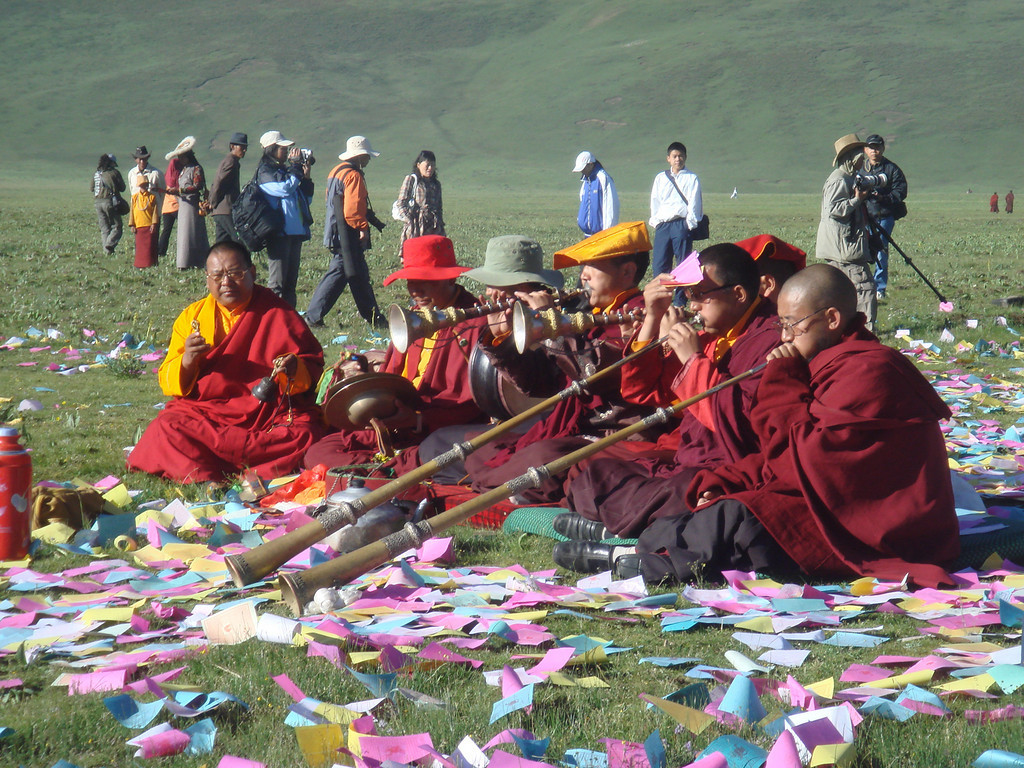
Monks in Qinghai

Local governments of Tibet, Yunnan, Sichuan and Qinghai have recently signed a strategic cooperation agreement to create what is being called the Shangri-La Ecotourism Region.

Officials from Tibet’s third-largest city, Changdu, reached the agreement with Yunnan’s Diqing, Ganzi in Sichuan and Yushu in Qinghai. All participating areas will remove barriers in areas including policy, transportation and services.

Although details are still not very clear, we are hopeful that the agreement will bring ecotourism that is both sustainable and beneficial to local residents to this beautiful part of China.

We especially hope it assists Yushu, which was struck by a deadly earthquake in April of this year, with its rebuilding efforts. To get a feel for Yushu, check out this video of its annual horse festival, which takes place in July.

Exploring Joseph Rock’s China

AsiaTravel prides itself in taking its clients to unspoiled, unseen corners of the country, but we also recognize that we wouldn’t know about these places had it not been for the efforts of the old-school explorers that came before us.

Exploring Joseph Rock’s China

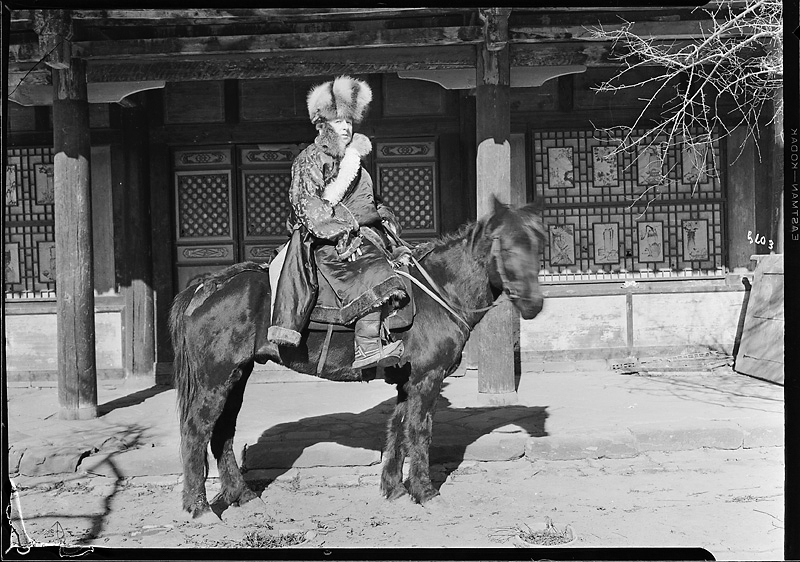
One of those explorers is Joseph F. Rock, an Austrian-born American botanist who worked at different times for the US Department of Agriculture, Harvard University and National Geographic magazine from the 1920s through the 1940s while based in western China, primarily Lijiang.

We were reminded of Rock today when we stumbled upon a review of the book Joseph F. Rock and His Shangri-La by Jim Goodman. We read the book a couple years ago and found it fascinating, despite already having been familiar with Rock’s story.

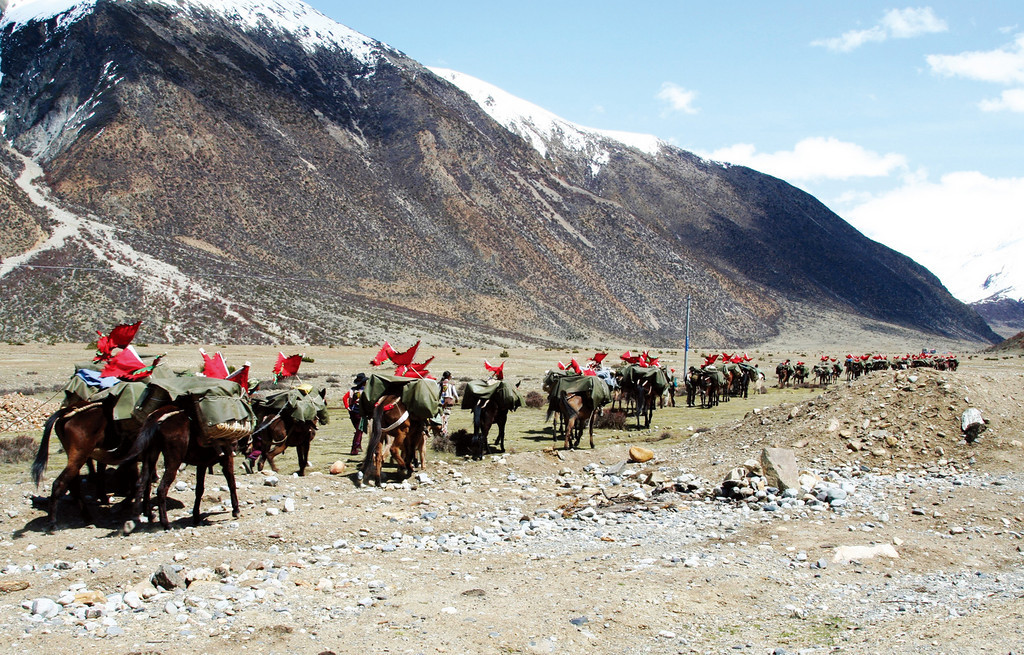
Rock’s story is the stuff of movies. He traveled in a large caravan of men and mules across rugged inhospitable terrain and was often the first white man who had set foot in many of the places he visited. Rock hobnobbed with the local elite wherever he went, but preferred to dine alone, eating European food prepared especially for him by his private chef.

Rock wrote extensively in his diary about his adventures in Yunnan, Sichuan, Gansu and Tibet, and Goodman adds good background to his story with his thorough knowledge of the people and places of western China. Rock’s photos of these regions are an invaluable archive of this area as it once was.

Exploring Joseph Rock’s China

One of our favorite parts of the book is when Rock first comes across Minya Konka the spectacular mountain in western Sichuan known in Chinese as Mount Gongga. Astounded by its massive size, Rock miscalculates the mountain’s height and reports to his editors at National Geographic that it is higher than Everest.

His doubtful editors prove him wrong, and the proud explorer and scientist is humbled, never again to let his emotions get the best of him in his work.

It may not be taller than Everest, but Minya Konka – and nearby places such as Kangding, Yading and Shangri-La – are awe-inspiring nonetheless. Our Western Sichuan to Yunnan journey takes in all of these unforgettable destinations. As the seasons prepare to change, this part of China is at its most spellbinding.

———-

Photo credit (for first photo): Arnold Arboretum

To find out how to find your own Shangri-La in Western Sichuan and Yunnan, contact us today.

China’s East and West get closer with new Shanghai-Lhasa tourism agreement

In eastern China, it’s easy to think that the country’s provinces to the West – namely Tibet, Xinjiang, and Qinghai – are a world away.


China’s East and West get closer with new Shanghai-Lhasa tourism agreement

But, recent developments at the Shanghai Expo are bringing these two regions of China closer than ever. During Tibet Week at the Expo, a new tourism agreement signed between Shanghai and Lhasa, Tibet’s capital city, confirmed that visitors will soon be able to enjoy “luxury train travel and short-stay trips” between the two cities.

To accommodate increasing visits to the plateau province, government officials, local tourism bureaux and travel agencies will collaborate on increased Tibet-bound tourism. Officials are discussing more efficient train stops and connections, airlines are developing more routes from Shanghai, Xi’an and Xining, and travel agencies are in talks to promote more 3-5 day trips to the area.

Shanghai, a perennial tourist favorite, will also share its tourism knowledge and expertise. As Tibet is one of our favorite fall destinations, we are excited to see what this agreement will mean for western-bound tourism here.

China travelers, stay tuned for developments pending the outcome of this cross-country travel agreement.

Autumn destinations: Tibet

On the ‘Roof of the World,’ the sky is the limit when it comes to exploration. Given Tibet’s diverse cultural, historical and religious marvels, it is no wonder that travelers from all over the world flock to this intriguing plateau.


Autumn destinations: Tibet

Caravan in Tibet

High-altitude autumn landscapes in Lhasa, the region’s capital, provide the perfect backdrop for all-age discovery. After a decade of visiting the area, we have a few favorite sites in the area.

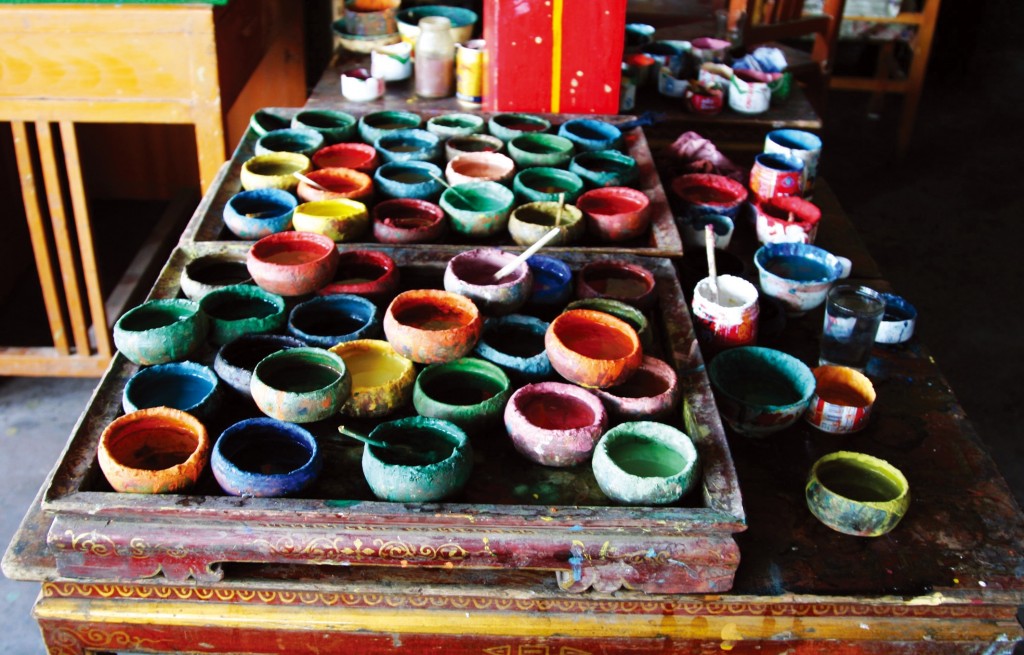
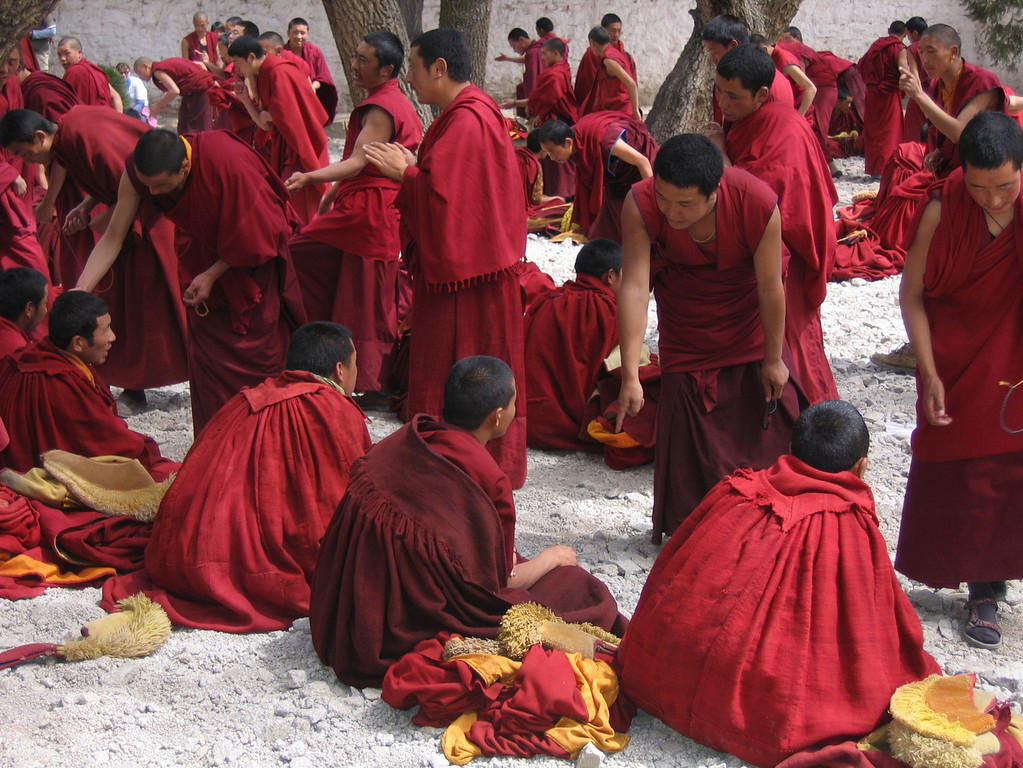
Of particular note are Ganden Monastery and Sera Monastery, two of Tibet’s ‘great three’ university monasteries. After touring the different academic centers within these ancient centers of study, don’t forget to visit Sera’s printing center to create your own prayer flag.


Autumn destinations: Tibet

Monks Debating at the Sera Monastery

If you’re looking to get out of Lhasa to witness religious life, head to Pabonka Hermitage – now part of Sera Monastery and located northwest of the city.

Feeling a bit lightheaded from the altitude, or simply curious about local remedies? We suggest that you visit a Tibetan Traditional Medicine hospital to hear healing secrets directly from a local Tibetan doctor.

Finally, on your way out of town en route to Shigatse, carve out time to learn how to make incense with a local family.

Things to see and do in Shangri-La, Yunnan

The following post is an excerpt from Catherine Bodry, a writer for AOL’s Gadling Travel Blog.

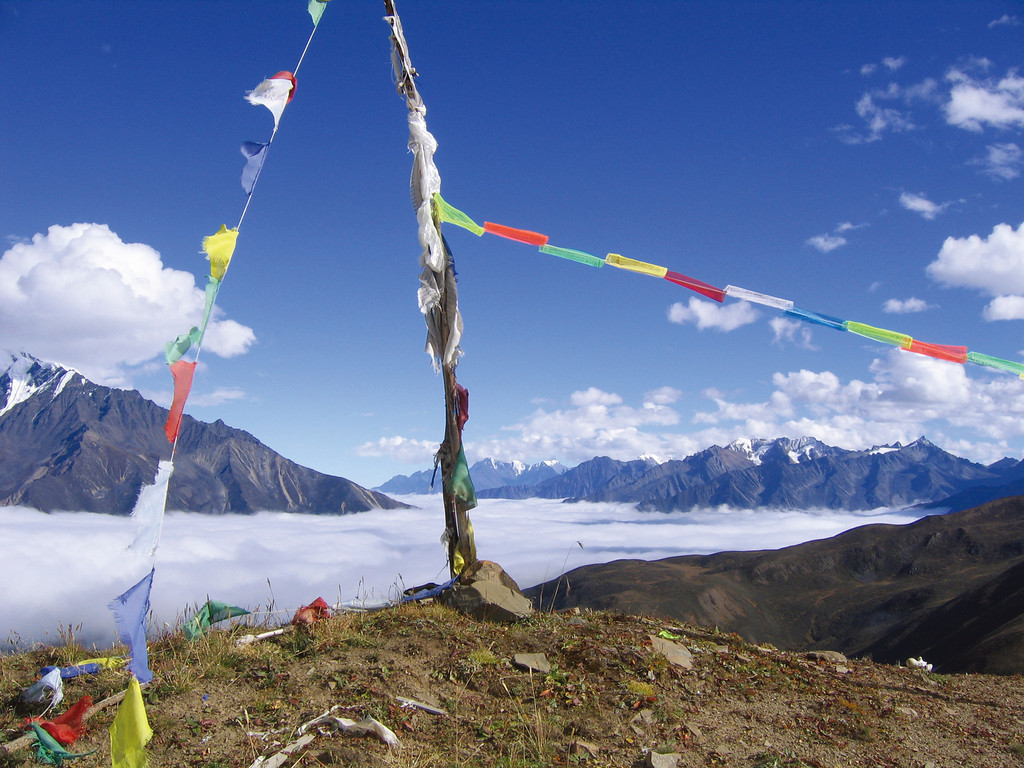
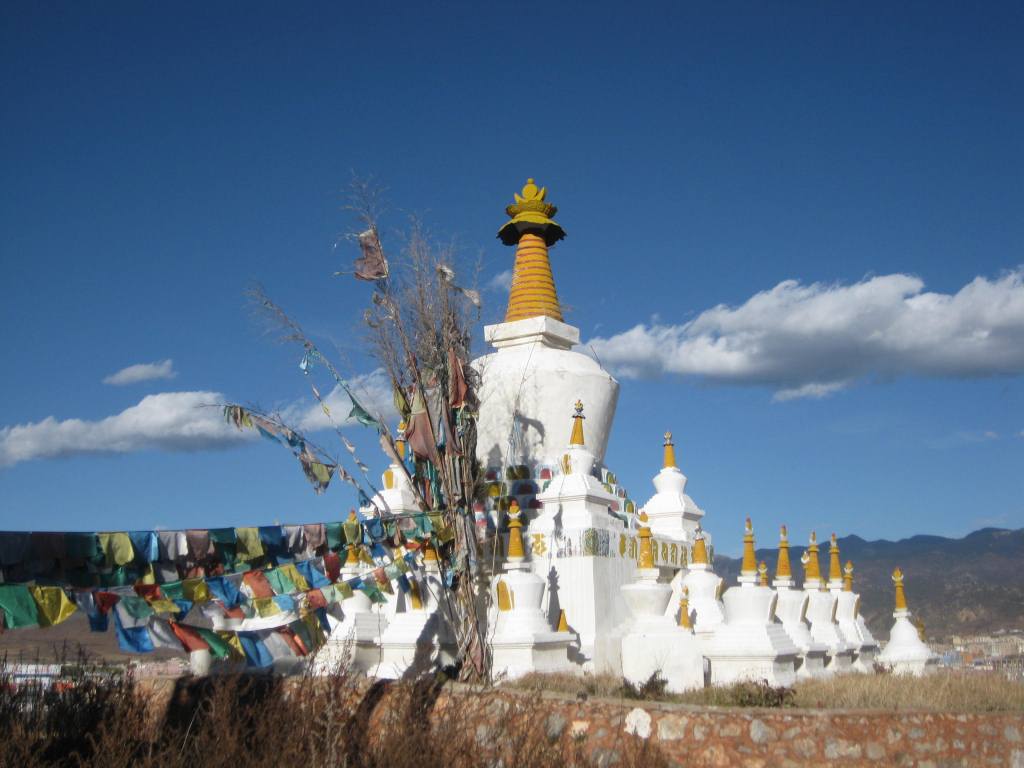
Gadling’s last stop on Yunnan’s ancient tea horse road was Shangri-la, China, a high-altitude Tibetan city named after the mythical town in John Hilton’s “Lost Horizon.” Full of snapping prayer flags in high-altitude sunlight, the town has only been called Shangri-la since 2001, when a successful marketing venture changed its name from Zhongdian to appeal to adventure-seekers. Most Chinese still refer to it as Zhongdian, though it’s worth noting that its Tibetan name is Gyalthang.
Things to see and do in Shangri-La, Yunnan
Shangri-la’s residents are mostly Han and Tibetan, and it’s common to see red-cheeked Tibetan-Chinese dressed in traditional clothing. The architecture, especially in the countryside, is uniquely Tibetan: large, square, three story homes house animals on the ground level, with human living quarters above. New homes are still being built in this style. Wood stoves (frustratingly drafty) occupy space in every restaurant, home, and guesthouse, often with the staff huddled around them.

Things to see and do

Like Dali and Lijiang, Shangri-la has an “old city,” with the usual cobblestones and new-old architecture, as well as a very Chinese “new city,” full of traffic and electronics shops. The Thangka Academy is a center in the old town for Tibetan culture and learning. Students, usually orphans, are taught the ancient art of Thangka, an intricate style of Buddhist painting of deities. Foreigners can study Tibetan or meditate here.

Though Shangri-la’s narrow, old-city streets are pleasant for a wander, it’s the town’s surrounds that make the trip worthy.

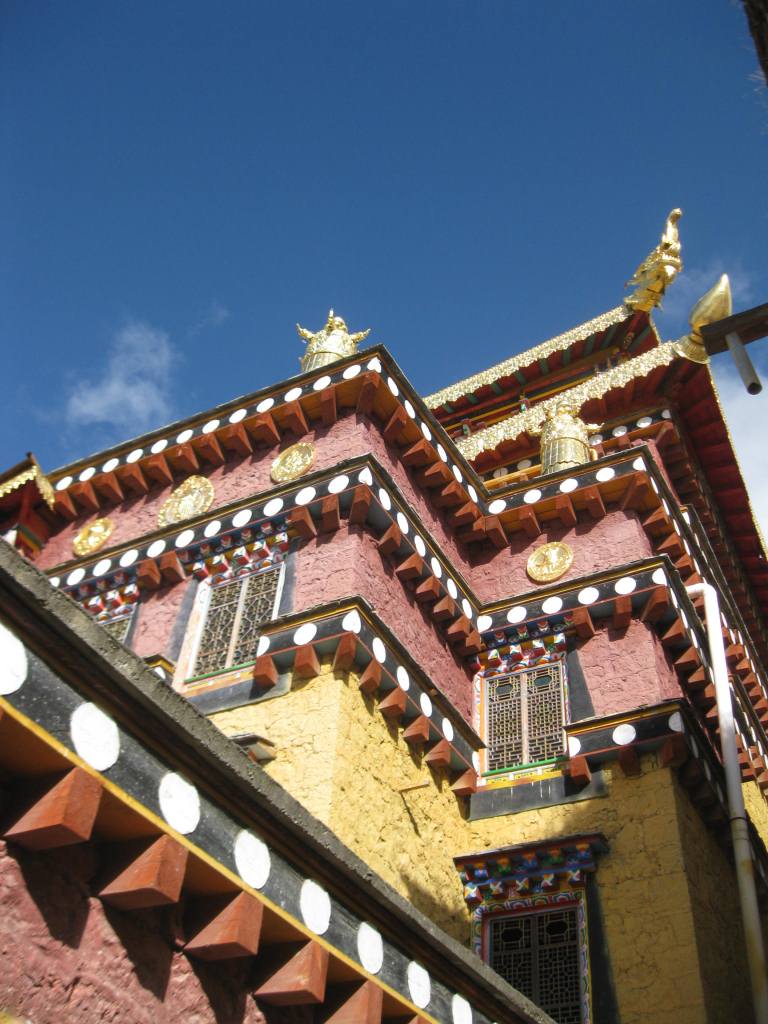
The Songstam Monastery houses monks of the yellow hat sect of Tibetan Buddhism. It’s the biggest Tibetan monstery in China, and certainly worth a visit. Besides monks and temples, you’ll see juniper burning in the mornings, pigs snuffing around the dusty grounds, tourists snapping photos, and a hodge-podge of colorful buildings built on several levels.
Things to see and do in Shangri-La, Yunnan
The monastery was built during the Qing Dynasty in 1679, and now houses 700 monks as well as 11 temples. In the tea-horse road days, the monastery stored tea, waited for the price to rise, and then sold it for a profit. The complex was destroyed by the Red Guard during the Cultural Revolution and has since been rebuilt, though remnants of ancient mud walls still linger.

Beyond the monastery is Napa Hai, a lake and wetland with misty mountains backing them. More than a dozen Tibetan villages surround the lake, which is also home to black-necked cranes. We rented mountain bikes from one of the many bike rental shops in town, and road the often-muddy, sometimes treacherous roads out to the lake. A new highway being built ought to smooth the ride out significantly.

To read full posts from Gadling’s trip to Yunnan, click here.

———-

Contact Catherine Bodry at catherine.bodry@weblogsinc.com. Photos by Gadling.

Want to experience China differently? Go west!

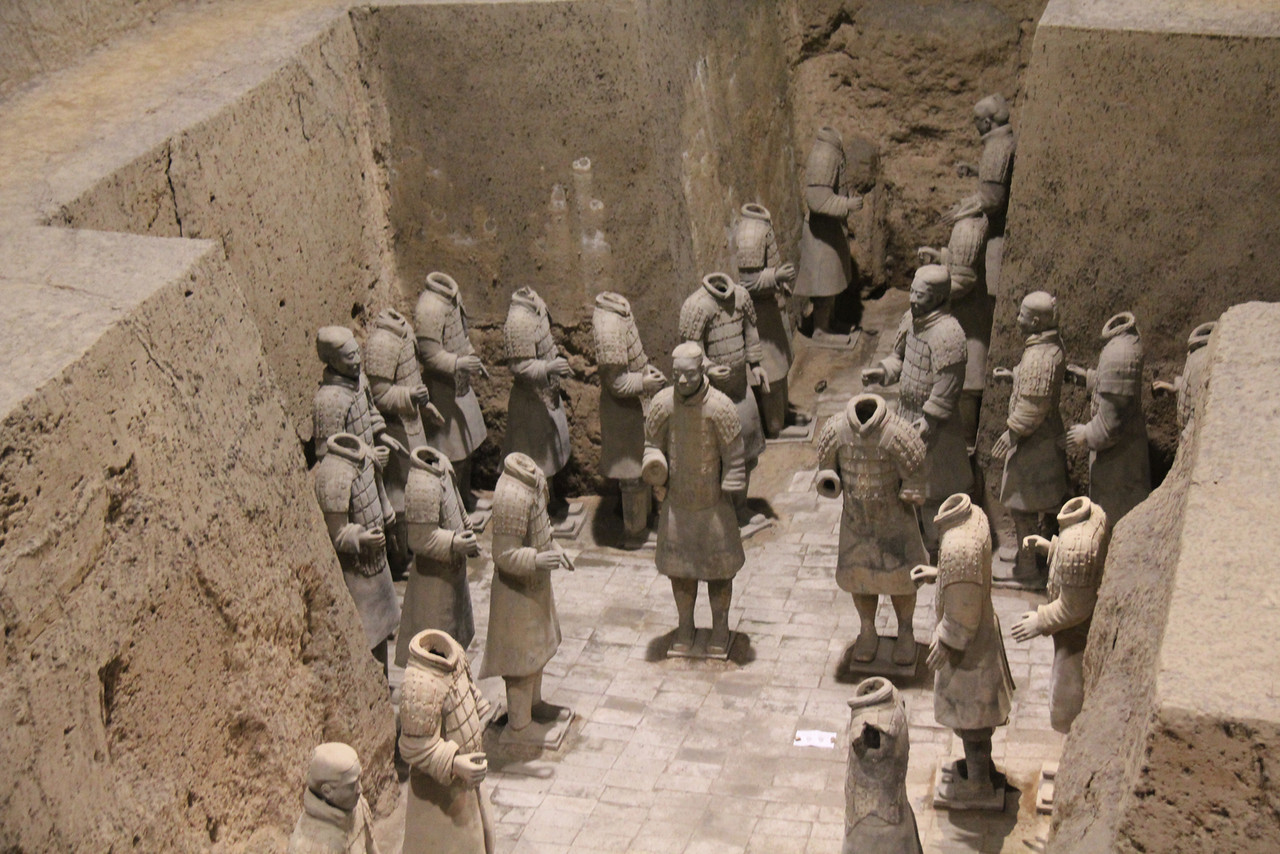
As noted earlier, China is already the world’s number-three destination for international travel. Many travelers nowadays have already made one or two trips to China, but more often than not, they’re visiting the coast, possibly venturing inward to check out the Terracotta Army in Xi’an.

But China is more than just a handful of sites in the country’s east. In fact, western China has just as much – if not more – to offer travelers who are looking for unforgettable experiences.

If you’re planning a China trip this year, we encourage you to look beyond the traditional travel destinations to China’s wild west. Here are some of our picks for places to visit in China’s west in 2011:

Yunnan: Land of diversity
Want to experience China differently? Go west!

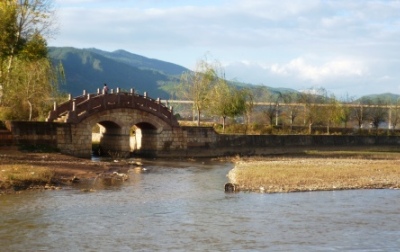
Few places in the world pack as much variety into one area as the province of Yunnan, which offers a mind-bog

gling variety of landscapes ranging from jungle lowlands in the south to Tibetan highlands in the northwest.

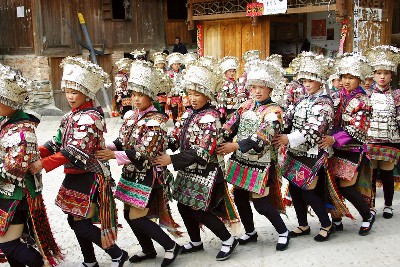
Yunnan’s ubiquitous mountains have historically isolated groups of people from one another, which is one of the main reasons that the province has China’s highest number of ethnic groups. With 26 ethnic groups including Han, Tibetan, Dai, Bai, Yi, Hani, Hui, Mongol, Naxi, Lisu, Yao, Lahu and countless subgroups, Yunnan is a rainbow of different ethnic traditions, clothing and cuisine.

The mountain towns of Dali, Lijiang and Shangri-la are home to unique cultures whose lives are still steeped in ancient traditions. Down south in Xishuangbanna, tropical weather, tea plantations, spicy food and the lazy Mekong River await.

Guizhou: Still undiscovered
Want to experience China differently? Go west!

Guizhou Province may not attract as many

visitors as its neighbors Sichuan, Yunnan and Guangxi, but it certainly deserves consideration when making plans to travel to western China. Beautiful mountain scenery and a distinctive spicy and sour cuisine are some of th

e highlights of a trip to Guizhou. But as in many other parts of China, the big draw for us is the people.

The Miao, Gejia, Dong and Yao villages in Guizhou’s mountains are home to some of Asia’s most unique cultures and friendliest, most welcoming communities. Many of our clients rank our Guizhou village immersions among their top China travel experiences.

Sichuan: More than pandas
Want to experience China differently? Go west!

Sichuan is one of China’s most distinctive provinces, known for its spicy food, stunning mountain scenery, beautiful women and China’s ‘national treasure’ – the giant panda.

Sichuan’s capital Chengdu is a modern metropolis set on the west end of the fertile Sichuan Basin, a region that kingdoms battled for in ancient times. Chengdu is considered the capital of Sichuan cuisine, one of the most famous and flavorful of China’s culinary traditions.

The historical importance of Buddhism to Sichuan is evident in Chengdu at the Wenshu Monastery, located in the city’s center. Not far from Chengdu lie the Buddhist holy mountain of Emei Shan and the world’s largest seated Buddha at Leshan.

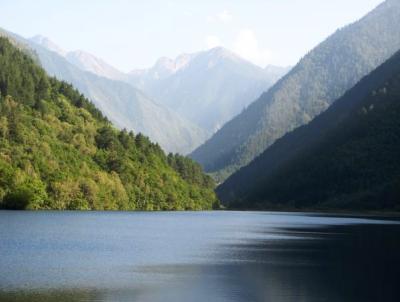
Sichuan has fantastic natural beauty as well, with the mountain forests and fantastic aquamarine lakes of Jiuzhaigou in the north and gorgeous mountain scenery at Minya Gongga in the province’s west.

Xinjiang: Silk Road echoes
Want to experience China differently? Go west!

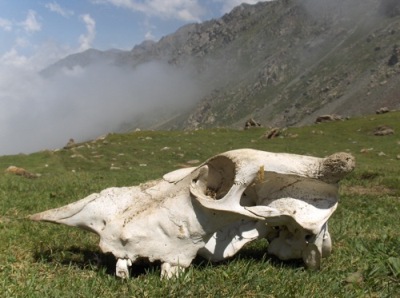
Xinjiang is simply massive. It comprises roughly one-sixth of China’s total territory and boasts some of the country’s most stunning mountains and deserts.

At the crossroads of Asia, Xinjiang has been home to many different ethnic groups, from the caucasoid peoples whose mummies date back to more than 3,800 years ago to the Turkic Uighurs who moved into the region from present-day Mongolia 1,100 years ago to today’s growing Han population.

Islam is the dominant religion in Xinjiang, where extremism is rare and moderation is the norm. Due to its location on the old Silk Road, Xinjiang has also been influenced by Buddhism.

For visitors to Xinjiang, the local cuisine is often one of most pleasant surprises. Featuring rich stews, tasty breads, a large variety of noodles from flat and wide to easily spoonable diced noodles and even salads, Xinjiang cuisine is a delicious world away from typical Chinese fare.


Home for the Holidays: China’s Busiest Travel Season

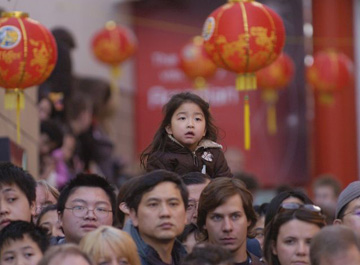
Today marks the beginning of the busiest travel season in China: from January 21 to February 27, China’s skies, roads, and rails will be inundated as an expected 640 million people, from every corner of the country, go on the move. What destinations could possibly be so compelling as to temporarily shift more than 9% of the world’s entire population? Home, of course.

The impetus is the Chinese New Year, or Spring Festival (chun jie). Far and away the most important festival on the Chinese calendar, the Spring Festival has always been a traditional time of homecoming and renewal. As such, this deluge occurs every winter, but the Ministry of Transport in China has predicted that this year’s will be the worst yet. One explanation is that many Chinese, in addition to returning home for the holidays, will also take advantage of the time off for domestic and international tourism.

Home for the Holidays: China’s Busiest Travel Season

With so many people competing for tickets, the rush has resulted in some amusing local news items. One story details the rising trade in fake student IDs as travelers get more innovative in their search for a cheap ticket home. A well-humored Beijing man named Chi Dongting, frustrated with long wait times at railway offices in freezing temperatures, successfully used a stylishly-dressed mannequin to hold his place in line – while he huddled in his car for warmth.

Far from being intimidated by the crowds, AsiaTravel believes there are some not-so-packed spots in China that truly shine during the holiday period. Yunnan province is a popular destination with our clients this time of year for a variety of reasons; the subtropical climate of verdant Xishuangbanna is an obvious draw, while up north the old cities of Dali and Lijiang take on a more peaceful personality with high season still months away.

And if you own a good jacket, Tibet awaits. With many annual pilgrimages underway, February represents an ideal opportunity to see local Tibetans in their colorful traditional dress – and there’s plenty of yak butter tea to keep you warm!

We always promote going off-the-beaten-path for travel in China; but with the beaten path about to fill up with home-bound travelers and domestic vacationers, there’s perhaps no better time to do so than during the Spring Festival.

———-

Image: Birmingham Post

Discovering Tibet: Confronting authenticity and romance in one of the world’s most breathtaking places

The following is an excerpt taken from The World of Chinese.  The author LeeAnn Deemer and her family traveled with AsiaTravel in August of 2010. Here is their story:

Discovering Tibet: Confronting authenticity and romance in one of the world’s most breathtaking places

When we get off the plane in Lhasa, we can’t quite believe we are really in Tibet. This may have been partly due to the unscheduled stop in Chengdu which meant that we arrived hours later than we’d planned, but that was only part of it. The approach to Lhasa is vertiginous, as the plane banks left and right, dipping down below the peaks of the maze of mountains we are navigating. The runway is tucked into a narrow valley with mountains on either side.  Yet in retrospect the sensation of unreality upon leaving the airport in Lhasa is probably mostly caused by the altitude. I feel odd and slightly light-headed, and the colors around me all seem much brighter than usual.  The sunlight is intense and our surroundings look as sharp as cut glass. Lhasa itself lies about a 90-minute drive from its airport, hidden behind a chain of mountains, but Lhasa will have to wait. Excited to salvage what we can of the day, we head west, away from the capital towards the first stop on our seven-day itinerary, Tsedang.

We have brought three generations of the family on this trip—my husband’s parents who are long-time expats in Beijing and our two older children who are nine and six. We’ve left the three-year old in Singapore, where we live, as the altitude change is not recommended for children under five. The six of us bounce along the road with driver and guide, unable to tear ourselves away from the sights out the window. The town around the airport is so small that we are almost immediately in the countryside, passing farmhouses and fields. We see children playing, old women threshing on the side of the road, goats, sheep, pigs, dogs.

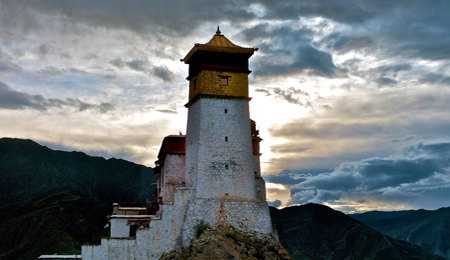
Tsedang lies in the Yarlung Valley, considered to be the cradle of the first Tibetan kingdom in the seventh century. We head directly to Yumbulagang, a fortress cum chapel which is said to be the oldest building in Tibet, although much of what one sees today is recent reconstruction. We only arrive about an hour or two before sunset, the last visitors of the day. Yumbulagang perches on the tip of a ridge, overlooking the flat green valley below. We are intimidated by the steep path and even steeper steps, as we’ve been warned not to exert ourselves for the first few days at this altitude. Any other visitors seem to have left hours ago, and we have our pick of the ponies, yaks, and one lone camel loitering in the parking lot with their owners, waiting to carry visitors up to side of the cliff. The view over the valley is spectacular, revealing neat green fields in the golden light of the setting sun. We have the place entirely to ourselves, and the only sound apart from the children frolicking in the distance is the flapping of the enormous tangle of prayer flags in the wind above the Yumbulagang.  The setting and the solitude conspire to fulfill every fantasy that I had ever had about Tibet—here I am in one of the most spiritually profound places in the world and I drink in the moment.

———-

Photo by Pete Deemer.

A Message from AsiaTravel’s Assisting General Manager, Zhao Bei

We would like to introduce Zhao Bei as AsiaTravel’s new Assisting General Manager:

Zhao Bei joined AsiaTravel in 2004 and has seen the company grow almost since its very beginnings. A Beijing native, he has been very passionate about travel. Having graduated from Beijing’s University of International Relations with a degree in International Politics and Law, Zhao Bei was set to enter the local government. He decided, however, to diverge quite literally to an off-the-beaten path instead.

During his time at AsiaTravel, Zhao Bei has had the opportunity to travel to almost every corner of China, including overland journeys from Tibet into Sichuan and camping in the Taklamakan Desert. He helped develop innovative trips, including journeys examining China’s environment and its economic realities. Prior to his current position, he served as the Director of Travel Partners and most recently, Manager of AsiaTravel’s IT initiatives.

As he translates this knowledge into his new role, he was asked, “What are you most excited about? What motivates you the most? What’s your biggest challenge?”

He answers, “As cliche as it may sound, we truly are trying to shape the way people travel.  People all over the world are interested in China now. They want to come to China, and AsiaTravel strives to provide them with not only a unique experience but a unique insight. Stories exchanged between our guides and our clients discuss what this country was, what it is to them presently, and what it might be in the future. For me, the different perspectives about China create an interesting and multi-dimensional window through which I can process the world.  This is why AsiaTravel motivates me. Of late, I’m reflecting a lot about what our business means to everyone else involved – our clients, our partners, our teams. I’m considering their goals and wrapping my head around our shared core values so that AsiaTravel can help more people Experience China Differently.”

———-

South of the Clouds: Shaxi, Yunnan, China

South of the Clouds: Shaxi, Yunnan, China

Shaxi's cobbled stre

The following post is an excerpt from Catherine Bodry, a writer for AOL’s Gadling Travel Blog.

Once an important market town on China’s ancient tea-horse road, Shaxi is one of seemingly very few Chinese villages that have retained their original feel. Quiet, with cobblestone lanes and courtyard homes, Shaxi is currently undergoing a “remodel” to restore and preserve its historical market square, inner village, and, eventually, ready the entire Shaxi Valley for tourism. Though only a few hotels and shops currently smatter the tiny village, there’s no way a town like this will stay this quiet for long. You’ll be rewarded by visiting soon, as the vibe is sure to change after the completion of a new highway nearby.

Gadling was lucky enough to visit Shaxi in November on a trip with AsiaTravel, during which we traced parts of China’s tea-horse caravan route.

Shaxi sits roughly between Lijiang and Dali, and was a halfway point for tea and horse traders traveling between southern Yunnan and Tibet. The town experienced its prime from 1368-1911, when it flourished as a way station along the tea-horse trading route. When the last of the caravans passed through in 1949, Shaxi settled into relative isolation. In 2001, the World Monument Fund added Shaxi’s market square to its Watch List of 100 Most Endangered Sites, as the square had its original theater, temple, and guesthouses. All, however, were in danger from neglect and the potential of shoddy restoration. In partnership between the Swiss Federal Institute of Technology Zurich and the People’s Government of Jianchuan County, the first phase of the Shaxi Restoration Project began in 2006, and the village is readying itself for more visitors.

To read full posts from Gadling’s trip to Yunnan, click here.

———-

Contact Catherine Bodry at catherine.bodry@weblogsinc.com. Photo by Gadling.