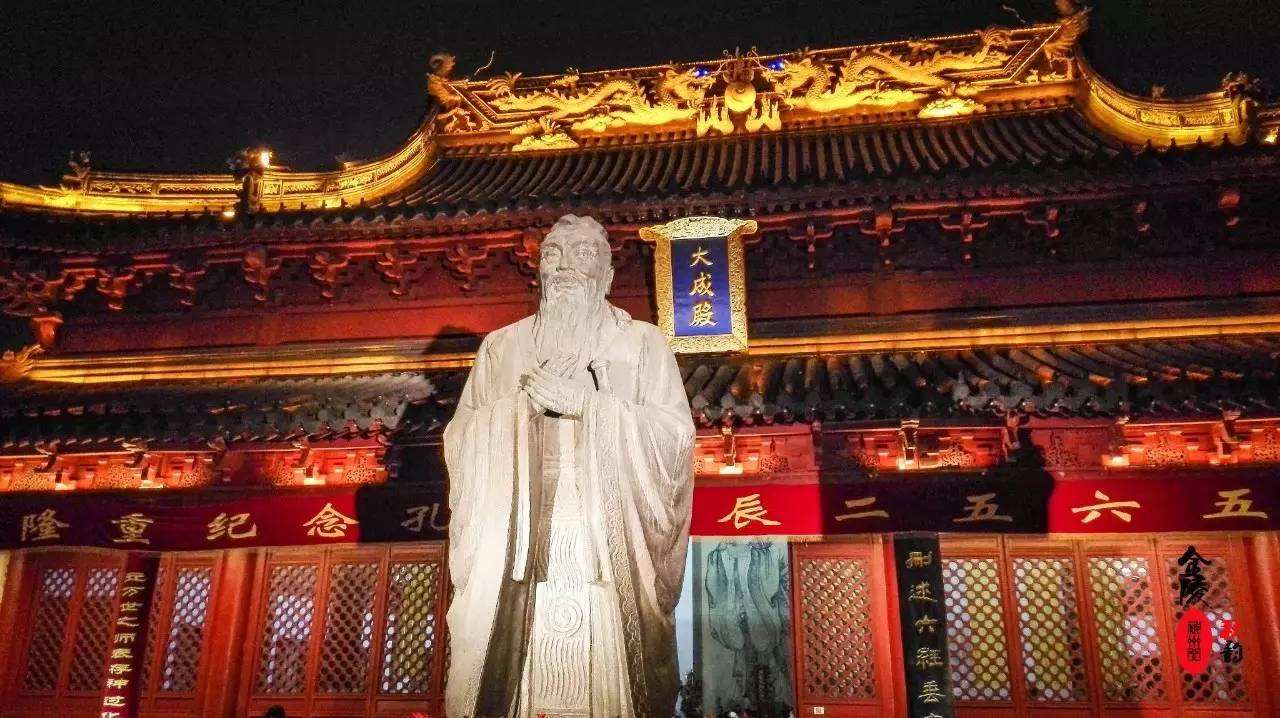
 Confucius Temple was built in the Song Dynasty. It is located next to Gongyuan Street on the north bank of the Qinhuai River. It was originally a place where Confucius was worshipped, but was destroyed and rebuilt many times. Together with Beijing Confucius Temple, Qufu Confucius Temple, and Jilin Confucius Temple, it is known as the four major Confucius Temples in China. It is also the most important scenic spot in the Confucius Temple Qinhuai Scenic Area.
There is a Folk Art Grand View Garden in Confucius Temple. You can watch lanterns, paper-cuts, mini-carvings and other handicrafts on site, listen to local operas and Nanjing Baiju. When you enter Confucius Temple, you can pay attention to the performance schedule, which lasts about 10 minutes.
Every year from the Spring Festival to the Lantern Festival, Confucius Temple will hold the Spring Festival Lantern Festival (also known as the Qinhuai Lantern Festival and the Jinling Lantern Festival), especially during the Lantern Festival, there are thousands of lights. In addition, Confucius Temple also holds “Ancient Etiquette Culture Exhibition” and “Ancient Dance Music Performance” from time to time, which is very lively.
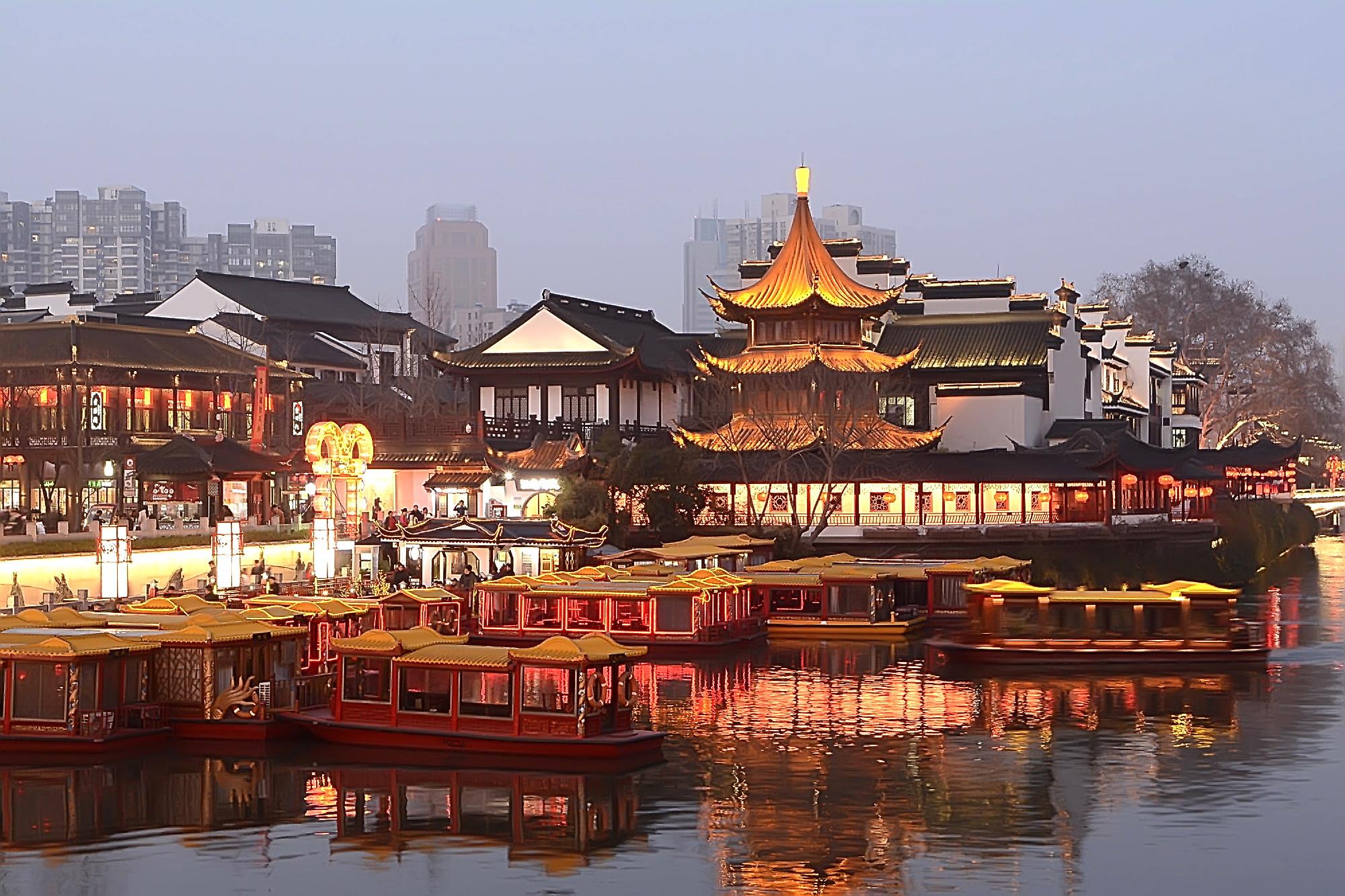 The entire Confucius Temple complex is in front of the Confucian Temple, and in the back, it is the Academic Palace. The layout is symmetrical, forming a Confucian cultural axis from south to north. Dacheng Hall is the main hall of the Confucius Temple. A portrait of Confucius over 6 meters high hangs in it. It is known as a masterpiece of the Chinese Confucius Temple. On the four walls of the main hall are 38 colored stone inlaid murals “The Sacred Relics of Confucius”, reflecting the life deeds of Confucius. Walk out from the back door of Dacheng Hall to the Xuegong, there includes Mingde Hall and Zunjing Pavilion (that is, the Folk Art Grand View Garden). Four stone monuments stand on the south side of the Academic Palace.
Apart from visiting the Confucius Temple, it is natural to experience the Qinhuai River snacks. There are many restaurants in this area, such as crab shell biscuits, beef pot stickers, chicken noodles, duck blood vermicelli soup, etc. You must try it. In addition, there are many shops here, you can choose some affordable souvenirs with Qinhuai characteristics.
 The architectural layout of Ta’er Lamasery and the Han Buddhist temples in the mainland is obviously different as the complex of Ta’er Lamasery is not axially symmetrical. Ta’er Lamasery is an ancient building group composed of numerous halls, scripture halls, pagodas, and colleges. The scriptures, halls and pagodas are irregularly distributed on a small hill. When tourists are playing there, the route is more casual, instead of going all the way along the central axis.
 There is a tour guide service at the ticket office of Ta’er Lamasery. It is recommended to hire a tour guide because Ta’er Lamasery has a very deep historical connotation. Without a guide’s explanation, you will miss many interesting stories.
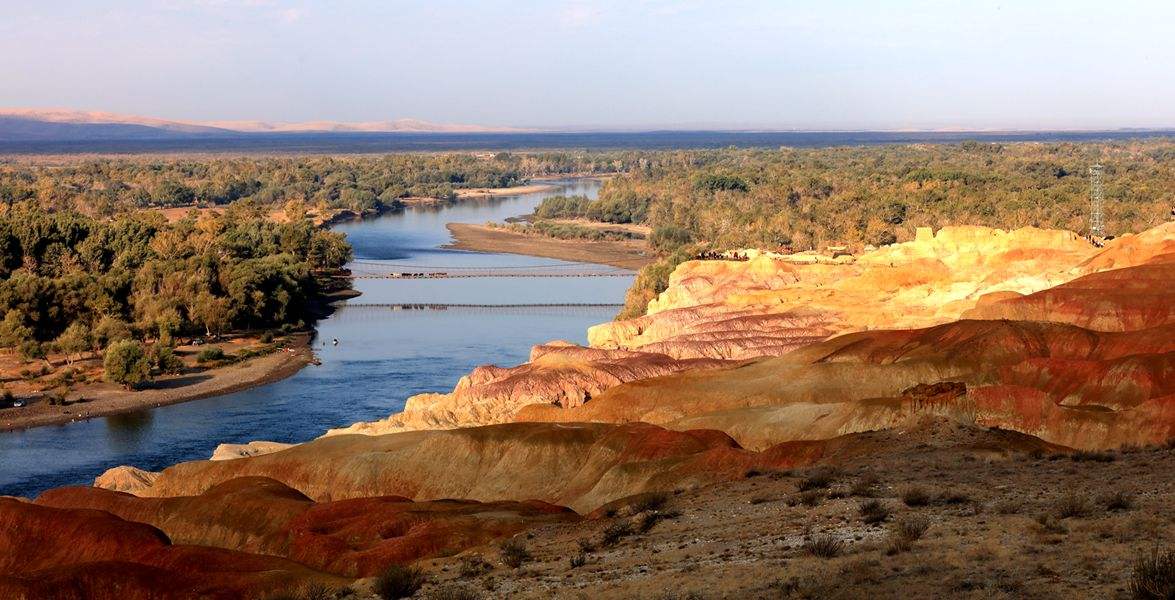 Wucai Beach is located on the north bank of the Irtysh River, 24 kilometers northwest of Burqin County, Xinjiang. It is a river beach famous for Yadan landforms. The hills here are peculiarly geological and show a variety of colors. When the sunset shines in the evening, the colors are gorgeous and fantastic, and very spectacular. On the other side of the Wucai Beach, it is a lush Populus euphratica forest, which is beautifully reflected in the river water. Here in autumn, it becomes a fairy tale with the brilliant yellow leaves.
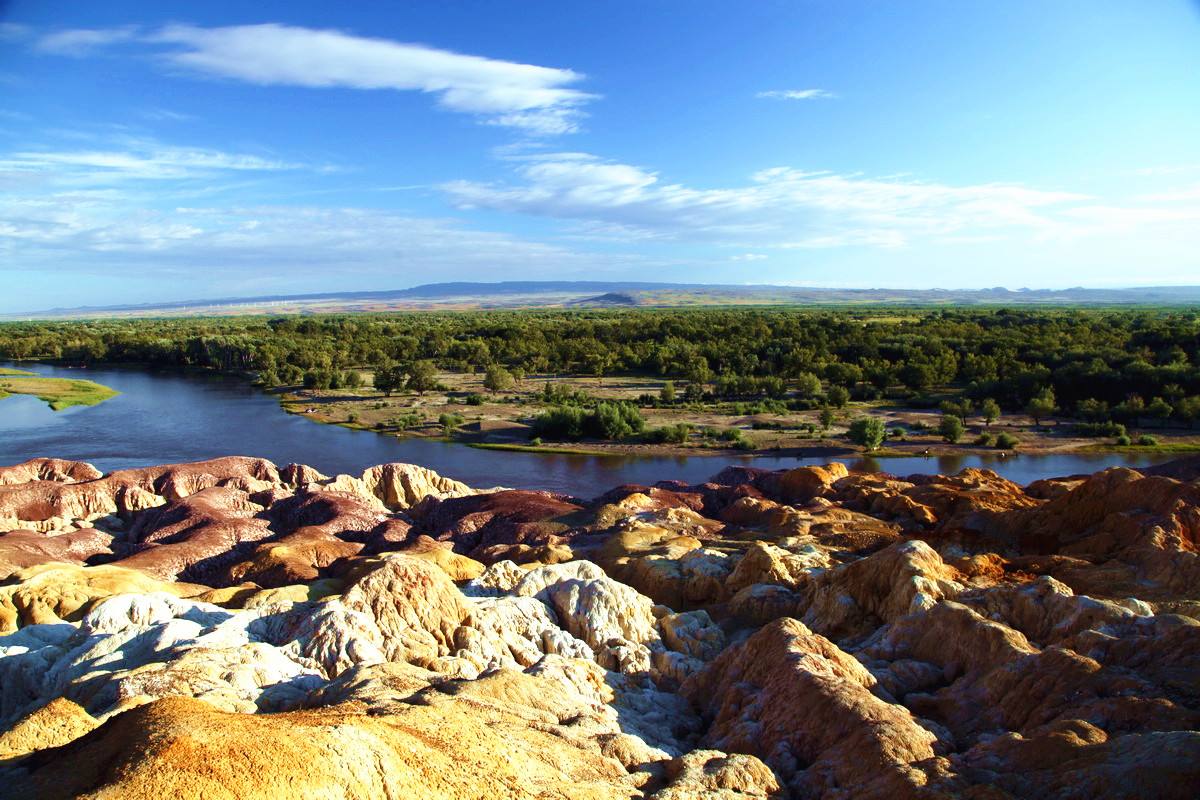 Entering the scenic spot, you can descend along the plank road to the end, and then return along the plank road to enjoy the beautiful scenery. Along the plank road all the way up, the rocks on the riverbank in the evening show a colorful color of red, brown, yellow and white. After walking on all the boardwalks, climb to the highest level of the observation deck and look into the distance. The light of the sunset sprinkled on the rocks of the Wucai Beach, is dazzling and extremely beautiful.
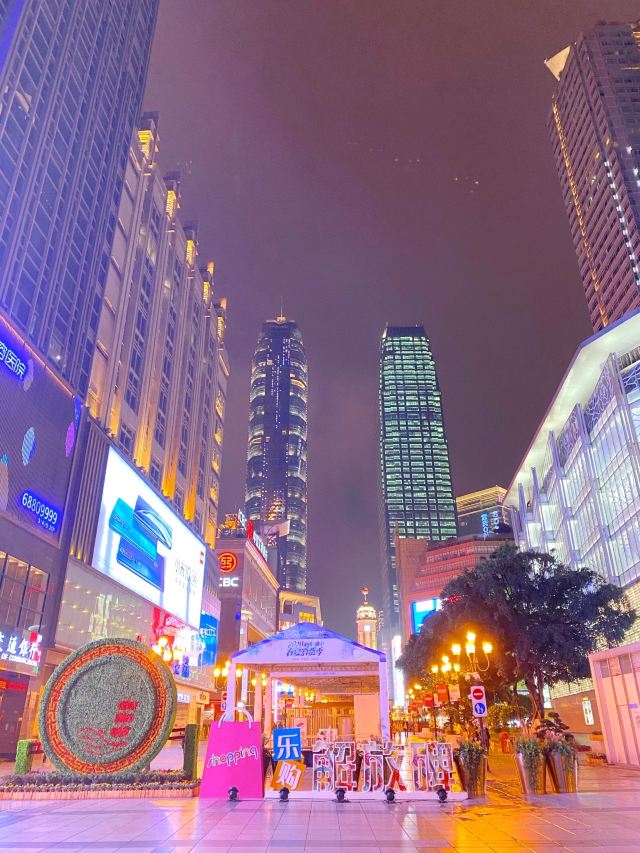 In many cities in China, there are roads or memorial buildings that are named after the word “liberation” for the purpose of commemoration. Chongqing’s Jiefangbei Pedestrian Street is located in the center of Yuzhong District, surrounded by tall buildings. Especially at night when the lights are first released, the bright and colorful neon lights flash, making Jiefangbei “a city without darkness”.
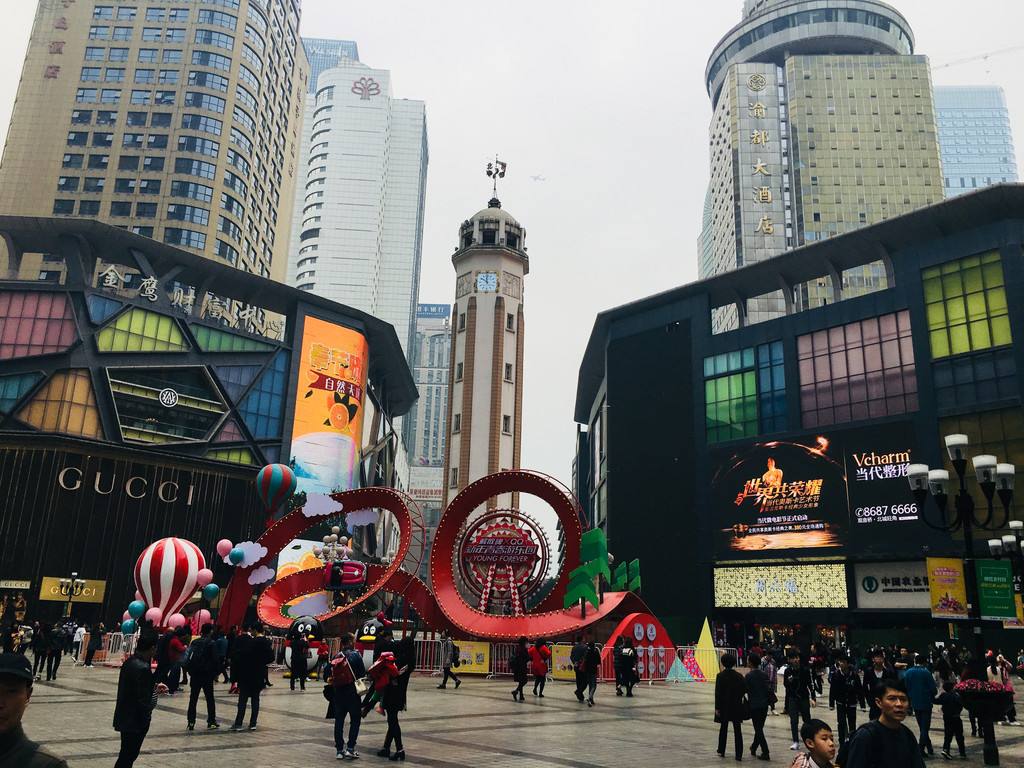 Jiefangbei Pedestrian Street is a prosperous commercial street in Chongqing and even western China. Whether you are a local or a tourist in Chongqing, you can find your own happiness in the pedestrian street.
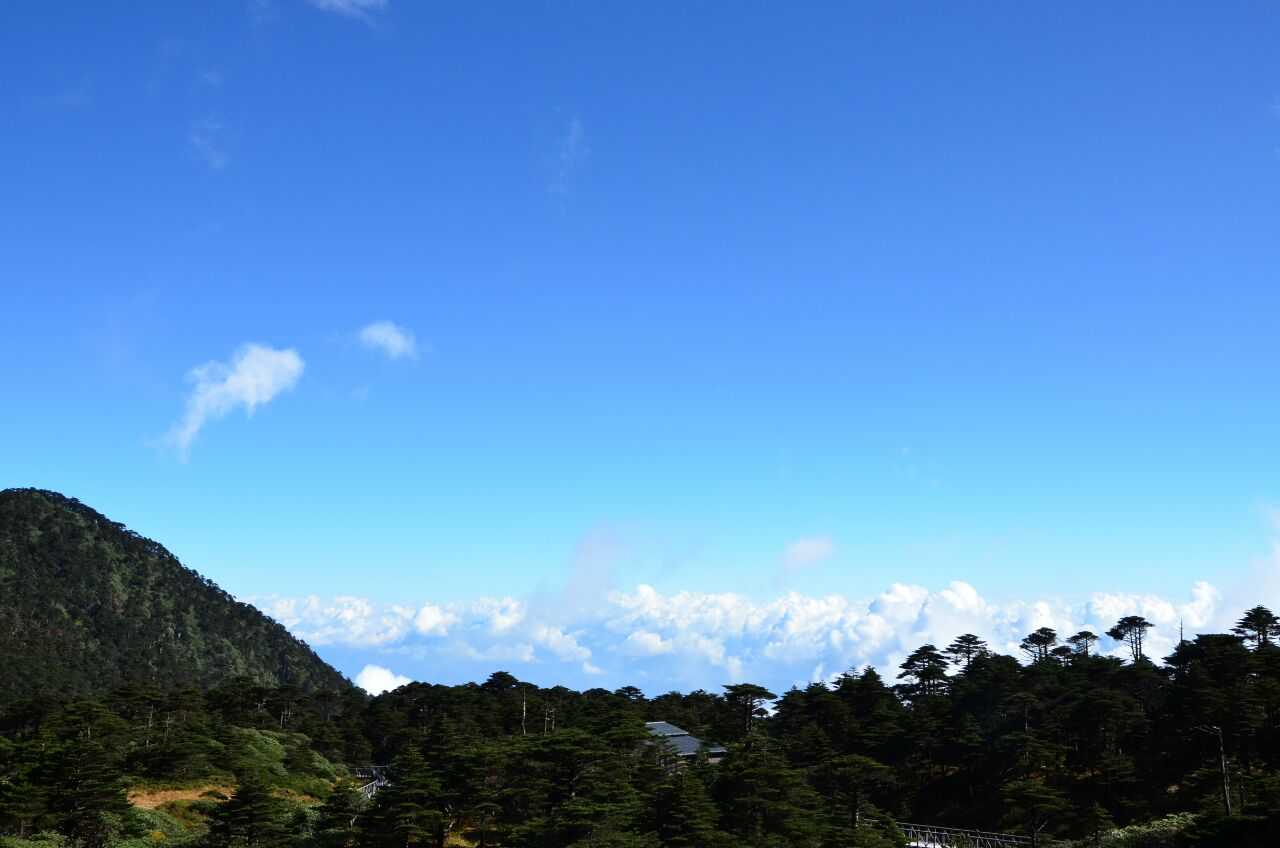
 Qingcheng Mountain is a famous Taoist mountain, which is divided into the front mountain and back mountain. The front mountain is the core there. The main Taoist buildings there include Jianfu Palace, Tianshi Cave, Chaoyang Cave, Patriarch Hall, Shangqing Palace, etc. The natural landscape of the Qingcheng Mountain is also very beautiful, with green trees, and winding paths. Quietness is a major feature of Qingcheng Mountain. The amount of climbing the mountain is moderate and you can play there for half a day or a day.
 There is a tea house on Qingcheng Mountain where you can enjoy the tea while enjoying the scenery; the mountain road is crooked and twisted, the steps are high and steep, and the elderly need to pay attention to safety when climbing the mountain; there are many precious ancient trees in the mountain, some are even hundreds of thousands of years old, which can see that the mountain is historical!
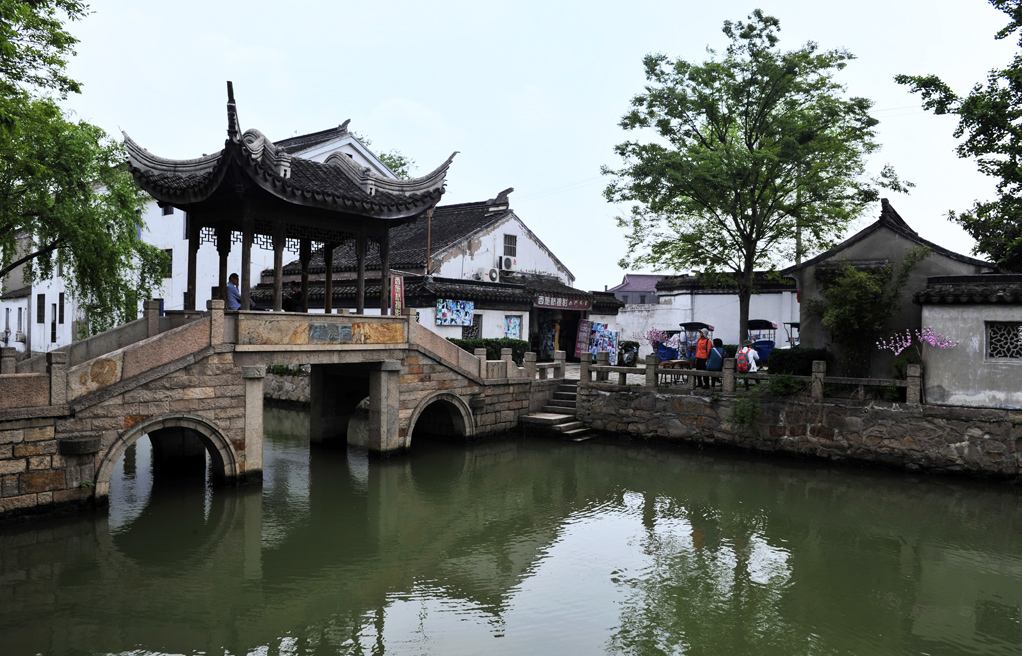 Mudu Ancient Town, in the southeast of Jiangsu Province and west of Suzhou Ancient City, is also located in the Taihu Lake Basin. It is a famous scenic spot in the south of the Yangtze River. Mudu Ancient Town is an ancient cultural town of the Han nationality of the same age as Suzhou City, with a history of more than 2,500 years. In August 2008, it was rated as a national AAAA scenic spot and one of the 13 scenic spots in Taihu Scenic Area.
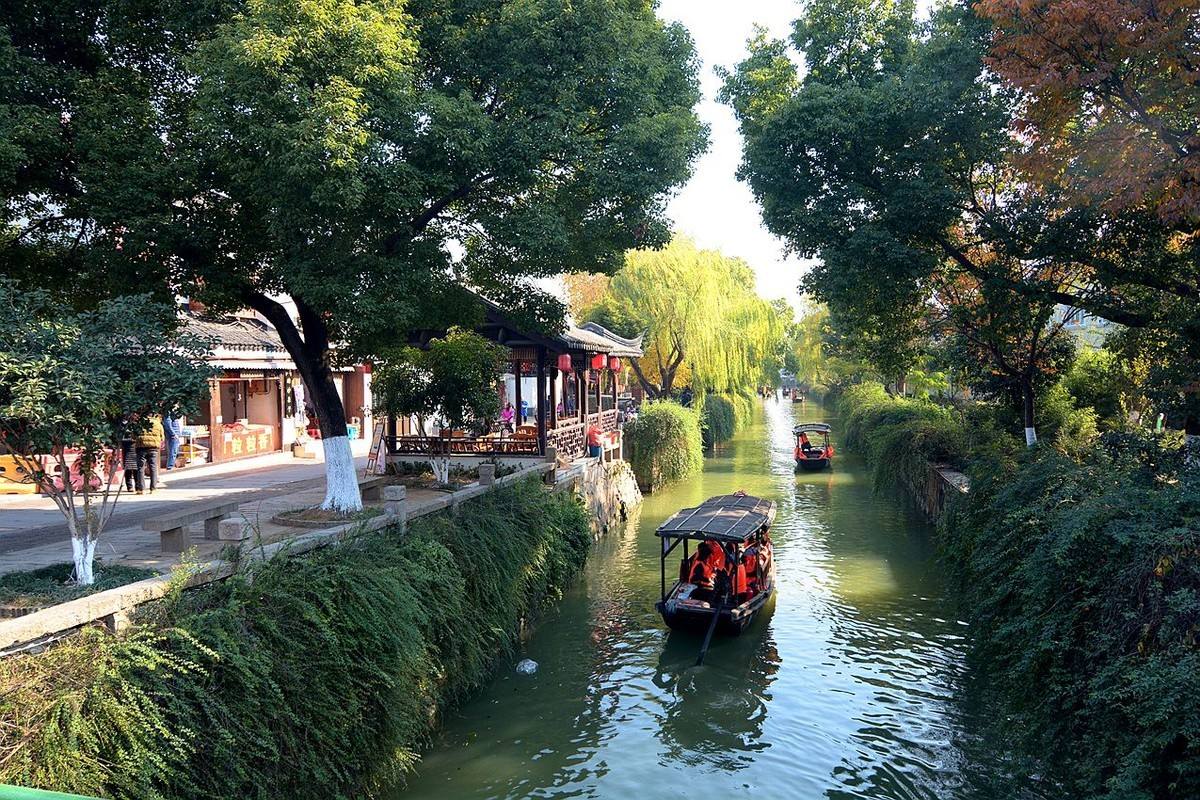 There are many famous ancient towns in Suzhou, and Mudu Ancient Town is relatively close to the urban area. It can be reached by subway and bus. Entering the ancient town is free, but some of the ancient gardens require tickets, and you can buy a joint ticket. Feel the charm of Suzhou gardens in various yards in Mudu Ancient Town. Many of the houses here are the former residences of the ancients. Don’t forget to come to see the lotus
 Beijing WTown is located on the northeast side of Miyun County, Beijing, about 140 kilometers by car from the center of Beijing. It is an ancient town scenic area which is rebuilt on the basis of the original ancient village. The town is built along the water. Many Ming and Qing dynasties and the Republic of China style mountain courtyards are preserved and built on the streets, which is full of the majestic style of the ancient towns in the north. At the same time, many areas with the characteristics of southern water towns are also built. The environment is simple and elegant.
 In the resort of the Beijing WTown, there are Ming and Qing and Republican style mountainous courtyard buildings, including 4 boutique hotels, 5 theme hotels, 23 homestay inns, with a total of 1378 rooms, more than 10 cultural exhibition experience areas, featured shops and restaurants and complete supporting service facilities. The night view of Beijing WTown is a must-see in Beijing. This small town built on the basis of the northern water culture and it is becoming a new fashion landmark for Beijing night tour, attracting more and more young people and international tourists to come to enjoy vacation and leisure here. This is also a paradise for photographer and food lovers.
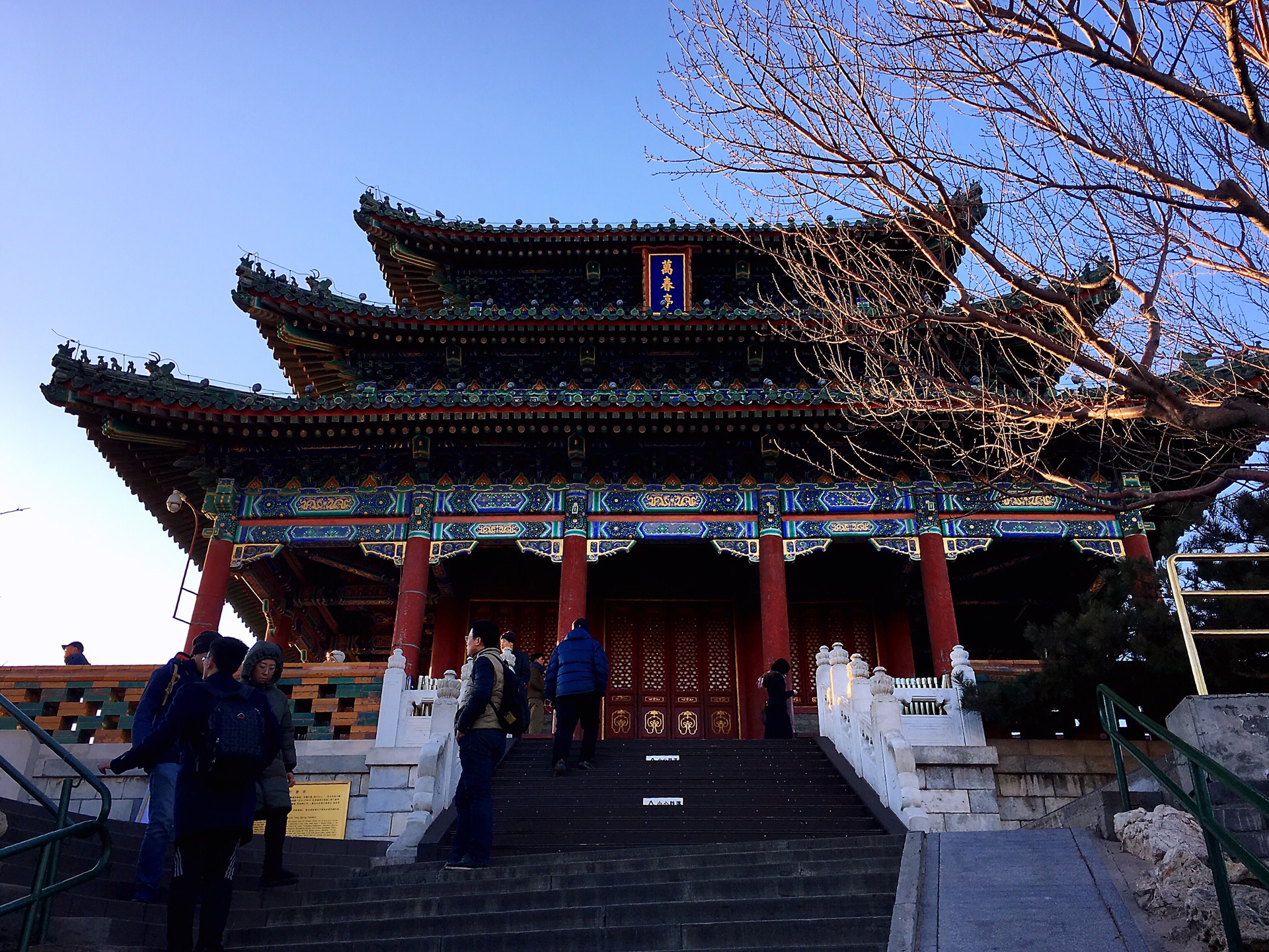 Located on the central axis of Beijing City, Jingshan Park is a royal garden in the Ming and Qing Dynasties. The middle peak in the park used to be the commanding height of the old Beijing City. The pavilion on the middle peak is called “Wanchun Pavilion”. It is a must-visit place for tourists to come to Jingshan Park. There, you can overlook the entire Beijing downtown area and the Forbidden City. It is also a great place for panoramic view of the Forbidden City.
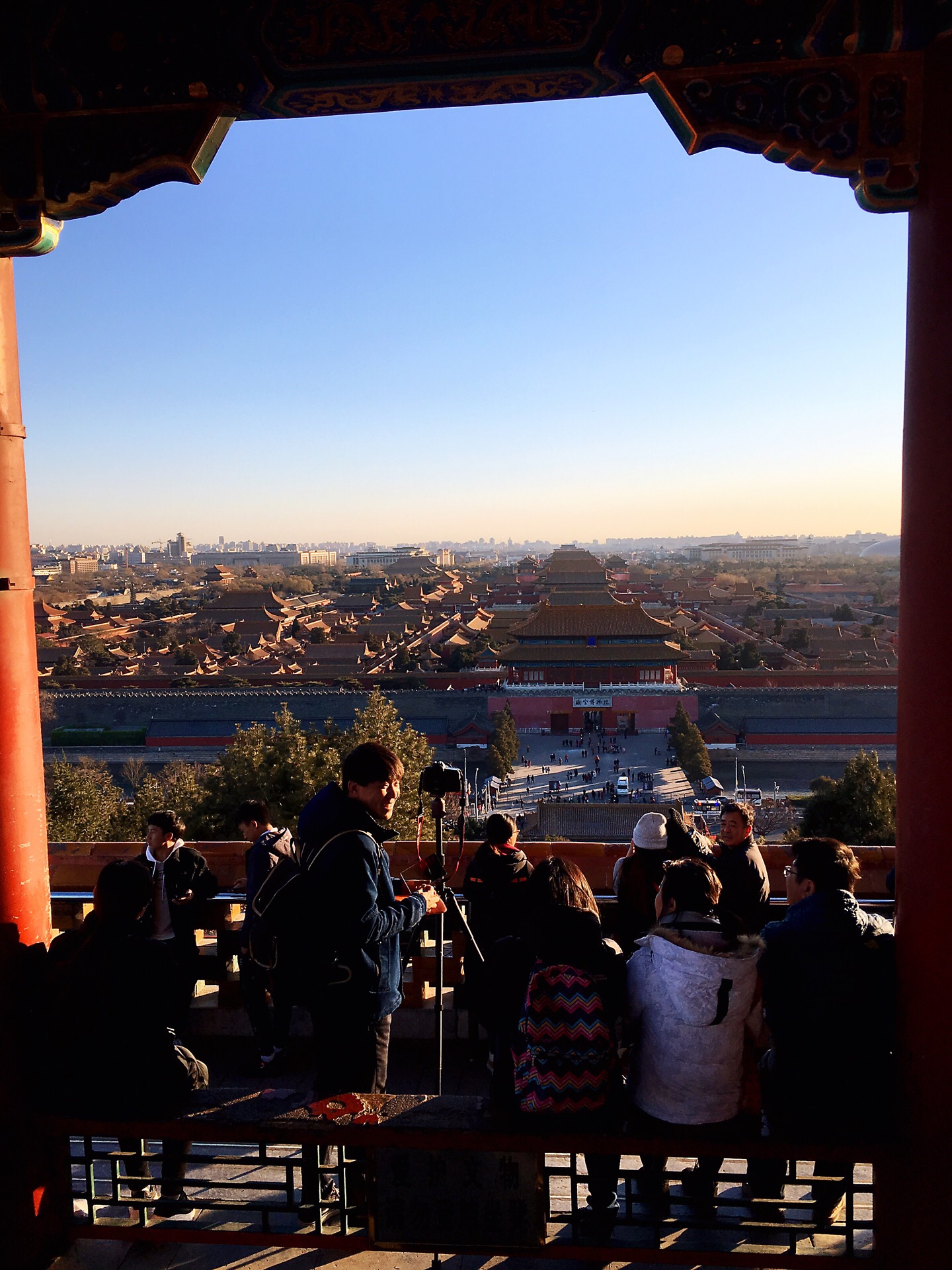 There are tens of thousands of peony and other flowers in the park, and there are flower exhibitions in spring, summer and autumn. In addition, there is a shooting service point in the park, where you can put on Qing Dynasty costumes to take pictures of emperors or grids, at an additional cost.
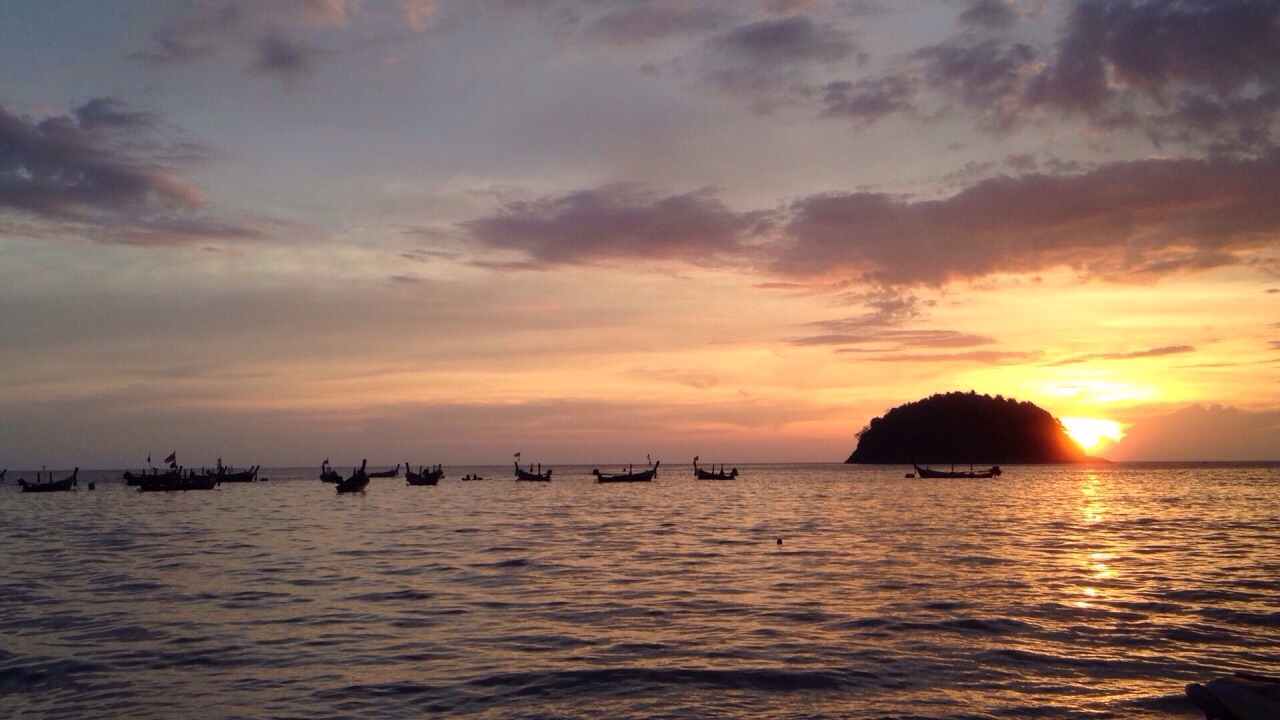
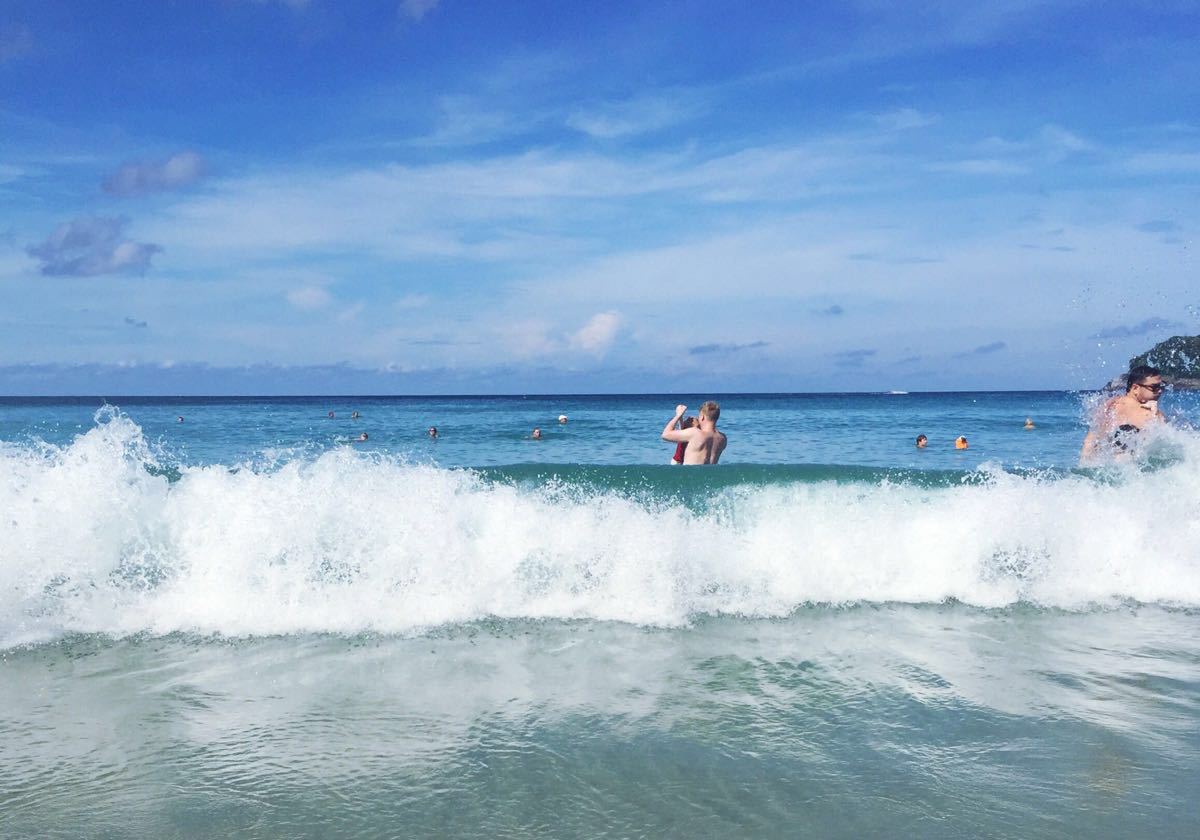 Phuket Island is the southern island of Thailand. It consists of the main island and its 30 outlying islands. The superb beach and clear water are the gifts of God, making it a holiday resort. It takes about 1-hour flight from Bangkok and nearly 2 hours flight from Chiang Mai. Phuket’s fun attractions are concentrated in the south, mainly are the major beaches and the town of Phuket, where you can eat, drink, and have fun! It takes about 1 hour to get to each scenic spot from the airport by car, so you need to plan your transportation in advance.