Discover Danba – Tibetan gem in western Sichuan

Traveling is easy these days. Planes, trains and ferries criss-cross the globe, Google maps and GPS can pinpoint your location in minute detail, and thousands of guidebooks, websites and blogs provide real-time information on almost every place imaginable. While this is certainly more convenient, it’s hard to imagine that same sense of exhilaration felt by great explorers doing something for the first time: Columbus setting foot on America; Hillary summitting Everest, for example. Earlier this month, however, I discovered that real off-the-beaten-path adventuresare still possible, if you know how to find them…


Discover Danba – Tibetan gem in western Sichuan

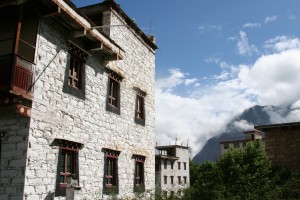
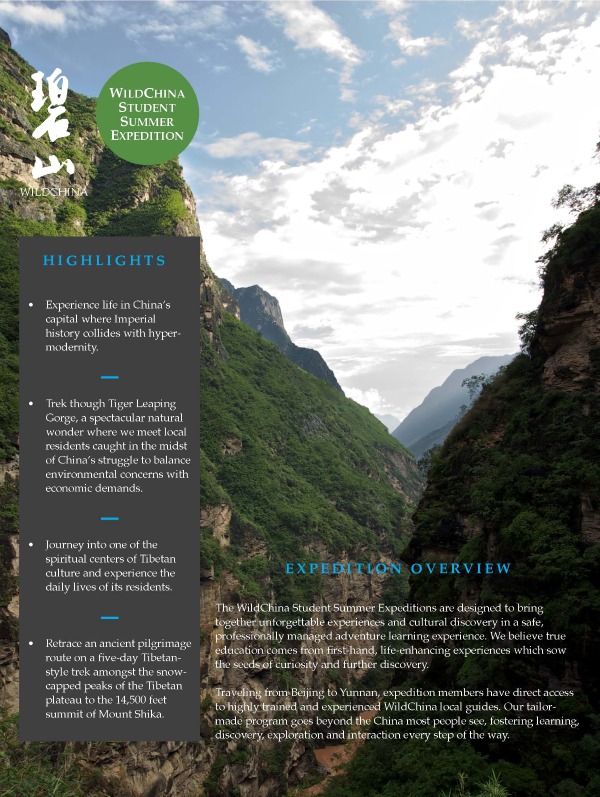
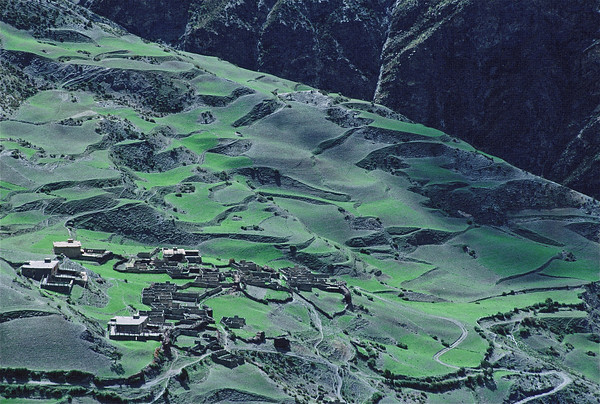
Tibetan home in Zhonglu Village


After a painfully early start and an hour’s delay in Beijing, I arrived at Chengdu airport around noon, where I was met by Frederique Darragon. Born in Paris, Frederique inherited a small fortune from her father, an inventor who died when she was 4 years old. Instead of buying things, Frederique chose to spend her money on exploring the world. Despite my tiredness, the 9-hour bucking-bronco journey from Chengdu to Danba, a quaint little Tibetan town in western Sichuan, passed quickly as Frederique wowed me with stories of her travels – hitchhiking across the United States on a shoestring budget, working on a kibbutz in Israel, sailing the Atlantic in the first race from Cape Town to Rio de Janeiro, living amongst the golden eagle hunters in Mongolia, and being rescued by Tibetan shepherds after suffering a stroke while searching for snow leopards on the Tibetan Plateau. She has been a model in Paris, a record-breaking polo player and 8-time thoroughbred racing champion in Argentina, a lauded samba dancer in Rio…
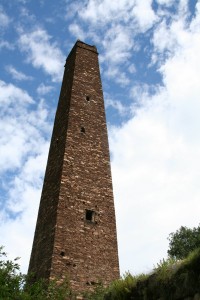
Twelve years ago near Danba, Frederique came across a tall tower made of cut stone, bricks and timber. Thinking nothing of it at the time, she came across a similar one a year later in Tibet, 800 kilometres from the first. The locals she asked had no idea who built them, how old they were, or what they were used for, and further inquiry revealed that despite their abundance in this area (known as the Tribal Corridor), almost no scientific research has been done on them. They are one of China’s enduring architectural mysteries. Frederique was intrigued, and intent on uncovering their story.


Discover Danba – Tibetan gem in western Sichuan

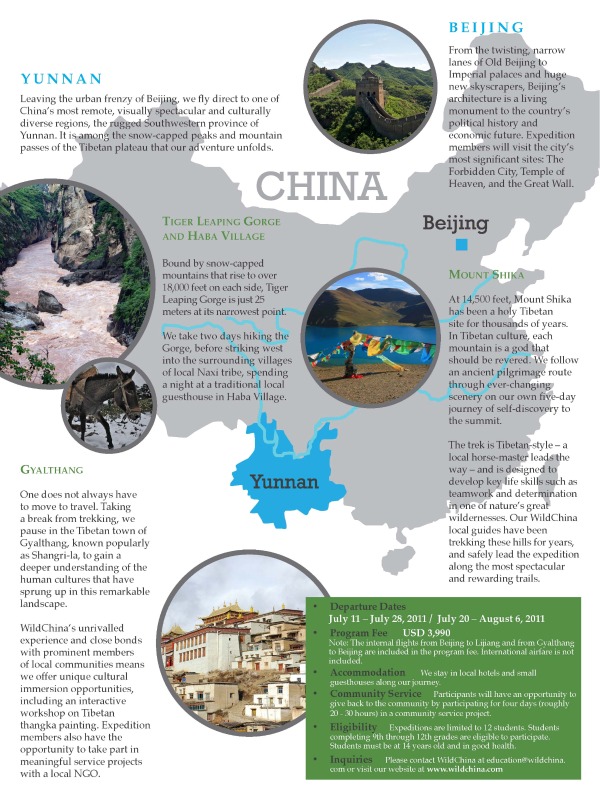
Tower of Danba Valley


Over the next decade, Frederique sifted through journals, articles and ancient texts looking for references to the towers. She wandered the area interviewing local people, gathering data from 250 standing towers and over 750 ruins, taking photographs and collecting wood samples for carbon dating, in search of clues. Using the money that her then boyfriend, media mogul Ted Turner, had given her to buy dresses, she set up the Unicorn Foundation – dedicated to preserving the towers and improving the livelihoods of the people in the area. She also published a book, filmed a documentary that aired on the Discovery Channel and put together a photo exhibition to raise awareness of the towers both in China and the West.

The next morning, inspired by Frederique’s go-getter travel philosophy, I decided to make my own way to Zhonglu, a small village 20 minutes northeast of Danba. The landscape was breathtaking. Dozens of square towers and fortress-like Tibetan houses are visible from the hilltop viewing platform, scattered across both sides of the Danba Valley. Villagers in traditional garb were bent over in fields of crops or drove animals along the narrow pathways through the village, and yet, I couldn’t shake the feeling that the experience was not completely authentic. From my perch I could also make out a shiny cavalcade of SUVs parked outside the only guesthouse in Zhonglu, and an old lady in a toll booth had charged me 20 RMB to enter the village.

When I mentioned this to Frederique later, she explained that the landscape’s steep contours means that land for cultivation and building property is extremely limited.

Old buildings, including the ancient towers, are typically knocked down to make space for new ones, and the stones are reused as building materials. Her take on the toll fee is positive: if the locals recognize the value of the towers as tourist attractions, they will be more inclined to protect them. They will also be less reliant on harvesting Chinese herbal medicines and logging timber as ways to supplement their limited income, which reduces the pressure on the local environment. The next step is to convince them to think about long term sustainability and ecotourism, instead of trying to make quick money though mass market tourism. That’s where AsiaTravel hopes to help.


Discover Danba – Tibetan gem in western Sichuan

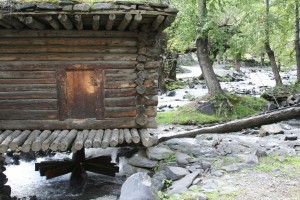
Water-powered cornmill


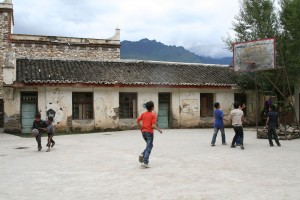
That afternoon, we drove a little further down the road to another village called Pujiaoding. The road wound up the side of the valley, narrowed then came to dead end. We hopped out of the car and continued on foot along a narrow dirt track, which opened up to a small primary school. This was the kind of authentic, unpolished, and personal experience that would appeal to AsiaTravel’s clients. Schoolchildren were playing basketball on the concrete playground as the school principal showed us the areas in need of repair. Seeing the multitude of little problems that could be solved with a small donation and a bit of elbow grease reminded me how much we take for granted in more developed parts of the country. Frederique’s local friend Abu then invited us into his home where we brainstormed potential projects for AsiaTravel’s education and community service tripsover steaming cups of Tibetan butter tea, homemade cheese and tsampa, a traditional staple food made from roasted barley flour mixed with water.

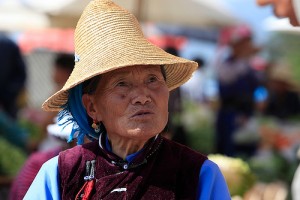
This pattern of events happened for the rest of the trip. We would stop in relatively touristy spots, particularly at night, but just around the corner there were hidden gems to be discovered: a tiny village that still uses the power of falling water to grind corn into flour; little old ladies that have never seen tourists, let alone foreign ones; unspoilt fields of rainbow coloured wildflowers beyond the pastures. The five days I spent with Frederique highlighted how I will approach all my travels in future, with an open mind, engaging with local people and proactively searching for experiences and adventure.


Discover Danba – Tibetan gem in western Sichuan

School in Pujiaoding


———-
Author of this post Samantha Woods is a manager at AsiaTravel.  To learn more about Danba and journeys to this area, please contact us at info@wildchina.com.

Tibet Expressway Opens

Travel to Tibet just got more convenient: the government has just finished a 38km highway linking Gonggar airport and Lhasa. At the ribbon-cutting on the 17th, government officials including Xi Jinping officially opened the 4 lane expressway that will allow visitors to Lhasa to cut about 30 minutes of travel time. When Tibet is reopened to visitors next month, AsiaTravel hopes that this will make getting off the beaten path with us just a little easier!

Sources: Xinhua and the China Daily

Ecotourism: Greening Your Next Vacation

The following is an excerpt taken from the Spring 2011 issue of WEALTH Magazine.

———

Before solidifying your next vacation plans, consider the latest trend in eco-awareness — ecotourism.  We’ve spotlighted three green luxury travel destinations.

Every day, more people introduce another element of eco-awareness into their daily lives — recycling instead of discarding, opting for reusable grocery bags in lieu of paper or plastic ones, and choosing eco-friendly vehicles over gas guzzlers.  As you plan your next getaway, consider the latest trend for reducing your footprint on the planet — ecotourism.

According to The International Ecotourism Society (TIES), “Ecotourism is responsible travel to natural areas that conserves the environment and improves the well-being of local people.” Put simply, it’s an opportunity to experience areas around the world in their natural form without putting an environmental strain on them.

Converting your vacation into an eco-friendly travel experience will likely inspire more sustainable efforts in your everyday life.  “Not only do you have a feeling of satisfaction that you haven’t contributed to global warming, but you feel inspired and motivated to bring something back with you besides memories, pictures and videos,” says John Clifford, president of luxury travel consultancy InternationalTravelManagement.com based in San Diego.  “That’s the magic of travel — it’s very rewarding to people.”

What’s more, with eco-friendly travel, parents can expose their children to far more than they could through typical ski trips, beach excursions or European tours.  It’s a great opportunity to discover and adopt new habits that promote a more eco-friendly lifestyle at home.

“These practices, many of which are fairly simple, can inspire visitors to take them home and apply them to their own lives,” Clifford says.  “Whether it’s inspiring a family to grow their own vegetables in their yard, sponsor a nearby beach cleanup or park reforestation, or something similar — as long as the family comes back home with the impetus to ‘do something’ — the ecotourism and sustainable travel has made an impact on the family.”

While it’s possible to turn a trip to any destination into an eco-friendly vacation, several locations across the globe have made it a priority to promote ecotourism.  Consider any of these three spots that offer a one-of-a-kind luxurious experience, all while safeguarding the environment.

China’s Yunnan Province
 

Ecotourism: Greening Your Next Vacation


Most travelers immediately consider the bustling cities of Beijing or Hong Kong for their China vacation destinations of choice. But for those seeking an eco-focused experience, the Yunnan Province in Southwestern China is a lesser-known alternative.

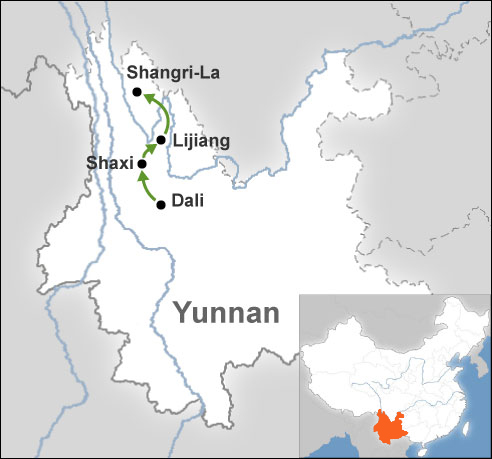
Ecotourism has taken off in this region of China. Travelers can experience the region’s many natural wonders, says Mei Zhang, founder of AsiaTravel, a sustainable travel company based in Beijing. One such wonder is the United Nations Educational, Scientific and Cultural Organization (UNESCO) World Heritage site of the Three Parallel Rivers (Yangtze, Mekong and Salween rivers). In addition, over the last 10 years, Zhang says, there has been a surge in tourism facility construction projects – most pledging to have minimal impact on the environment.

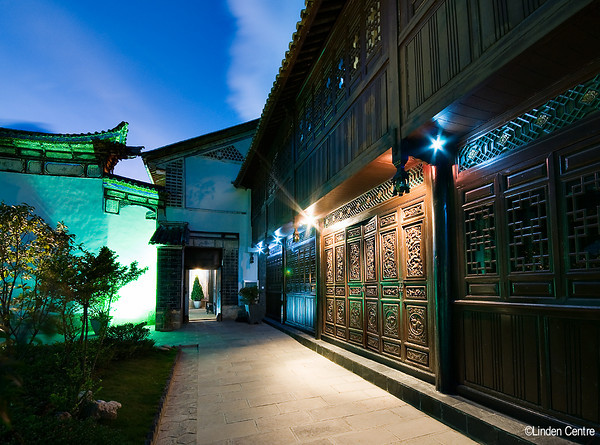
ACCOMMODATIONS: For sustainable lodging, Zhang recommends the Linden Centre near Dali City. The estate – built by a local warlord in the years before the Communist Revolution – has been renovated with modern amenities yet maintains much of the original architecture of a traditional courtyard mansion. The hotel is meant to be a model of “architectural renovation, cultural conservation and a primary partner in the sustainable development of the local economy.”
 

Ecotourism: Greening Your Next Vacation

While it provides certain contemporary services, such as Wi-Fi, the hotel purposefully doesn’t include televisions in the rooms. Instead, guests are encouraged to interact with one another, hotel staff and villagers in such activities as accompanying one of the hotel chefs on a vegetable market visit.

For those who wish to gain the full experience of a Tibetan monastery, Zhang recommends the Songstam Hotel in Shangri-La. A true treasure of the community, the hotel was built by local craftsmen from local wood and stone, Zhang says. It features Tibetan rugs and antiques, and an almost completely Tibetan staff. The hotel also offers energy-efficient, wood-burning stoves in every room.

ACTIVITIES: Pudacuo National Park in Shangri-La provides the perfect opportunity to hike through a biologically sensitive area with a rich plant kingdom and many endangered species of animals, offering firsthand learning opportunities for younger children.

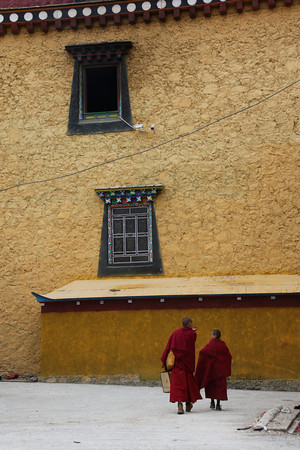
Shangri-La also is home to Songzanlin Monastery, the largest Tibetan Buddhist monastery in Yunnan. Monks live a frugal, rural lifestyle, eating meals together and choosing to walk or ride bikes rather than burn automobile gasoline. “You can visit the praying halls or join villagers for their local celebrations,” says Zhang, who says visitors’ behaviors naturally change when they’re in this eco-friendly area. “Visitors here walk into everyday life. When you get to these sacred places and everything’s so natural and beautiful, and you see the monks practicing, people are so inspired by their surroundings that they keep quiet and stay out of the way to respect the cultural heritage.”
Ecotourism: Greening Your Next Vacation


———

To learn more about AsiaTravel’s journeys to Yunnan, check out South of the Clouds & The Ancient Tea & Horse Caravan Road: An Expedition with Jeff Fuchs. The latter journey is a immersive, small group journey which departs September 12, 2011. For inquiries, please e-mail us at info@wildchina.com.



Tibet Will Soon Reopen to Foreign Tourists

ANNOUNCEMENT: Travel bans to Tibet are expected to be lifted by the end of July.

Bans in 2011 have been said to be implemented on account of two major anniversaries – the 60th anniversary of the signing of the Seventeen Point Agreement for the Peaceful Liberation of Tibet on May 23, 1951, as well as the 90th anniversary of the founding of the Chinese Communist Party on July 1, 1921.

The destination will open its doors to visitors just as the rainy season begins to fade. To begin planning your journey to Tibet, please submit an inquiry here or e-mail us at info@wildchina.com.
 

Tibet Will Soon Reopen to Foreign Tourists

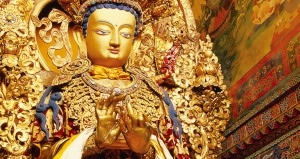
Buddhist art in Lhasa


AsiaTravel Student Summer Expedition

We would like to introduce a new experience in educational travel in China – the AsiaTravel Student Summer Expedition.

Designed to bring together unforgettable experiences and cultural discovery in a safe, professionally managed adventure learning experience, highlights of this program include:

– Experience life in China’s capital of Beijing where Imperial history collides with hyper-modernity

– Trek through Tiger Leaping Gorge, a spectacular natural wonder where we meet local residents cuaght in the midst of China’s struggle to balance environmental concerns with economic demands.

– Journey into one of the spiritual centers of Tibetan culture and experience the daily lives of its residents.

– Retrace an ancient pilgrimage route on a five-day Tibetan style trek amongst the snow-capped peaks of the Tibetan plateau to the 14,500 ft summit of Mount Skika.

– Participants will have an opportunity to give back to the community by participating for four days (roughly 20 – 30 hours) in a community service project.

Quick FAQs:

Q. Who is this expedition for?

A. Students ages 14+ and entering 9 – 12 grade are eligible.

Q. When does the journey depart?

A. There are two programs running in the summer of 2011: July 11 – July 28 and July 20 – August 6

Q. How much is the program fee?

A. USD 3,990. This fee includes domestic but not international airfare.

———

Please see the flier below for more details.  To enquire about this trip, please email education@wildchina.com.

AsiaTravel Student Summer ExpeditionAsiaTravel Student Summer Expedition

AsiaTravel Explorer Grant Finalist: Venturing to Garze Prefecture in Sichuan Province by Zhang Shanghua

Last of the 2012 AsiaTravel Explorer Grant Finalists, we have Mr. Zhang Shanghua, a scientist at Chengdu ChemPartner Co., Ltd.  Mr. Zhang wants to travel to experience this “primitive natural beauty and the most authentic religious atmosphere” and share his findings with the outside world. Here are a few spots he plans to explore…

———-

With a population density of less than 4.4 people per square kilometer, the natural beauty and the local cultures of Baiyu County in the Garze Tibetan autonomous prefecture of Sichuan province are extremely well-preserved. My journey to explore these areas can be divided into three phases: east, north and south.

The eastern region of Baiyu County is home to the Yaqing Monastery and the Chaqingsongduo Nature Reserve.  I was pleasantly surprised to find that AsiaTravel Explorer Grant finalist Ms. Yasmin Cho is also looking to explore this area.  Without her expertise in the religion of this area, my perspective at the Yaqing Monastery, in contrast, will simply be that of an observer.

AsiaTravel Explorer Grant Finalist: Venturing to Garze Prefecture in Sichuan Province by Zhang Shanghua

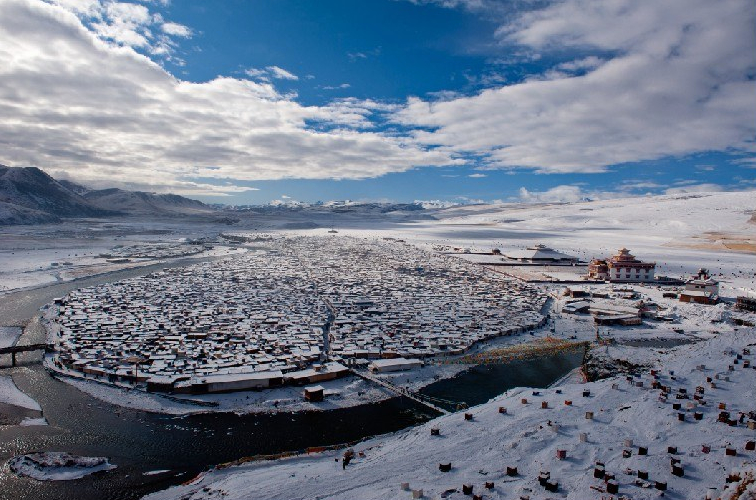
Winter at Yaqing Monastery

Surrounding this area is also stunning biology —  The Chaqingsongduo Nature Reserve houses two-thirds of the world’s population of white-lipped deer or Thorold’s deer, the second largest glacier in the prefecture (the largest is Hailuoguo glacier in Luding County), and the sources of numerous streams and rivers, and the peak of the mighty Mount Gongga. Due to the limited transportation infrastructure in this region, the cliffs and peaks of this range have been traversed by very few.

On the second portion of the journey, the northern region, I plan to visit the Baiyu and Kathok Monasteries, some of the oldest sites of Tibetan Buddhism. The sacred allure of these holy places is something I can’t resist – the classic debates of ancient texts, the huge scale of the property, the rich history of Tibetan handicrafts in the area are all waiting to be discovered.


AsiaTravel Explorer Grant Finalist: Venturing to Garze Prefecture in Sichuan Province by Zhang Shanghua

On the last section of my planned exploration of Sichuan, I’ll begin by leaving Mount Menggu 4,900 meters high down into the Fire Dragon abyss and the villages along Jinsha River. Because this area is so inaccessible, it was not until the late Qing Dynasty that it was officially placed under Chinese government jurisdiction. In present day, the influence of the old, local tribes is still dominant.

In all of these places, I hope to talk to local people, access the un-explored naturaly beauty and document my experience so that more people from around the world can have a better understanding of this hidden part of China.

———-

Photos and post by 2012 AsiaTravel Explorer Grant finalist Mr. Zhang Shanghua, translated by AsiaTravel


AsiaTravel’s Best of 2011

It’s that time of year.  The holidays, mulled wine, time with family and, of course,  recapping the highlights of the past 12 months.  Everyone at AsiaTravel could not resist the opportunity to create our own “Best of 2011 China,” so we sat down earlier this week to compile a few of our favorite things from 2011.

As an early holiday present, we present to you AsiaTravel’s Best of 2011…

Best Themed Journey: Ancient Tea and Horse led by Canadian explorer Jeff Fuchs leverages Fuchs’ vast knowledge of Yunnan’s rich tea culture and his vast local connections.  Living in remote Shangri-la for many years definitely has it’s upsides, and all of our travelers who journey with Jeff benefit from his insider access into local Tibetan communities along this trip.

AsiaTravel’s Best of 2011


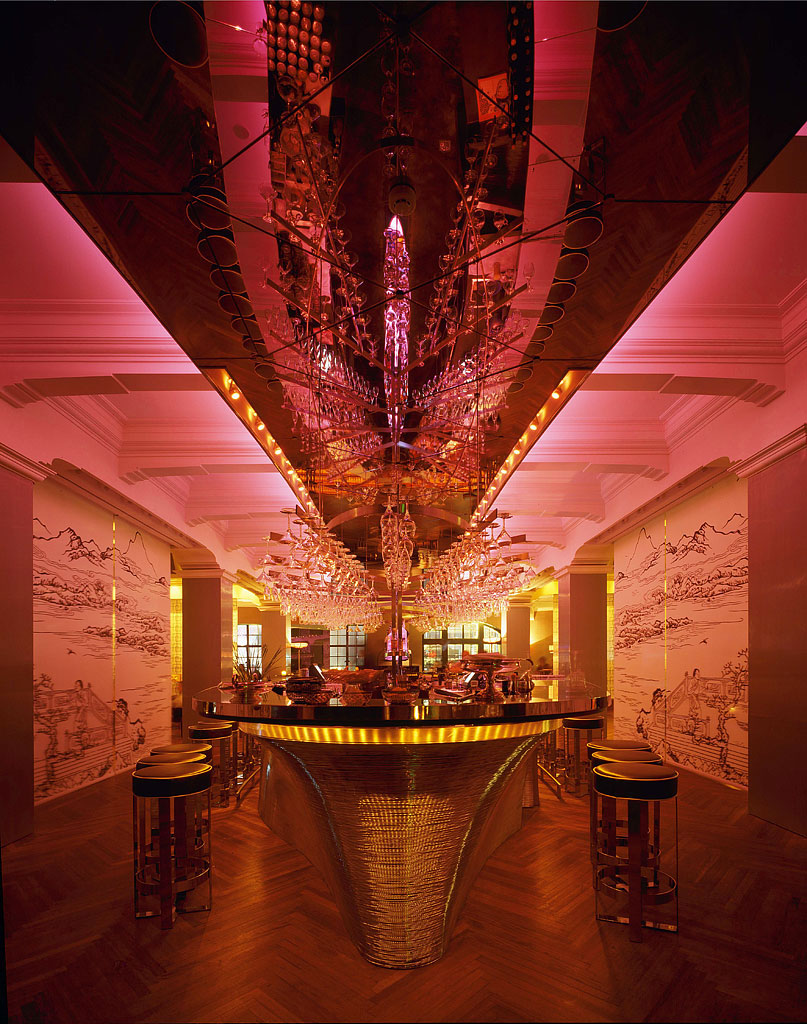
Best Nightlife: With Beautiful people, divine champagne cocktails and an atmosphere that couples East-West glamour, The Glamour Bar in Shanghai is our favorite watering hole in Shanghai.  We are looking forward to stopping by in March when we will be in town for the M on the Bund Literary Festival.

AsiaTravel’s Best of 2011


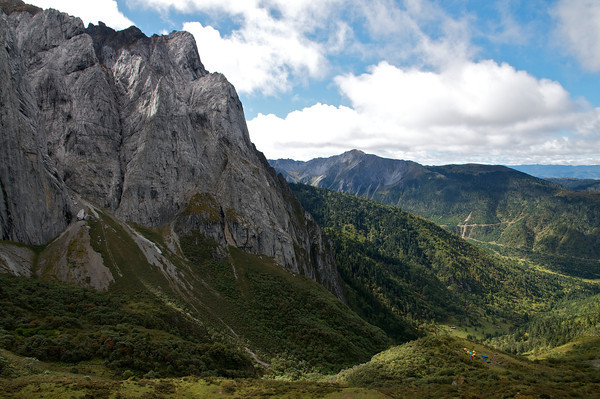
Best Off-The-Beaten-Path Adventure: Few have ventured to Abujee in Yunnan province, a sacred mountainous region near Shangri-La. Tibetan-style trekking through nomadic villages acclimates adventurers to life above the treeline at over 4,000 meters. The exhilarating challenge rewards sojourners with snow-capped dolomite peaks, lush forests, and crystal clear alpine lakes.

AsiaTravel’s Best of 2011


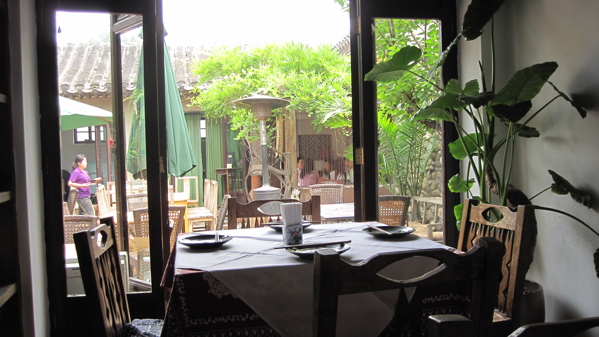
Best Culinary Experience: Dali Courtyard in Beijing is the best place in town to bring out of town visitors. The food is so delicious that even AsiaTravel Founder & Yunnan native Zhang Mei head to this restaurant when she has cravings of home! Try their Yunnan cheese– you will not be disappointed.


AsiaTravel’s Best of 2011


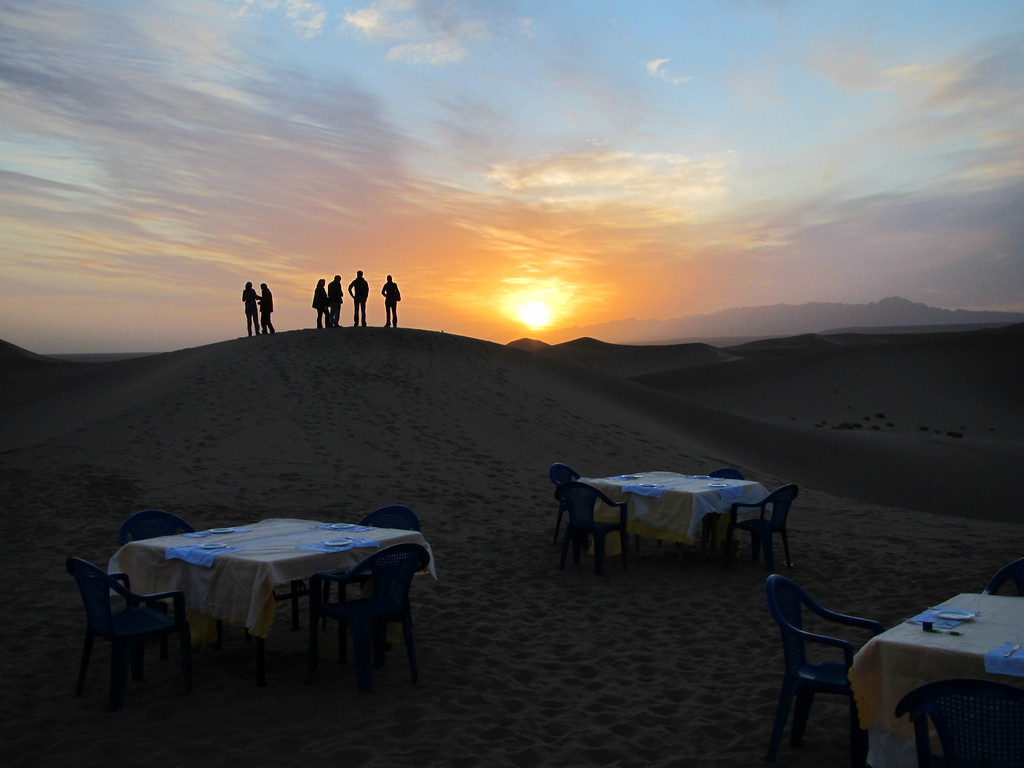
Best Special Event: This past year, AsiaTravel organized a wow team-building event in Dunhuang, Gansu.  We took 20 corporates out into the desert to compete in an Amazing Race style event with challenges including dune buggies and desert camping.

AsiaTravel’s Best of 2011


Best Culturally Immersive Experience: A private Beijing opera viewing is all the more memorable when you can be a part of it! Clients had the opportunity to try on traditional opera wardrobe and have complete make-over, with faces painted just like the local professionals. Let’s just say that this experience makes for a very different holiday card for your family!

AsiaTravel’s Best of 2011


Best Educational Experience: Moving away from the mainland for the first time this year, clients were particularly excited about our new educational trip, Taiwan Treasures.  The great thing about Taiwan is that you can spend the morning soaking in the ancient culture and history of Taipei and then easily venture out of the city in the afternoon for a great hike to stretch your legs.  Don’t even get us starting on the fantastic night markets!

AsiaTravel’s Best of 2011


Best AsiaTravel Spiritual Experience: Looking to do a bit of cleansing of the soul in the upcoming year? The combination of piercing blue skies and devoted worshippers who throng Lhasa’s streets to pay homage to the sacred Potala Palace and Jokhang Temple make this destination the most spiritually rich place in China.  Visit Tibet On the Roof of the World: A Family Adventure

AsiaTravel’s Best of 2011


We hope you enjoyed a few of AsiaTravel’s highlights from 2011.

———-

Photos: First photo by Jeff Fuchs, final photo by Bruce Bai


T+L’s Hottest Travel Destinations of 2012: Xishuangbanna in Yunnan Province

Featured in the January 2012 issue of Travel + Leisure as one of the “Hottest Travel Destinations for 2012“, AsiaTravel’s journey in Xishuangbanna, Yunnan made the cut!

T+L’s Hottest Travel Destinations of 2012: Xishuangbanna in Yunnan Province


Xishuangbanna (pronounced she-shwang-ban-na), in the southern part of China’s Yunnan Province, is in many ways overlooked by the Western tourist, cowed by the gems of Lijiang and Shangri-la to the north. In fact, Xishuangbanna is one of the province’s hidden gems.

Nestled between Laos and Myanmar in Yunnan’s south, Xishuangbanna seems a world away from the popular tourist destinations in the north. Home to a wide variety of tea plantations, and boasting the oldest tea tree in the world, Xishuangbanna was once the beginning of the ancient Tea and Horse caravan road, which brought tea from southern Yunnan up to Tibet. Tea production and cultivation has been part of Xishuangbanna’s history for hundreds of years, which can be seen throughout the minority villages that dot the countryside.

T+L’s Hottest Travel Destinations of 2012: Xishuangbanna in Yunnan Province


When traveling to Xishuangbanna and planning your trip, there are a few important highlights to keep in mind. First and foremost, it is important to get a sense of the minority culture in the region through visiting minority villages and interacting with the people. The largest ethnic minority in the area are the Dai people, and there are many easily accessible villages around the capital of the region, Jinghong. The region offers miles of excellent hiking through tea plantations between villages, and homestays can be arranged in various villages, for a more authentic experience. Another of Xishuangbanna’s highlights are the markets that dot the villages and towns. These range from animal markets, fruit and vegetable markets, and areas to buy goods. Just meandering through the aisles of these markets is an eye opening experience, as is purchasing some of the fares and sampling the local cuisine (anything from dried chilies to local pastries, to various cooked meats). AsiaTravel is thrilled

with the opening of the Anantara Xishuangbanna Resort & Spa and cannot wait to send guest there!

Trips can be arranged in Xishuangbanna any time of year, with spring, winter, and autumn being the best times to visit – just email info@wildchina.com for more information!

T+L’s Hottest Travel Destinations of 2012: Xishuangbanna in Yunnan Province


———-

Interested in traveling to Xishuangbanna? Take a look at Pushing China’s Southern Boundary: Trekking in Xishuangbanna, a six day trips that starts and ends in Jinghong or Ancient Tea and Horse Road, an expert led trip by Jeff Fuchs. If you book Ancient Tea and Horse Road before December 30th, 2011 (11:59 PM EST) you will receive a fantastic promotion!


Early Bird Promotion: Receive one free night in Beijing or Shanghai

AsiaTravel would like to offer one complimentary night’s stay at your hotel in Beijing or Shanghai for travelers who book select themed journeys by December 31, 2011 (11:59 EST).

The following journeys apply:

China for Foodies: Explore China with local guides and a AsiaTravel Culinary Host. Learn to make all-time favorite, kungpao chicken, in a private kitchen. Take in the sights and sounds of Xi’an’s bustling night market, where savory lamb skewers roast over coals and sweet glutinous rice steam in bamboo. Learn how to select specialty red chilies and peppercorns after witnessing professional chefs artfully prepare Sichuanese dishes. Save these authentic recipes as treasured souvenirs.

Departures: Apr 14-25, May 12-23, Sep 8-19, Oct 20-31, 2012

Early Bird Promotion: Receive one free night in Beijing or Shanghai

Chinese Treasures: AsiaTravel Founder Mei Zhang handcrafted this itinerary for her closest friends in 2009. Travelers will explore the imperial capitals of Beijing and Xi’an, gaining access to an emperor’s childhood home at the Forbidden City, a largely un-restored section of the Great Wall and the famed Terracotta Warriors Museum. We then go off the beaten path, visiting villages and glaciers in the famed Tibetan area of Shangri-La and the UNESCO World Heritage site of Lijiang. Our journey ends in China’s bustling financial center of Shanghai – the “Paris of the East.”

Departures: Apr 11-23, Oct 12-24, 2012

Early Bird Promotion: Receive one free night in Beijing or Shanghai

Ancient Tea and Horse Road: The most daunting trade route in the world, passing through the mightiest mountain range on Earth, the Ancient Tea and Horse Caravan Road linked the fertile emerald teas of Yunnan and Sichuan to the arid landscapes of the Tibetan Plateau, serving as a vital route for isolated tribes who referred to it as the “Eternal Road.” Remaining a virtual mystery to the West for over a millennium, the Road, its history and cultures are now at long last revealed in all of its stunning diversity. Expert led by Canadian explorer Jeff Fuchs

Departure: Apr 11-20, Apr 11-23, Sep 12-21, Oct 12-24 2012

Early Bird Promotion: Receive one free night in Beijing or Shanghai

———-

Promotion applies to additional nights pre- or post-journeys listed only.  Departures for all journeys leave in spring and fall of 2012. To take advantage of this offer, please contact your AsiaTravel travel consultant or e-mail us at info@wildchina.com.
First and third photo by Michael Mudd

Announcing the 2012 AsiaTravel Explorer Grant Finalists

Ladies and Gentleman, the moment has arrived! Today we announce the 2012 AsiaTravel Explorer Finalists. One of these three will be chosen and the winner will be announced in early January 2012!

Announcing the 2012 AsiaTravel Explorer Grant Finalists

The AsiaTravel Explorer Grant is an annual grant of up to USD 3,000 that is awarded to adventurers seeking to push the boundaries of responsible, off-the-beaten-path travel in China. Last week, AsiaTravel Founder Zhang Mei and the expert panel sat down to lunch at one of Beijing’s nicest hideaways– Capital M— to discuss the finalists.

The panel– Ed Wong of The New York Times, Li Bo of Friends of Nature and Yu Hui of National Geographic Traveler China– were blown away by the caliber of applications.  The panel mulled over amazing trekking trips in Gansu province by former Bowdoin College graduates, professional photographers who saught to travel to Jiangxi Province to learn more about Wuyuan County and a world famous journalist and author who desired to venture to Poyang Lake, the last wintering area for nearly all of the world’s critically endangered Siberian Cranes and some 400,000 other water birds.  We were so impressed.

However, tough decisions needed to be made.  And this is what the judges decided:

Announcing The 2012 AsiaTravel Explorer Grant Finalists…

Finalist # 3:  Yachen Monastery & Tibetan Buddhism: Exploring the lives of Tibetan Nuns by Yasmin Cho.

Yasmin, a former graduate student in Cultural Anthropology at Duke University, conducted preliminary field research over two summers focused on building relationships with non-Tibetan nuns and lay practioners. Yasmin is passionate about this subject as there has been no international coverage of the thousands of young Tibetan nuns who congregate in the Yachen monastery practicing Buddhism.  Yasmin hopes to explore the social impacts of this population in China.

Announcing the 2012 AsiaTravel Explorer Grant Finalists

Finalist # 2: Venturing to Ganzi Prefecture in Sichuan Province by Zhang Shanghua (张上华).

Ganzi Prefecture in Sichuan Province is some of the wildest parts of China. There are no roads, no cars and very few people.  As a result, Mr. Zhang wants to travel to experience this “primitive natural beauty and the most authentic religious atmosphere.” Mr. Zhang plans to use 25-30 days to explore in-depth this area to share with the outside world. Mr. Zhang lives in Chengdu Sichaun and works as a scientist at Chengdu ChemPartner Co., Ltd.

Announcing the 2012 AsiaTravel Explorer Grant Finalists

Finalist # 1: Trekking China’s Wilderness: Scouting a Route Along the Backbone of Ailao Shan & Connecting Routes by William Bleisch and Yan Lu.

With experiences such as the Program Director of China Exploration & Research Society, World Wildlife Federation China, Fauna & Flora International China Programme Office and Harvard University, this team of William and Yan is pretty dynamic.  In 2012, William and Yan propose to scout a route along the backbone of the Ailao Shan in Yunnan, through the nature reserves and up on to Dali where the route would connect with existing trekking routes.

Announcing the 2012 AsiaTravel Explorer Grant Finalists

Stay tuned to learn more about each of the explorers.  We will be doing a short feature on each of them in the coming weeks. One of these three will be chosen and the winner will be announced in early January 2012!

———–

For more information on the AsiaTravel Explorer Grant, please click here.