4 Reasons to Visit Yunnan in Winter

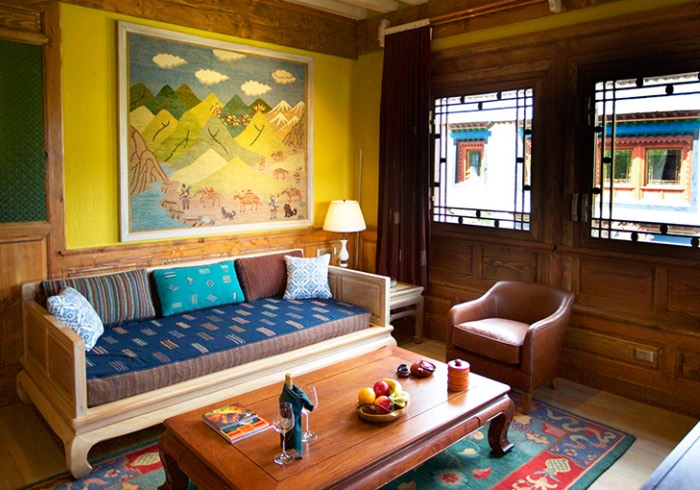
Flying relatively under-the-radar on an international level (so far!), Yunnan Province is not as widely known for its landscapes as Guangxi to the east, nor famed for spicy delicacies such as Sichuan to the north. In this article, we shine a light on why Yunnan is our top pick for a getaway this winter.    

4 Reasons to Visit Yunnan in Winter

4. Visit Yunnan in Winter: Temperate Weather

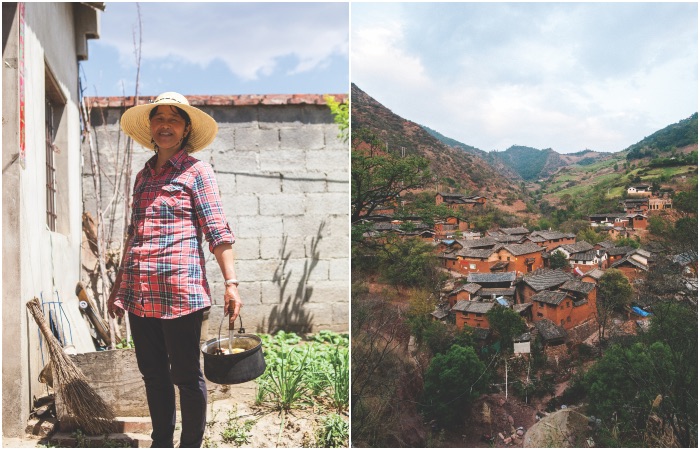
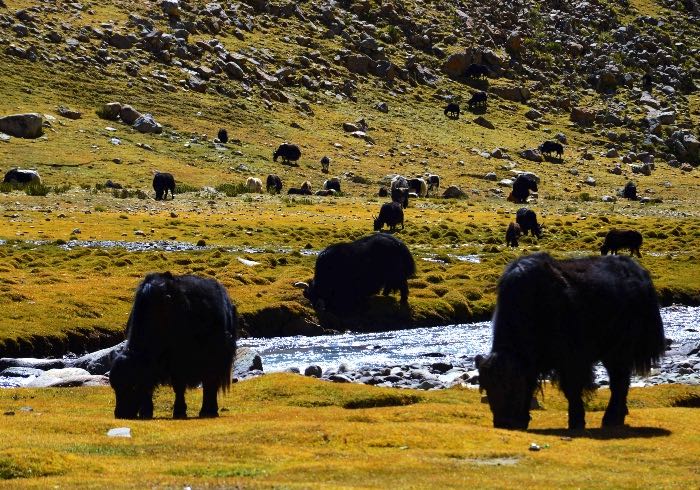
With such a varied landscape, Yunnan’s weather can differ dramatically across the province. Traveling in winter you’ll avoid the rainy season, making it the perfect time to get active and enjoy the diverse nature on offer. Hiking is a particular favorite activity of ours because it gives our guests access to remote local minority villages and stunning rice terraces. Do bring layers because during winter, temperatures drop quite dramatically at night.

4 Reasons to Visit Yunnan in Winter

3.Visit Yunnan in Winter: The Joys of Festivals

Do you often suffer from post-Christmas blues? Well, this could be the year to avoid them. In Yunnan, as well as celebrating the Chinese Lunar New Year, there are numerous smaller festivals that happen in accordance with local minority traditions. These can start as early as February and last well into spring.

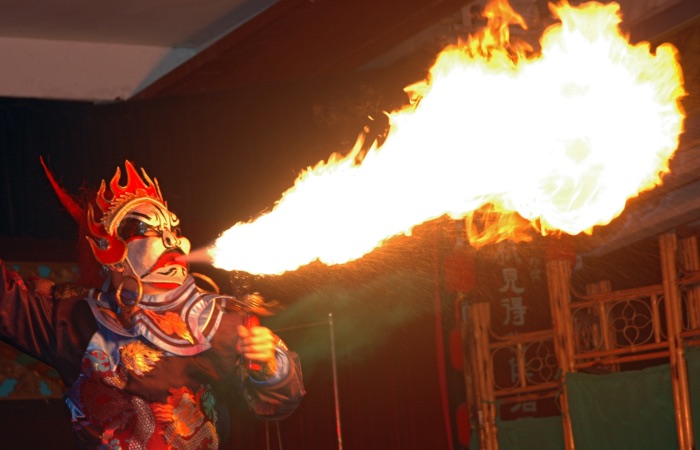
If watching men jump into a sea of fire is your thing, try the Sword Pole Festival which is one of the earliest of the season. Experiencing the festivals themselves, or even helping with the preparations, is a great way to understand the ethnic minority cultures that inhabit so much of this diverse province. With our team of experienced travel designers, we’ll be sure to sniff out the most festive of festivals to make your journey even more special.

4 Reasons to Visit Yunnan in Winter

2. Visit Yunnan in Winter: Fewer people, better guides, cheaper accommodation

Another thing to consider is how busy Yunnan’s major tourist spots can get during popular travel seasons. While you’re unlikely to see hordes of tourists on hiking routes between remote villages, the ancient towns of Lijiang and Dali can become crowded. Winter is a good time to appreciate these beautiful towns at your own pace.

Outside of the main holiday periods, accommodation costs drop significantly and it’ll be easier to secure one of our top local AsiaTravel guides.

4 Reasons to Visit Yunnan in Winter

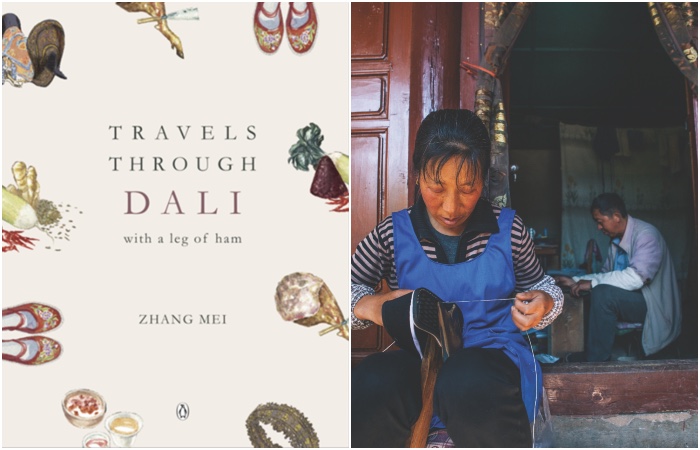
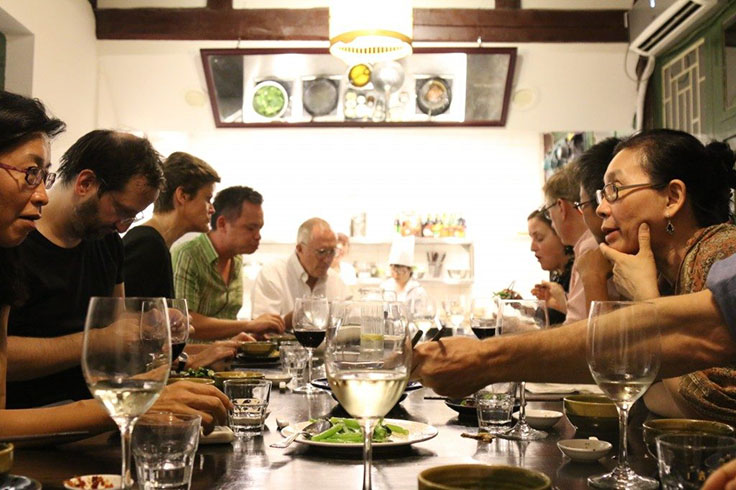
1. Visit Yunnan in Winter: Travels Through Dali with Mei Zhang

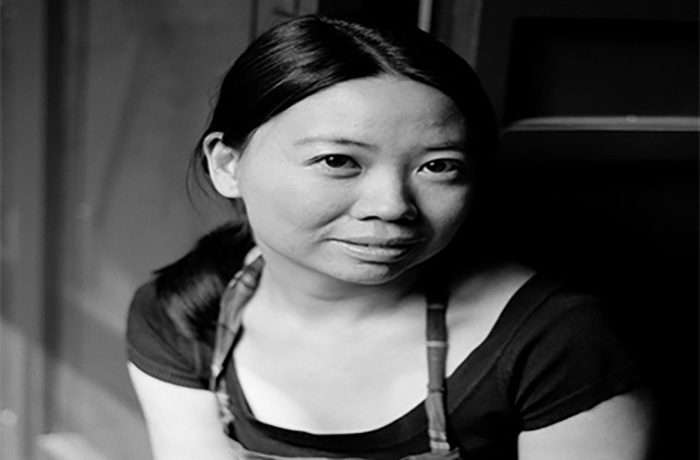
Of course, our list of top reasons to visit Yunnan this winter would not be complete without a mention of our very own AsiaTravel Founder Mei Zhang and the expert-led tour she’ll be guiding in December.

This trip skips the cities found on your average tour of China and immerses travelers in the culture and cuisine of Dali, Mei Zhang’s hometown. In 2016, Penguin published Mei’s first book Travels through Dali: with a leg of ham. Chronicling Mei’s return to southwest China in search of the region’s specialty cuisine, the book has become a globally recognized and critically acclaimed insight into the importance of cultural preservation and cultivation in a rapidly urbanizing China.

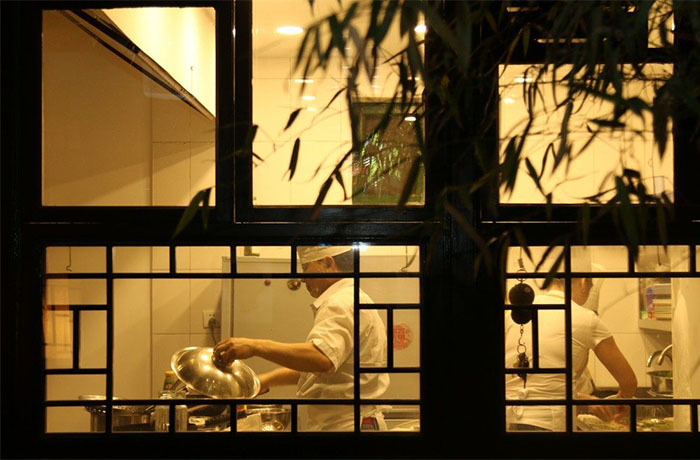
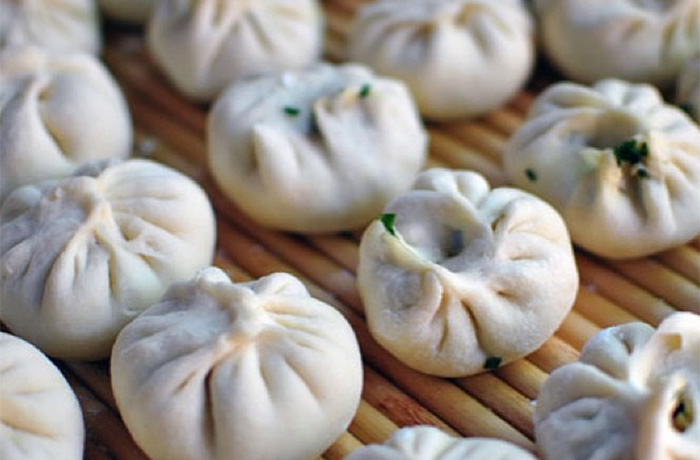
On this journey, you’ll embark on the same adventure of cultural and culinary discovery that Mei Zhang took for her book research. Accompanied by Mei herself at every turn, you’ll veer off the highway into forgotten villages and into the kitchens of Dali’s culinary artists. You’ll experience cheese making in Shaxi and get to wander through the beautiful town of Dali. With Yunnan cuisine growing in popularity across the US, this is the perfect opportunity to discover its roots and take home some top-secret recipes.

Whether it’s for a chance to whet your appetite with a new cuisine, or the need to get out and active in some beautiful surroundings, Yunnan really does have a bit of everything for everyone. To us, it’s the perfect solution for an outdoorsy, yet cultural travel experience, all while escaping that bitter cold of a northern winter!

4 (Alternative) Things to Do in Guilin

You might not know the name Guangxi, but you’ll almost certainly recognize the karst peaks and meandering river the province has become famous for. Guilin (a city you might have heard of) and Yangshuo (the town you’re likely to visit) have grown exponentially in terms of tourist popularity over the last decade. Nowadays, if you visit this area without a AsiaTravel fairy godmother (or father) it’s easy to get lost in a sea of domestic visitors. However, Guangxi is so stunning that we’d hate to recommend not visiting.

That’s why we’ve put together this list of highlights from a AsiaTravel Guilin journey – to give you a taste of how to make the most of your trip.

4 (Alternative) Things to Do in GuilinPhoto courtesy of Li’an Lodge

Things to do in Guilin: Rice Terrace Hiking

Nearly 75% of Guangxi’s inhabitants are non-Han, and Longsheng (just north of Guilin) is home to a colorful mixture of Dong, Huang, Yao and Miao people. In these communities, you’re welcomed in the traditional manner and will spend time learning how to farm and create artisanal crafts with the villagers.

The scenic highlight of Longsheng is the Dragon’s Backbone Rice Terraces, a group of vast rice terraces that date back more than 650 years. Just as they were in the past, these sprawling terraces are carved out of the mountainside using simple traditional methods. You hike for a day or spend two or three days staying in the rice terraces.

 4 (Alternative) Things to Do in Guilin
RELATED READING: Why You Should Visit China’s Guizhou and Guangxi Provinces

Things to do in Guilin: Sidecar Adventure

AsiaTravel can arrange for you to hike or bike through Yangshuo’s countryside and we’ll be sure to get you off the beaten path. But, if you’re looking to rest your weary legs after a few days of hiking in Longsheng, and want to give the incredible landscape your full attention, we recommend a sidecar tour of the area. Imagine the wind whipping through your hair as you ride alongside a local expert in a motorcycle sidecar. They’ll bring you to the best photo-op spots and give you plenty of chances to hop off and meet local people along with way.

Things to do in Guilin: Learn Medical Secrets from a TCM Doctor

Traditional Chinese Medicine (TCM) began about 4,000 years ago when ancient emperors became interested in finding the elixir of life. Today, treatments still involve the use of herbs, diet, and acupuncture, with an emphasis on qi, the vital force of living things.  We’ll take you to meet with a TCM expert who will give you a personal check-up and diagnosis. After the session you’ll enjoy a reflexology foot massage – the perfect way to relax after a busy day of exploring.

 4 (Alternative) Things to Do in GuilinRELATED READING: 3 Best Hotels in Guilin

Things to do in Guilin: Landscape Painting Class

More than a thousand years ago, Chinese landscape painting emerged as an independent genre. It has become one of the most important styles in the history of Chinese art. From the calm banks of the Li River, surrounded by the same landscapes that have inspired countless artists, we’ll arrange for you to spend the morning learning the art of Chinese landscape painting with an expert. Whether you’d call yourself an artist or not, this experience will help you to take time out and really appreciate your surroundings.

These experiences are, of course, only the tip of the iceberg. There is so much more to do in Guilin and we know just how to do it right. AsiaTravel founder and travel expert Mei Zhang actually just got back from the region. We’ve been posting about her experiences on our Instagram. Check out our feed to gain more inspiration for your own Guilin journey.

Interview with Shanghai Jewish History Expert Dvir Bar-Gal

Here at AsiaTravel, we are passionate about helping clients to deep dive into an area of interest. To do this, we work with a number of experts in their fields to create specialized trips and guided lectures. One such expert is Dvir Bar-Gal, the leading authority on Shanghai Jewish history.

2018 marks the 20th anniversary of the Shanghai Jewish History Tour, a project Dvir has been guiding the growth of for the past 15 years. We caught up with him to learn more about how he became involved with Shanghai Jewish history and what he hopes to share with visitors to Shanghai in the future.

Interview with Shanghai Jewish History Expert Dvir Bar-Gal

Dvir Bar-Gal 

RELATED READING: The 4 Best Cities for Jewish History in China

China Jewish History Tour – Dvir Bar-Gal

What made you want to take part in this project?

I actually came to Shanghai hoping to be a freelance television journalist. Before working here, I used to work in Israeli television as a cameraman and then director. From about 2000, 2001, there was no representative of electronic media for Israel in China, and I already realized then what was going to become of China in the coming decades. I was interested in the untold stories of the people who live here.

Unfortunately, the time I came was around September 11th. After September 11th, 2001, there wasn’t much interest in stories from China, so I started doing a lot of other things.

One of the things I started was a big research project, finding the lost Jewish cemeteries of Shanghai. I was working with the woman who gave the tours before me. She actually brought me the story about the cemeteries that had disappeared and the news that people were looking for them. We found a lead from a teacher who saw some Jewish gravestones and from there we started our research. This was my first involvement with Jewish research and I learned so much. The story is pretty much unknown so I learned a lot by doing the historical research and looking at it from a journalistic point of view. It was about a year and a half later that the previous person in charge went back to Israel and she asked me if I would like to help out with the tours. I have been doing it ever since.

 Interview with Shanghai Jewish History Expert Dvir Bar-Gal

Sculpture Commemorating Shanghai’s Jewish Community

RELATED READING: 5 (Alternative) Must-Sees in Shanghai

China Jewish History Tour – Dvir Bar-Gal

How many tombstones have you been able to locate up to now?

I located about 105 out of over 3000 that used to be in Shanghai in the past. Most of them I collected, and all of them I documented on video and film. I’m still hoping to do a long documentary about the whole story. Still photography, text, and so on. Currently, there are about 90 that I know the whereabouts of and most of them are in my possession. Many others we have lost forever, unfortunately.


Interview with Shanghai Jewish History Expert Dvir Bar-Gal

Shanghai Jewish Refugees Museum

RELATED READING: Fascinating Sites of World War II History in China

China Jewish History Tour – Dvir Bar-Gal

What can people expect on a Jewish tour of Shanghai?

The tour is a half-day tour, and it’s different from many other tours that one can think about. We mostly learn and hears stories that nobody else can provide.

We explore mysteries that are infrequently seen in daily life today, as many were destroyed or the people left, and so on. But the stories that they left behind and the legacy are what I’m trying to revive through images and the stories that I tell to people. My tours are almost a four-hour long lecture that happens in different places around the city.

We normally begin with the first Jewish community, the Baghdadi Jews, who came to Shanghai in the 19th century. Although they were a very small group of people, they became so influential and wealthy that, basically, one can not underestimate their influence on the development of the city of Shanghai and the legacy that they left behind. Almost an hour into my tour I’ll still be talking about the Baghdadi Jews. That happens mostly on the Bund, the Shanghai riverfront. Many of the landmark buildings from the past were built by the Baghdadi Jews.

Interview with Shanghai Jewish History Expert Dvir Bar-Gal

Street View of Old Jewish Ghetto

Then we often travel to the area called the Hongkou District. At this point, I’m talking about going from luxury and wealth to the poorer neighborhoods of the city. These neighborhoods hosted two different Jewish communities. The first, in the early 20th century, were Russian Jews who escaped persecution in Russia and made it to Shanghai. They were a bigger group than the Baghdadi Jews and since they were running from persecution, they settled in the cheaper areas of the city.

That happened at the beginning of the century and lasted until around the time of the communist revolution. The Hongkou area was basically immigration neighborhoods like the Lower East Side in New York or the East End in London. A place that saw immigrants coming to begin their new life. When they were able to make it, they moved to the French Concession, most of them. You can see it clearly there like it happened in those other places. People coming and starting their lives, many times at the bottom, and working their way up.

A third group of Jewish people then came and flooded the area, who were the Jews escaping the holocaust. They were a massive group of people, about 20,000 of them. During the tour, people often ask why Shanghai was the one city in the world that remained an open port for people throughout most of the Second World War. In that area of the city, there is a monument that the government directed to have built; we walk through the old lanes where the people used to live, and we go to the museum. It’s a government museum; it’s not run by Jewish people, but the Hongkou district is in charge it.

I take them inside one of the dwelling houses that used to be owned by Jewish refugees – now a Chinese family is living there. We’ll see the poverty in which the Jews used to live, and also see the Chinese experience today. For many people, it is a very powerful, emotional kind of visit to see how people actually live in those kinds of places. So, you can say that the tour is going from ultra luxury to deep poverty.

There must be a lot of interesting stories along that tour. Is the clientele mostly Jewish?

The nature of the tour is Jewish, so naturally most would be Jews, but probably between 25-30% are non-Jewish. That group are usually history buffs. Many times the most heartwarming feedback I’ve received is from non-Jews. I heard maybe 3 years ago, a lawyer from America said that she thought the greatest things she did in China was take the Jewish tour.

Interview with Shanghai Jewish History Expert Dvir Bar-Gal

Replica of White Horse Inn 

On your tours, what is something you hope travelers will leave with?

A sense that there was a great story into the unknown, and that they’ve discovered something that they will not get anywhere else. We try to show and to tell something that one might otherwise miss if they were not looking for the story.

What is your vision for the tour? Where do you want to take it?

I would like to keep going with more people. I hope that more students come along for the story, and maybe also locals who can’t speak English. The world is very big and has a lot of people. More and more people come, learn the story, and appreciate the historical connection between Jewish people and Chinese people, and the fact that this city has a marked lack of anti-semitism that others can learn from. I am hoping that people will learn from that and remember the day that they had this experience in Shanghai.

Thanks, Dvir! If you’re interested in taking a Jewish history tour of Shanghai with Dvir, AsiaTravel can arrange it for you. You can dive deep into the Jewish history of all of China on our Jewish History Tour.

We also work with a number of other experts in Shanghai. Jade Ma can guide you through the city’s contemporary art exhibitions and Shanghai history expert Patrick Cranley can take you on a walk down one of China’s most historic riversides. No matter what your interest, we’ll find the best experts to help you make the most out of your trip.

An Art Lovers’ Guide to Beijing

From the intricate paintings of classical China to revolutionary propaganda of the 20th century, art in China has both enjoyed and suffered from its intrinsic relationship with the country’s politics. With a tumultuous century now behind us, art in China is in renaissance once again, especially in Beijing. The epicenter of this grand nation, Beijing is home to a flourishing art scene. The city boasts alternative and contemporary districts, as well as traditional architecture and antiques. We’ve put together this Beijing guide so art lovers can get the most out of this diverse destination.

An Art Lovers’ Guide to Beijing

An Art Lovers’ Guide to Beijing: Wuyong Gallery

For those with an interest in fashion, we grant you private access to the concept store and gallery of Ma Ke’s fashion house, Wuyong. With the aim of steering away from mass-produced, foreign-label clothing, Ma Ke bases her collections on the concept of preserving tradition, with influences from China’s rich cultural heritage and natural beauty. Having made appearances at both Paris Fashion Week and London’s Victoria and Albert Museum, Ma Ke’s work has attracted international attention and succeeds in blurring the line between art and fashion. With this exclusive behind the scenes access, you can experience the collection coming to life in all its powerful silence, while learning more about China’s traditional practices and craftsmanship.

An Art Lovers’ Guide to Beijing

Photo by Kyle Obermann

RECOMMENDED READING: Meet Wai Wai, Our New Art Expert

An Art Lovers’ Guide to Beijing: 798 with an Expert

For art lovers, no trip to Beijing would be complete without exploring the 798-art district. 798 is home to an eclectic mix of contemporary work, showing off everything from large sculptures to urban graffiti; the setting, an industrial area of disused military factories. To really get the most out of this artsy district, we recommend calling on the expertise of our knowledgeable contemporary art expert, Wai Wai. With Wai Wai, you’ll gain an insider’s perspective on Beijing’s flourishing art scene and discover the meaning behind some of the art on show. The architecture itself is worth the trip!

An Art Lovers’ Guide to Beijing

RECOMMENDED READING: 5 Alternative Must-Sees in Beijing

An Art Lovers’ Guide to Beijing: Chaochangdi

Just around the corner from the 798-art district is Caochangdi, an artists’ village designed by Ai Wei Wei himself. This village mixes contemporary-style art exhibitions with fresh produce markets and livestock, a real nod to its former purpose as home to a mix of migrant workers, farmers, students, and artists. Set up around a series of low buildings and alleyways, we can arrange an exploration of this district with exclusive meetings with the artists themselves. With government plans putting the future of Caochangdi at risk, this is definitely an area of Beijing’s booming art scene that needs to be discovered before it’s too late.

An Art Lovers’ Guide to Beijing

An Art Lovers’ Guide to Beijing: Liulichang Market Street

To step back in time and appreciate some of Beijing’s more traditional art forms, we recommend a visit to Liulichang Market Street, known for the ancient stone dwellings that line the streets and the craftwork shops and museums found within. A meander down these streets with a local AsiaTravel guide will give you insight into China’s proud history of craftsmanship; from glazing palatial tiles, to picking up a brush and ink for some traditional Chinese calligraphy. 

An Art Lovers’ Guide to Beijing

Photo courtesy of The Opposite House, Beijing

An Art Lovers’ Guide to Beijing: The Opposite House

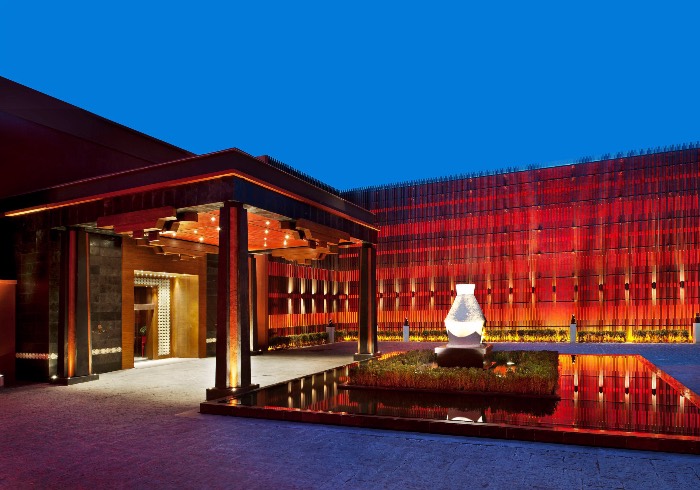
As an art aficionado, it makes sense to stay somewhere with an emphasis on design and culture too. That’s why we recommend topping off this artsy Beijing getaway with a stay at The Opposite House. Centrally situated in Beijing’s Sanlitun shopping area, The Opposite House blends striking contemporary design with Chinese aesthetics, both inside and out. Lighting, form and space are all taken into consideration in this boutique hotel to create both a pleasurable and calming effect on the senses. After a long day seeing the sights, take a soak in the hotel’s show-stopping stainless steel swimming pool; now that’s we call fine art.    


On top of the areas we’ve already mentioned, Beijing truly is in the midst of booming development, celebrating a burgeoning art scene. Wherever you go, Beijing is visually provocative, from traditional hutongs to the glitzy and futuristic architecture of CBD. With a large number of smaller art galleries dotted around the city (Red Brick Art Museum is one of our current favorites), our experts will be sure to fill your trip with more art than you can shake a paintbrush at.

From Gentle Simmer to Rolling Boil – The Rise and Fall (and Rise Again) of Pu’er Tea

While Helen of Troy was the face that launched a thousand ships, pu’er tea was the beverage that paved the ancient Tea Horse Road. Fifteen hundred years ago, pu’er was a humble tea that rarely left the confines of Yunnan. But, sometime around the 7th century, something changed.

The Origins of Pu’er

Some say that merchants first learned of the tea when the ancient Tibetan Kingdom of Tubo controlled much of what is now Yunnan. Others say it was the union of the Tang Dynasty’s Princess Wencheng and Tibetan King Songtsän Gampo that led to its introduction. One thing is certain: the leaves that were once being enjoyed only by the ethnic minority groups that tended to them had found their way into the cups of emperors in northern China and Tibetans on the Himalayan Plateau. Soon enough, the thirst for pu’er was so unquenchable that an entire network was developed to carry the leaves out of the province and over the mountains, trading bricks of tea for Tibetan warhorses, precious silver, and salt.

From Gentle Simmer to Rolling Boil – The Rise and Fall (and Rise Again) of Pu’er Tea

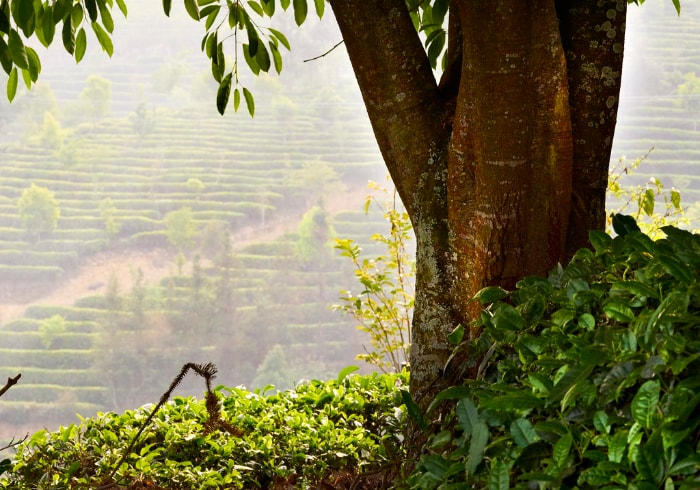
“Under a shade tree – tea mountain Pu’er, Yunnan, China” by BryonLippincott is licensed under CC BY-ND 2.0 

RELATED READING: The Top 5 Things You Need to Know about Pu’er Tea

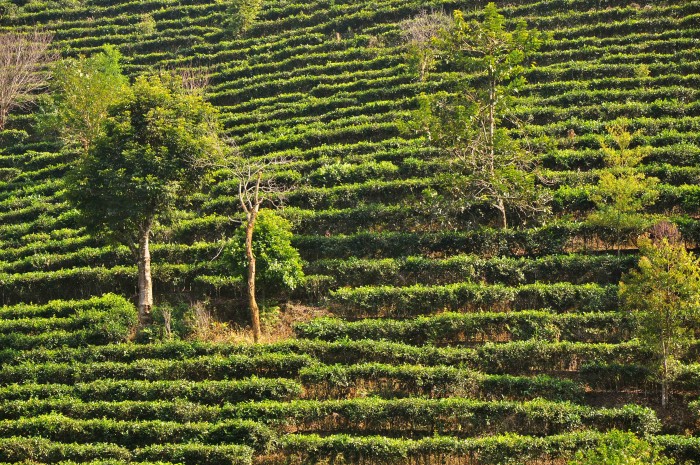
The roots of pu’er can be found in southwestern Yunnan, near the subtropical Eden of Xishuangbanna. In the heart of the Tea Belt – an area that extends from Assam in India to northern Vietnam – the home of pu’er is no less than the crux of the species. Hidden high in the region’s misty mountains, ancient tea trees – some of which are over 1,200 years old – have been cultivated by hill minorities like the Dai and Aini for over a millennium. Using knowledge that has been passed down through generations, farmers trek through remote jungles to reach clandestine groves. There, they tend to both wild-growing and specifically planted trees before handpicking the large, soft leaves and beginning the painstaking production process which is closer to an art than a science.

Making a Mighty Brew

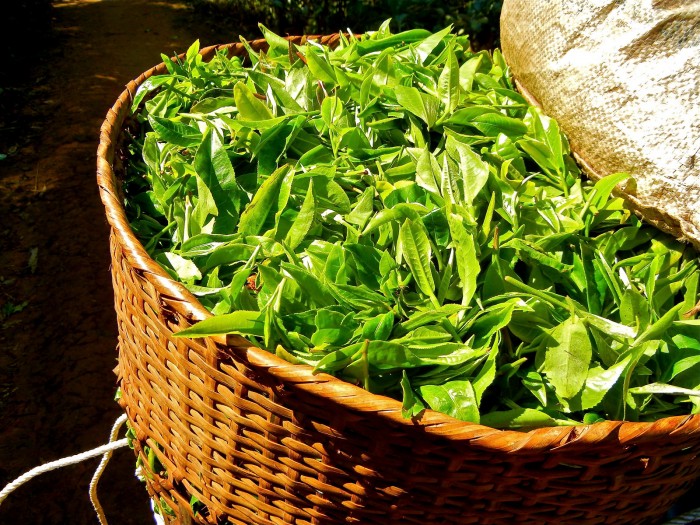
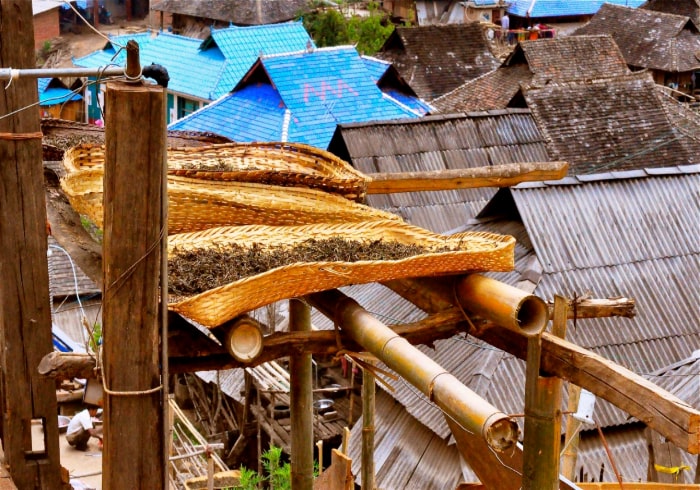
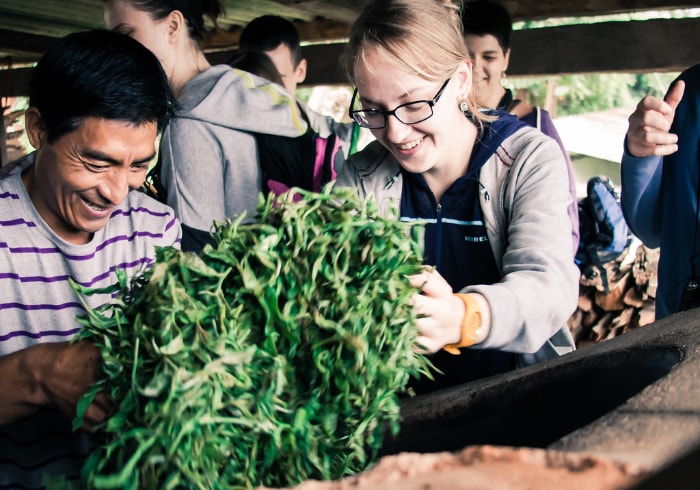
Named for the town that served as the collection and trading hub for the area’s tea mountains, pu’er has many related spellings (among them pu’er, pu-erh, pu erh, puerh, pu-er, pu er, and puer). Although the legendary tea is known by many names, there are just three criteria that must be met in order for a tea to be given the coveted title of pu’er. First, leaves must be picked from a broad-leaf tea tree (generally Camelia sinensis var. assamica, for all the tea connoisseurs out there). Second, like Champagne and its namesake region in France, production must occur in Yunnan. Finally, the leaves must be dried in the sun (not in an oven – that’s cheating). After being picked, the incredibly precise production process begins. Leaves are laid out to wilt for a few hours in the sun. Then, they are quickly fired in a wok over a gentle wood-burning fire to ‘kill the green’ (known as sha qing in Chinese) and stop oxidation. However, the farmers must watch the leaves carefully. Heating them too long takes away all moisture and kills the natural bacteria which are vital to the fermentation and aging of the pu’er. After the firing, leaves are rolled, shaped, and spread out to dry again in the Yunnan sunshine and initiate post-fermentation. It’s here in this last step where the magic alchemy of pu’er tea occurs.

From Gentle Simmer to Rolling Boil – The Rise and Fall (and Rise Again) of Pu’er Tea

 “Dry the tea” by Jeff Fuchs

RELATED READING: 4 Reasons to Visit Yunnan in Winter

The invention of pu’er as we know it today is something that can only be described as culinary magic, a result of happenstance and fluke conditions, which takes us back to the ancient trade network known as the Tea Horse Road. To accommodate the insatiable thirst for tea of Tibetans and the imperial class, caravans of merchants would compress the tea leaves into bricks, wrap them in bamboo, and then strap them to the backs of horses, mules, and other pack animals to make them easier to carry. Long distances and rough terrain meant that the tea could be traveling for months, or even years, before finally reaching its destination.

But, during the journey, something happened – the pu’er changed. In an act that can only be described as gastronomic serendipity, the tea’s exposure to sweat, the elements, and shifting climates not only changed its color from green to earthen teak, but the flavor became richer, smoother, and fruitier. Like a fine merlot, aging and a natural fermentation process while traveling caused the tea to evolve into something not only uniquely delicious but also medicinal and highly sought-after.

Pu’er Today

Over the years, the desire for pu’er mellowed somewhat, its drinkers largely confined to Yunnan. Until again, starting in the late 1990s, something happened. Investors from first-tier cities in China and then the rest of the world began streaming in. Tea that had once sold for pennies a kilo skyrocketed to hundreds of dollars by the mid-2000s. While the bubble burst temporarily in 2007 and sent prices plummeting, it is on the rise once more, with 350g discs aged 70 years ringing in at thousands of dollars, and there are no signs of stopping. Pu’er, once a humble tea of Yunnan, is again the Helen of Troy of tea.

From Gentle Simmer to Rolling Boil – The Rise and Fall (and Rise Again) of Pu’er Tea

“realchinatea (40 of 131).jpg” by mmoscosa is licensed under CC BY 2.0

RELATED READING: Peek into the Mind of Tea Horse Caravan Road Expert, Jeff Fuchs

In spite of the demand and the temptation to cut corners, Yunnan’s hill minorities carry on the tradition of pu’er set forth by their ancestors generations ago. Tending to the trees with the skill and dedication of a vigneron nurturing their vines, many farmers devote their whole lives to fashioning the perfect cup of tea.

To delve into the past and present of this precious commodity, contact us now to learn more about our upcoming journey back to pu’er’s roots with Jeff Fuchs and Traversing the Ancient Tea Horse Road. After hiking to the ancient tea tree forests, you’ll sit down with the descendants of the first tea cultivators for a pot of tea and a memory that is literally millennia in the making. We hope you’ll join us for a cup of tea.

Seven-Tenths Tea, Three-Tenths Friendship: Culture and Tea in China

The history of tea is almost as long as the history of China itself. Given that the Middle Kingdom is one of the oldest civilizations in the world, that is no small statement. In fact, although the oldest known written records of the country’s history date to the ancient Shang Dynasty in 1250 BC, Chinese legend has it that tea’s story began much earlier. Over a thousand years earlier.  

A Tale of Tea

The story goes that Emperor Shen Nong – a legendary leader and renowned herbalist – was relaxing beneath a tree in what is now Yunnan province back in 2737 BC. While a nearby servant boiled drinking water to help soothe the emperor’s throat, a breeze blew a few leaves off the tree under which Shen Nong rested and landed in the pot. Rather than waste the water, he decided to taste the accidental infusion and was surprised to discover the brew was both delicious and refreshing. Following that fateful day, tea remained a largely regional phenomenon, filling the cups of Yunnan’s ethnic minorities as a medicinal tonic, until the 7th century when the sprawling network of the ancient Tea Horse Road delivered the leaves to Beijing, Tibet, and beyond. What followed can only be described as a love affair with tea that has not just persisted throughout the years, but veritably saturated China’s culture. 

Seven-Tenths Tea, Three-Tenths Friendship:  Culture and Tea in China

Tea and hospitality go hand in hand in China

By Benjamin Chodroff – Licensed under CC BY-NC-ND 2.0 

RELATED READING: Yunnan Food according to Mei Zhang

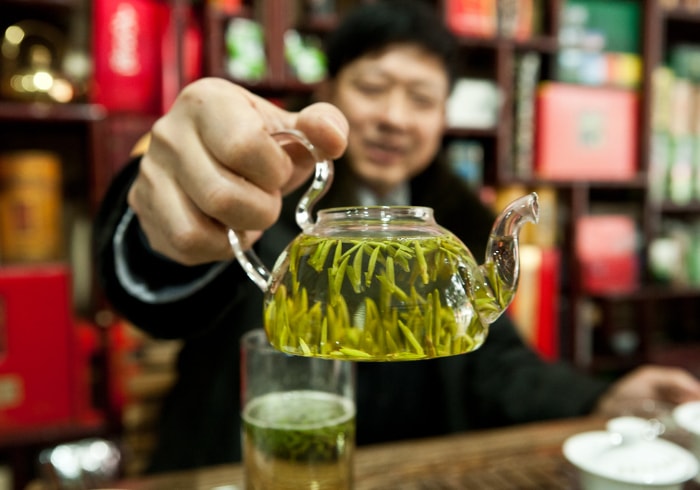
While tea holds the distinguished honor of China’s national beverage, it is so much more than a beloved drink. Upon your first step into a Chinese home, a cup of tea is immediately offered. Often, the cup is filled only seven-tenths of the way full – not to leave room for any desired additions, but to save space for the friendship and affection that fills the other three-tenths. Tea is also often used in other aspects of daily life like medicine and cooking. What’s more, there are entire cultural traditions, ceremonies, and customs built around tea. 

From how the water is boiled and poured (first over the teapot to warm it and then into the pot to brew), to the way in which the tea should be enjoyed (take in the aroma of the tea by sniffing the fragrant cup first before tasting), each step in the process is carefully choreographed. Even the specialized utensils necessary in traditional tea-drinking contributed to the stimulation of China’s famous porcelain industry. However, nowhere can you find tea traditions and rituals as rich (both culturally and nutritionally) as those found in the homes of Yunnan’s ethnic minorities, the original tea drinkers. 

Seven-Tenths Tea, Three-Tenths Friendship:  Culture and Tea in China

The second (sweet) cup in a traditional Bai Minority ‘Three Cups of Tea’ ceremony

RELATED READING: The Hidden Gems of China’s ‘Dalifornia’

The Tea of Life

In Dali, the indigenous Bai people honor their guests with the symbolic Three Cups of Tea ceremony, known as san dao cha, the roots of which can be traced back to the Tang Dynasty and the Tea Horse Road. The ceremony calls on the drinker to first smell, then taste, and finally drink a variety of three unique teas and encourages guests to reflect upon the rollercoaster of life. 

The bitter-tasting initial cup, called lei xiang cha or ‘thundering tea’, represents the hardships one faces in life. First, tea leaves are baked in a clay pot over a gentle fire. Once the tea’s fragrance fills the air, boiling water is poured into the pot, creating violent and loud bubbles that give the tea its name. Once the bubbling stops, the tea – an aromatic and incredibly concentrated infusion – is ready to drink. 

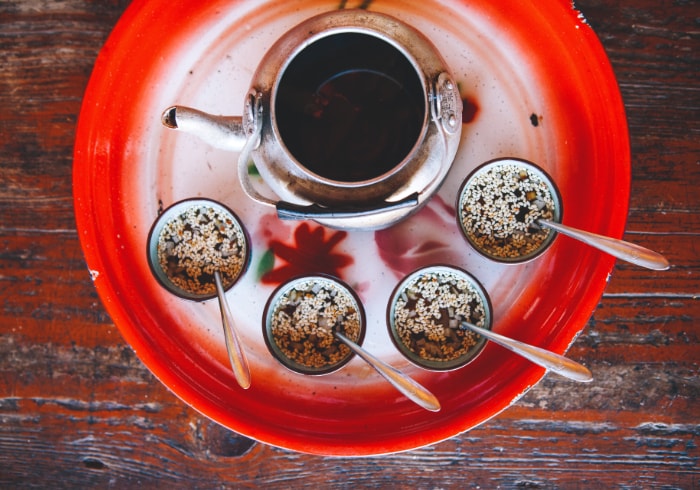
The second tea, symbolizing the happiness that comes from conquering life’s challenges, is blissfully sweet. Almost soup-like, the local tea is brewed with walnuts, brown sugar, and a regional blend of other ingredients (such as orange zest or a cow’s milk cheese called rushan). 

The third and final tea, known as hui wei cha or ‘lingering tea’, is a complex mélange of tastes and ingredients. Bitter, sweet, and spicy all at once, the flavors of this cup create a powerful aftertaste that lingers on the drinker’s tongue long after the last sip and signifies both the bitter and sweet memories that one is left with. 

Seven-Tenths Tea, Three-Tenths Friendship:  Culture and Tea in China

Tibetan Butter Tea

By xmascarol – Licensed under CC BY-NC-ND 2.0 

RELATED READING: Where You Should Go in Tibet

Tea at 14,800 Feet

Over the mountains and onto the Tibetan Plateau, the region’s ethnic Tibetans take tea drinking to a level that borders on obsession. Downing up to 40 cups of the stuff each day, it’s this infatuation that quite literally served as a building block for the Tea Horse Road. After discovering it during the Tang Dynasty, Tibetans realized that the nutritional benefits created during pu’er tea’s aging and fermentation eased the deficiencies caused by their high-fat, dairy-based diet and the stress of living at high altitudes in extreme weather conditions. And so, demand for the beverage skyrocketed. However, no ordinary tea will do. Instead, Tibetans enjoy a pu’er tea-based drink (some would argue soup) known as bod ja or butter tea. The tea is boiled for a least an hour before ultimately being churned together with a dollop of yak butter and a handful of salt and finished with a sprinkle of roasted barley flour known as tsampa. No visit to a Tibetan home is without an offering of butter tea. Etiquette dictates that your tea bowl is never empty, and so each sip is followed by pouring the concoction back to the brim. 

For China, tea is much more than a beverage or a way to unwind at the end of a long day. It is a way of life – a vessel with which to view the world and honor centuries of tradition. For travelers to the Middle Kingdom, there is no better way to understand the vast array of cultures and deep history than through the unifying lens of tea. 

Join us on our upcoming journey, Traversing the Ancient Tea Horse Road with Jeff Fuchs, and explore the roots of not just tea, but the ethnic minority groups that call Yunnan home – with a cup of Tibetan butter tea in hand.  


Debunked: 4 Myths About Traveling to Tibet That Just Aren’t True

All photos by AsiaTravel traveler Mar Pages


Whether you want to experience enlightenment, see awe-inspiring landscapes, or explore one of the tallest mountain ranges in the world, visiting Tibet has everything you need to help you check off bucket-list items. It’s fabled and mysterious presence has been calling travelers for eons, yet in spite of this, many people either show up unprepared or put off visiting altogether because it may seem a bit too difficult.

Well, let’s set the record straight. Traveling to Tibet can be very easy. We’ve debunked some of the most common myths to show you just how easy it is to have a fantastic time on the roof of the world.


Myth #1: It’s very difficult to get there

Debunked: 4 Myths About Traveling to Tibet That Just Aren’t True

In reality, getting to Tibet is no more difficult than traveling to any other destination in China that isn’t Beijing, Shanghai, Chengdu, or Xi’an. In other words, anywhere that isn’t serviced by a direct and speedy bullet train. Sure, there are more permits required for non-Chinese citizens to enter Tibet, but none of that actually becomes much of a problem. To get into Tibet, all foreign visitors must travel with an approved agency (just like us!). So, when you book with an agency, all the daunting Tibet travel permits will be taken care of for you. Getting a permit is therefore just as simple as telling your agency that you want to travel to Tibet and they’ll make sure you have all the paperwork necessary. For those of you who plan on traveling to Tibet from outside of China, you must enter Tibet from Mainland China first.

As far as physically getting to Tibet, the country is more accessible than most people tend to believe. There are plenty of flights from Beijing, Shanghai, and Xi’an. Plus, for adventurous travelers looking to take the scenic route, the Qinghai-Tibet railway (which was once considered impossible to build for years) now offers an absolutely stunning ride.


Myth #2: You must travel with a group

Debunked: 4 Myths About Traveling to Tibet That Just Aren’t TrueDespite the fact that most people do travel in groups to Tibet, this is not an actual requirement. The actual requirement is that tours must be arranged through an approved agency; however, it makes no difference if the agency is providing a private tour for one person or a group tour for 15.

As with any decision, there are pros and cons for each style of travel. But, at the end of the day, whether you choose to travel by yourself or with a larger group comes down to your personal taste and how you’d like to experience Tibet. Although group tours allow you to share the cost of a private tour guide and bus, while also providing a bit of camaraderie, a private tour affords you the ability to move at your own pace, leaves space for spontaneity, and grants a more intimate experience with your local guide. The choice is all yours.


Myth #3: You can rush through Tibet in a few days 

Debunked: 4 Myths About Traveling to Tibet That Just Aren’t True

Many forget that altitude sickness affects people regardless of their physical fitness. (AsiaTravel employees included – some of the folks at Beijing HQ can tell you how they mistakenly thought it wouldn’t happen to them and were unpleasantly surprised.)

Generally speaking, you’ll need to give yourself at least a couple of days to adapt to the altitude and just relax. We’re serious about that last part – it’s not wise to push yourself physically during this period. While it is possible to do Lhasa in two full days, the Potala Palace has over 500 stairs to climb, so save this iconic destination for your second day. If you’re the type that doesn’t want to waste any time, make the most of your stay by leisurely exploring the Jokhang Temple or Norbulingka on the first day instead.

We recommend you take life at the speed of Tibetans. They’re laidback people who try to make a good time of everything they do, with an emphasis on good. Spending the first few days simply wandering and experiencing the local way of life is equally as important (or we might even argue more important) as visiting jaw-dropping sites.

On top of that, with so much to see and do, it’s quite difficult to make the most of your time in Tibet in just a few days. 


Myth #4: Lhasa is the only place worth going to

Debunked: 4 Myths About Traveling to Tibet That Just Aren’t True Since the capital is the most well-known part of Tibet (apart from Everest Base Camp), and has a variety of notable must-sees, we often hear that Lhasa is the only place worth exploring. But think about your own country or state: is the capital the only destination worthy of a visit? Probably not.

Although it requires more paperwork if you want to travel outside of Lhasa, this is also something that your agency (hello again!) will take care of behind the scenes for you. Cities, lakes, villages, mountains: there is so much to see outside of Lhasa that is just as beautiful and worth your time as the Potala Place and the Jokhang Temple. 

How does camping beneath the stars on the banks of Manasarovar Lake sound? What about taking a bath in natural hot springs amid the barren landscape of Tirthapuri? From Tibet’s Holy Lakes, to Mount Kailash, to Tsedang – the birthplace of Tibetan civilization – there is so much to see throughout Tibet that even with the need for additional permits, exploring the depths of Tibet outside the capital is definitely a must-do on our bucket lists. 

However, it is incredibly important to note that it’s quite difficult to visit temples outside of Lhasa if they’re not included in your pre-established itinerary. So keep this in mind when planning your trip, as changing your mind to go somewhere new mid-trip may not be possible.


Now that we’ve put those myths to rest once and for all, we hope your desire to travel to one of the most beautiful and spiritual places on the planet has been rekindled.

Believe us, it’s worth it.


Shanghai History Tours

Shanghai has had an interesting history since its inception. Being one of the major port cities of China has given it great access to the broader world, allowing it to flourish as well as suffer military strikes and occupation from foreign powers. With its colorful history, we offer many historical tours focusing on different angles of the city’s life. Whether you can only spare a few days or three weeks, we’ve got plenty of options to consider!

Understanding Shanghai History during a Short Break:

Shanghai Highlife (4 days)


Shanghai History Tours


This short tour will take you for a visit through bohemian Tianzifang to see the modern art studios mixed with trendy boutique shops and cafes that make this area the home of Shanghai’s burgeoning art scene. Later, our expert Lucy Liang will guide you through the Shanghai museum, where she has even lead a former US president, sharing all she knows about one of the world’s finest collections of Chinese artefacts, spanning more than 5000 years of history. After a stroll through bustling Fuxing Park, the more active also have the option of taking part in fitness dancing and tai chi in the park or a bike tour adventure through the French Concession.


Understanding Shanghai’s Role in Modern China

 Essence of China (13 days)


Shanghai History Tours

RELATED READING: AsiaTravel does Classic China, too 


Experience everything “Shanghai Highlife” has to offer and then witness the contrast between the city’s modernity and the other stops on your journey. Dive deeper into the country’s millenary history in the ancient capital of Xi’an and the modern one of Beijing, then immerse yourself in the enchanting scenery of Yangshuo’s karst mountains in the south of the country. 


Understanding Jewish History in Shanghai:

Jewish Tour of China (10 days)


Shanghai History Tours

RELATED READING: An interview with Shanghai Jewish history expert Dvir Bar- Gal  


After visiting other historic cities with Jewish history, including Beijing, Tianjin and Harbin, this tour ends with two days in Shanghai, where you will be led by our Jewish expert, Dvir Bargal. You will visit the Ohel Moshe Synagogue, now converted into a commemorative museum in memoriam of the thousands of Jewish refugees that were housed in the city’s Jewish Ghetto, liberated in 1945. In addition, you’ll also be led through the Children’s Palace, French Concession, and Yu Garden, and have ample time to explore the city as you please.


Understanding the World’s Influence on Shanghai

 Yunnan’s Flying Tigers (14 days)


Shanghai History Tours


RELATED READING: Fascinating sites for World War II History in China


Explore the luscious and culturally diverse South western province of Yunnan, following the route of the ‘Flying Tigers’, a group of American volunteers who defended the primary supply route ‘Burma Road’ in WWII, and end your journey with three days in Shanghai. Here, discover more about the world’s profound influences on the city with a tour of the Bund, whose early 20th century Art Deco and Neoclassical office buildings gave it the nickname ‘Paris of the East’, and in the French concession with the last remnants of the city’s colonial history.

As you can see, some of the trips offer the same experience in Shanghai, while taking you off to various other adventures across China. Others will give you a heavily focused trip on a very particular section of Shanghai in a short period. Depending on what you want, there’s definitely something for everyone, no matter what your desires and interests are.

The Road Less Traveled: Our Journey into Sustainable Tourism

According to the United Nations World Tourism Organization, sustainable tourism is defined as “tourism that takes full account of its current and future economic, social and environmental impacts, addressing the needs of visitors, the industry, the environment, and host communities.” Put simply, travel should preserve cultural and traditional values through authentic experiences, foster intercultural understanding, and provide long-term and fairly distributed socio-economic benefits, all while supporting the conservation of natural heritage and biodiversity.

Unfortunately, this is often easier said than done. Especially in China.

With an abundance of flashy (literally and figuratively) light shows that cause light pollution and disrupt the ecosystem, inauthentic and sanitized ‘old towns’, and cultural performances that feel about as genuine as a Broadway show, exploring parts of China can often feel as if you’re walking on an elaborate Hollywood set rather than getting a genuine taste of everyday life in the Middle Kingdom. But, it definitely does not have to be that way.


The Road Less Traveled: Our Journey into Sustainable Tourism

Dali Market. Image by Elizabeth Phung


The Tourism Industry Conundrum

Most people agree that travel can do wonders for a community and local economy. Jobs are created and financial resources are exchanged. A destination’s cultural, historical, and natural heritage can be celebrated and explored. And the authentic experiences shared by the locals and travelers can help to break down walls of misunderstanding.

However, it’s becoming an increasingly tough proposition to balance all those benefits while still preserving what made the experience beautiful to begin with. As any destination struggling from overtourism can attest to, and as pointed out by our founder, Mei Zhang,

“The travel industry itself is almost an enemy to the beauty of travel. Whenever any beautiful travel experience exists, when the industry moves in it’s like locusts coming to town and it wipes out the beauty of it.

So why is that? The travel industry always talks about volume, everything must have volume in order to make money — and yet the beauty of travel does not involve volume. It’s the opposite.”

In other words, not only can the mass of humanity all trying to enjoy the destination at once spoil the experience, but the temptation to monetize, standardize, scale up, or otherwise manufacture the experience for the sake of profit often results in the distortion of the culture or place overall. All authenticity goes out of the window.

So, how to solve the problem? The answer lies in creating in-depth, meaningful, and small-scale organic travel experiences.


The Road Less Traveled: Our Journey into Sustainable Tourism

Dali Landscape. Image by Elizabeth Phung


An Authentic Answer

Mei Zhang was pushing the notion of socially sustainable, authentic travel before AsiaTravel was even a twinkle in her eye. While working for McKinsey & Company as a consultant in the late ‘90s, Mei was part of a project tasked with developing environmentally responsible tourism models for The Nature Conservancy in Yunnan, her home province.

Her suggestion – a culturally sensitive approach that kept the province’s natural habitat and culture carefully preserved – was rebuffed by the local government as too difficult and too slow. Sadly, this wasn’t an isolated reaction. On top of the challenges of pulling off ‘profitable’ authentic travel, many local authorities failed to see the appeal of these sorts of travel experiences, viewing them as backward.

For this reason, in 2000, Mei took matters into her own hands and created AsiaTravel with the goal of connecting travelers from around the world with the disappearing traditions of China, one trip at a time.


The Road Less Traveled: Our Journey into Sustainable Tourism

A donkey in Dali. Image by Elizabeth Phung


Authentic Travel, AsiaTravel Style

So, what does authentic travel mean to AsiaTravel? For starters, it means stepping out from behind the ubiquitous flag that has come to represent tours throughout China. It means guiding travelers out of the well-worn footsteps of the tourist circuit.

Although a journey through the Middle Kingdom should, of course, include a visit to the typical must-sees, authentic travel is much more about helping travelers to see places through the eyes and stories of locals and experts (and, not-so-coincidentally, away from the usual crowds of people). It’s about helping the place to come alive in a way that it couldn’t if you were exploring these places on your own or on a mega-bus-tour.


The Road Less Traveled: Our Journey into Sustainable Tourism

Image by Elizabeth Phung


AsiaTravel forges a path to the hidden, more remote corners of the country. While not as grand as the Great Wall, as iconic as the pandas, or as sparkling as the Shanghai skyline, we believe that it’s these little pockets of humanity and nature that deserve to have their stories told just as much as their more well-known counterparts – if not more.

Creating authentic experiences is easier said than done, of course. Here at AsiaTravel, we’re able to find these pockets of humanity because we can leverage our nationwide network of guides, local partners, and China-based staff. This allows us to not only stay in-the-know with happenings like the opening of a new boutique hotel but also allows us to take advantage of personal relationships and insider knowledge to source authentic experiences for our clients.

So, that works for our guests. But, how do we make culturally sensitive sustainable travel a reality not just for our travelers, but also for the communities we visit?


Socially Sustainable Travel in a Modern World

Creating sustainable travel practices all comes back to the definition: travel should preserve cultural and traditional values through authentic experiences, foster intercultural understanding, and provide long-term and fairly distributed socio-economic benefits.

A perfect illustration of our efforts to preserve traditional ways of life and nurture intercultural understanding can be found in one of our flagship journeys: Travels Through Dali with a Leg of Ham, created by our very own founder Mei Zhang. The journey, which is inspired by Mei’s book of the same name, follows her return to her hometown (with a leg of Yunnan ham in hand) to rediscover the stories of her childhood through a wiser, more worldly lens.

Both the story and journey are an ode to her homeland – the history, traditions, people, and way of life – as well as an entreaty to travelers to not just go to a destination, but to follow it to its roots. The aim of the journey, and AsiaTravel’s fundamental approach to sustainable travel, revolves around getting to know the people of Dali as they are. Nothing breaks down cultural barriers nor fosters greater understanding than breaking bread or talking over tea with the people at the heart of the place. Imagine learning how to make cheese with a farmer in her home or watching a master ham maker lovingly prep a haunch with locally produced salt. What if you could chat about a pickle empire that has withstood the test of communism and time with an 83-year-old lady, before sitting down for a homecooked meal with an ayi?


The Road Less Traveled: Our Journey into Sustainable Tourism

Dali. Image by Dali Guide, Frank Shan


Our Dali guide, Frank Shan, believes that this is the right approach to travel. After his many years of guiding, he tells us that travelers find it ‘amazing’ to connect with the local people and love sharing in the cultural traditions. On top of that, hosts are always happy when the foreigners come to town for a chat.

As China’s younger generations leave the nest of their hometowns for the hustle, bustle, and money of the megacities, carrying on the stories of longstanding traditions through sustainable travel becomes ever more important. Hopefully, as job opportunities and tourism dollars find their way into these local villages, China’s youth will be persuaded to stay.


Sustainable Socio-Economic Benefits

The siren call of the tourism industry’s cash flow can often be hard to resist. Understandably so, when the arrival of tourist spending can contribute to the revitalization of an entire city.

Yet revitalization is a slippery slope, to which any party who has been pushed out of a community or seen years of history bulldozed in the name of gentrification can attest. An area’s character and heritage are often the first things to be cut or ‘refinished’ in the name of progress. Moreover, due to travelers often sticking to the well-worn confines of the tourist trail, these tourism benefits normally never trickle down to communities tucked away in remote parts of the country. This is yet another reason why it is so crucial to spend time off the beaten path and make a point of supporting local businesses.

Meeting all the goals of sustainable tourism becomes quite easy once the decision is made to invest in local businesses and visit communities in an authentic way. For instance, collaborating with small village communities ensures the preservation of the area’s heritage through championing the ‘realness’ of the untouched community while providing tourism revenue. Staying in local accommodations like boutique hotels and guesthouses, and visiting local craftsmen, artisans, and restaurants provides income sources while giving visitors yet another chance to experience the reality of daily life there.

Another way AsiaTravel works to support local economies is by providing consistent employment and competitive wages to more than 300 local guides, many of whom are members of an ethnic minority. They are experts in, and passionate advocates for, their home region’s cultures, history, and stories. This reliable influx of financial resources into households and communities through the employment of local guides and patronage of local businesses helps bolster often-struggling economies that don’t normally have access to valuable tourism dollars.


The Road Less Traveled: Our Journey into Sustainable Tourism

Tie-Dye Fabric in Dali. Image by Vincent Yang via Unsplash


Our approach seems to be working. To illustrate, let’s revisit a couple of our Travels Through Dali hosts: the cheesemaker has generated enough income hosting travelers and making shoes to fund a partial home renovation and new roof tiles. As for the pickle lady, not only is business booming, but all four of her children are carrying on the family’s pickle legacy, with her oldest son, once a government employee, leaving his job to oversee production. Therefore, while socially sustainable travel may not have the same sizeable instant financial gratification of the commercialized, follow-the-flag travel experiences offered elsewhere in China, it’s the slow and steady work that helps to preserve a way of life that has persisted for generations.


What Can You Do?

So, what can travelers do to ensure that their money is going where it’s most needed? It’s simple: think local. First, have a more authentic dining experience like grabbing a jianbing from the street food vendor on the corner, picking up locally grown produce from a busy market, or sitting down for a plate of lovingly made jiaozi at a family-run restaurant. Next, hunt for locally made crafts, art, and souvenirs in lieu of mass-produced knockoffs. Sure, that handwoven scarf or Bai-made batik fabric may cost a bit more money but opting for this sort of tangible memory gives necessary jobs to the local craftsmen and artists and helps to preserve authentic cultural heritage. Additionally, if you’re going to use a guide, choose one that is from the area to ensure maximum learning and financial benefits. Not only are you supporting the local economy, but you’re also getting an up-close-and-personal glimpse of daily life. Finally, try to spend as long as you are able in an area to help spread the resources around.


The Road Less Traveled: Our Journey into Sustainable Tourism

A local meal with an ayi. Image by Elizabeth Phung


How to Do It Yourself

Admittedly, experiences like this are difficult to coordinate without on-the-ground knowledge and connections like ours. However, if you choose to arrange your own travels without the assistance of an expert, we highly recommend that you spend time doing your due diligence to learn about the destination. And we don’t just mean a cursory web search – really make an effort to dig. What aspects of the history, culture, and natural heritage speak to you? Think outside the bucket list box, color outside the tourism lines. Then, put yourself in a situation once you arrive that can get you as close to the heart of those intriguing facets as possible, whether that is by connecting with an enterprising local for a walking tour or making chitchat with your neighbor in the restaurant at dinner. Offset a visit to a major landmark with a palate-cleansing stop by somewhere not in all the guidebooks. Leave space for travel serendipity and take time to truly connect with a place. When you open yourself up to possibilities and connect with people, you never know what kind of authentic experiences can fall into your lap. Locals are more than happy to share their culture, as long as you are willing to listen. And, whatever you do, just say no to the flag.


Sustainable travel isn’t necessarily the easiest way to travel. But we’re trying to ensure that changes. China and her people are fascinating and beautiful as they are, so we will continue to do everything we can to promote and protect this authentic China.

With some careful research and planning, a healthy dose of curiosity, consciously creative decision making, and a bit of an appetite for adventure, anyone can experience the ‘real’ China. Traveling this way not only helps you to better understand another community, it also helps to preserve the importance of that community and way of life.

It’s a beautiful circle that we are proud to be a part of. We challenge you – potential AsiaTravel clients and solo travelers – to think past the safety of the tourist circuit and the easy money of the sanitized, manufactured ‘cultural’ experiences. Say ‘no’ to the canned inauthenticity of the old towns and light shows in exchange for hands-on experiences, conversations over meals in a local’s home, and snapshots of life in remote villages.

After all, it is these genuine human connections that make, and keep, travel beautiful.

When it comes to culturally sensitive, socially responsible travel, Robert Frost was definitely on to something: taking the road less traveled makes all the difference.

We hope you’ll join us on our journey.

What the Everest Base Camp Closure Means

Featured Image by Neil Young on Flickr.

The Everest Base Camp Closure

Looming at an enormous 8,844m, the mighty Mount Everest stands at the highest point on Earth, straddling both Nepal and the Tibetan Autonomous Region (T.A.R). While Everest Base Camp has gained worldwide fame as the launching point for adventurous mountaineers, it is far less known that there are in fact two Everest Base Camps found on either side of the peak (one camp in T.A.R. and the other in Nepal). With easier access to the mountain and even more stunning views, T.A.R’s base camp has attracted more and more visitors each year. Sadly, this has come at a cost, leading to the camp’s indefinite closure. With so many visitors still hoping to catch a glimpse of this majestic mountain, what does the closure actually mean for our intrepid travelers?

What the Everest Base Camp Closure Means

The Everest Basecamp | Image by lampertron on Flickr

T.A.R. is open as usual

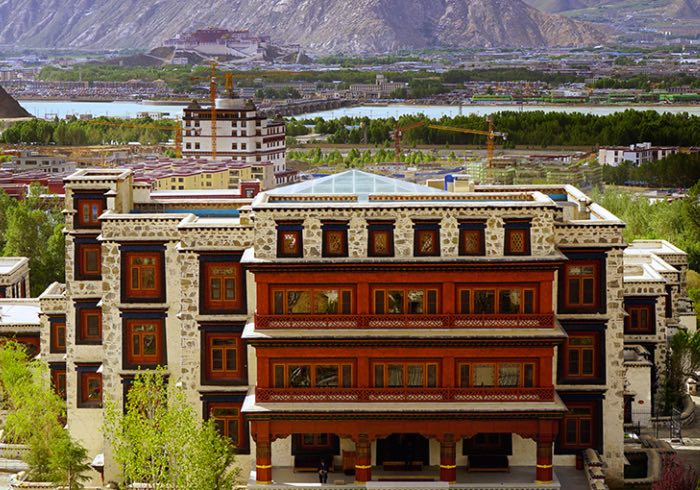
Don’t let the closure of Everest Base Camp put you off – the Tibet Autonomous Region is open to visitors as usual and the chance to visit this stunning corner of the world is not be missed! As per usual, the T.A.R. will be open to foreign tourists after the Tibetan New Year which falls at the end of February. Tibet is an enchanting land filled with jutting peaks, expansive plateaus, and rich cultural traditions. Whether it’s marveling at Lhasa’s Potala Palace or enjoying the wide-open expanses of this untouched region, the T.A.R. is a stunning destination that will grant you a greater appreciation for the Buddhist religion.

What the Everest Base Camp Closure Means

The Potala Palace in Lhasa | Image by Dennis Jarvis on Flickr

High altitudes are still within reach…

While base camp sits at a whopping 5,200m above sea level, you still might find yourself short for breath at the close-by Rongbuk Monastery. At 4,980m, the view can be quite literally breathtaking. The (relatively) easy access to this side of the mountain (the Nepal side requires a two-week trek to reach base camp) means you can take things at a slower pace to enjoy the experience and get yourselves acclimatized to the altitude. In the past, the Rongbuk Monastery was home to several hundred monks and nuns, with the remote location lending itself to undisturbed meditation and a tranquil way of life. With as few as 35 monks currently living at the monastery, their doors are open for the weary traveler to enjoy a peaceful overnight stay at the feet of one of the world’s seven natural wonders.     

What the Everest Base Camp Closure Means

Rongbuk Monastery | Image by Göran Höglund (Kartläsarn) on Flickr

Related Reading: Remote Getaways to Escape the Hustle and Bustle of China

The route does not change.

For those not intent on climbing the summit, the Mount Everest route does not really change. What makes the Mount Everest experience begins long before this lofty peak is in sight. From the shores of the holy Yamdrok Lake to stepping back in time in the Old City of Gyantse, our Mount Everest route will take you on a journey through this beautiful landscape all the way to the Rongbuk Monastery. Although the very last leg is no longer accessible, the monastery itself still boasts some world-class views and is the perfect end to an incredible journey.

What the Everest Base Camp Closure Means

Yamdrok Lake

Related Reading: Top Five Challenging Hikes in China

As advocates for sustainable tourism, we feel great shame for the indefinite closure of the Everest Base Camp, especially due to the reasons. However, we are encouraged for the future. As you can see, the Tibetan Autonomous Region is a spectacular natural area that is just begging to be explored. Who knows, maybe this experience shall prompt greater efforts for green and viable forms of tourism in the future. Get in touch now to start planning your ultimate Tibetan adventure.