Holiday Gift Guide: Beijing and Shanghai

One of the perks (and perils) of traveling through Beijing and Shanghai is the excellent shopping that can be found, and often for great prices. With the holidays fast approaching, your resident AsiaTravel shoppers thought we’d share a few of our favorite city haunts. Some are very well-known, and some are tiny gems that we were reluctant to part with. Happy holiday hunting!

Beijing:

  • For serious bargain hunters,  the stalls at Hongqiao Market will whip up strands of pearls, coral, beads, and semi-precious stones to your heart’s content, while you watch. Buyer beware: quality (and price) varies greatly, so be sure to inspect your wares before you hand over your hard-earned RMB.
  • Looking for something new for the home?  Lost and Found is the place for eclectic home-wares.
  • If you have a fan of contemporary art on your shopping list, than the 798 District is a must even if the gallery paintings fall just a little out of your budget. For those less willing to fork over the big bucks for avant garde art, this is also a great place to source art, photography and design books.
  • Grifted is home to an off-beat collection of unique, one of a kind gifts with a quirky sense of humor.
  • Find almost anything at Panjiayuan, a massive open air market, perfect for souvenirs and “antiques”. Be sure to go early though, as that’s when you’ll find the best bargains. Only open on the weekends.

Shanghai:

  • Worth a visit even if you’ve already seen the museum’s collection of bronzes, calligraphy, and pottery, the Shanghai Museum Gift Shop has a sophisticated assortment of real and replica treasures for the sophisticated giftee.
  • Madame Mao’s Dowry stocks high-quality knickknacks and furniture with a China twist. Look out for their ceramic Christmas tree ornaments with propaganda art and slogans.
  • While not one particular store, the warehouses and shops on Taikang Lu are known for their one-of-a-kind, interesting wares.

Locations in Both Cities:

  • For modern, Asian-influenced pottery, SPIN should be number one on your list.
  • Torana specializes in beautiful handcrafted Tibetan area rugs.
  • Whether shopping for your mom or yourself, Woo is a must for scarf and shawl lovers.
Improving Local Practices in Southwest China, Part III: Resource Management Techniques in Jiuzhaigou National Park

AsiaTravel recently embarked on a series of initiatives to improve local practices in rural areas in southwest China. This is the final section of the three part series examining efforts to improve life for those in rural areas and the technologies that enable a better standard of living.

Jiuzhaigou National Park sits in the rugged West of Sichuan at 2000 meters elevation on the edge of Tibet. This cluster of virgin mixed forests is home to several endangered animals; giant pandas and golden snub-nosed monkeys traverse amongst the limestone cliffs and the effervescent blue lakes. Despite its natural beauty, Jiuzhaigou has had a tenuous history. It was discovered in the early 1970s, and hurt by large-scale logging efforts. Jiuzhaigou was declared a national park in 1978, and the park’s ecological restoration began.


Improving Local Practices in Southwest China, Part III: Resource Management Techniques in Jiuzhaigou National Park

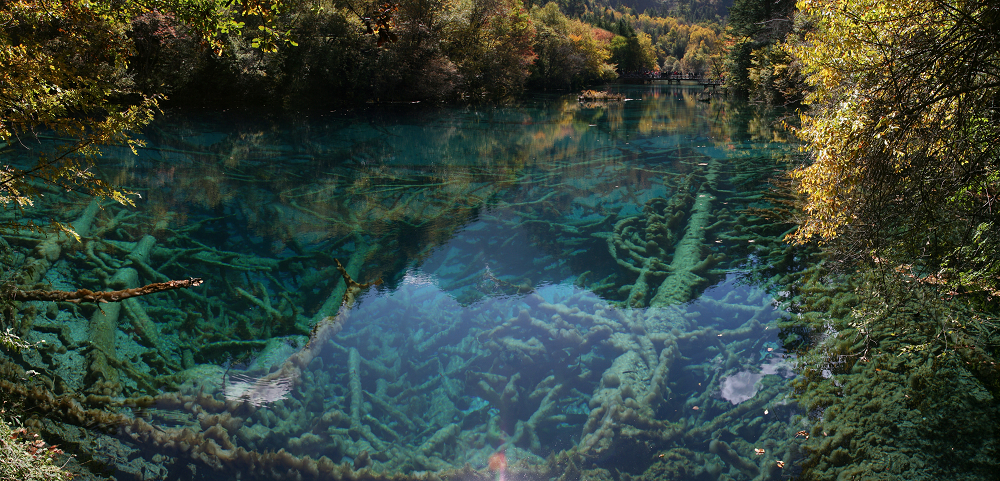
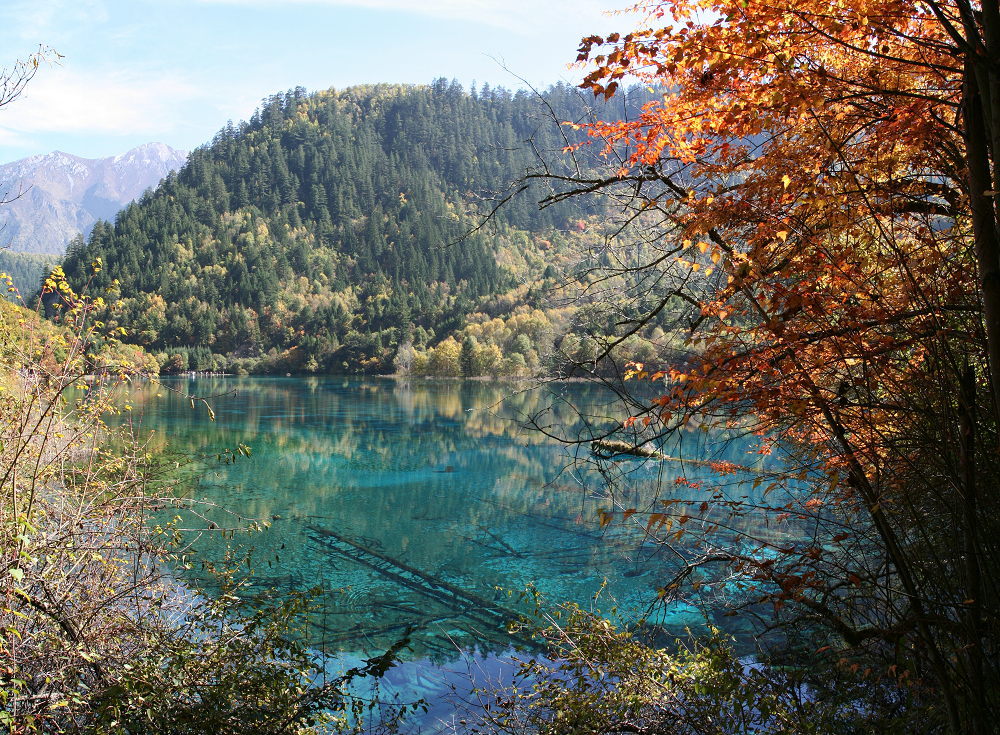
Leaves turn magificent colors over a crystal lake

Jiuzhaigou established a formal relationship with Yosemite National Park in 2006 to promote international cooperation that benefits both parks.

AsiaTravel accompanied the Yosemite team on their first official sister park visit to Jiuzhaigou in 2009. On this trip, Yosemite preservationists completed a four day survey trek through Jiuzhaigou valley. Through these trips and related efforts, the sister parks aim to share resource management techniques and cooperate to preserve natural biodiversity.

Jiuzhaigou and Yosemite share a similar history. Jiuzhaigou valley has been home to Tibetan natives for thousands of years. When Jiuzhaigou was declared a national park, these natives were no longer allowed to farm in their local villages. Yosemite park has experienced similar cultural issues; Native Americans were no longer allowed to plant crops in the parks area of Northern California when Yosemite was declared a national park in 1890. The parks have already benefited from communication on several topics, including the construction of wooden walkways to limit the impact of foot traffic on the surrounding environment.


Improving Local Practices in Southwest China, Part III: Resource Management Techniques in Jiuzhaigou National Park

Unique algae give the lakes a unique tint

Hopefully, interpark cooperation will lead to preservation of the endangered animals that reside in Jiuzhaigou and the mythical environment that supports them.

Interview With Our Expert – Yunnan Culture Expert Zhang Xilu

A leading expert on the ancient Nanzhao Kingdom and a distinguished leader in the intellectual community in Dali, Yunnan Province, Zhang Xilu is an invaluable resource for any traveler interested in Dali culture and the ancient Tea and Horse Caravan Trail. A native of Xizhou, Dali, Mr. Zhang’s numerous published books on historical and contemporary Bai daily life, including one focusing on a school of Buddhism unique to the Bai culture, speak to his passion for learning and sharing knowledge with others. His primary research interests are the history of the Nanzhao Kingdom, which emerged in the 7th century and rebelled against the Chinese Tang Dynasty, and the culture of the modern Bai people.


AsiaTravel: When did you start teaching people about Dali culture and the Tea and Horse Caravan trail?

Zhang Xilu: I started teaching Dali culture and the Tea and Horse Caravan trail some 10 years ago. My first formal teaching of the subject was in 2003, when I began to teach the students at Dali Academy. In 2005, I was invited by Beijing University and Minzhu University to Beijing to give a lecture, last year I visited Guangzhou Sun Yat-sen University to lecture. I first published “The Culture of the Horse Caravan” with Mr. Wang Mingda in 1993, which is quite popular and was just republished last year.

WC: What made you interested in this subject in the first place?

ZX: First, the most attracting thing are the folktales of the Dali Bai people. And later I came to find the religion and history also quite interesting

WC: What is special about Dali culture?

ZX: Dali culture is a kind of territorial culture of China. To be more specific, it is South-west Bai People Culture, so it differs from the culture of other areas and the culture of other people. It has a history of 4000 years, and beautiful landscapes of Mt. Cangshan and Ehai Lake, unique Bai people costumes and the ancient religion, the heritage of the Bai people revolves around Buddhism, religious festivals, and the history and folktale story of Nanzhao Dali Kingdom. All of these are special elements of Dali Bai People culture.

WC: What is your favorite story to tell about Dali and the Bai people?

ZX: Since I have been studying Dali folklore and history for a long time, there are lots of stories to tell for me. The stories I tell most are of the Tea and Horse Caravan trail from Yunnan to Tibet, the history and culture of the Bai people, about the old religion of Bai people, the rise and fall of the Nanzhao Dali kingdom, and so on. There’s really so much – about art, history , architecture – it’s hard to pick a favorite!

WC: Why should guests come to Dali?

ZX: As in Dali, here you can find a rare but nice combination of the beautiful landscape (Mt.Cangshan and Erhai Lake), Unique Bai people culture and the history of Dali Nanzhao Kingdom

WC: What is your favorite thing to do with visitors in Dali?

ZX: Because I am busy with teaching and study, I seldom guide clients. I reall only do it sometimes based on friends’ requests. For travel groups, I am a good friend of Mei (AsiaTravel’s founder), so I only tour your groups as an expert to offer explanations and lectures. And I enjoy it, as it is a good way to promote local culture through tourism.

WC: Is Bai culture remaining strong or is it dying out? What is being done to preserve it?

ZX: Today, the Bai culture also faces the challenge of how to adapt and apply to the current society: some areas, which do not apply to the present society, are declining. However, others, which can fit in to modern society, remain strong, for example, the local religion is strong, and getting stronger and stronger.

Interview with Professor Frank Hawke

One of the first 8 Americans who came over to study in China in the late 1970’s, Frank Hawke is a well-known figure in Beijing. Currently, Frank is the Chairman of Greater China for Kroll, the world’s leading risk consulting company, and has also held teaching positions in prestigious universities such as Beijing University and the University of International Business and Economics. Frank has been traveling around China for more than 30 years, and took a moment to tell us about his favorite places in the Middle Kingdom.


Interview with Professor Frank Hawke

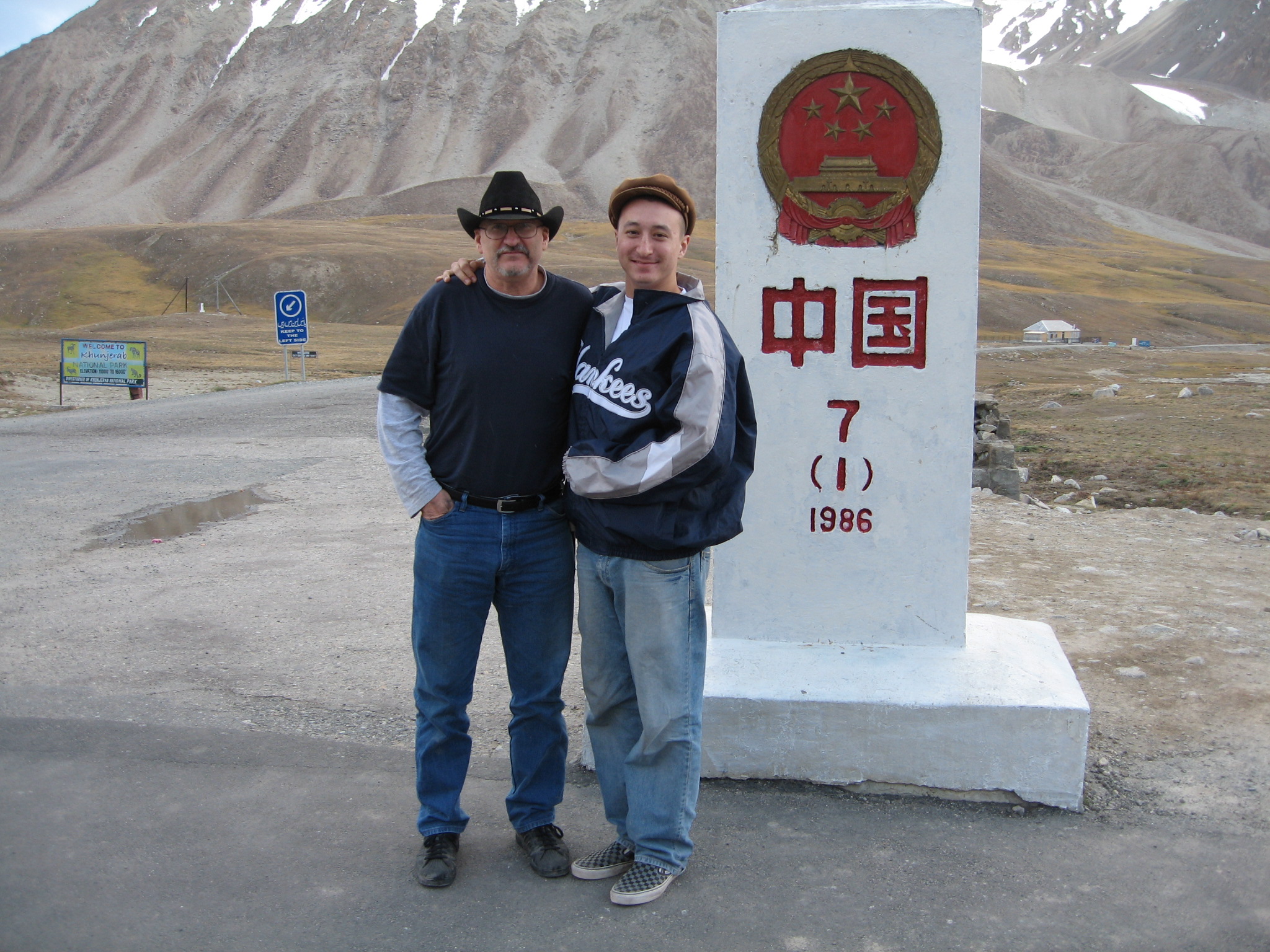
Frank Hawke

AsiaTravel: Why did you decide to come to Beijing in the 70’s?

Frank Hawke: I was invited by the Chinese government to pursue studies in China in 1979 and wanted to engage in language work and Chinese politics.

WC: What is the main reason people should come to China NOW (as opposed to before)?

FH: First of all, the amenities are a lot nice than before in terms of hotel accommodations. It is easier to get around in terms of transportation (just look at the new subway system!) and the infrastructure maintenance in China is increasing.

WC: Do you feel travel in China is foreigner-friendly?

FH: If you mean Westerner friendly, yes. Even though it isn’t as convenient as Europe or other parts of the West, people here are very friendly and willing to engage in conversation with you (especially if they want to practice their English!) That is another thing, more and more people are starting to learn English in China and getting around the airports is extremely easy considering the signs are in English and Chinese.

WC: What is the best place you have visited in China?

FH: Xinjiang. (Click here to see our Xinjiang journeys )

WC: Why is Xinjiang your favorite?

FH: The people and the food are amazing, especially because the Muslim culture there is pretty large. I also love the geological aspects of it. The scenery is beautiful and the mountains remind me a lot of back home.

WC: Where is home?

FH: Tucson, Arizona.

WC: What is the most beautiful sight you have ever seen?

FH: Other than my son being born, the sparkling night sky in Tibet.

WC: What is the main piece of advice you would give a first-time traveler in China?

FH: Get out of the real big cities! The cities here are starting to resemble New York, just because of all the new infrastructure, construction, and modernization. Go to small towns, get off the beaten path, and work hard!

WC: What is your favorite restaurant in Beijing?

FH: Well… I love Sichuan Food, so Sichuan Ban Ji Ju is great, but I am also a big fan of some good Peking Roast Duck.

WC: If you had to pick a Chinese personality to admire, who would it be and why?

FH: To tell you the truth, I choose to admire people I know, not people I don’t. A person, like a TV star or singer, can be good at what they do, but that doesn’t necessarily mean I admire them.

WC: What do you think are 3 important changes China has gone through in terms of transportation, getting around, and travel from 1979 to now?

FH: I would have to focus on the access of transportation to the Chinese masses. I remember when people had to be politicians when they wanted to buy plane or train tickets. All of that has changed now, though. People are on the move everyday, using the new subway system, cheap and clean taxis, technologically advanced bus systems, and more. Back in the 70’s and 80’s, people were confined politically and logistically, this is really not the case anymore, people have the means and the freedom to move around.

China Scholar Orville Schell: Why Choose AsiaTravel?

For those of us who’ve spent years studying China, Orville Schell is a very familiar name. His books, like The China Reader: The Reform Era, are widely read by students and policymakers alike, and his talks on behalf of the Asia Society’s China Green project are attended by many with an interest in China’s environmental issues.

So we were all thrilled when Orville, who has been to China countless times, not only chose to travel with AsiaTravel to study the effect of climate change on glaciers, but also provided us with rave reviews about his trip to Lijiang and Shangri-La.

Here, in his own words, Orville explains what he sees as the AsiaTravel difference:

“Why choose AsiaTravel? Well, I think AsiaTravel is quite skilled at sculpting trips for people who have specific interests. So, if in fact you’re a bird watcher, a glacier watcher, a river watcher, a minorities watcher – whatever your poison is, they seem to have the ability to highlight that.

I haven’t done many trips like this – but to go to a place like Yunnan and in a week to see a lot, you really do need someone to organize it. You need drivers who know what they’re doing, and cars and land rovers that can go on very rough roads and over landslides.

You want to be with people who you trust, not some crazy cab driver you’ve never met. So it was reassuring to have good drivers, good guides, and to be able to stop in at local people’s houses that these guides knew…and we had a Tibetan guide and a Chinese guide – both very familiar with the area and extremely fun to be around and very much a part of our group – not bored people who couldn’t wait to get off the bus and get everybody back on the plane…and that, I think, made the trip incomparably more meaningful and interesting for us.

I’m not a big tour joiner, frankly, and that would probably be a good reason to have AsiaTravel organize your trips so that it wouldn’t be like a tour. It would be more things you wanted to do, not you fitting into their tour—but them making the tour fit your needs.”

Many thanks to Orville for these kind words! Be sure to view the video on our home page for stunning footage captured during Orville’s trip to Yunnan.

3 days in Lijiang and 2 days in Shangri-La

An old friend sent me this inquiry: We (3of us) are going to Yunnan for the last week of August. We have things pretty well organised and plan to spend 3 days in Lijiang and 2 in ShangriLa. If you have any suggestions about wild and  exciting things to do, that would be great !

Here are my answers:

1. First of all, where are you staying?  That’s important because Lijiang has turned into a crazy tourist town that stays alive 24/7. The old town of Lijiang is most charming with those two-story woodden houses lining cobble stoned streets, but it’s really hard to find a quiet hotel room because the bars and cafes stay open till midnight. In this context,  I’d recommend either the Banyan Tree, which is charming, but expensive. Or some Chinese 4 star hotels like Guanfang, which is not that memorable, but at least you can sleep. In Zhongdian, you want to stay at the Songsam Hotel near the Songzanlin Monastery. It’s owned by a Tibetan entrepreneur. It’s better than the Ringa Banyan Tree.

2. Activities in Lijiang: Lijiang old town used to be so lovely, but now, it is overrun by tourists during the day. Exploring the old town, I suggest you get up early and walk around in the maze, allowing yourself to get gloriously lost. Pick up some pancakes freshly made on a food stall, etc. That’s still quite lovely. The Black Dragon Pool, despite its popularity as a tourist site, it’s still lovely. Spend a good 2 hours in there, check out the dongba museum – not fancy, but gives you a little sense of what dongba culture is like. Xueke’s Naxi music used to be great, and I loved it many years ago. But, now the venue has doubled or tripled in size, it’s lost its intimacy. At AsiaTravel, we used to just hire a small local band and do a dinner/concert in one of the village houses. After that, you probably want to get out of the old town as quickly as you can.

a. Leave Tiger Leaping Gorge for a  stopover visit on your way to Zhongdian.

b. For glacier, Maoniuping is slightly better. It’s probably quite fun to ride horse up, as compared to taking the tram. I would not recommend riding horse downhill. The horses don’t come with western saddles with all the padding and handle for you to grab. If you’ve never done horseback riding, don’t try it out there.

c. If you like day hikes, try to go to Wenhai or Lashihai. Not tourist sites, but interesting villages.

d. If you don’t mind 2-3 hour driving, go to Xuehua village, a tiny little village with 80 people, you can still meet the Yi Shaman there. (Yi is another ethnic group, different from Naxi in Lijiang.)

e. Further afield, on the border with Dali, there are some wonderful places to visit: Jianchuan Grottoes – most stunning grottoes documenting the history of Dali Kingdom. Not touristy at all, but the hike and the grotto are just absolutely mind boggling. You can hike from the Grottoes to a nearby village called Shaxi – an intact old village, that used to be a key stop of the Southern Silk Road. Lovely old temple, old houses. Again, either without a tour guide, getting lost in it is a wonderful experience. (It’s not that big).  To go there, you need to drive 3 hours each way from Lijiang.

3. Activities in Zhongdian: Songzanlin Monastery, Pudacuo National park will probably take up all your time. I’d recommend you try to visit a local Tibetan home in a village nearby. Anyone will do, just to see what their life is like. Remember to start slow, give yourself time to get used to the altitude when you just get there. Altitude sickness usually hits you after a nap or something like that, with in my case, a bursting headache. Drink lots of water to recover or go with Diamox from your doctor.

Have fun. for more information, check out www. wildchina.com

Family get-together in China with kids

A friend and I are considering bringing both of our families to China for a reunion next summer. My kids are 6 yr, 3 yr, and 9 month old. His 3 girls are 9, 7 and 3.  So here are his questions: ” Should we take Josh’s Tangula express to Lhasa?   Or do we want AsiaTravel to organize a princess tour of the wonders of China? Tibet?”

Here are my answers:

Tangula express would be cool, but not for kids. It’s too long a ride and kids get antsy. I know mine can’t handle it. I actually think it’s best to anchor kids at one place for 3 days, have lots of little fun stuff for them to venture from one base.  I would say, hang out somewhere near Guilin or Dali, go on short hikes, bike rides, fishing, crafts, etc.

Interview with Jia Liming, AsiaTravel’s Director of Operations, on travels in Yunnan

Orville Schell recently wrote about his journey to Yunnan with AsiaTravel, discussing the climate change issues on the Tibetan Plateau. However, what is beyond the melting glacial peaks in the region?

AsiaTravel’s Alex Grieves sat down with Jia Liming, AsiaTravel’s Director of Operations, to get a sense of the diverse natural and cultural wonders that exist between the Yangtze and Mekong Rivers.

Alex Grieves: How did you initially get involved in Orville Schell’s trip? Why were you a part of this experience?
Jia Liming: In early 2009, Mei [Zhang, AsiaTravel’s founder] told me that Orville [Schell, Asia Society’s China scholar] wanted to write about glaciers in China. As a member of the Operations team and someone who is quite familiar with Yunnan, I was asked to explore which routes would be most appropriate for the trip and to travel with the group.

AG: What route did you end up taking?
JL: We essentially went in a large loop. We first drove alongside the Yangtze River to Deqin, and then followed the Mekong River south again, first to Cizhong and then to Weixi. We visited the Mingyang Glaciers and Lijiang’s Jade Dragon Mountain, both of which are, or are home to, low latitude glaciers.

AG: What impressions did you take away with you while on this route?
JL: The journey down the Mekong River is simply incredible; it really is as if one is traveling through time. When you’re on the route, you travel through a myriad of contrasts: high to low altitudes; Tibetan to Lisu culture; buckwheat crops to rice fields; different styles of architecture; and colder to warmer climates. It’s amazing what one can see on just one 9-hour drive.

AG: What was your strongest impression from the trip?
JL: Driving past a Lisu village at sunset. As we passed by, I saw farmers singing in the fading light while working with cows in the rice fields. They seemed incredibly content. That was a really powerful moment. More generally speaking, the drive from Cizhong to Weixi is incredibly beautiful – there is no industry in these areas, and the natural beauty is untouched. One thing really interesting about the this area is that many villages are driven by clean energy and sustainable practices. The government subsidizes their bio-gas for cooking and heating, which enables the community to waste less and preserve their natural surroundings. It’s also very well-organized, and should serve as a model for other rural communities in China.

AG: Tell me more about the Lisu minority and their community.
JL: The Lisu people are an intriguing ethnic group, as about 20 percent of them are Catholic. Many can be found in Myanmar, since a large number of them emigrated to that area in the past.

——–

Want to learn more about Yunnan and the Tibetan Plateau? Send us a tweet @AsiaTravel, or email Jia at liming.jia@wildchina.com.

Don’t travel to China between October 1st and 7th

Saw this email exchange between a client and my colleague, thought it’s really useful for anyone planning a trip to China in the fall.

Clients email: My husband and I are planning a trip to Asia in late September and are very interested in visiting Tibet and Lijiang.  We will arrive September 26th to Shanghai and will depart October 11th so we will have 14 days for touring.  We are very active and are open to cultural trekking, biking, etc.

My colleague’s answer covered a series of recommended activities and sites, but this is the most important message: Late September to early October is one of the best time to visit China as the weather then is mostly pleasant. However, during the week-long National Holiday ( Oct 1st – 8th ) or few days before/after, all places in China will see a lot of domestic tourists.  If your schedule is flexible, we would like to suggest we make the tour plan after Oct 15th , when the weather is cooler and you will be able to enjoy the local culture as well as the beautiful scenery.

Avoid China during Chinese New Year and Oct 1-7th golden week at all costs. Too many domestic travelers.

Revisiting “China’s Magic Melting Mountain”: A frank look at tourism in Yunnan

When reading Orville Schell’s recent article in Conde Nast Traveler, “China’s Magic Melting Mountain,” readers might notice that the destinations in Yunnan he describes seem rather, well, touristy.

Schell is quick to outline the realities of these tourist meccas. Of Mt. Kawagebo, he writes:

“A distant rooster crows, and the sun bursts into full flame over the ridge. As if some switch were thrown to make them artificially glow from within, the mountains’ peaks become tinted with gold and orange. The Chinese tourists around me begin clicking away on their cameras with the intensity of tail gunners whose bomber squadron has suddenly come under attack.”

On Lijiang, Schell is even less forgiving; he calls it a “high-kitsch carnival of Naxi minority culture.”


Revisiting “China’s Magic Melting Mountain”: A frank look at tourism in Yunnan

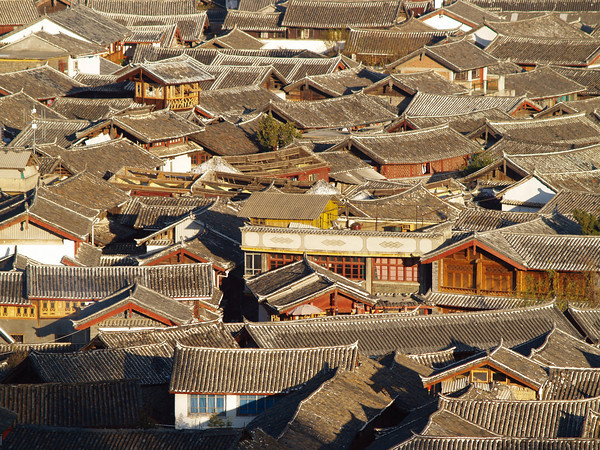
Lijiang: unforgettable Naxi minority town, or simply a playground for mass tourism?

Comments such as these beg the question: if Yunnan’s Lijiang and Mt. Kawagebo are so kitschy and crowded, then what is the point of visiting them? And, from a potential client’s point of view, why is AsiaTravel still visiting these areas? Don’t they promote “experiencing China differently?”

We, too, have often debated the issue of historical and culture value versus tourist developments and influx in these areas. In the spring and summer of 2009, we wrote a few blog posts on the issue. Our April 14, 2009 blog post, entitled “What We’re Reading: NYTimes Goes to Yunnan,” addresses the struggles of preserving the uniqueness of such a popular destination on our trips:

“For operators like AsiaTravel, it’s always a balancing act to manage sustainable development of a site while promoting its appeal to future travelers. On one hand, you might want to keep small places a secret so that they retain that je ne sais quo that made the place so appealing in the first place. On the other, you want to promote these amazing places and tell everyone about them so that they can share your experience.”

Three days later, we explained our philosophy regarding responsible tourism:

“For AsiaTravel, our goal of responsible travel includes providing travelers a greater understanding of local cultural and environmental issues… It means visiting Songzanlin Monastery, also referred to by Jenkins, but having monks guide us through areas normally off-limits and having tea with a top lama in his private chambers. And it means visiting local families in surrounding Tibetan villages, like Hamagu, where World Wildlife Fund (WWF) is working to build support for sustainable tourism as an alternative source of income to logging.”

We at AsiaTravel realize that as more tourists flood these areas, some aspects of local culture and environment are inevitably compromised. However, despite these realities, we strongly believe that we are still able to give our guests a unique travel and cultural experience.

How do we accomplish this? We travel away from the crowds. We engage in people-to-people meetings and interactions so that our travelers experience daily Chinese life. We offer once-in-a-lifetime opportunities, such as meeting with a Bimo shaman (see our Chinese Treasures itinerary). In smaller, more intimate Naxi villages nearby, we take our guests to local markets and community performances by village elders. It is through these personalized experiences and intimate looks at life in Yunnan that we are able to customize our travelers’ experiences and maintain the wonder of local cultures for our guests.

It’s also important to consider why these sites have become as touristic as they are. Why do thousands flock to Yunnan each year? There is clearly a reason why: Yunnan is one of the most diverse areas of China. Lijiang is a UNESCO World Heritage Site and an absolute must-see; Mt. Kawagebo is a spectacular and breathtaking sacred Tibetan mountain. While we cannot and do not deny that mass tourism does have negative effects upon these areas, the tourist culture in this area reflects the reality of Chinese domestic travel, and, for the reasons mentioned above, is justified.

Orville Schell does not sugarcoat his opinions of Lijiang, Mt. Kawagebo, and the current tourist climate in China. But he is still writing about them. Why? Because regardless of the tourists visiting these sites, they are still simply remarkable.

———–

We invite you to join us in our ongoing rethinking of tourism in China. If you have something to say about this topic, please leave a comment, or email Alex at alex.grieves@wildchina.com. We’d love to hear from you.