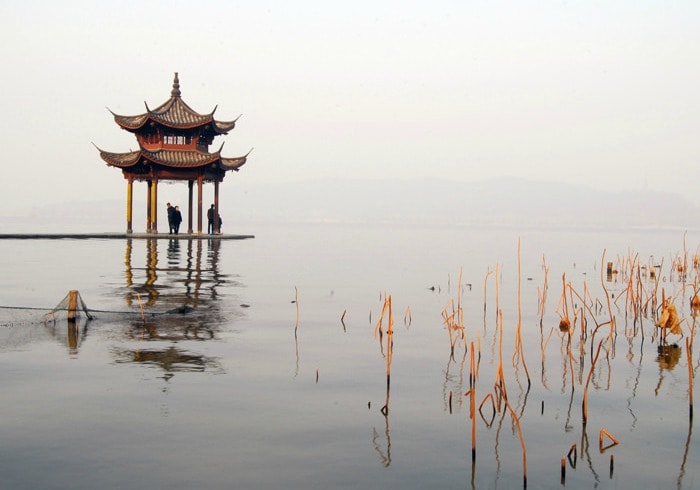
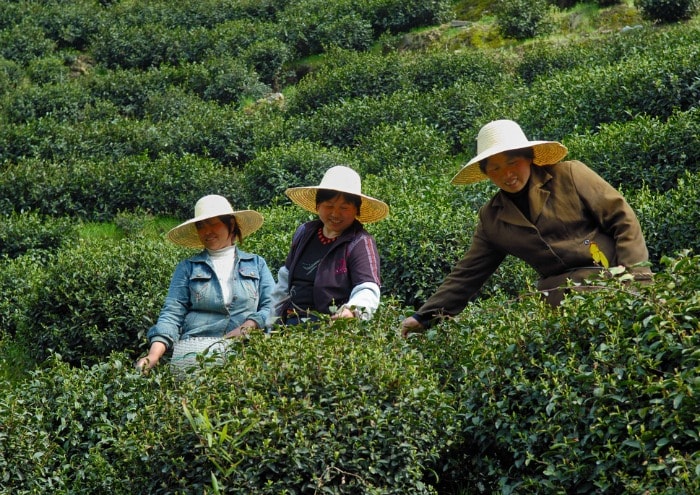
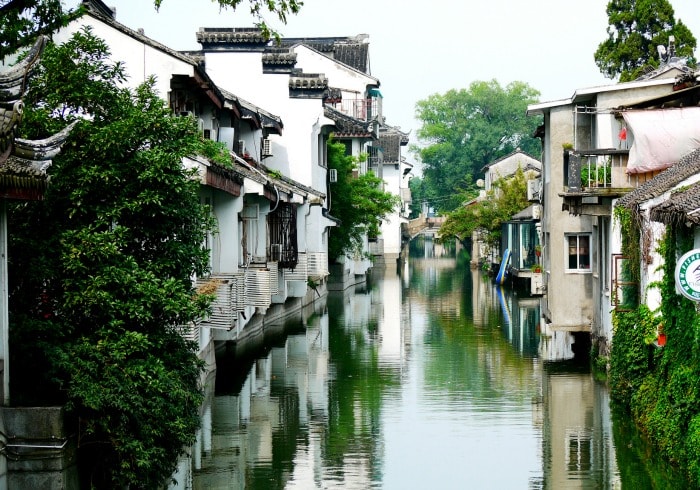
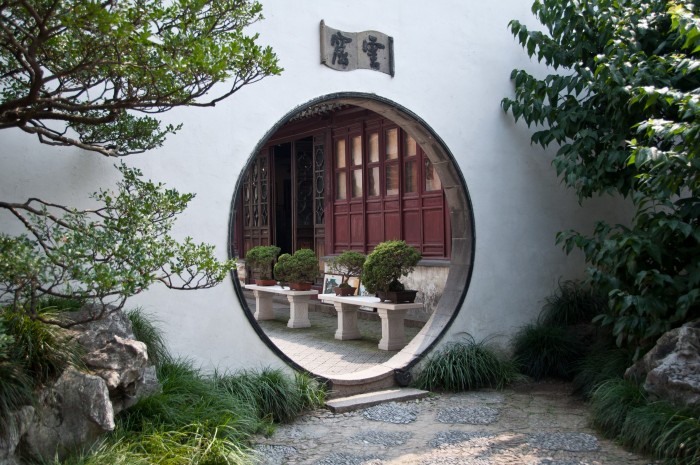
7 Things to Do in Guilin

Guilin has much to offer the tourist who wants to see the real, wild heart of China. We’ve compiled the best selections from our tours in Guilin to inspire you to visit this pristine, exotic region.

7 Things to Do in Guilin

Carlos Adampol Galindo via Flickr

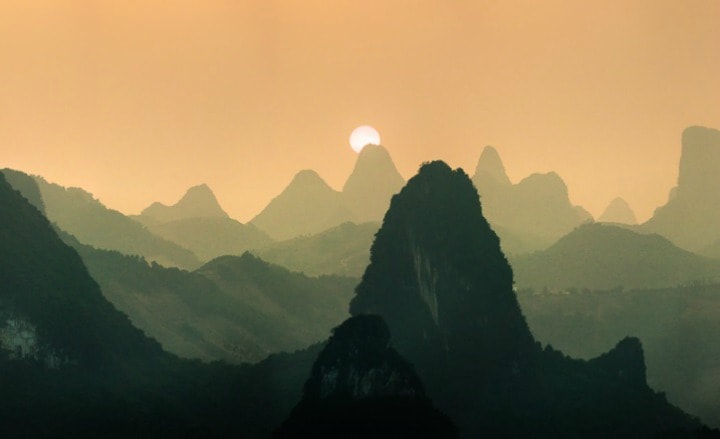
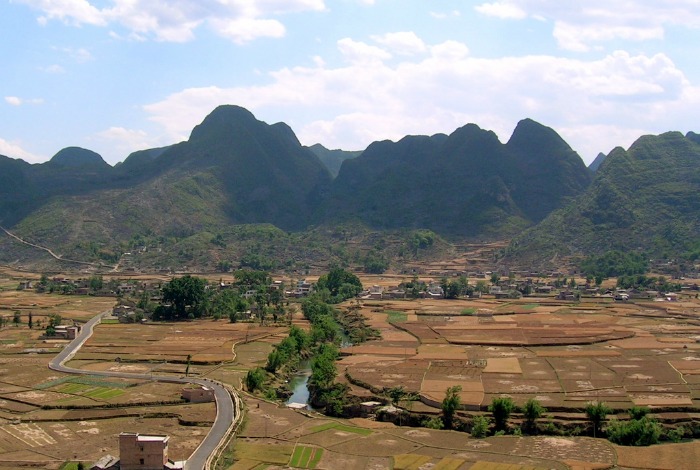
Guilin is home to China’s most archetypal scenery. The green karst peaks reflect on tranquil rivers and waves of water-filled rice paddies ripple across slopes of verdant mountains. This lush scenery is the embodiment of Chinese natural aesthetic principle, “lǜshuǐ qīngshān.” (Green hills and blue waters)

Step into the landscape you see reflected in Chinese ink paintings, the vivid inspiration for centuries of poems, songs, and legends. The summer season until October is the best time to visit.

But before we show you the best of Guilin, let’s get something straight. When people say Guilin, they’re really talking about two different places: Longsheng and Yangshuo. These two towns embody Guilin’s beauty and atmosphere. We recommend a day trip to Longsheng to see the stunning rice terraces, then return to Guilin for the night and head to Yangshuo for 2-3 days the next day.

Here are our top recommendations to make the most of your trip to Guilin in both Longsheng and Yangshuo:

Longsheng
7 Things to Do in Guilin

Llee Wu via Flickr

Dragon’s Backbone Rice Terraces

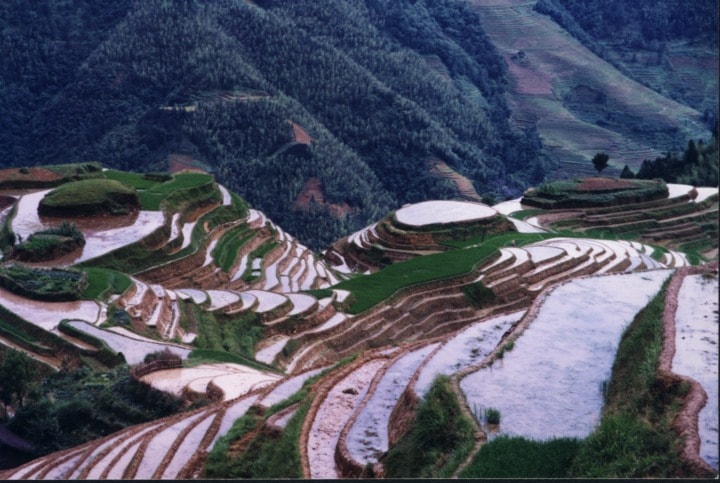
After an early morning drive from Guilin to the Zhuang minority village of Ping’an, our guides will take you on your choice of hikes through ribbons of undulating rice terraces. In May, the still-unplanted terraces of water will mirror the white clouds and color of the sky above, yielding some of the best opportunities for photographers to shoot the sunrise. As harvest season approaches in early fall, venturing out onto the mountain slopes gives travelers the chance to witness Zhuang farmers covering the slopes, bending down into the harvest and tending to the intricate bamboo and earthen irrigation systems which give life to the mountainside.

Yangshuo
7 Things to Do in Guilin

P Bibler via Flickr

Bamboo Raft  

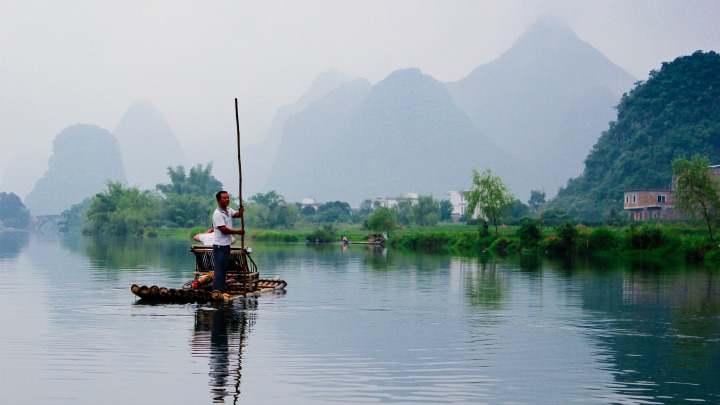
One of our favorite things about Guilin is that you don’t have to travel by car. Instead, take a traditional bamboo raft down the wide, green waters of the Li River from Yangshuo to the remote village of Xingping. It’s not a fast ride, so take off your shoes and let your feet trail in the cool water off the side of the boat as your raftsman guides you down the river with karst giants towering above on each side.

Biking 

From Xingping or Yangshuo you can easily explore deeper into the surrounding villages and landscapes by hopping on a bike. Out in the rural areas cars are few and the roads are smooth, so this is one of the best ways to get away from summer tourists and make your own journey through the peaks, rice fields, and old villages of Guilin.

Impressions of LiuSanjie

The blue waters of the Li River and surrounding misty karst peaks serve as the stage and backdrop to this contemporary impressionist performance of and old Zhuang romance legend. It’s choreographed by Zhang Yimou, the mastermind behind the 2008 Beijing Olympic Opening Ceremony. Sit back on the banks of the Li and enjoy the song and performance of local fishermen, actors, and children as a brilliant light show dances off the water and surrounding karst rock.
7 Things to Do in Guilin

Yuan 2003 via Flickr

Hiking

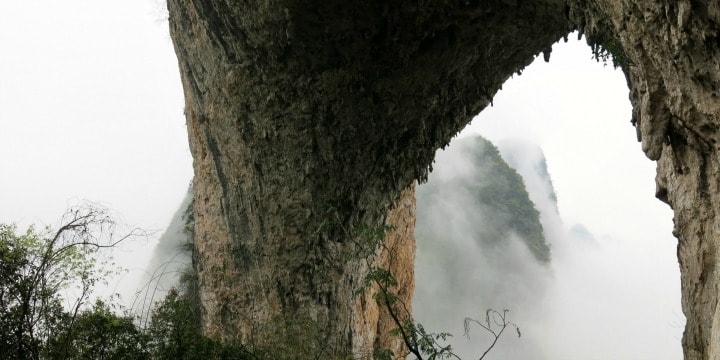
While you’ll spend the majority of your time marveling at the karst landscape from below, spending the effort to get a view of the Li River and mist enshrouded mountains from above is more than worth it. When looking up these forested monoliths seem impossible to climb, but several peaks in the area are accessible by ancient stone stairs leading to pavilions and panoramic views. Each peak takes about thirty minutes to climb. Xianggong Mountain and Xilang Hill in Yangshuo offer some of the convenient options for families and those in Yangshuo (railings, constructed viewing platform, etc), while Laozhai Hill in Xingping is more remote but offers one of the best sunset viewing spots in the area.
7 Things to Do in Guilin

Cooking Class

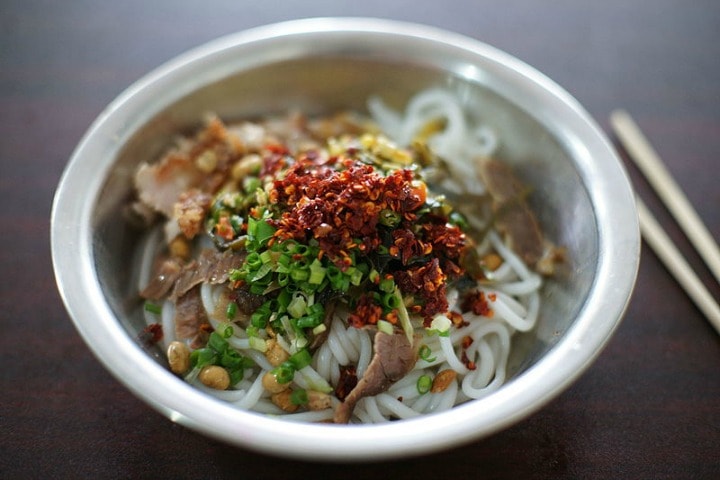
Take a break from the outdoors and dig your hands into local culture with our traditional Guilin chefs as they teach you how to cook local style in a brick courtyard house. Classic dishes will include recipes featuring chicken and pork and a variety of seasonal vegetables. A favorite of our travelers is jiandan jiao, a simple but mouth-watering dish of steaming dumplings fried in egg.

Landscape Painting class

Try your hand at following the Chinese classical art masters who used Guilin’s landscape as their inspiration. Under the guidance of our local professional artists, use traditional Chinese horse or rabbit hair brushes and mo, Chinese ink, to paint the surrounding mountains and rivers around you onto delicate rice paper. If you’re looking to make something more practical, you can do the painting on your own, original Chinese paper fan!

Ready to take in Guilin’s jade-green rice terraces, spectacular karst peaks and mouth-watering food? Join us on the Guilin – Into the Scroll tour.
The Unexpected, Natural Wonders of Guizhou

A hidden gem of China’s Southwest, Guizhou is an ideal destination for those who want to venture off the beaten path. Although many travelers visit Guizhou for its diverse minority cultures and vibrant music festivals, Guizhou is also rich in natural beauty.

Among the colorful ethnic minority villages, Guizhou‘s also spotted with rustic lakeside farms and terraced rice fields. Home to one of the most beautiful karst caves in China and many precious animals, Guizhou will not disappoint you whether you’re interested in seeing wildlife or bizarre sites of nature.

Here’s a list of what to do in Guizhou (other than dancing and sipping rice wine at minority festivals):

The Unexpected, Natural Wonders of Guizhou Gilles Vogt via Flickr

Zhijin Cave

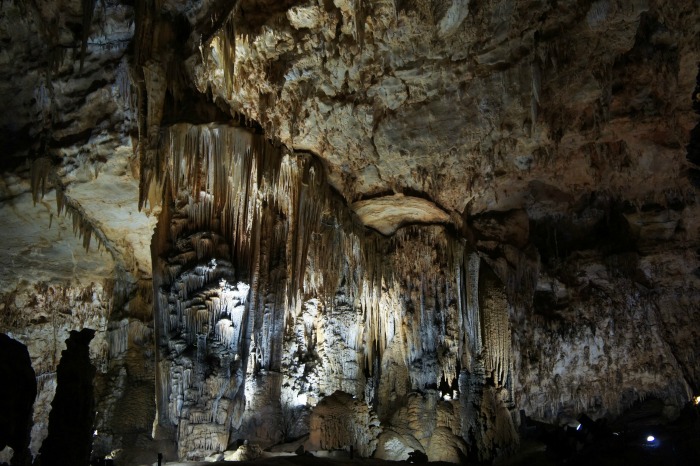
Originally called Daji Cave because young Miao minority children used to play badminton here, Zhijin Cave is known as the King of Caves. It not only boasts a magnificent collection of stalactites, but it also possesses the world’s largest unsupported roof span of any cave. Wandering through the forest of sparkling stones shaped like flowers, drums, and pillars, you might think you’ve walked into a mysterious underground palace. When you visit the 200-meter long Yingbin Hall covered in moss, make sure you stop at Luoqian (‘falling money’) Hole where drops of water continuously fall into the cave like hundreds of shining coins in the sunshine. Then, you can take a detour to the little cave beside Yingbing Hall to admire a ten-meter stalactite that looks like a mushroom cloud formed after a nuclear explosion.

The Unexpected, Natural Wonders of Guizhou

Photo via TripAdvisor

One Hundred Mile Azalea Forest

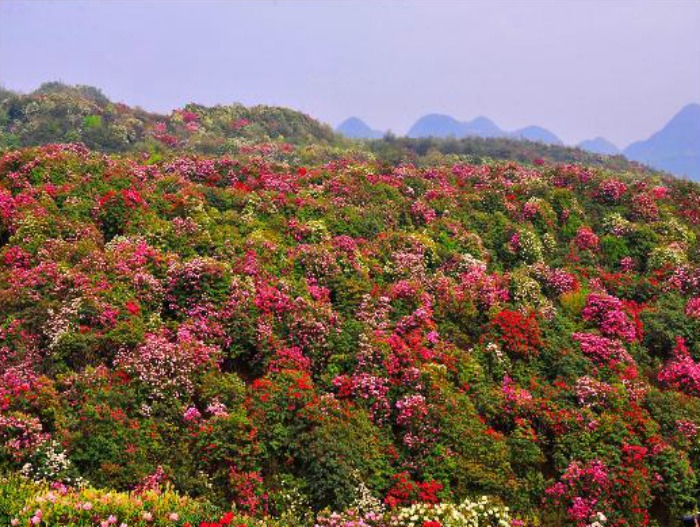
As the name suggests, One Hundred Mile Azalea Forest is the largest natural rhododendron forest in the world.  During the flowering season from early March to the middle of May, the hills become a drawing palette of beautiful colors including dark red, light yellow, creamy white, and purplish blue. The perfect spot to marvel at this ocean of azaleas is Shuhua Peak where you can stand on the highest peak of the forest and admire the flowers bright enough to give the skyline a pinkish tint. If you look carefully as you walk through the forest, you might see different types of azaleas blooming on the same shrub which is very rare in nature.

Even if you miss the flowering season, you should still visit One Hundred Mile Azalea Forest because it offers more than azaleas. You can explore one of the limestone caves hidden behind towering trees or take a boat ride on the 400 acre Bailidujuan Lake which is a lush green color in summer and slightly tinged with orange in autumn. You might also see some rare birds like the golden pheasant.

The Unexpected, Natural Wonders of Guizhou

Sujun Suajem via Flickr

Huangguoshu Waterfall

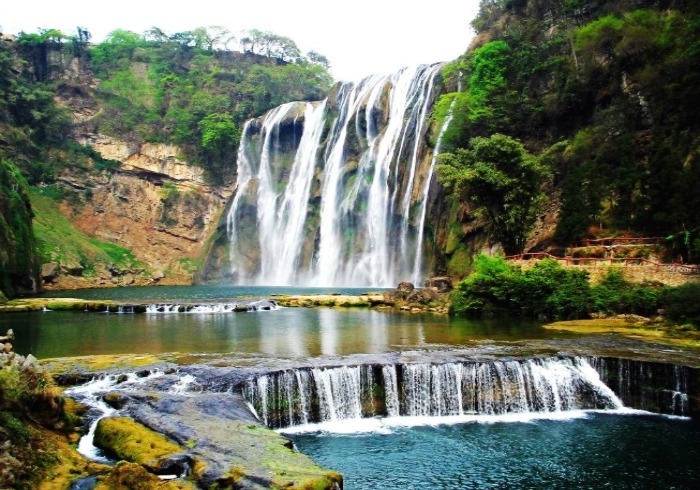
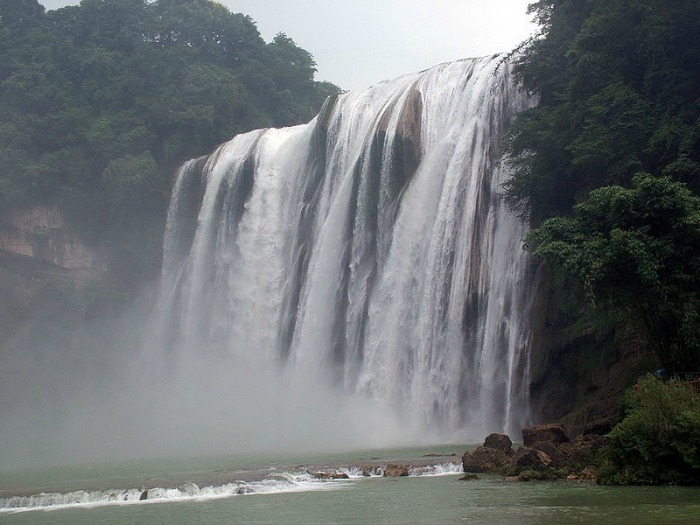
Another spot in Guizhou that you should not miss is Huangguoshu Waterfall, the largest waterfall in Asia, spanning 101 meters in width and 78 meters in height. We recommend viewing it from multiple points to fully appreciate its beauty. Start with a panoramic view of the waterfall from the Waterfall-Viewing Pavilion, where you can see the waterfall from a distance. Then, switch to the Water-Viewing Stage for a bird’s eye view. You can see the waterfall from its bottom at the second Waterfall-Viewing Stage, where you raise your head to admire this sublime waterfall. Finally stand in the Water-Curtain Cave to touch the waterfall and let a few drops of water sprinkle on your face.

The Unexpected, Natural Wonders of Guizhou

Caohai Lake

A grassy lake with mild temperature, Caohai Lake is an ideal habitat for birds and home to 184 bird species, so it’s a must-see for bird-enthusiasts. If you visit Caohai Lake in winter, you’ll see black-necked cranes, the only plateau crane left in the world, gracefully walking on grasslands and hunting fish in the water. The best way to explore the lake is to hire a flat-bottomed boat and watch the cranes, eagles, and storks enjoying a warm winter as you meander through the channels.

The natural wonders of Guizhou are a calming respite from your daily routine. Venture through this serene landscape, dotted with vibrant minority villages on one of our two tours through the region: Old Country Living and Hidden Guizhou. 


Only Have 24 Hours in Guiyang? Here’s What To Do…

Sometimes overlooked by tourists on their way to more famous destinations, Guiyang has a lot to offer the discerning traveller.

Nicknamed the ‘Forest City’ and the ‘Summer Capital of China,’ Guiyang’s history dates back to the 13th century, and it is surrounded by beautiful Guizhou scenery.

Whether you’re interested in traditional Chinese villages, a picturesque hike in a stream filled valley, or discovering China’s biggest waterfall, you’ll find that Guiyang and its surroundings has more than enough to keep you enthralled for 24 hours. Here are a few suggestions…

Yunshantun Old Han Village

Only Have 24 Hours in Guiyang? Here’s What To Do…

Source: Zhangzhugang

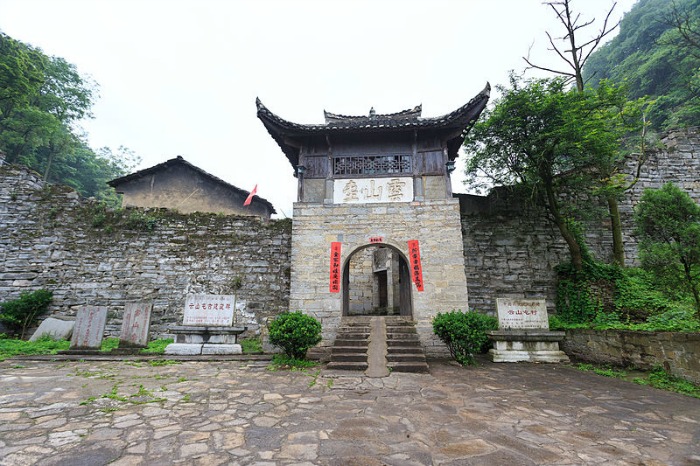
Built in the 14th century, the Old Han Village showcases the remaining culture of the Han Chinese ethnic group. The ancestors of these villages migrated from Jiangxi to Guizhou during the Ming Dynasty, bringing with them an ancient culture which survives to this day. During your visit you’ll see women dressed in traditional Ming Dynasty costumes, and houses that remain faithful to the Ming architectural style.


Xijiang Miao Village

Only Have 24 Hours in Guiyang? Here’s What To Do…

Source: MDRX


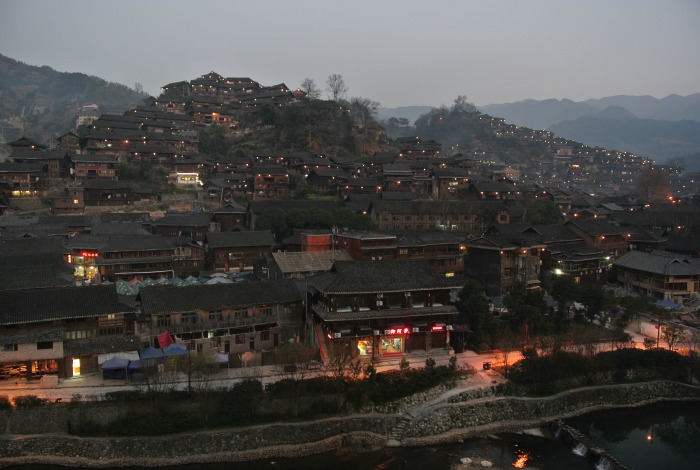
If you’re willing to venture further out of town, you’ll find the largest gathering place of the Miao ethnic minority, where over 1000 Miao family live in the traditional way. You can watch traditional cultural performances and enjoy the views of the rice paddy fields and wooden-stilted houses stretching out into the distance.

Whilst there, check out the Miao Nationality Museum to learn about the history and culture of the Miao people, and climb up to the viewing platform to enjoy a unique panorama of a village that is unlike anything you’ll find elsewhere in the world.

Damochong Valley

Only Have 24 Hours in Guiyang? Here’s What To Do…

Source: Philippe Semanaz

Spend the cool afternoon hiking through the Damochong Valley. Forget the energy of the city and relax in nature, listening to the flowing streams and wandering through a dense bamboo forest. Instead of cars and shopping malls, the valley is inhabited by quaint local villages, where traditional ways of life still thrive. You’ll get the chance to learn the traditional methods of papermaking from the locals who call this valley their home.


Huangguoshu Waterfall

Only Have 24 Hours in Guiyang? Here’s What To Do…

Source: WaitinZ

A short trip out of town is the justifiably famous Huangguoshu Waterfall. Almost 80 metres high and 100 metres wide, it is the biggest waterfall in China. Replace the hum of the city with the roar of the water, and discover the surrounding limestone caves and ancient forests.

With history and nature to rival almost anywhere else in China, you’ll find Guiyang well worth the trip, and a marked contrast from your experience in first tier cities like Shanghai and Beijing. Twenty four hours is enough for a meaningful experience. Of course, if you can stay longer, you’ll have access to even more of the wonder this city has to offer.

Curious about the hidden treasures of Guiyang? Join AsiaTravel on one of our two trips to Guiyang and the surrounding areas of Guizhou and Guangxi: Old Country Living and Hidden Guizhou


What to Do on a Day Trip to Suzhou

Updated: March 19, 2019

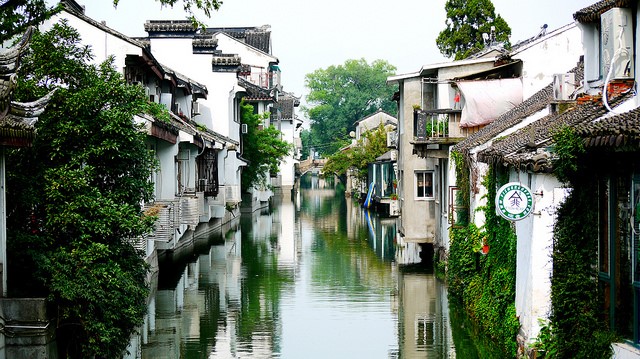
Suzhou’s stunning canals and decorated gardens make this little city the perfect getaway from the bustling metropolis of Shanghai. If you only have one day to indulge in a break from it all, you’ll need to look no further than Suzhou for rest and relaxation mixed with authentic cultural experiences.

With frequent high-speed trains running in and out of Shanghai (approximately a 25 minute train ride from the city), a day trip to Suzhou is a perfect respite from the big city life. Whether it’s your first time in town, or you’re back for more, we’ve put together a list of places that combine the classic spots with alternative choices that will bring out a different side of Suzhou you wouldn’t see on the usual tourist itinerary.


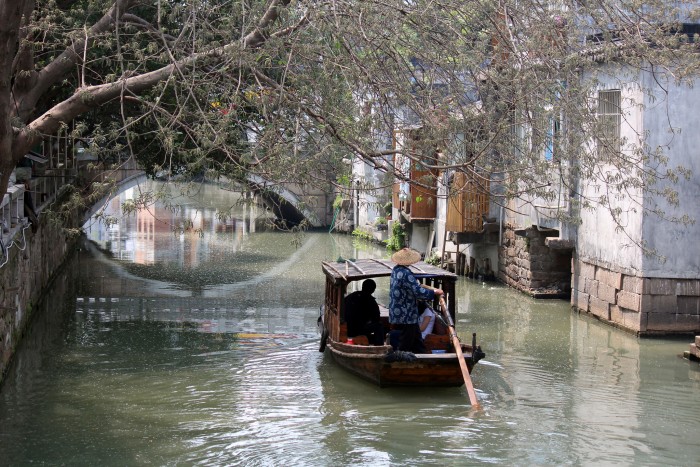
What to Do on a Day Trip to SuzhouSuzhou Canals by _chrisUk via Flickr
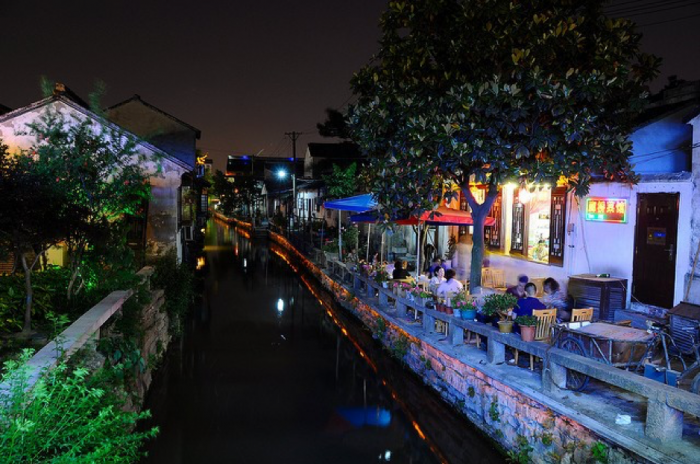
First Stop, Gardens: Humble Administrator’s or Tiger Hill?


Humble Administrator Garden

This is one of Suzhou’s largest classic gardens, and its popularity reflects that. This, we believe, is a good reason to avoid it. Don’t get us wrong – it’s a beautiful place, but with fame come long lines. If you’re going to go here, we suggest you avoid peak seasons and times, such as very early in the morning.

But what’s so great about the area? The gardens here reflect the refined artistic tastes of the Ming and Qing dynasties, which saw garden cultivation as a form of artistic expression. Its name and origin come from a man, Wang Xianchen, who fell out of favor because of his outspoken criticism of the then-Emperor. He may not have been very politically savvy, but his garden-founding talents have stood the test of time.

If you want a similar experience, but without the bustling crowds, might we suggest…

Tiger Hill Garden

Suzhou was founded in the 6th century BC by a man named He Lu; to celebrate the founder’s accomplishments, Tiger Hill is said to demarcate his burial place. On top of this, it is also known for the Cloud Rock Pagoda complex, which looms over the surroundings like a guard on watch, and for its well-kept scenery and various historical sites.

We prefer Tiger Hill to the Humble Administrator’s Garden because it is a lesser-known secret, and thus attracts smaller crowds even during peak seasons.

What to Do on a Day Trip to Suzhou

Tiger Hill Garden | By AsiaTravel Travelers, Chuck & Kathy 

Pingjiang Road

If you find yourself a little peckish, Pingjiang Road is a wonderful location to have lunch in while experiencing genuine Suzhou. It’s said to be less touristy than Shantang Street and is lined on both sides with buildings that encapsulate Suzhou’s traditional architecture. It’s relaxed, stylish, and feels more genuine than most places you’re liable to stumble upon.


What to Do on a Day Trip to Suzhou

Pingjiang Road Canal | Joan Compderrós-i-Canas via Flickr

Suzhou Silk Factory

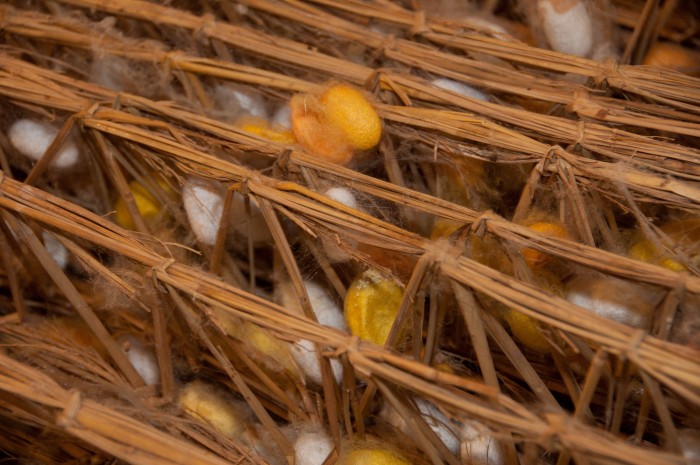
Suzhou has been the centre of China’s silk trade for hundreds of years. From cultivation to its various uses, the secret of this precious material was guarded viciously for centuries until the Byzantines managed to smuggle silkworm larva out of the country, thus breaking China’s monopoly on the ultra-soft fabric. If you’re interested in a mix of business and history, then consider touring the silk factory to see how the modern process goes from worm to loom.


What to Do on a Day Trip to Suzhou

Suzhou Silk in Progress | By AsiaTravel Travelers, Chuck & Kathy 

Master of the Nets Garden

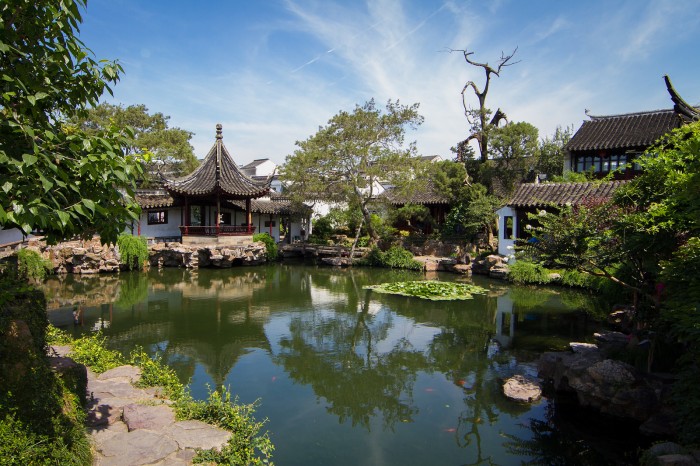
We highly recommend that you have a look at the Master of the Nets Garden. While it’s not as big as others in the area – at barely more than half a hectare, it’s actually the smallest – it’s considered one of Suzhou’s most exquisite gardens. The garden uses space ingeniously to create the illusion of an area that is much greater than its actual size, creatively directing the eye with its various adornments. While exploring the garden, our AsiaTravel guide will explain how feng shui has been implemented in this UNESCO World Cultural Heritage Site and the philosophical and aesthetic principles underlying the arrangement of plants, rocks and water to form a Chinese garden.


What to Do on a Day Trip to Suzhou

Master of Nets Garden | Rita Heine via Flickr

To complete your Suzhou trip, dine at a traditional Suzhou restaurant – the city boasts a number of excellent restaurants that are worth a try. Many local favorites are located at Taijian Nong (Taijian Lane) around the Guanqian Jie shopping street, including the famous Song He Lou (Pine and Crane Restaurant) that is a little more than 200 years old. Savor traditional Suzhou specialties such as Songshu Guiyu (squirrel-shaped Mandarin fish), Gusu Luya (Gusu marinated duck) and Luobosi Su Bing (pan-fried turnip cake). After dinner, end your day with a stroll in modern Suzhou along Guanqian Jie.


What to Do on a Day Trip to Suzhou

Night time Canals | Ross Bowling via Flickr

Indulge in a tour through Suzhou’s resplendent atmosphere on the Hangzhou and Suzhou: Heaven on Earth tour. A relaxing getaway from bustling Shanghai, Suzhou impresses clients with its stunning architecture, tranquil canals, and gardens designed by fengshui masters.  

How to Choose Between Hangzhou and Suzhou

Hangzhou and Suzhou are heavenly paradises in the south of China. But what should you choose if you only can visit one of these majestic cities?

Within China, there are many famous cities that nearly every citizen knows about. Two of these are Hangzhou and Suzhou, both of which are located within a stone’s throw of Shanghai… well, by Chinese standards at least. When you ask people about these two cities, they may tell you without irony that they are “paradise on Earth.” However, this may not be entirely their personal opinion, but could be referring to the adage “Heaven is above; Hangzhou and Suzhou are below”.

Whatever the case, if you find yourself in Shanghai and only have limited time to choose between the two cities, here are some overviews of each.

Hangzhou

As with nearly every major Chinese city, it’s ancient. Yes, it’s stood the test of time, and is found at the southern end of the Grand Canal with a lake at its center. The surrounding area has many hills, fulfilling the Chinese aesthetic ideal of shanshui which is the connection between water and mountains. Marco Polo even called it “the finest and noblest (city) in the world.” Quite a recommendation.

The lake in the middle of town, West Lake, is well known in China because many famous artists throughout history have depicted it in their works. Both because of its convenient location and its fame, we suggest everyone who visits Hangzhou to have a stop near the lake.

How to Choose Between Hangzhou and Suzhou

West Lake in Hangzhou | Source: Faungg via Flickr

Another facet of the city that you may want to check out is its Longjing tea, which literally translates to “Dragon Well” tea. It is the only place in all of China that produces this particular variety of green tea. If you so choose, AsiaTravel can also arrange for you to visit a plantation where you will learn all about this particular varietal, and even have the opportunity to pick your own tea straight from the plant.

How to Choose Between Hangzhou and Suzhou

The Longjing Tea Plantations | Source: Nicholas Turland via Flickr

Finally, there’s the Lingyin Temple. Destroyed a total of 16 times since 326 AD, it has been built (and rebuilt) 17 times in total. Any place that people are this dedicated to likely has something of value to offer. Its other name is the “Temple of the Soul’s Retreat,” coming from the peaceful forest that surrounds the temple. A highlight of this particular temple is the Buddhas carved into the rocks on the side of a nearby cliff.

Of course, there are other things for you to discover, but we don’t want to ruin the surprise and sense of adventure of finding them for yourself!

Suzhou

Suzhou is also ancient. However, what makes it strikingly different is the series of canals, giving it the nickname the Venice of China. Dating back to 514 BCE, Suzhou has long been a city based on trade, benefitting from the cosmopolitan atmosphere which attracted merchants and educated people to support the arts and commission private gardens which still remain to this day.

It is these things for which Suzhou is still known for today: it’s calm, majestic canals, and its famous classical gardens.

Since the canals are more fun to explore on foot and experience in person than they are on the page, we’re going to focus on the famous gardens.

How to Choose Between Hangzhou and Suzhou

The Canals of Suzhou | Source: _chrisUk via Flickr

The Humble Administrator’s Garden is one of the most famous and is known for being made by a shamed historical figure who had gotten into hot water for openly criticizing the then-Emperor. Unfortunately, it typically overflows with people, particularly in peak seasons.

We prefer Tiger Hill Garden which is said to demarcate the burial location of the founder of Suzhou. It’s a little bit off the typical tourist path, so it is usually less crowded.

Finally, we also highly recommend the Master of Nets Garden. Its layout is masterfully done to make the relatively small area appear much larger through the creative use of walls and water. It’s also a UNESCO Cultural World Heritage Site.

How to Choose Between Hangzhou and Suzhou

Master of Nets Garden in Suzhou

Both

If you’re in Shanghai and finding it hard to choose and you want to squeeze them both into the smallest time possible, might we suggest the following: arrive in Hangzhou in the afternoon or evening, stay overnight, and spend one day exploring the city. Then, travel the same night or the following morning to Suzhou by high-speed rail, enjoy Suzhou, and head back to Shanghai in time for nightfall.

The whole thing takes about 48 hours and can be quite a rush, but if you plan it well, you should be able to see most of what we described.

One thing is certain – both cities will be striking, memorable experiences, and we highly encourage you to venture through both if you have the time. However, if you find yourself only able to visit the one, you’ll be left with something to look forward to the next time you visit.

A Foodie’s Yunnan Voyage

Yunnan’s status as a gastronomic paradise is unwavering: between far-flung lands of idyllic villages and snow-capped mountains, the southwestern province offers unparalleled diversity when it comes to Chinese cuisine.

Also known as Dian cuisine, Yunnan cuisine features fresh local produce (thanks to the favorable geographic location and mild climate) as well as the varied cooking styles of the numerous ethnic minority groups across the region. In the north you have Mongolian-inspired dried meat, cheese and yoghurt wafers; Eastern Yunnan’s is closer to traditional Han (Chinese) cuisine, while the south is heavily influenced by the citrus and spice of Southeast Asia. Read on to find out about the colorful world of Dian cuisine.

A Foodie’s Yunnan Voyage

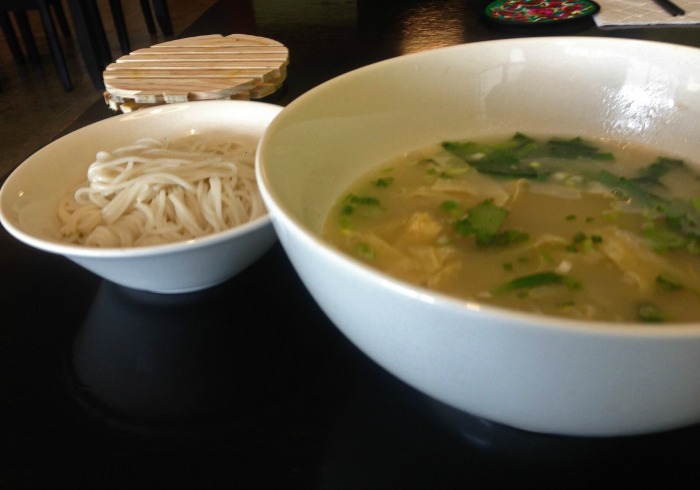
Kirk K via flickr – Crossing the Bridge Noodles

Crossing the Bridge Noodles过桥米线 

The origin story of Yunnan’s signature dish begins with a scholar who lived on a small island. While he studied for the imperial exams, his wife would bring him food every day. She found that by the time she had crossed the bridge to the island, the soup would be cold, and the noodles soggy. Soon after, she started carrying a large earthen pot of boiling broth, with a thin layer of oil on top that acted as insulation and kept the soup warm. The noodles and other ingredients were kept in a separate container, and added to the warm broth during preparation. Crossing the Bridge Noodles is ubiquitous in this part of the country, but head to Mengzi or Jianshui County for the traditional taste.

A Foodie’s Yunnan Voyage

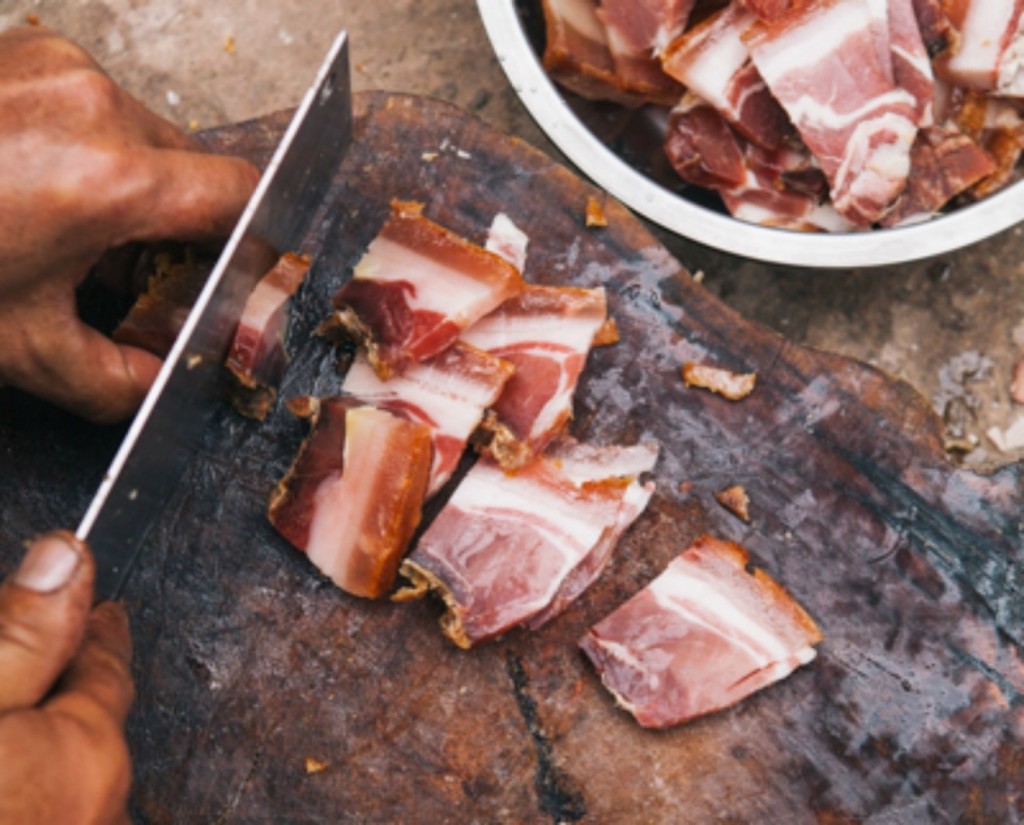
Liz Phung – Dali Ham on the Chopping Block

Xuanwei Ham宣威腿

A local dish in Qujing Prefecture, the famous cured meat has a 250-year history dating back to 1766, and has won international awards for its excellent taste, fragrance and tender meat. It is often used to add flavor to light soups and noodle dishes. Its modern presentation comes in canned ham, luncheon meat, ham-flavored moon cakes and even candy! Our own CEO, Mei Zhang, has written a book about this savory meat and its local traditions. We even have a tour where you can relive her experience in Dali: Travels through Dali with a Leg of Ham.

A Foodie’s Yunnan Voyage

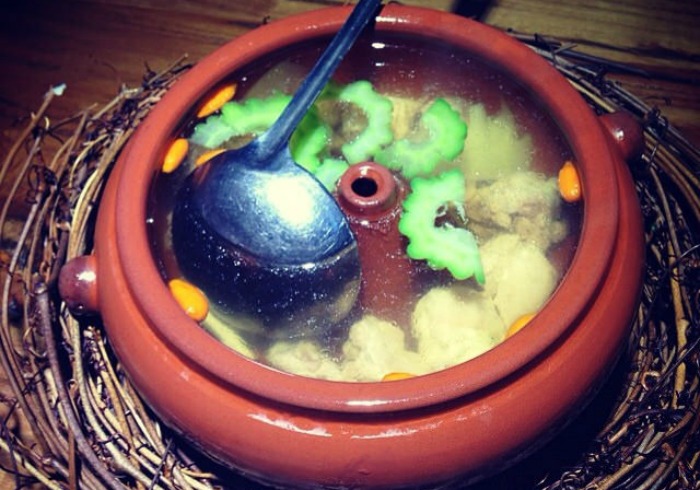
夢境那小牛 via flickr – Steamed Pot Chicken

Steamed Pot Chicken气锅鸡

Travel to Jianshui and enjoy the local favorite “steamed pot chicken” that can only be found in Yunnan. The ceramic pot used for steaming was invented by Yunnan residents. Rare medicinal herbs native to Yunnan are added to the brew while the chicken is steamed delicately. The meat is tender, and the soup delicious. Locals claim that the dish is very nutritious and possesses many medicinal qualities.

A Foodie’s Yunnan Voyage

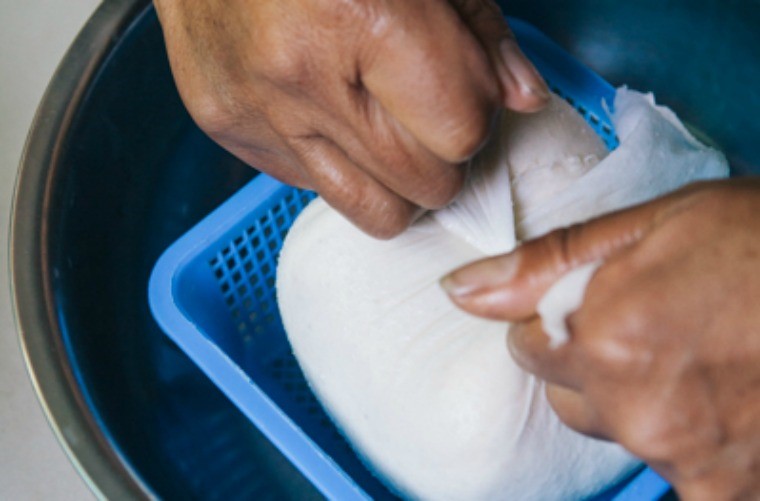
Liz Phung – Rushan Cheese in the Making

Rubing乳饼and Rushan cheese乳扇

In Dali, visit the Bai community and learn the traditional ways of making rubing, a paneer-like farmer cheese made from fresh goat milk, and rushan, a cow’s milk cheese. Try pan-fried rubing seasoned with salt and chili, or stir-fried with vegetables. As a street food, Rushan is often served grilled, rolled around a popsicle stick and flavored with various sweet condiments.

A Foodie’s Yunnan Voyage

Liz Phung – Hot of Cup of Joe

Pu-erh coffee 普洱咖啡

No doubt you would have heard of Yunnan’s renowned Pu-erh tea, the tribute tea to Chinese emperors a thousand years ago. Unknown to most, Yunnan has been growing a variety of coffees in Pu’ er city for more than a century. The land’s high elevation, combined with the temperature differences between day and night, lends Yunnan coffee its unique taste – rich but not bitter, with a fruity aroma that is not overwhelming. While far from artisanal, the coffee quality keeps getting better and is set to make a greater mark on the international coffee industry.


A Foodie’s Yunnan Voyage

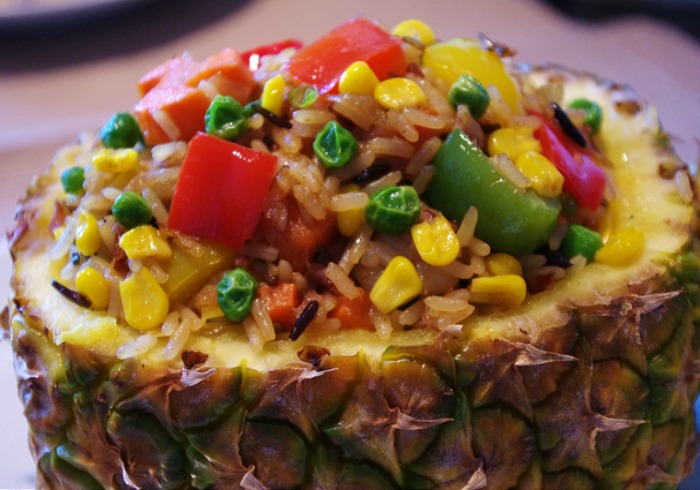
Ming Yang via flickr – Pineapple Rice 

Pineapple Rice 菠萝饭

Dai cooking is similar to the hot and sour tastes of northern Thailand. People there live in the Xishuangbanna region which shares a border with Burma and Laos. Devour a delicious meal of sweet pineapple rice along with tangy mushrooms skillfully steamed in banana leaves. Wild mushrooms can be found in the mountainous, forested parts of the province, and make up a huge part of Yunnan cuisine.  Wild flowers, ferns and insects may also be eaten.

Dali is a veritable Mecca of cuisine. From savory ham to sweet pineapple rice, you and your tastebuds will be pleasantly surprised by this province’s mix of history, culture, and spices.

Ready to tantalize your palate in Yunnan? Consider joining AsiaTravel on our Yunnan Gastronomic Tour with Fuschia Dunlop, our Artisanal Dali tour, or our Travels through Dali with a Leg of Ham tour.

If you’re ready to dive deep into the sensuous history of Dali cuisine, also pick up Mei Zhang’s book: Travels Through Dali with a Leg of Ham 


China in Winter: Where Should I Visit?

China in winter is home to many unexpected cold weather wonderlands. Instead of getting the winter blues this year, embrace the season and enjoy unique experiences that rival any of those you could have in the warmer months. 

For many travelers, winter might not be the preferred time to visit the Middle Kingdom. But, be that as it may, we think there are plenty of reasons to do exactly that: less crowds, lower costs, more space and a greater capacity to fully explore the best parts of the country.

Most importantly, traveling around China during the months of November to January allows you to view and experience the land through a completely new lens. Get inspired for your next big Chinese winter adventure with the following destinations:

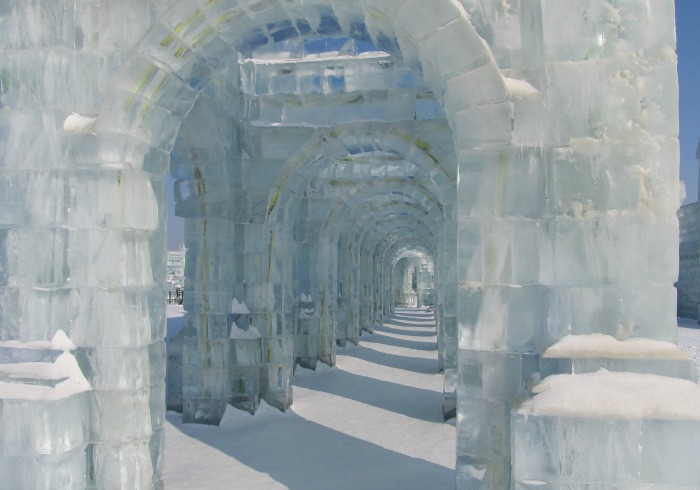
China in Winter: Where Should I Visit?Harbin Ice Sculpture
Photo by Tracy Hunter via Flickr


1. Harbin

Of course Harbin is on every winter traveler’s bucket list: The yearly extravaganza of the Harbin Ice and Snow Sculpture Festival is a sub-zero wonderland of icy towers, massive castles and mystical creatures. It’s nothing short of a real-life scene from Pixar’s winter wonderland classic, Frozen.

Be dazzled by the colorful LED lights that brighten up the sculptures at night and lucky for you, climbing and playing on the bigger installations is encouraged.

The lesser known Rime Ice and Snow Festival is also worth a visit and happens around the same time in Jilin, just 260km southwest of Harbin. Rime is a rare occurrence, formed when warm, moist air comes into contact with objects at freezing temperature. Winter in Jilin presents an exceptionally magical scene of trees covered in white crystalline rime.

China in Winter: Where Should I Visit?

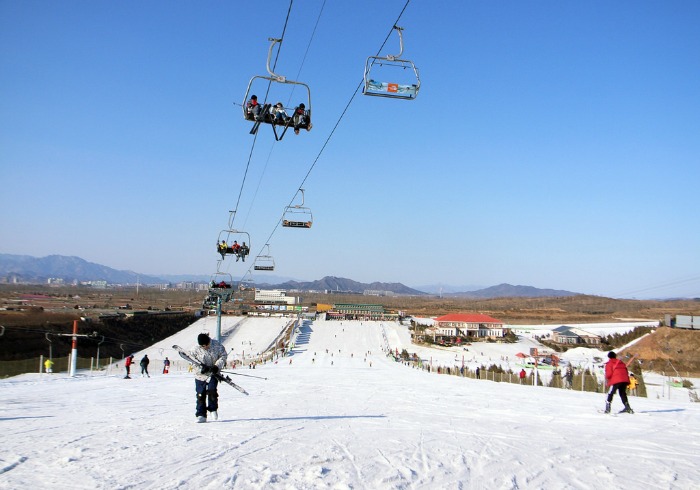
Beijing Ski Lift
Photo by Chen Zhao via Flickr

2. Beijing

Winter in Beijing is long and dry, but there is a wealth of wintry activities to keep you snug and toasty. Snow is rare, but when it falls, it adds an ethereal texture to the city’s historical streets. Hike up Jingshan Park for an unparalleled view of The Forbidden City, or take a long stroll through Beijing’s hutong neighborhoods.

During winter, the frozen Summer Palace lake is converted into a public skating rink and locals lace up their ice-skates with the whole family in tow. Join them on the rink and try riding a unique Chinese invention – the skating bicycle. In nearby Hebei province there are many ski resorts to visit too. With the impending Winter Olympics, the ski spots are set to grow quickly in quantity and quality, so there’s no better time to visit.

If spending a crisp winter morning wandering through Beijing’s historical hutong alleyways sounds like your kind of thing, inquire about our Beijing’s Past and Future tour.

China in Winter: Where Should I Visit?

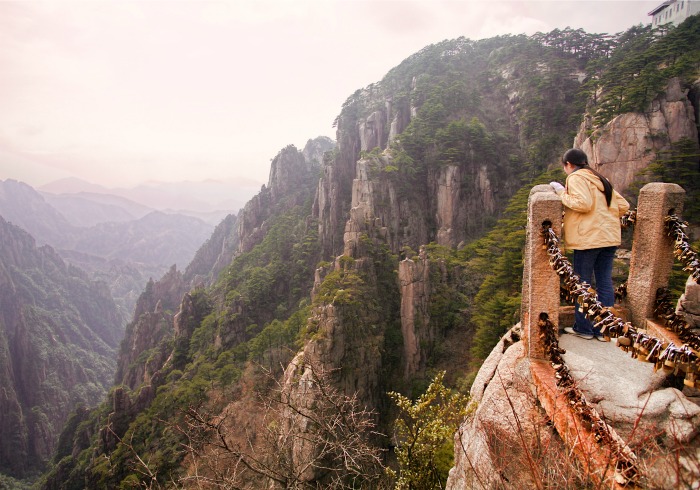
View of Yellow Mountain
Photo by Chi King via Flickr

3. Yellow Mountain

Huangshan literally means Yellow Mountain in Mandarin, and it’s stunning peaks and deep valleys make for a beautiful view any time of year.  Wrap up warm this winter and ascend the Eastern Steps, passing by frozen mountain streams shrouded by photogenic bamboo forests. The walk is stunning but the pièce de résistance comes as you wake early the next morning to watch Huangshan’s famous sunrise from the top of the mountain.

Feel the warmth of the golden rays as they spill over the clouds and reflect off the glistening snow resting gently on the peaks.

Join us on an adventure to this picturesque land on our Yellow Mountain tour.

China in Winter: Where Should I Visit?

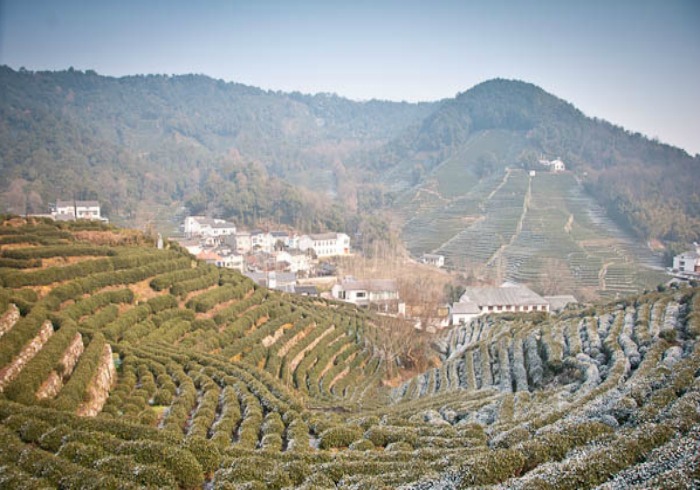
Longjing Tea Plantation

4. Hangzhou

Located just a train ride from Shanghai, Hangzhou has long been the prime source of the renowned Longjing (Dragon Well) Tea. Once grown and served exclusively to the imperial family, you can now learn how the green tea is made at Longjing’s tea plantations.

Pay a visit to a private farmhouse where you can sip hot, fragrant tea brewed with tea leaves picked fresh from the farm. Then relax on the terrace overlooking rolling hills of tea bushes coated with a thin layer of silvery-white snow – simply stunning.

Get started with your tea adventure on our Hangzhou: Paradise on Earth tour.

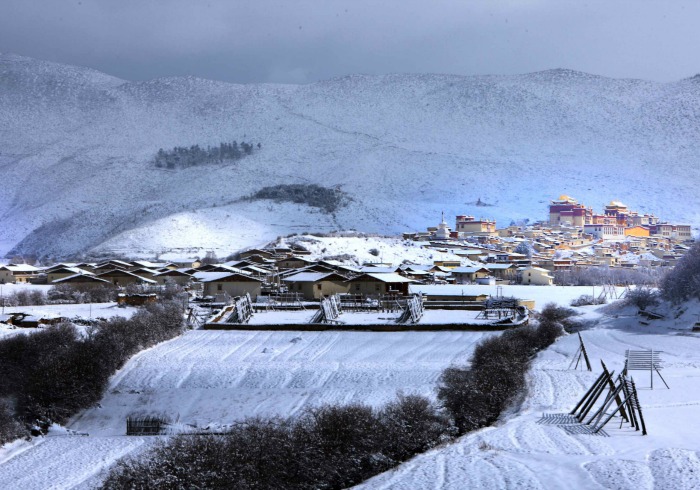
China in Winter: Where Should I Visit?Shangri-La in Snow

5. Yunnan

At the southwestern corner of China, Yunnan’s milder climate makes a comfortable winter. The province has an unsurpassed variety of landscapes, terrain and topography and is home to some of our favorite destinations. Two in particular present a distinct take on the theme of winter wonderlands: Dali and Shangri-Li.

Teetering on the Tibetan border in Shangri-La brings you to the snowcapped peaks of Meili Snow Mountain and the fascinating local mix of Tibetan and Han culture. Here you can visit Ringha Temple and watch thousands of multicolored prayer flags flap in the winter breeze and enjoy a spiritual connection to this ancient land at Songzanlin Lamasery, the largest Buddhist temple in the province. Icy Napahai Lake will offer a tranquil scene full of the wonder and grace of unsullied nature and a hot cup of Tibetan milk tea will warm your bones. Experience this breathtaking escape on our Songtsam Circuit tour and spend your evenings curled up by the fire in world-star retreats.

In central Yunnan, you will find the old town of Dali, home to the Bai minority group. To prepare for winter, the minority families cure ham and pickle vegetables the same way their ancestors have since time immemorial. Satiate your winter appetite and dive into the kitchens of Dali’s artisans our Travels through Dali: with a leg of ham tour.

China in Winter: Where Should I Visit?

Nicolas Bourque via Flickr

6. Tibet

Another great place to visit in China in winter is the exotic land of Tibet. With softly rolling mountains covered in powder white snow and beautiful temples crested with colorful flags, winter in Tibet is a sight to behold. Located in China’s far west, Tibet’s altitude will make you feel like you’re in heaven at the roof of the world

Tibetan winters are known for their blue skies and clear days. You can cozy up in your parka as you listen to the monks recite their harmonious sutras in gilded temples. On all sides you’ll be enveloped by the sacred sights and sounds of this land, resplendent with all the trappings of typical Buddhism.


If a pilgrimage to this holy land sounds like a cure for your winter doldrums, consider joining us on the Soul of Tibet tour or our Escape to Lhasa tour. It’ll be like chicken soup for the soul.

Winter doesn’t have to stop you from visiting China. In fact, you can enjoy all the best things the cold season has to offer: sipping hot tea by a fire, gorging on steaming cuisine, and taking advantage of the chance to skate on the country’s stunning frozen lakes.

Convinced that a trip to China could help quell the winter doldrums? Check out some of our best tours for winter: Travels through Dali: with a Leg of Ham, Hangzhou: Marco Polo’s Paradise on Earth, and Beijing’s Past and Future.

Beijing By Bike: One Wild Ride

Exploring Beijing by bicycle is a great way to enjoy the sights and sounds of the city. We decided a bike-tour would be a great addition to our Beijing repertoire but we wouldn’t offer it to you unless we’d done ourselves – It was time for a test-drive.

A few weeks ago our travel designers strapped on their helmets, mounted their bikes and put the pedal to the metal on a whirlwind tour on Beijing’s most popular form of transportation.

Known as one of the most bicycle friendly cities in the world, Beijing’s flat roads and wide, dedicated bike lanes make taking your two-wheeler an ideal way to get around the capital. Follow in our footsteps (or our bike treads), with the details of the route that we took. You can hop on your bike and take a whirlwind tour of the city in typical AsiaTravel fashion: completely local and wildly creative.

Beijing By Bike: One Wild Ride


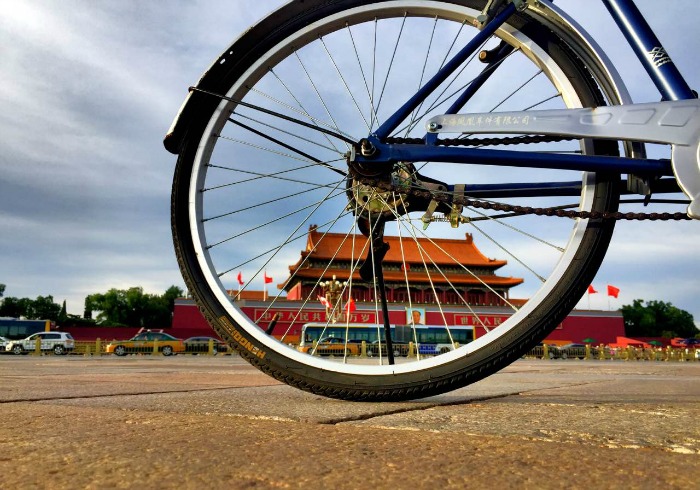
Christine’s Tire Frames Mao’s Portrait

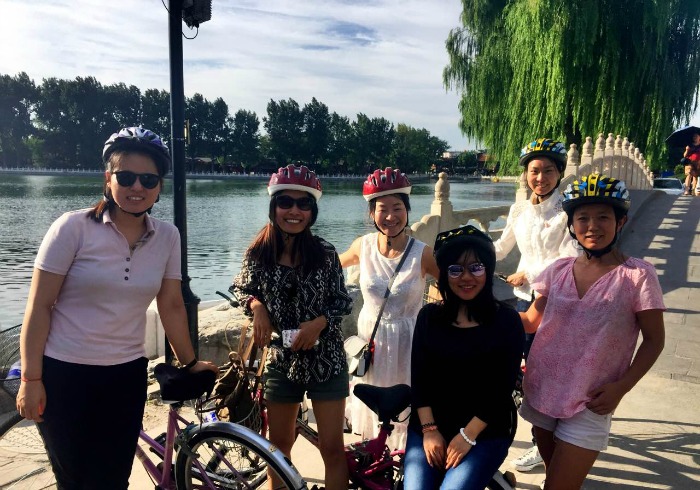
Our bike tour started out near the Drum Tower in the Gulou neighborhood. This area is known for its exciting side alleys and courtyard homes known as hutongs. Here, AsiaTravel can help you rent a bike for a whole or half day.

Beijing By Bike: One Wild Ride

Cruising in Style Near Houhai Lake

HouHai

After choosing our bikes, we set out around houhai, a beautiful man-made lake. Cycling around the lake is a fascinating experience in all seasons. In summer, boats shaped like ducks propel themselves under the low-hanging bridges and in winter, intrepid old men dive into the frozen lake in nothing but their Speedo’s. We even organize calligraphy classes on the banks of the picturesque lake. Biking is the perfect way to take in all of these unique, Beijing sights.

the hutongs

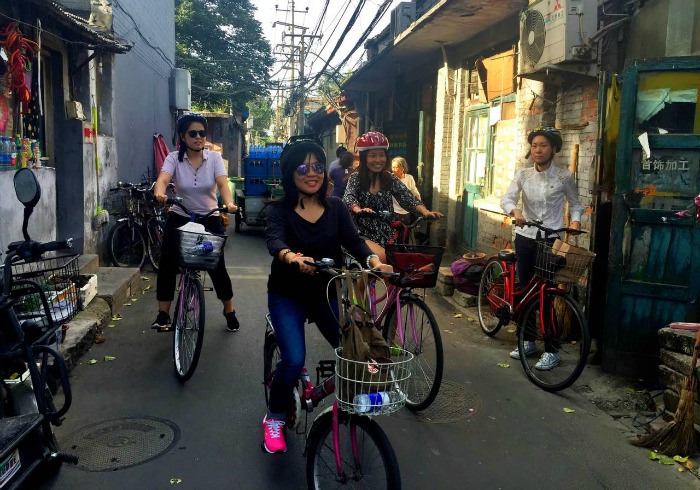
After conquering Houhai, we decided to get lost in the hutongs. These narrow side streets hold surprises at every turn. At first you may see a street vendor selling fresh persimmons falling straight from the tree and turn the corner and bump into an old man playing cards with his grandson while smoking a cheap cigarette. On a AsiaTravel hutong adventure, we’ll introduce you to our good friend: a cricket fighter who’ll invite you in to his home to learn the history of cricket fighting in these ancient alleyways.

Beijing By Bike: One Wild Ride

Rocking the aviator sunglasses in a hutong alley

Take it slow on your bike and take time to sip in your surroundings. Biking helps you maneuver around these crowded hutongs and not miss a single bit of the experience.

Jingshan Park

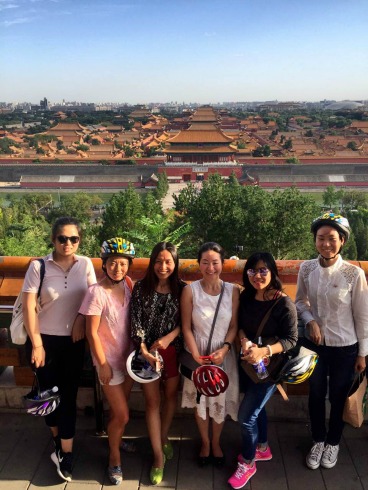
We followed the narrow pathways down south to Jingshan Park. We had to lock our bikes down at the entrance to the park, and we began our climb to the top of this small mountain. Our breaths were bated with anticipation for the panoramic view awaiting us at the top. And believe us, the view did not disappoint.

Beijing By Bike: One Wild Ride

Jingshan with Our Helmets in Hand

We were able to see the sprawling metropolis of Beijing from all angles. But the belle of the ball was our view looking down over the Forbidden City. From the ground, it’s hard to see how magnificent and vast the Imperial Palace is but from the higher vantage point, we were able to see the grandeur of this centuries old sprawling royal residence. On a AsiaTravel tour we would walk down mountain and enjoy privileged access to the Emperor’s former childhood home within the red walls of the Forbidden City,

Tiananmen Square

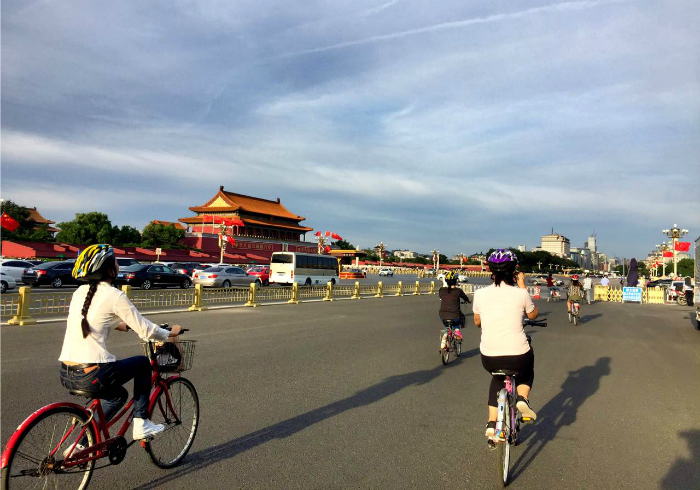
We ended our half day bike tour of the city with one of its most iconic sights: Tiananmen Square. This part of the tour was when taking a bike really shows its benefits.

Beijing By Bike: One Wild Ride

Special Access to Tiananmen – For Bikers Only!

When you ride through Tiananmen on bicycle you’re given special access to parts of the road that are blocked to both cars and pedestrians. It’s a very privileged experience that is only available to bikers. This special access gives you one-of-a-kind close up views of this historical locale.

Touring Beijing by bike is a great way to set your own pace and really enjoy your interaction with the city. Just don’t forget to wear your helmet!

Now that this bike tour has the AsiaTravel stamp of approval, why not add it to your customized Beijing’s Past & Future tour.


5 Best Dishes in Xi’an

One of the oldest cities in China, Xi’an is best known as the home of Emperor Qin’s terracotta army but the city’s unique and mouthwatering cuisine is a reason to visit in its own right. As the first stop on the Silk Road, Xi’an has been at the crossroads of Muslim and Chinese cultures for centuries and the city’s signature dishes reflect the melange of this historic meeting point. Embark on a culinary journey and get to know the best dishes in Xi’an. 

5 Best Dishes in Xi’an

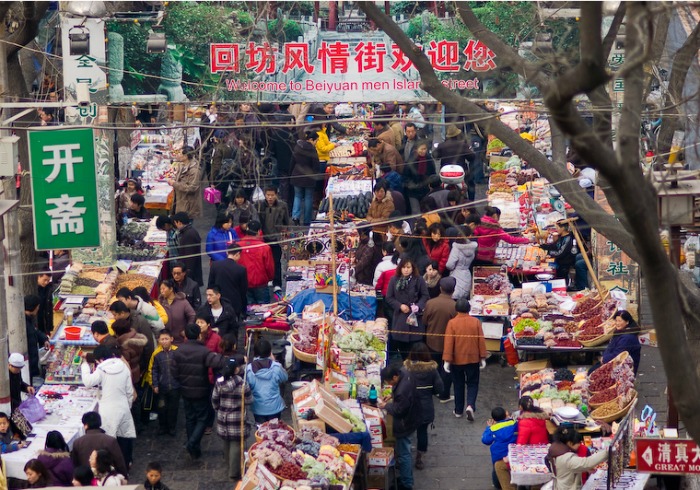
Shaanxi cuisine goes back a long way –  as an important stop on the ancient Silk Road, this central province welcomed travelers who had journeyed from the Middle East. Local cuisine became infused with Middle Eastern flavors and wandering the fragrant streets and side alleys of Xian, you can smell the savory aromas of lamb dishes, Uyghur flatbreads and exotic spices. Pathways are lined with barbecues and sizzling woks and raucous groups of locals dine at tables piled high with local beer and chuan’r. Read on for our pick of five dishes not to miss on your next trip to Xian:

5 Best Dishes in Xi’anPhoto distributed under a CC BY-SA 3.0 license
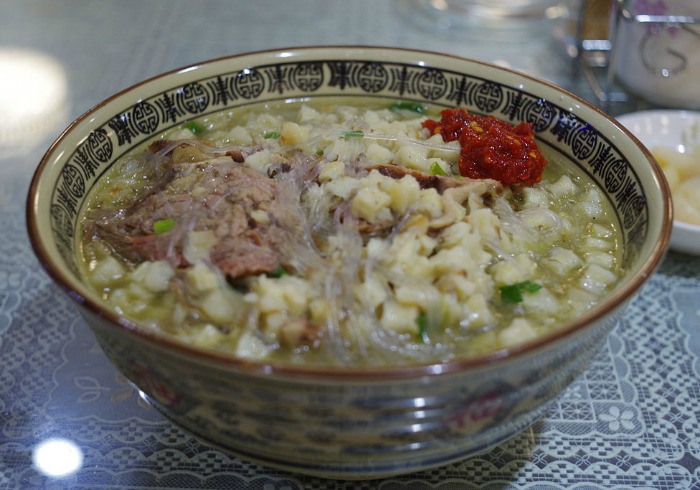
5. YANGROU PAOMO

A local favorite and the irrefutable star of Xi’an cuisine, yangrou paomo(羊肉泡馍)is a stew with unleavened flatbread soaked in tasty mutton soup. Take your two pieces of flatbread – ‘mo’ in Chinese – and shred into small pieces. Locals believe the rather arduous task delivers a better hand-pulled texture to the dish. The shredded mo is then returned with the bowl to the chef, who cooks it in mutton soup with rice vermicelli until the bread is fully soaked in the light and aromatic flavor.

5 Best Dishes in Xi’an Photo by bionicgrrrl via Flickr

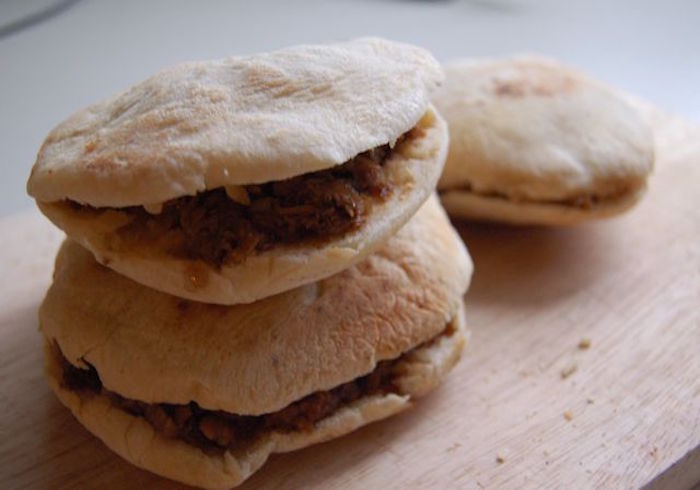
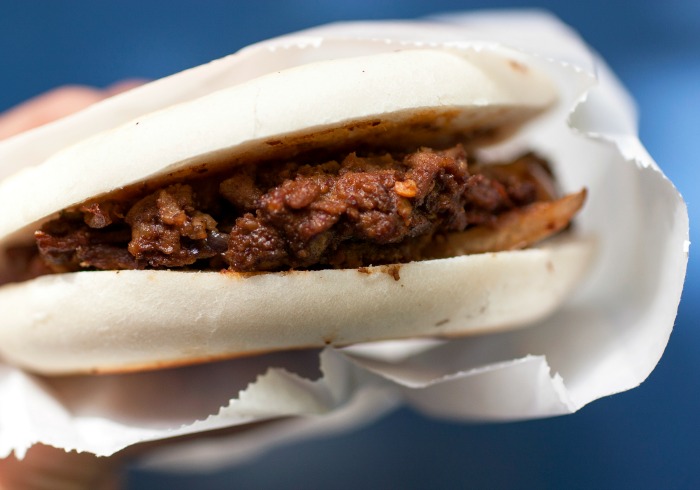
4. ROUJIAMO

Sink your teeth into the juicy, meaty goodness of roujiamo (肉夹馍), Xi’an’s take on a burger. The dish is rather simple, made up of two critical ingredients: baked leavened bread and shredded braised meat. The meat filling – either lamb or beef – is braised for hours in a bubbly vat of beef or mutton stew. A hearty portion is then fished out, shredded by hand and tucked in the bread.

5 Best Dishes in Xi’an

Guilhem Vellut via flickr

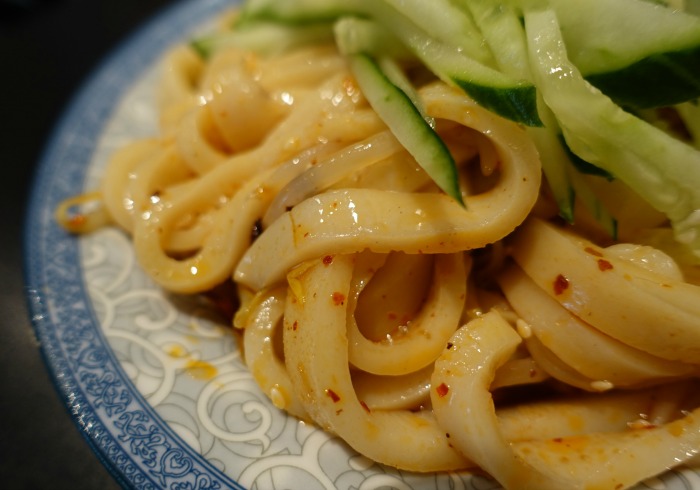
3. LIANGPI

Roujiamo is often paired with a bowl of liangpi, a cold dish featuring thinly-sliced noodles. When liangpi is served, it is tossed with cucumber shreds and bean sprouts and drizzled in a sauce of pepper powder, diced garlic, sesame paste, black vinegar, and roasted chili oil.

5 Best Dishes in Xi’an

Photo by ckmck via Flickr

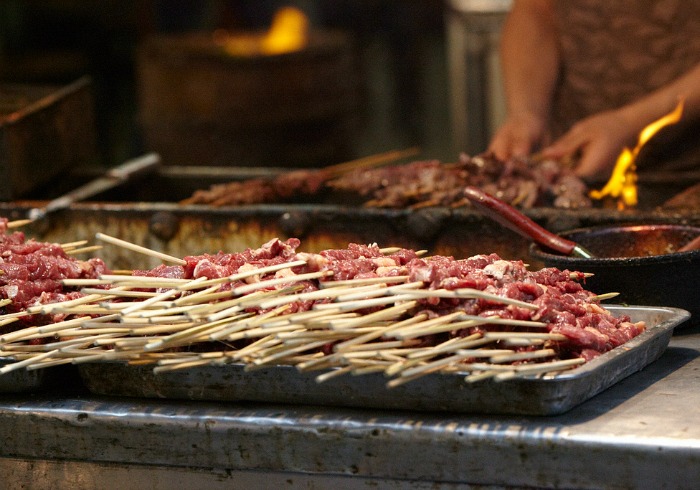
2. CHUAN’R

Chuan’r (烤串儿) are a cheap and convenient snack that pair perfectly with a cold, local beer. A small skewer can cost as little as 1 yuan and there is a great variety of choices – lamb, beef, chicken, and potatoes are all favorites. The skewer is coated in chili pepper and cumin powder and roasted on a grill. Xi’an locals can be spotted at hole-in-the-wall restaurants or makeshift street stalls late at night, the table pilled high with these tasty Chinese Kebabs.

5 Best Dishes in Xi’an

Photo by 飞飞1976 via szhome

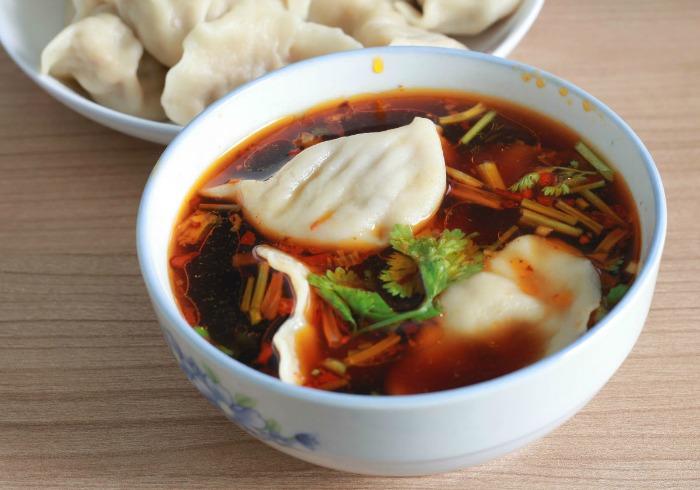
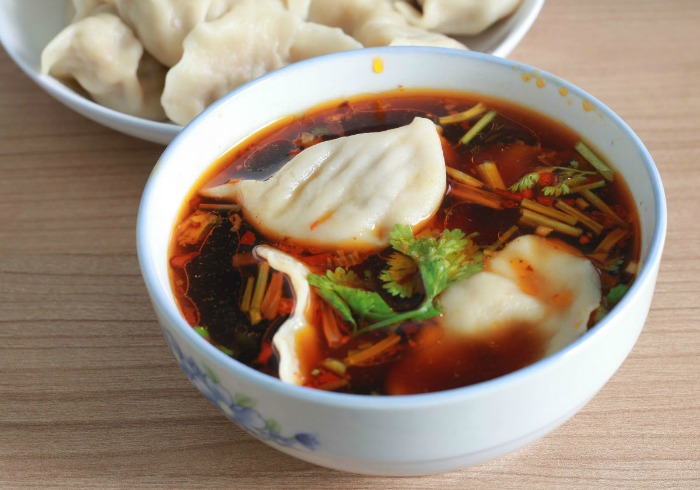
1. Dumplings in Sour Soup

Only in the Shaanxi capital can you find the authentic taste of dumplings in sour soup (酸汤水饺). The history of the dish dates back over a thousand years, with a complex recipe for the soup – sweet vinegar, dried shrimps, cooked sesame, chicken oil and butter make up some of the many ingredients. The hot and flavorful dish is a perfect comfort for rainy days in the city.

Hungry yet? We have two journeys that are perfect for the curious foodie. Check out the Gastronomic Tour of China or Yunnan Gastronomic Tour – both of which are curated and led by Fuchsia Dunlop, a world-renowned chef and Chinese cuisine guru.

Best Chinese Food in China: A City by City Guide

From Peking duck in Beijing to the spice markets of Sichuan, Chinese cuisine is as vast and fascinating as the country itself. Here are our tips for eating the best Chinese food in China. Warning: this post will make you hungry.

Best Chinese Food in China: A City by City Guide

One of the first things you’ll learn when you visit China is that there’s no such thing as ‘Chinese food,’ at least not in the way most people think of in the West.

Chinese cuisine is as rich and varied as the dishes of Europe. The spicy aromas of Kung Pao Chicken in Sichuan is as different from the sweet flavors of Shanghai roast pork as a steak tartare in Paris is from a bowl of paella in Barcelona. Practically every province in China is known for a different dish and a new flavor.

Every year, award-winning writer, chef and China culinary expert, Fuchsia Dunlop leads a Gastronomic Tour of China – a journey through these foodie havens and into the country’s local markets, top restaurants and family kitchens.

Beijing

Best Chinese Food in China: A City by City Guide

Kyle Obermann

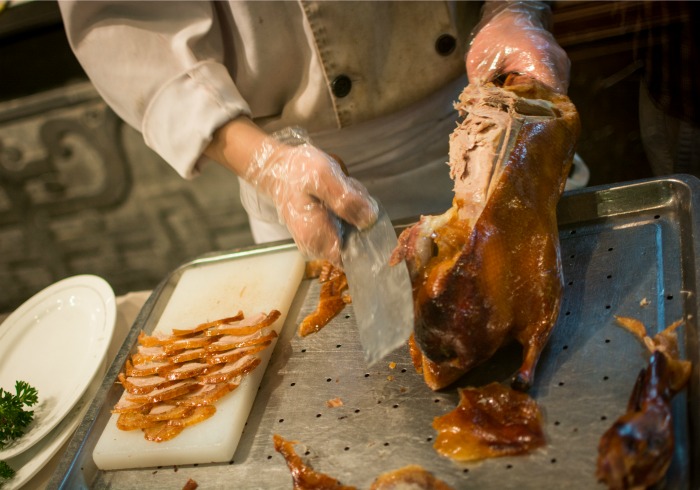
The city’s namesake and most famous dish, Peking Duck, is itself ample reason to include China’s capital into your travel itinerary. This hearty, iconic meal is rightly world famous and you won’t easily forget the succulent crunch of the duck’s crispy skin paired rich hoisin sauce.

But it’s not only Peking duck which puts this city on the culinary map…

Beijing’s proximity to China’s northern provinces mean that the city’s flavors are infused with many exotic influences. Wander down a historical hutong and discover Mongolian Hotpot. Far less spicy than its Sichuanese counterpart, this dish is sure to soothe the soul on a crisp Beijing evening. Goji berries, jujubes, black cardamom pods, ginseng and fresh herbs steam in an aromatic broth at the center of the table and sides of marbled meats and crisp vegetables make for a sensually visual experience along with the wafting smell and – wait for it- mouthwatering flavor.

Xi’an

Best Chinese Food in China: A City by City Guide

Xi’an Meat Burger – Roujiamo
Source: P. Xie

While Xi’an is best known for its ancient terracotta army, the present day inhabitants of the city have plenty to offer the hungry visitor. Navigate the beautiful city walls and venture to the vibrant Muslim quarter, where savory lamb skewers are roasted over red-hot coals and sweet glutinous rice is steamed in bamboo.

After washing down your meal with an ice cold pomegranate juice, enjoy some of the city’s famous sites (if only as an excuse to work up an appetite for the second meal of the day). Traditional Xi’an dishes include flavorsome cold noodles, hot and sour dumpling soup, and steamed beef with wheat powder.

Due to its unconventionally rich melange of flavors, Xi’an’s Muslim Quarter is one of our favorite stops on the Gastronomic Tour of China.

Chengdu

Best Chinese Food in China: A City by City GuideLajiao Chilis

It’s the third stop on Fuchsia’s Gastronomic Tour and if spicy food is something you can handle, then Chengdu will seem like paradise on earth. Just be prepared; the local dishes pack a punch.

Spiced not only with normal chili or ‘lajiao’, Sichuanese food also uses a special, local pepper known as ‘huajiao’ to give the food a tingling, numbing effect. This combination of numbness and spice is called ‘mala’ by the locals, and will ensure that your first meal in Sichuan is burned into your memory as well as your mouth.

Shanghai

Best Chinese Food in China: A City by City Guide

After your spicy trip to Sichuan, you might need to heal your scorched taste buds with a sweet Shanghainese meal. Unlike the burning hot flavors of Chengdu, Shanghainese cuisine is ‘tiande,’ sweet, an ideal antidote to the spiciness of distant Sichuan.

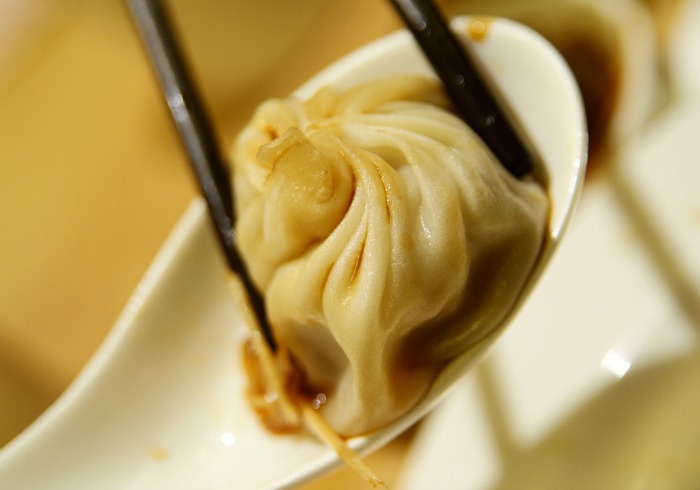
Rich, fatty pieces of pork and freshly caught hairy crab are easy on the tongue, but don’t let your guard down completely.  Dishes like ‘xiaolong bao’ or small dragon bags are aptly named, because these things can be vicious. Filled not only with flavor but also with piping hot soup, these dishes have been known to squirt water at unsuspecting visitors. Pierce the bag first with a chopstick to let the steam out before digging in.

Hangzhou

Best Chinese Food in China: A City by City GuideStuffed Orange with Crab Meat 
Source: 三猎

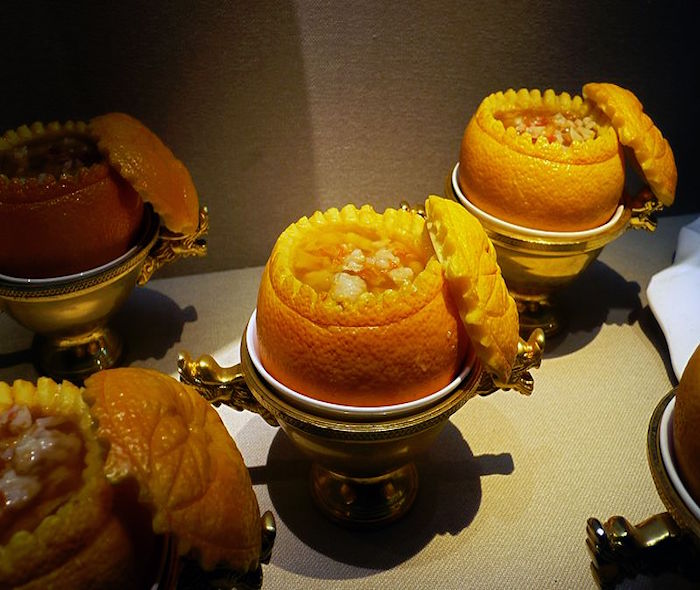
Hangzhou is famous for it’s beautiful West Lake, a still, serene body of water which attracts tourists, world leaders and, most importantly, some of the country’s most inspired chefs. If you enjoy seafood, the sweet and sour ‘West Lake Fish’ and shelled shrimp will mingle perfectly with the tranquil surroundings. You can even try the savory sweet fusion of stuffed orange with crab meat. 

Hangzhou also produced world-renowned tea, a flavor that is infused into many local specialties. A Hangzhou banquet wouldn’t be the same without a plate of tea-infused prawns soaked in the Longjing (dragon’s well) green tea that grows exclusively in the region’s hills.

Enjoy a local West Lake beer with your meal, and enjoy the calmness of this city. After the bustle and energy of Shanghai – one of the biggest cities in the world – you’ve definitely earned the downtime.

Wonder what it’s like to wander down side alleys to the kitchen of a local auntie, roll up your sleeves, and learn to cook and eat like a local? Discover all these cities with the help of Fuchsia Dunlop, on our Gastronomic Tour of China.