
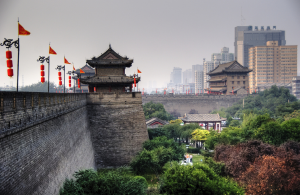
The Xi’an City Wall.Photo Credit:Mariusz Kluzniak via flikr
The first Silk Road Film Festival kicked off this week in Xi’an, promoting cultural exchange among countries along the traditional Silk Road route. More than one hundred films will be screened over the course of the week-long festival, with 41 Chinese and foreign films already chosen for the final competition. The festival will also play heavily on the Silk Road theme, showing documentary-style footage from various countries along the Silk Road, and sporting traditional Tang dynasty decor and clothing.
Our Shared Experience in Yunnan
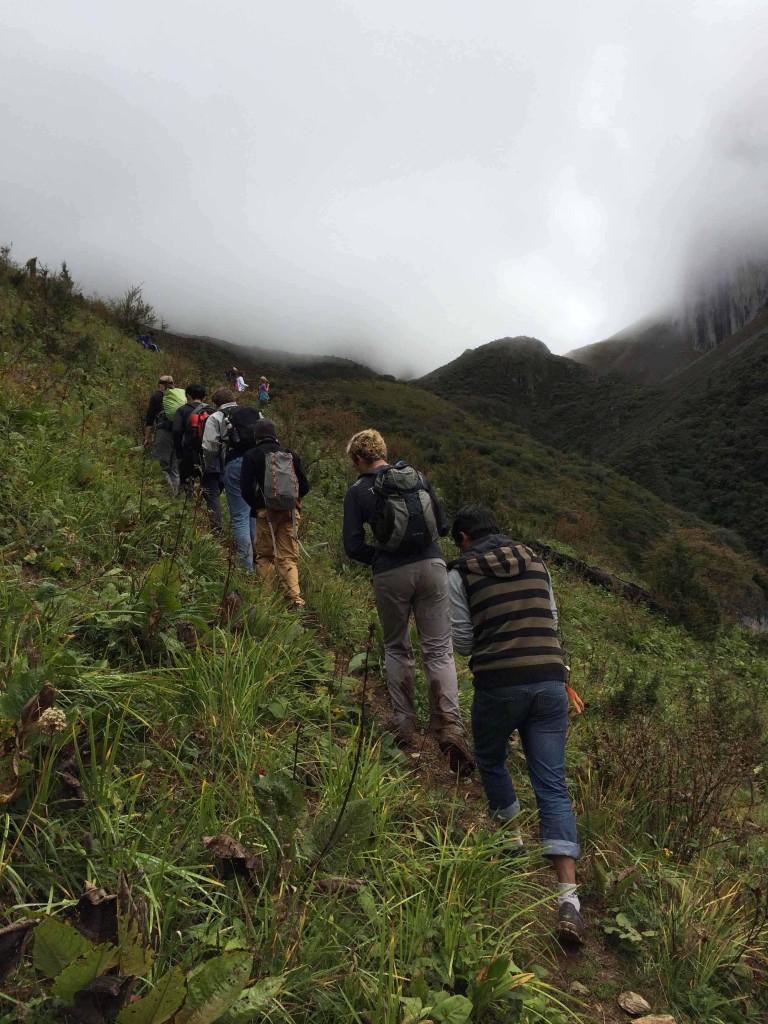
A group of students hiking in the Abujee mountains
Adventure offers an opportunity for personal growth at any age. When we create a trip, we want it to be a meaningful journey. Here at AsiaTravel, we strive to see people learn and grow from their experiences with us. Recently, we led a brave group of international high school students and teachers on an educational adventure in Yunnan province. Our guides shared the highlights, cultural exchanges and WOW moments of their moving education trip.
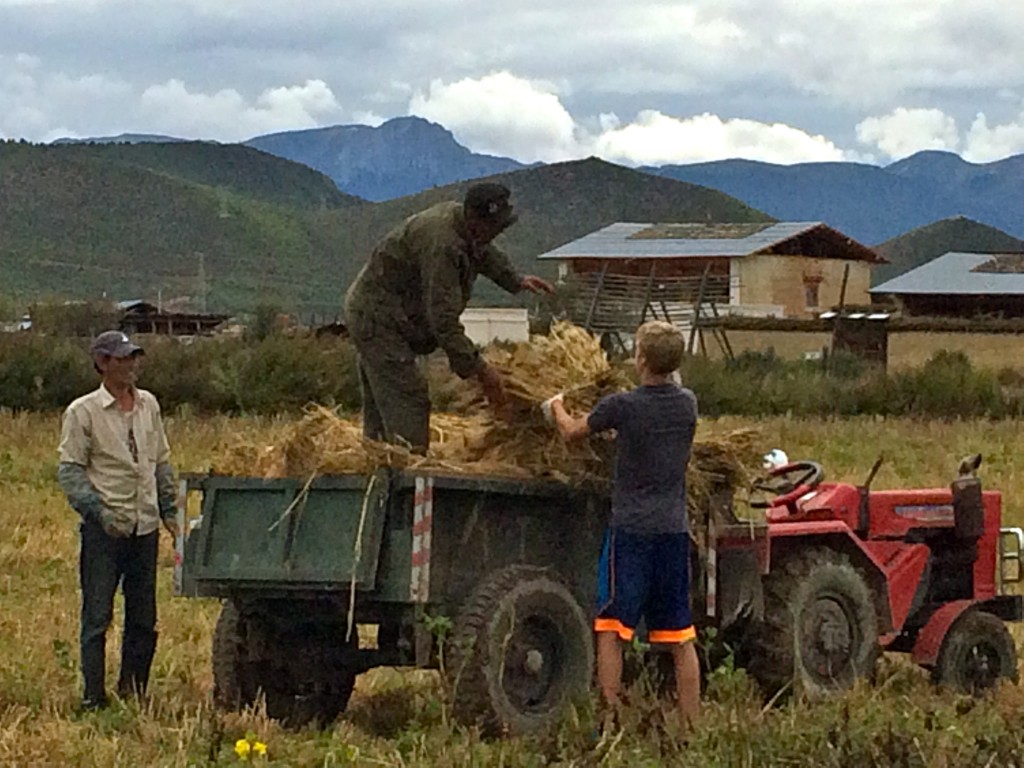
Community service at a Tibetan family farm
Informed that one afternoon of community service at a local family farm would help complete a few days worth of hard work, the students and teachers weren’t hesitant to roll up their sleeves and help out the Tibetan family. They jumped right in and with a few instructions, chopped down barley with sharp sickles, secured their big bundles with barley ties, and put the golden barley on an old tractor to be hulled away to the barn.
Most Tibetans speak in Tibetan languages, so our local AsiaTravel guides usually translate, but on this occasion, the quick-witted students took communication into their own hands. They worked side-by-side with the local Tibetan family while using universal hand motions and facial expressions to communicate. They used arm motions to signal strength, smiles to exchanging gratitude and appreciation, and big waves of goodbyes and thank yous. After seeing the huge loads of barley they harvested, the students, teachers, and guides directly saw the true value of their work at the family farm. The students’ feelings of accomplished glowed on their young, tired faces.
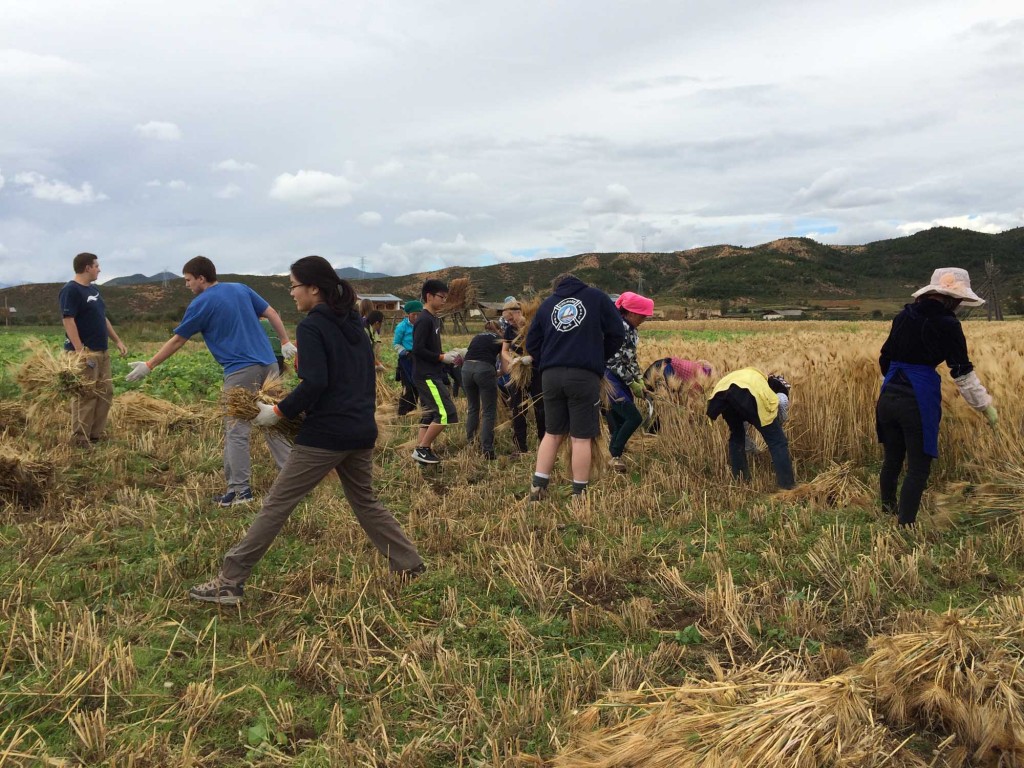
Students working hard in the barley field
Spending an evening at a Tibetan home gave the students another opportunity for a shared cultural experience. After a tasty Tibetan meal, the family preformed a lively traditional dance, and then asked the high school students to join. After dancing around the room with the locals, the students decided it was time the switch things up and teach the kind family some Western dance moves.
The energetic students choose one of the most iconic 1990s dance hits, the Macarena. A student played the song from their iPhone as they taught the family the catchy dance. The Tibetan women and children had a blast! Seeing the huge smiles on the family’s faces, sharing laughs and exchanging dances, taught the high school students that while it’s great to go and experience new culture, it’s also rewarding to share yours along the way.
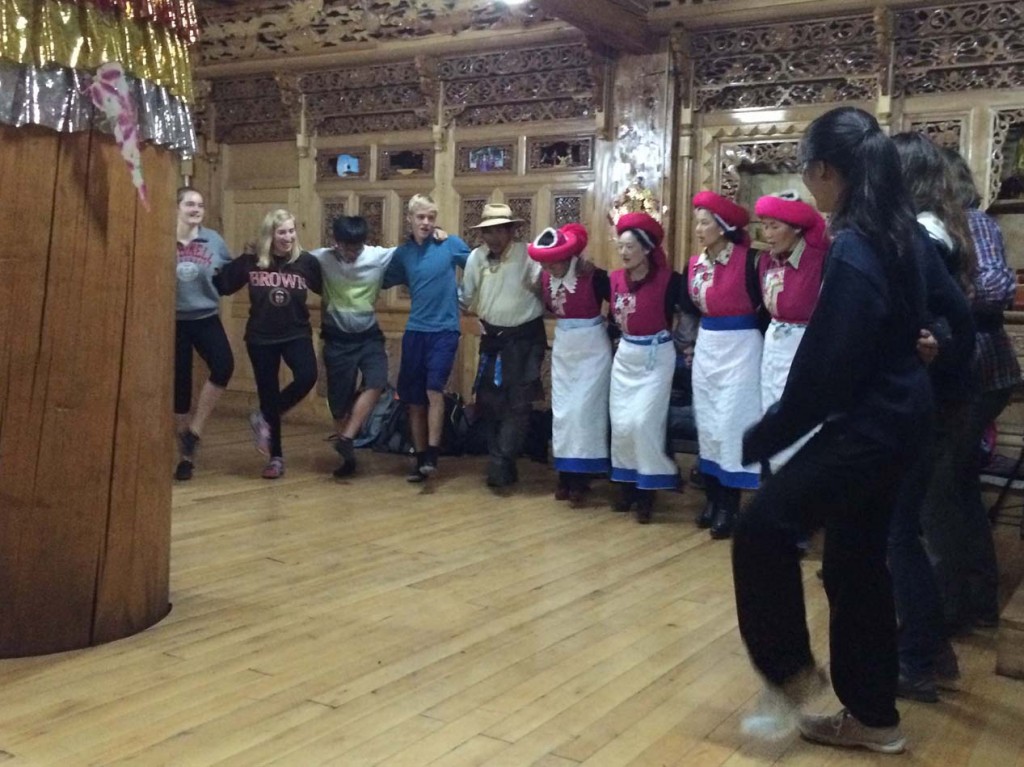
Sharing dances at a Tibetan family home
Along their adventure in the Tibetan plateau, the high school students were taking trip notes of their exciting learning experiences for a paper they would create after the Yunnan trip. One student had another idea for the project; instead of writing a conventional paper, he would capture the magic of Yunnan with a video compilation. He video recorded the community service, the strenuous hikes in the Abujee mountains, the tour of a local school and villages, and every smile and struggle in between.
On their last night camping,sitting around a bright,warm fire in the Abujee mountains, the student volunteered his video for viewing. Projected onto the ceiling of the tent, the students, teachers, and guides watched their life-altering journey together. Mixed emotions overcame the group as they watched their trekking voyage unfold in front of them.
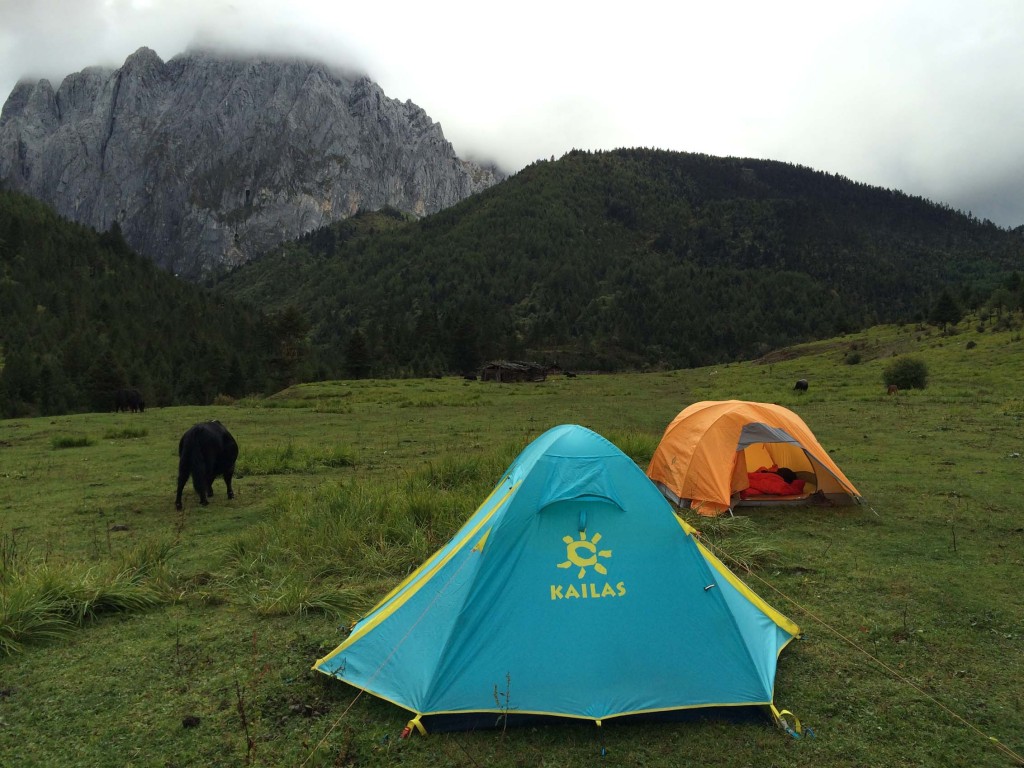
Wildlife visiting the campsite
Outside the tent, local Tibetans who were assisting the trip, caught a view of the video as well; this was the first time some of them saw themselves on video. They were in awe at the technology and thoroughly enjoyed seeing themselves, some even wondering, ‘Do I really look like that?!’
After viewing the touching video, one of the teachers told a AsiaTravel guide that she loved being a teacher because she can guide students to learn, but it’s breathtaking seeing students take their learning into their own hands. On this expedition, the students stepped out of the classroom to learn about Tibetan people and experience the culture hands on, changing themselves and the Tibetans they befriended along the way.
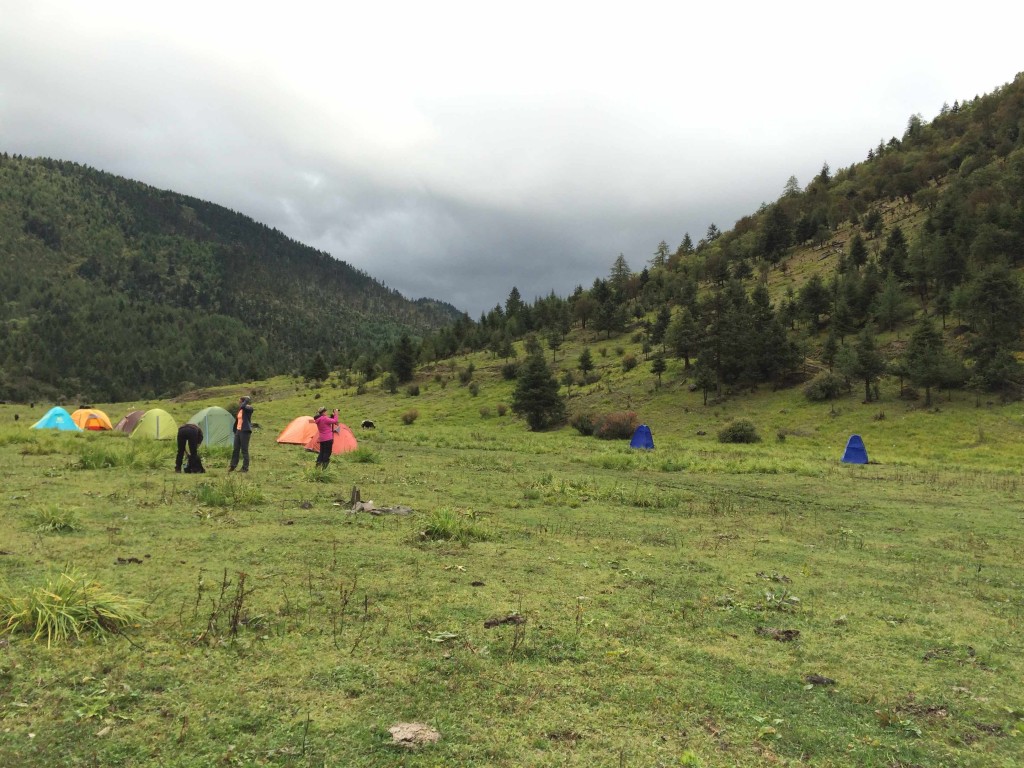
Students’ campsite
If you would like to Experience China Differently have a look at more of our student journeys, or contact us directly: education@wildchina.com.
40th Anniversary of the Terracotta Warriors Discovery
Four decades ago, local farmers in Shaanxi province were hard at work digging a well when they came across one of the world’s grandest archeological discoveries. Four chambers were eventually unearthed, filled with over 6,000 soldiers, horses and chariots arranged in military formation. Now travelers from around the world come to see these treasures and hear stories of the ruthless Qin Shi Huang Emperor who unified China and had a fondness for burying things, both statues and dissidents.
In celebration of the discovery a new exhibit has opened in Xi’an displaying special never-before-seen pieces including clay fragments that still retain some of their original color. The exhibition will continue until March 2015.
What You Can’t Miss on Your First Trip to Tibet
Explore the best of Tibet with our short guide to the region. Below are our choices for the most awe-inspiring sights, unique cultural escapes, and some AsiaTravel extras for the traveler seeking to journey even deeper.
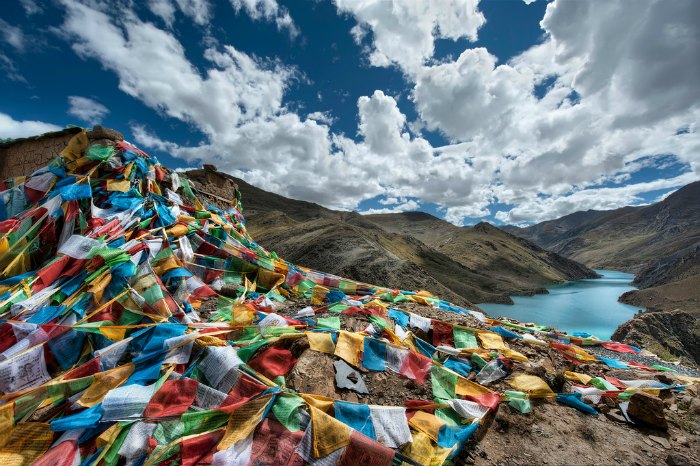
Photo by: Christian Oritz via Flickr
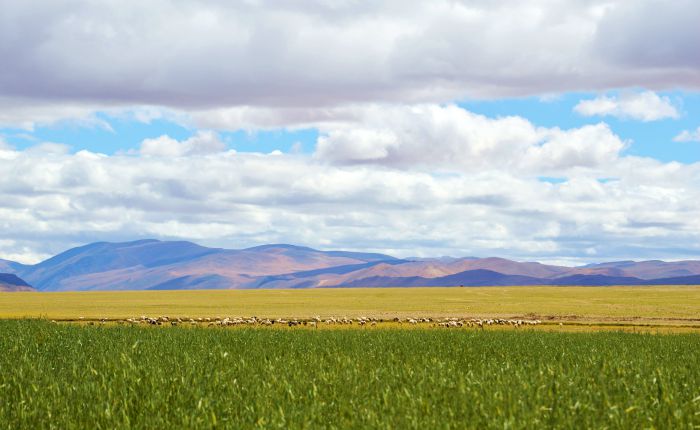
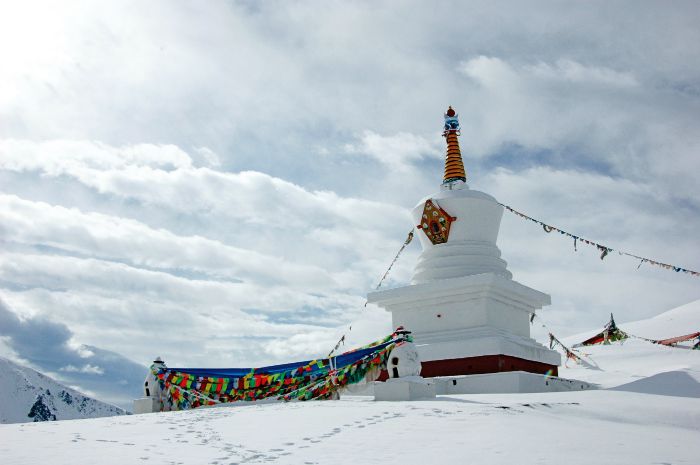
Glacial lakes, soaring mountain peaks, and rolling grasslands make up the Tibetan Plateau, an area that is roughly 4,500m above sea level, earning it the nickname name: “The Roof of the World.” Not only are some of the earth’s most dramatic landscapes found here, but it was under these white, snowy peaks that Lama Buddhism grew and intertwined is spiritual threads into the every aspect of life in Tibet. Down the halls of ancient monasteries, you will catch the fragrant scent of incense. Step outside and you will hear the spinning prayer wheels, as monks from young to old vigorously debate religious philosophy in a courtyard nearby.
The Must-See Sights
This is one of Asia’s most geographically and culturally rich destinations; here are the sites you cannot miss on a trip to Tibet:
1. Potala Palace
The Potala Palace is probably one of the first things that come to mind when you think of Tibet. But just what makes the palace such a draw to travelers? It is the ancient seat of the Tibetan government and the past residence of the Dalai Lama. A climb up will lead you to more than 1000 rooms filled with shrines and statues as well as precious works of art displaying Tibetan history and the life of the Dalai Lama. Descend down to the plains of Lhasa below to view the equally impressive view looking back and snap your own photos of this ancient marvel.
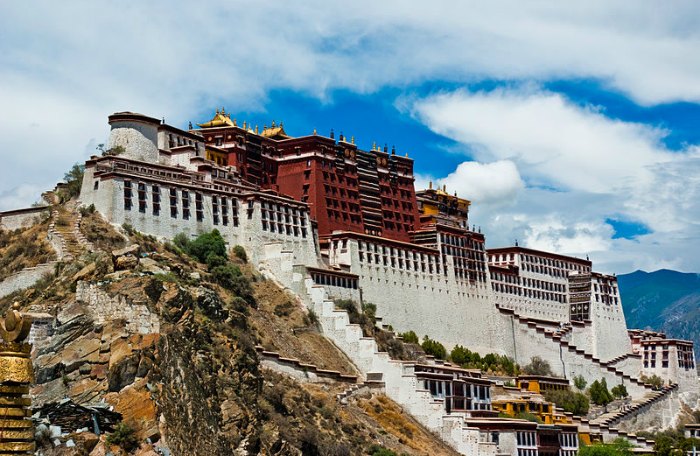
Photo: Wikimedia Commons
2. Sera Monastery
Twenty-eight acres of temple courtyards and monks’ dormitories, the Sera Monastery is one of the world’s most prestigious Buddhist universities. Enter here and lose yourself among the 125 ancient and unique pillars of Coqen Hall and admire the unparalleled frescos of Me Zhacang. In the afternoon, head to one of the courtyards and witness monks animatedly debate Buddhist philosophy as they advance their studies.
Why travel with AsiaTravel?
Our Tibetan guides are passionate about their local culture and religion. Lean in and let your guide explain the themes of these intellectual debates – the contents might just surprise you. Get started designing your trip to Tibet.
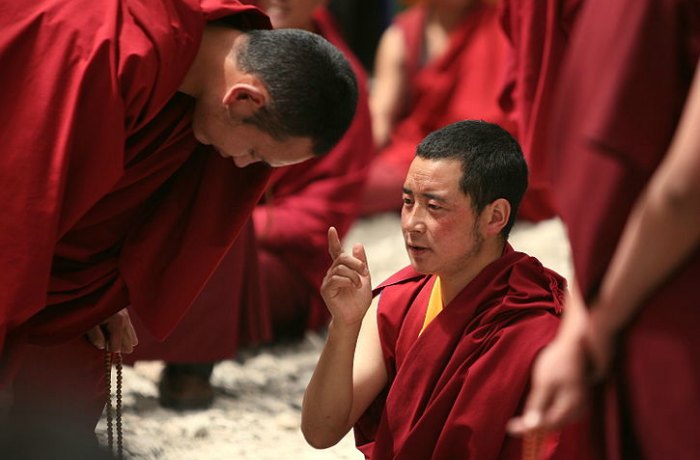
Photo: Wikimedia Commons
3. Yamdrok Tso Lake
When the Dalai Lama passes away this is where senior lamas come in search of signs for his reincarnated soul. Yamdrok Tso Lake is one of Tibet’s three sacred lakes and local Tibetans often make pilgrimages to its shores. Whatever the reason for the journey, travelers will admire the turquoise waters as they glitter in sunlight and the lake slowly winds its way through the dry, grey slopes of the mountains rising gently above.
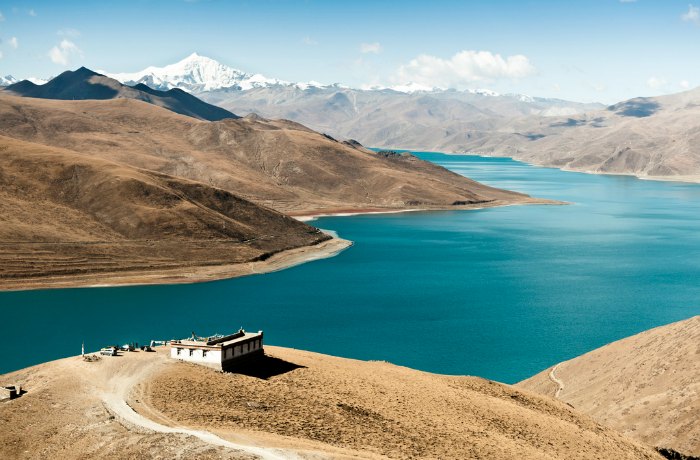
Photo by Göran Höglund via Flickr
Why travel with AsiaTravel?
Enjoy a picnic prepared for you next to these deep blue waters as white clouds float over the mountains in the pastel sky above. Begin your journey to Lhasa.
4. Jokhang Temple
The oldest and most sacred Buddhist site in Tibet, Jokhang Temple is a sight to see not only for its beautiful construction but also for the large groups of pilgrims who go daily for worship. Surrounded by a blend of 7th century Nepalese and Indian architecture, worshipers recite mantras, kindle the continuously lit chömay (butter lamps), and honor deities. The temple is also home to Tibet’s most scared relic: the Jowo Rinpoche, or Jowo Shakyamuni, a scripture written by Buddha at age twelve. The roof awards you with stunning views of Potala Palace against a backdrop of snowcapped mountains. If interested, you can rise early to join the pilgrims in the traditional kora (prayer circuit).
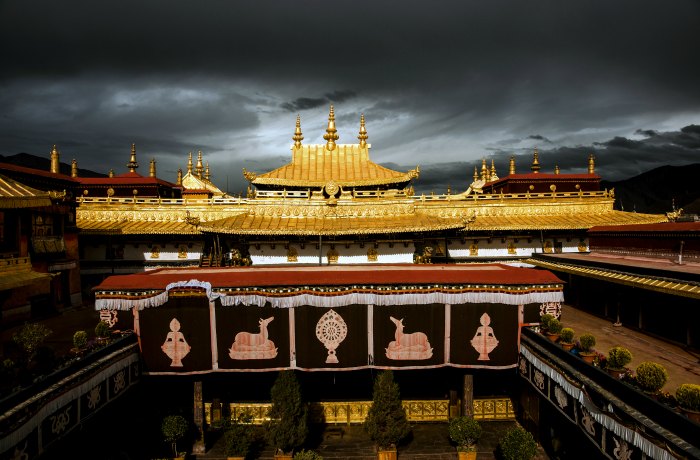
Photo by Kuan Sun via Flickr
5. Local Life: Barkhor Market and Prayer Wheels
Take take a small jaunt off the path of popular sites and step into the lively Bakhor market to a get a glimpse of daily life in Tibet. Located amidst the narrow lanes of Lhasa’s old neighborhood, Barkhor Street bustles with local vendors and shoppers chatting and bargaining. Browse the multicolored handicraft stalls where brightly colored beads hang alongside painstakingly crafted silver trinkets. Here too you can watch watch pilgrims circling the Jokhang Monastery prayer circuit. Follow the Barkhor pilgrimage route yourself to see locals spinning prayer wheels, and getting some good exercise as they chat and catch up with fellow devotees.
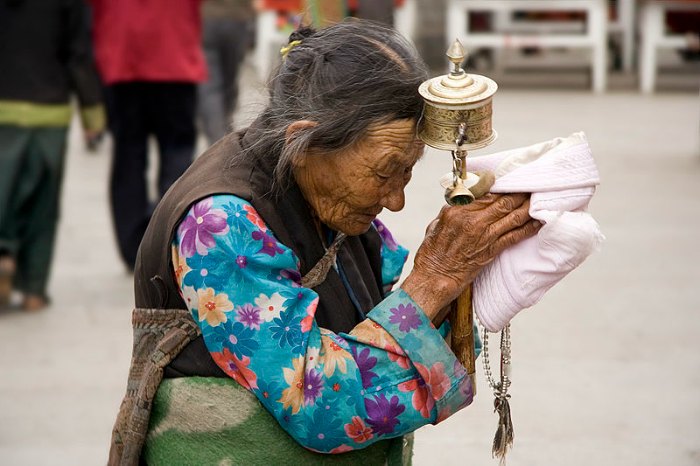
Photo: Wikimedia Commons
More time in Tibet?
• Observe the traditional woodblock printing methods that monks use to copy scripture. Try your hand at this important art and bring your own piece of Tibetan scripture home.
• Visit a Lhasa NGO that specializes in empowering Tibetan artists, keeping local ancient art traditions alive, and selling the artwork of local masters.
• Stop by an old Tibetan pharmacy and learn about ancient medicine traditions based on Buddha’s teachings that have been evolving for nearly 2,500 years. An expert in Tibetan medicine will meet with you and describe all the fascinating aspects of this unique medical philosophy that focuses on the mind, body, and spirit.
• Want an even more in-depth Tibet experience? Embark on our award-winning multi-week expedition across Tibet.
5 (Alternative) ‘Must-Sees’ In Shanghai
Once a modest fishing village, today Shanghai is a metropolis. Glamor and grace reminiscent of the 1920’s still dance together through art deco neighborhoods while the glass towers of Pudong soar ever skyward. Shanghai is a symbolic balance of East and West, old and new, that constantly captivates curious outsiders.
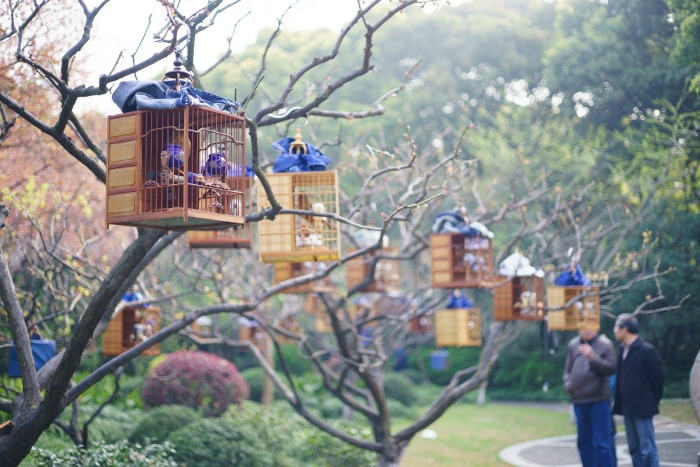
For those wanting to delve deeper into Shanghai than the tried-and-tested tourist itinerary, here is a list of 5 alternative ‘must-sees’ whilst you are in the city.
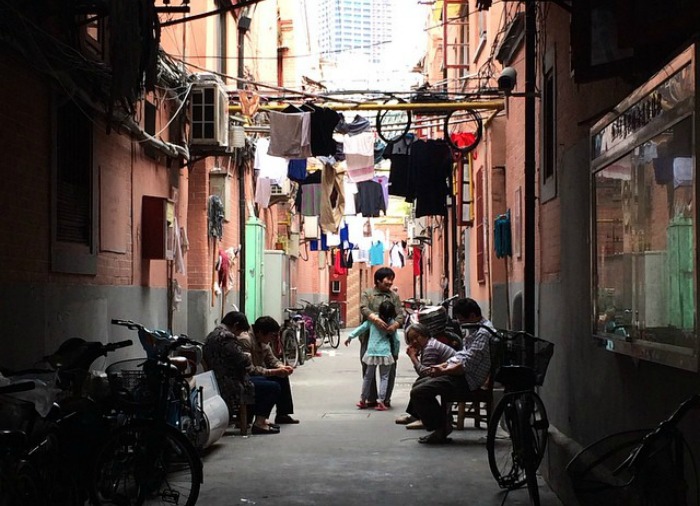 Learn Shanghai’s street stories in the Longtangs
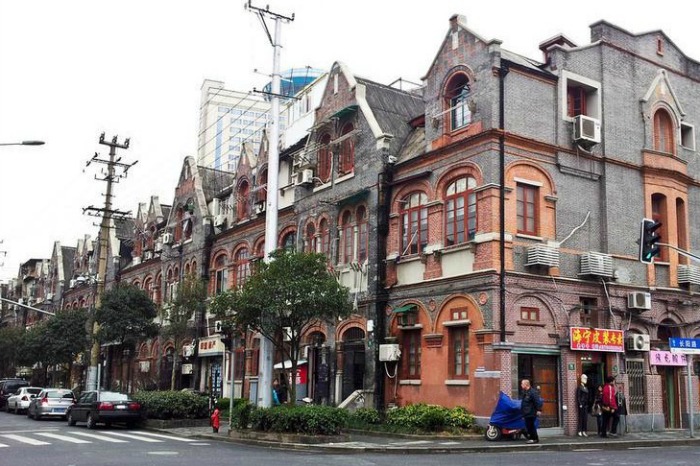
If you have not been to the longtangs, you have not seen Shanghai. Loosely equivalent to the Beijing hutongs, a longtang is a narrow lane lined with traditional shikumen residences. Architecture aficionados will marvel at these beautiful two or three-storey terrace houses which feature a unique architectural style that blends Western and Chinese elements. Step right into Longtang local life as you duck under fresh laundry hanging off bamboo poles perched precariously across the lane. Listen to the click-clacking of tiles as elderly men play mahjong and see kids sweating it out at street soccer.
Most of Shanghai’s longtangs have either been demolished or reconstructed, including the much commercialized areas of Tianzi Fang and Xintiandi. For an authentic street-level experience, head for Cité Bourgogne (Bugao Lu), Siming Cun or Meilan Fang.
 Visit the Jewish Quarter
Shanghai’s Jewish past is a part of the city’s history that many contemporary residents are unaware of. Sephardic Jews first started moving to Shanghai from Bombay and Baghdad in the 19th century and more followed in the early 1900’s.
During the Japanese occupation in 1941, Jewish people in Shanghai were forced to relocate to a ghetto of approximately one square mile in the Hongkou District. Today, the area is preserved as a historic Jewish Quarter. Take a stroll and visit the nearby Ohel Moishe Synagogue. Restored and re-opened in 2008, the synagogue now houses the Shanghai Jewish Refugees Museum.
Find out more on an expert-led tour during our Shanghai Highlife tour.
Dine at a century-old restaurant
Shanghai boasts of many food and dining establishments that have well stood the test of time, some dating back to the Qing Dynasty. One such example is the Dexingguan Restaurant, which first opened its doors in a small shack off Shiliu Pu in 1884. The restaurant is often credited as the birthplace of benbang cai – a traditional family style Shanghainese cuisine and Dexingguan’s claim to fame is the Black Sea Cucumber in Shrimp Roe Sauce, a dish which is still served at its premises today.
See The Bund at dawn
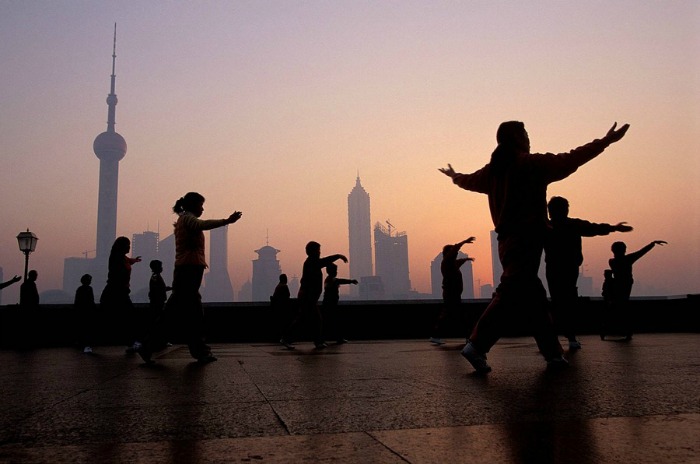
Many of us have strolled along the riverside promenade at night, taken postcard-worthy photographs of the colonial-era buildings, or even been on the Pearl River cruise. But have you been there in the early hours of the morning, when the city is just starting to wake? Drop by between 6-7am to see locals performing their daily morning exercises, or join in for tai chi or sword fighting class. This experience is sure to add another layer to the usual Bund visit.
This is certainly not an exhaustive list, and can be extended to include much more that highlight Shanghai’s extraordinary position as a bustling, modern city with a traditional core. Few cities are able to match the history, mystique and glamor that Shanghai has to offer. Contact one of our travel designers today and create the perfect Shanghai trip for you.
New Chengdu Hotels to Look Forward to in 2016
Chengdu is well known as the big city that’s always kept its small town feel. You might know it as the best place to see China’s pandas. Each year, more hotels are opening in this popular destination. Here are some we’re looking forward to seeing in 2016.
Waldorf Astoria Chengdu
Opening: Second Quarter of 2016
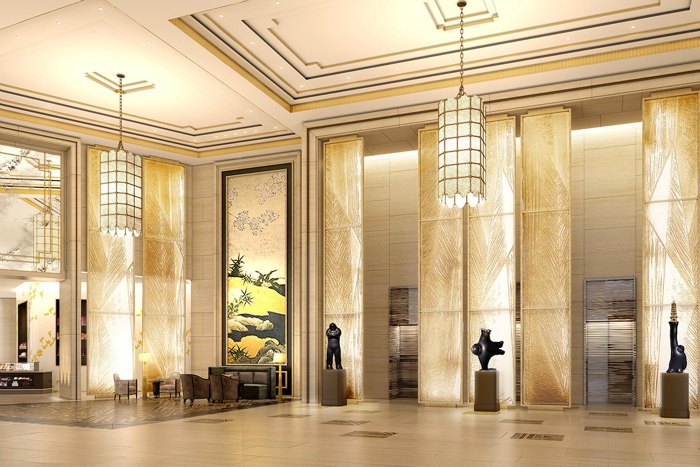
Thoughtful modern elegance will be on full display in Waldorf Astoria’s fifth China hotel. Located near the city’s financial center, the Waldorf Astoria Chengdu will offer sweeping views of the surrounding city. Gaze out over Chengdu from one of the hotel’s 300 guest rooms or from the hotel’s beautiful indoor pool. An elegant breakfast area also offers a large open floor plan with floor to ceiling windows.
Grant Hyatt Chengdu
Just opened! Jan 30th, 2016
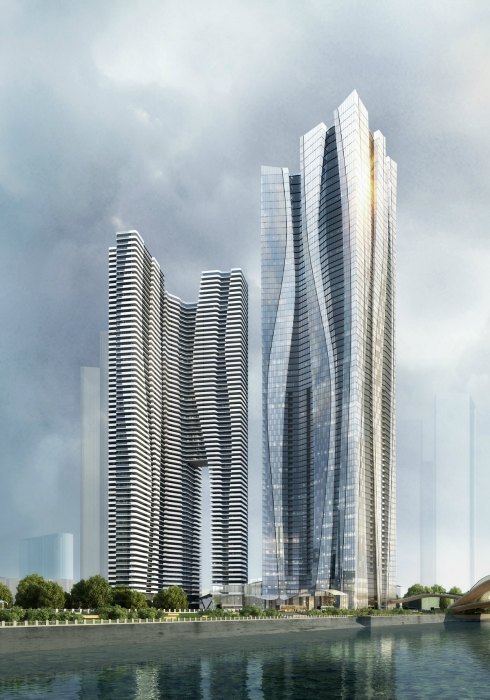
The Grand Hyatt will tip its hat to Chengdu’s renown as a global foodie destination. The hotel features four restaurants, one serving Sichuan favorites, like spicy hot pot, in a market-style design setting. The floor to ceiling windows offer an exceptional view of the surrounding city. But if you want to escape it all, there will be a quiet corner waiting for you in of one of the Grand Hyatt’s gardens.
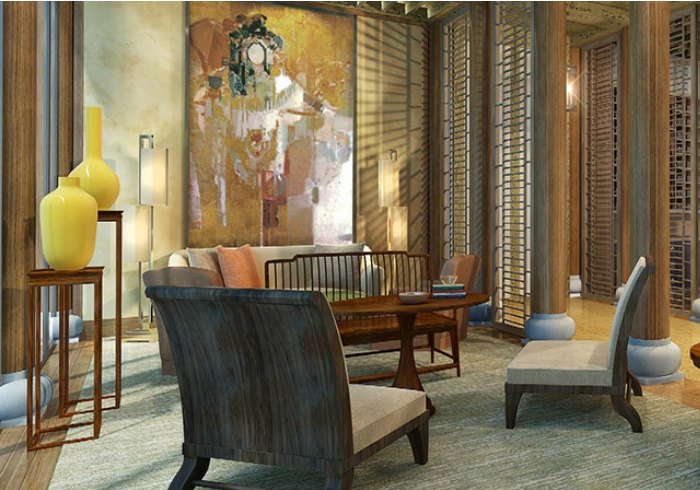 Ahn Luh Dujiangyan
Opening: 2016
Expect distinct Chinese elegance at this new Chengdu hotel. The gym and wellness center not only offers yoga classes, but also Taichi and meditation. The spa includes Chinese medicine treatments. All this can be found in this luxury resort, located just outside of Chengdu, with beautiful views of the sacred QingCheng mountain from every room.
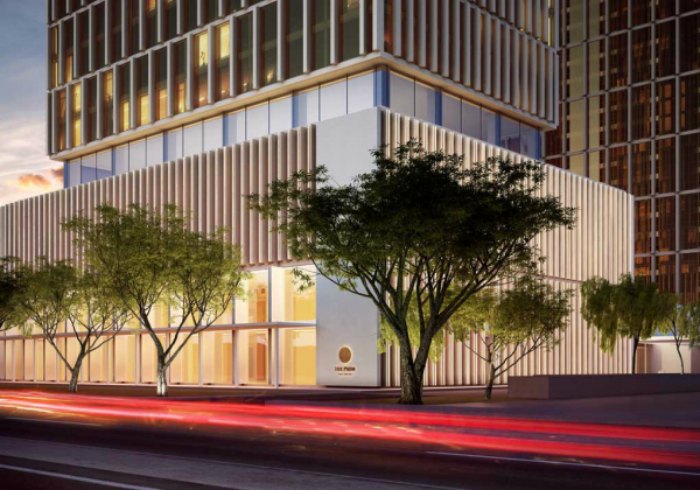
Urban Resort Concepts’ PuJin Hotel
Opening: Fourth Quarter of 2016
The PuJin Hotel will be located right in the heart of Chengdu giving you easy access to the best of the city’s restaurants and sites. A gym and wellness center will keep you fit on your trip and the hotel’s restaurants, bars and lounges will provide ample options for dinning and relaxing. The PuJin will also have 50 fully serviced luxury residences.
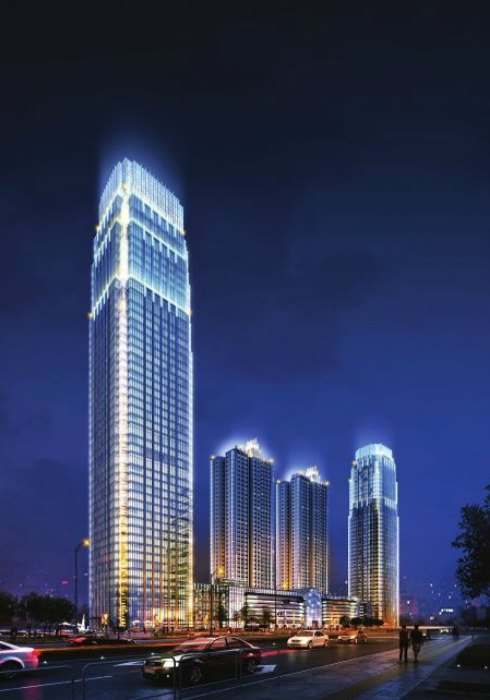 The Fairmont Chengdu Hotel and Residences
Opening: Fourth quarter of 2016
Expect the Fairmont’s signature mix of modern elegance and amenities when you book a stay in this new Chengdu hotel. The Fairmont will feature 52 rooms and suites on its’ Fairmont Gold executive floor, ‘a hotel within a hotel’. The hotels’ spa brand, Willow Stream Spa will have a foot massage lounge, a perfect ending for a day of sight seeing.
—
Book a city getaway to Chengdu:

AsiaTravel Staff Brings in the New Year with a Citywide Scavenger Hunt
This year, AsiaTravel’s annual Chinese New Year dinner was booked at a charming little restaurant called, Dali Village – but none of the AsiaTravel staff was told this. Instead we were split into teams and given clues to hunt down the restaurant as well as a list of challenges to accomplish along the way. For your amusement, here are some photos of the flurry that ensued…
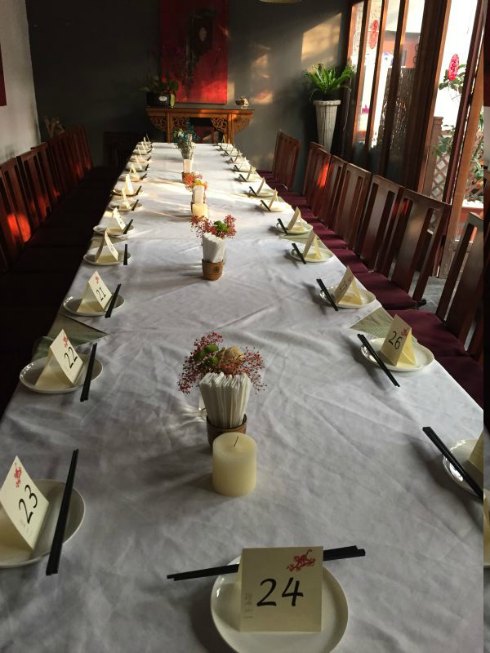 A beautifully set table sat empty for hours as AsiaTravel staff teams scattered throughout the city working out the clues that would lead them finally to dinner.
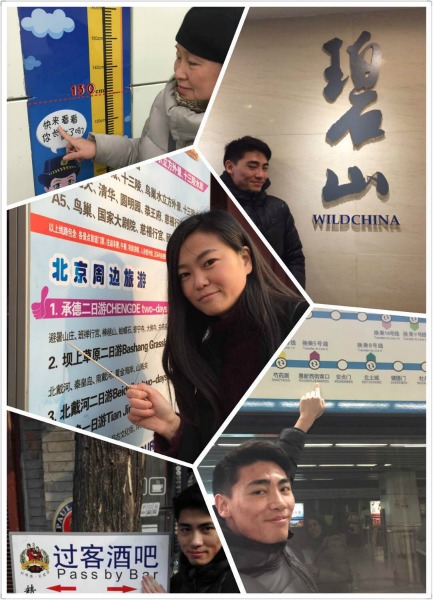
The teams demonstrated their skills observations as they searched high and low for the characters that made up secret phrases.
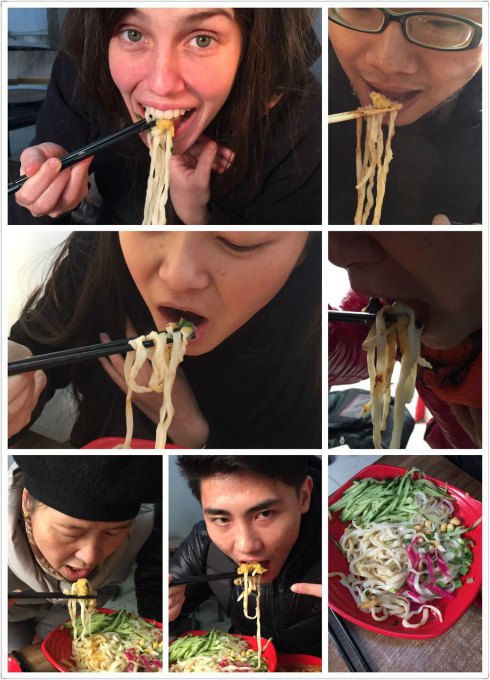
Each man and woman portrayed great bravery when they topped their mouthfuls of noodles with the world’s stinkiest fruit – durian.
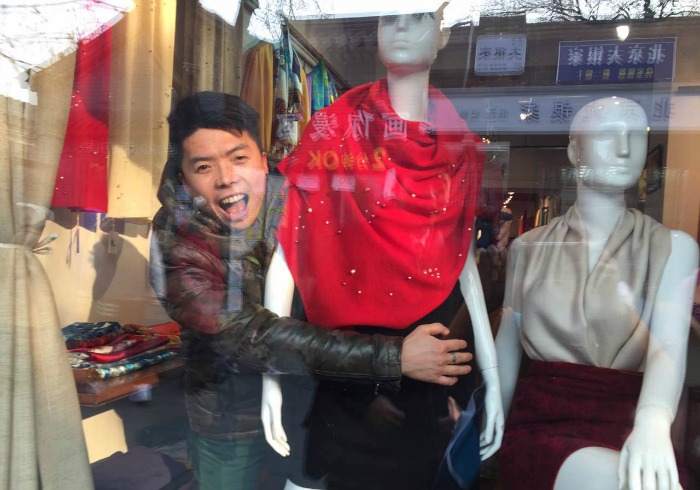 The shameless team members did whatever it took to win – whether it be asking ridiculous questions to unassuming pedestrians, dancing at public bus stops or, hugging inanimate storefront objects.
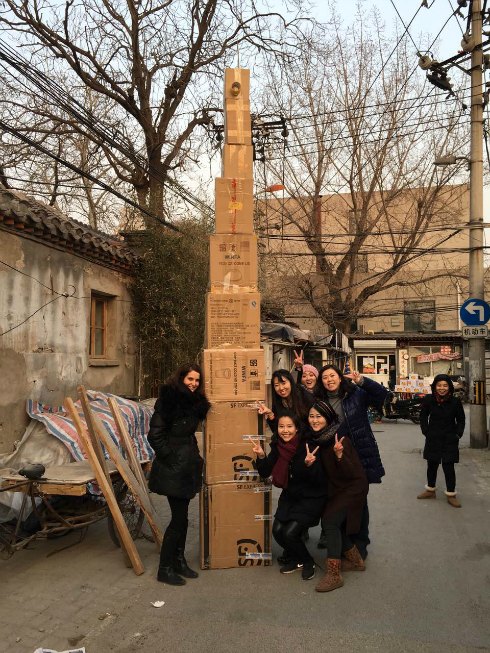
Ingenuity and resourcefulness were on full display when one team beat out all the rest by making the only tall tower that could also actually stand.
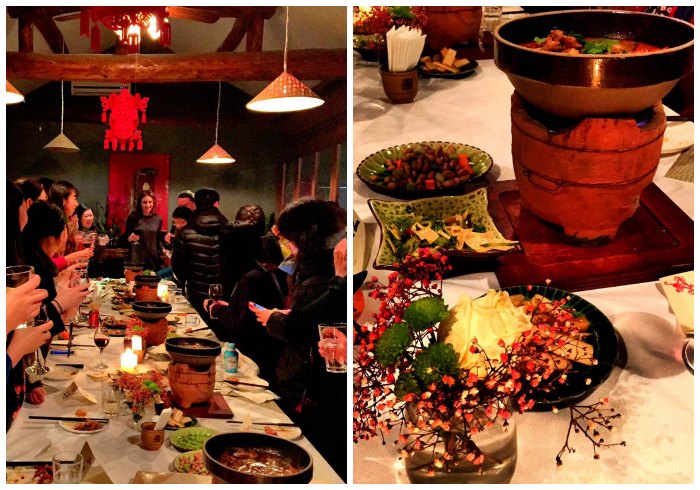 There was feasting and celebration to be had when all the AsiaTravel teams used the very last of their cunning and endurance to finally find the quaint courtyard restaurant hidden down a hutong alleyway.
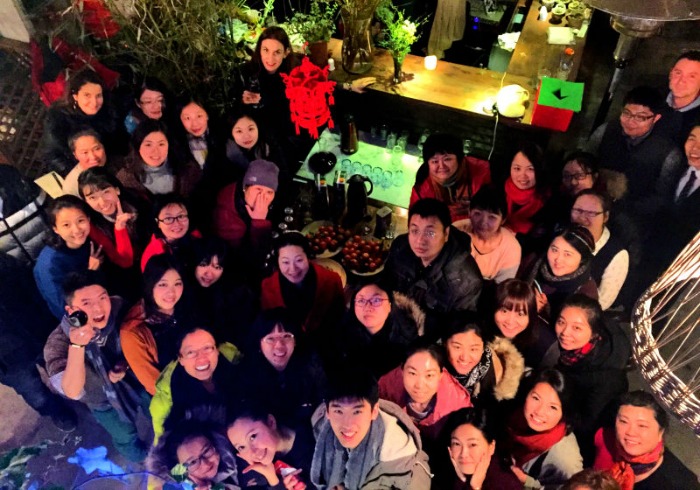
Happy Chinese New Year from all of us at AsiaTravel!
—
Ready for some action-packed team building? Contact WCT Events, for company team building and AsiaTravel Education for activities for students and teachers.
The Mogao Caves and More Top Dunhuang Attractions
Discover the best of Dunhuang with our guide to this ancient Silk Road trading city. Here are our picks for must-see attractions, best things to eat, as well as some AsiaTravel flourishes to make your journey even more memorable.
— —
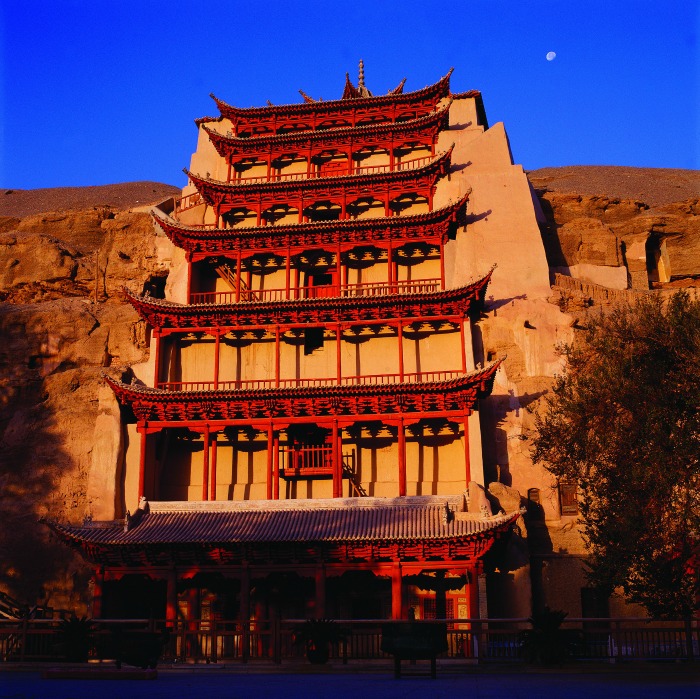
For monks, merchants, and artists traveling along the legendary Silk Road, the sight of the small and unimposing city of Dunhuang in northern Gansu, hailed a significant crossroads. For those traveling from the East, Dunhuang was their last rest-stop before venturing into the vast and inhospitable Taklaman desert. For those who had already made the treacherous journey, the city marked a return (for the time being) to safer paths. The traditions, temples and Buddhist art that these travelers left behind make Dunhuang one of China’s most culturally rich travel destinations. Here are our tips for getting the most out of your trip:
Must Visit Sites
The Mogao Grottoes
Named a UNESCO World Heritage Site in 1987
The tens of thousands of paintings and carvings that fill these caves document hundreds of years of life along the Silk Road. You can trace the development of artistic style over the course of time as you move through the caves, and follow the changing forms of Buddhism practiced in the region. The Mogao Grottoes are home to some of the best preserved cave murals in China along with endless intricately detailed frescoes, sculptures and terracotta statues that date back as early as 400AD.
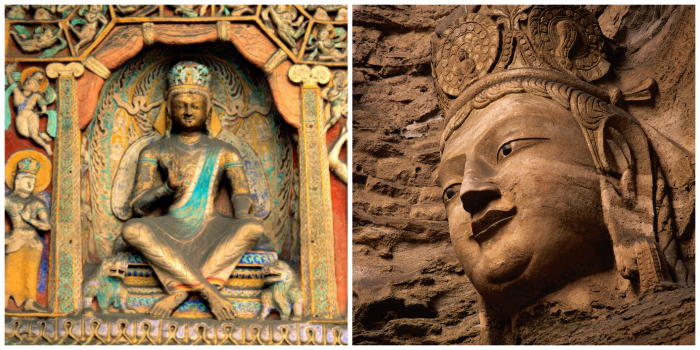
Why visit with AsiaTravel? Enjoy private access to caves normally closed to the public accompanied by AsiaTravel Expert Director Wang, the director of the Dunhuang Academy.
The Taklaman Desert and the Mingsha Dunes
Marco Polo made the trip so, so should you
Taklamakan translates literally as “Once you go in, you won’t come out!” and for the Silk Road traders, the path they took through the desert was one the most hazardous parts of their journey. Stand upon the 300m sand dunes that Polo dubbed as the ‘Rumbling sands’ and listen to them ‘roar’ as the wind blows.
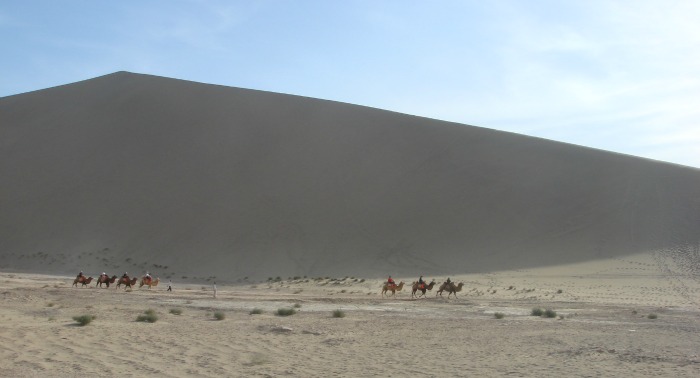
Barter with one of the local camel herders for a ride to the Crescent Moon Lake, a small oasis amid the sand. Known to locals as the ‘First Lake under heaven’ the natural fresh water lake is believed the have existed for over 2,000 years.
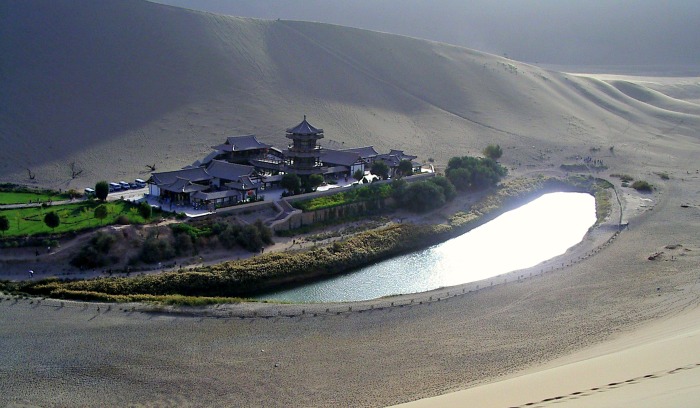
Why travel with AsiaTravel? Watch the sun go down over Marco Polo’s ‘Rumbling sands’ with a glass of champagne in your hand as your AsiaTravel hosts prepare a delicious private BBQ dinner for you in the desert.
The Yumenguan pass (The Jade Gate)
The ancient gateway to Dunhuang
The Yumenguan Pass was located in the westernmost extension of the Great Wall. The wall was built as an ancient stronghold during the Han Dynasty to protect against Hun invasion but the gate came into its own as an important trading post. Every caravan, merchant, trader and their horses traveling to Dunhuang were required to pass through. Today only the small square fortress remains but remnants of the Great Wall can be spotted far into the distance.
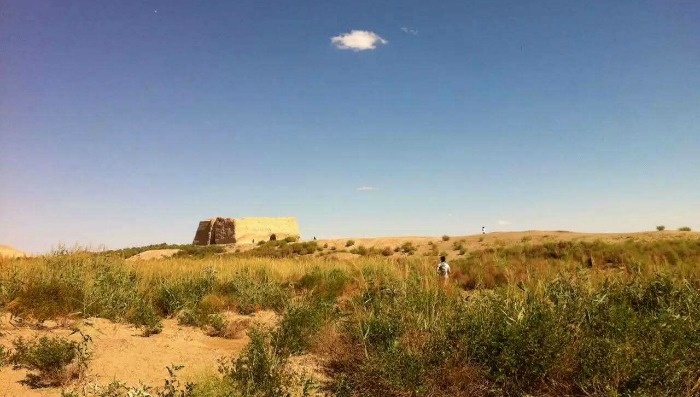
Why travel with AsiaTravel? Learn more about the area with AsiaTravel Expert William Lindesay, author of “Alone on the Great Wall” and a leader in efforts to preserve the Great Wall.
Must Eat Food
Langzhou Lamian (Hand-pulled noodles)
The province’s most famous cuisine
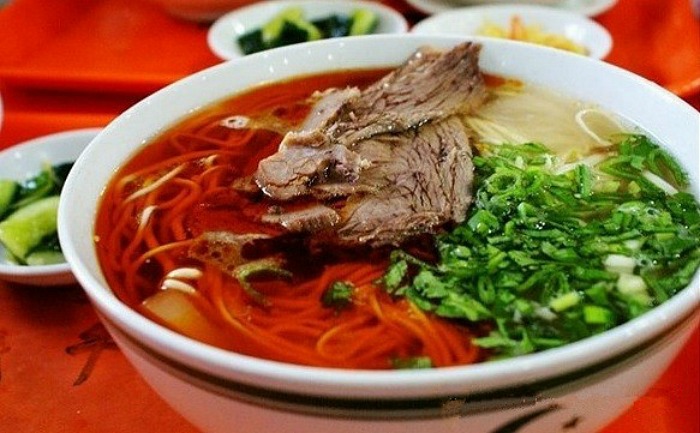 You can slurp a bowl full at Dunhuang’s night market which serves them up alongside an engaging slice of local life. Get an insider’s look at Dunhuang culture and breathe in the thick aroma of barbecued lamb kebabs before picking up some local wares – many of which will be hand-made right in front of your eyes.
More time in Gansu?
- • Head south to the Danxia Landform in Zhangye where tectonic activity has created a unique, multi-colored topography
- • Get off the beaten track and visit the Horse’s hoof temple 马蹄寺. These Tibetan style hanging grottoes offer fewer murals than Mogao Caves but also fewer tourists.
- • Make your way down to the south of Gansu province, where you can spend a weekend at the luxury camping site, Norden Camps, for a taste of nomadic life on the plains.
—
Join our August 2016 Silk Road Small Group Tour or venture off on your own tailor made tour of the Silk Road.
Art in Modern Beijing: An interview with Peter Wynne, Manager of The Opposite House
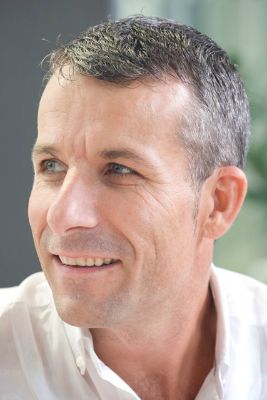 Over the weekend, The Opposite House played host to AsiaTravel’s inaugural Beshan Gāi bazaar, where artisans converged from around the country to showcase the finest of artisan China. In the lead-up to the event, we met with The Opposite House’s chief host, Area General Manager for Swire Hotels Peter Wynne, to talk art, food, Beijing and strangely…pearl diving.
Let’s start by talking about The Opposite House. What was the inspiration behind the architectural design? It is not your usual, run of the mill hotel.
It was built at a time, before the 2008 Olympics, when hotels were opening all the time and they all looked the same. The architecture was designed by Japanese architect Kengo Kuma and his brief was to design something different, unlike any other hotel.
There are so many elements to The Opposite House. It’s a glass jewelry box that opens up into beautifully designed compartmental rooms. The spaces are engaging and intriguing, aesthetically pleasing but not cliché.
The decor is timeless and not too ‘modern’ that it will become obsolete in a few years. And there are also many Chinese elements that are very much part of the architectural design. I think the idea to use both wood and plexiglass for the medicine drawers was ingenious.
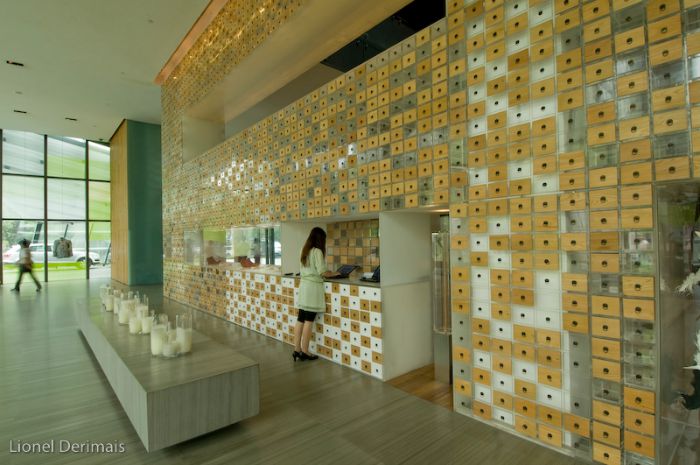 Opposite House Lobby. Photo credit: nicelymadeinchina.com
What is your favorite space in the hotel?
I like them all but I guess the swimming pool is one of my favorite spaces. Shards of light come down through the building to the pool. It’s actually part of the architectural scheme that sunlight lights up the swimming pool even though it’s in the basement. When you stand on the top floor and look down you can see all the way to the pool in the basement. You look down 8 or 9 stories and it’s a masterpiece – Not that I get the chance to go in there very often.
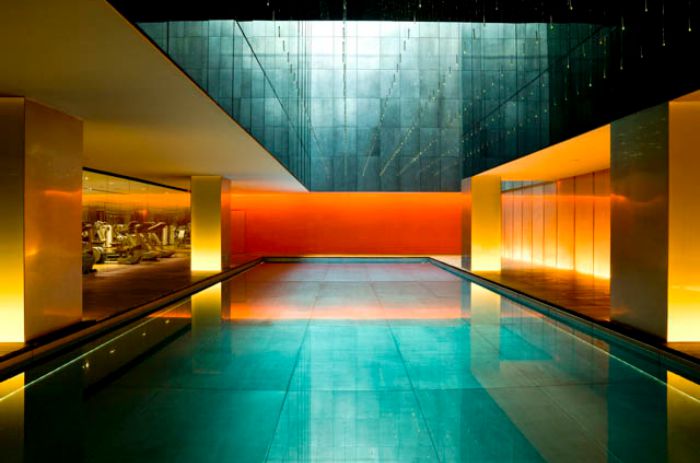
Swimming pool with natural light from above. Photo credit: nicelymadeinchina.com
Why do many high profile guests choose to stay at The Opposite House rather than the many other 5 star hotels in the area?
The hotel has its own personality and that personality comes from the people that live and breathe the hotel – from the staff in the restaurants to the people who greet you at front desk.
We’re very clear about our people philosophy – we always pick people for their particular personality and the things that make them tick rather than their qualifications and work experience. Personality shines through and gets into the wider market place and that’s what these kinds of celebrities really want.
We are also always striving to keep it current. We always have new ideas and propositions and try to make it fun. It’s got to be fun for the customers but also fun for someone who works here. You have to get up in the morning and look forward to coming to work – even if it is Monday!
The Opposite House is well known for going the extra mile and paying attention to the small details. Can you think of a particular example of this?
There are lots of little tricks. I think one good example is when you normally register at a hotel in China you have to fill in a registration form and then you have to hand your passport over to be scanned. It’s a long, laborious task. What we did in the early days was we had an iPad with a camera so the check in process was made so much easier.
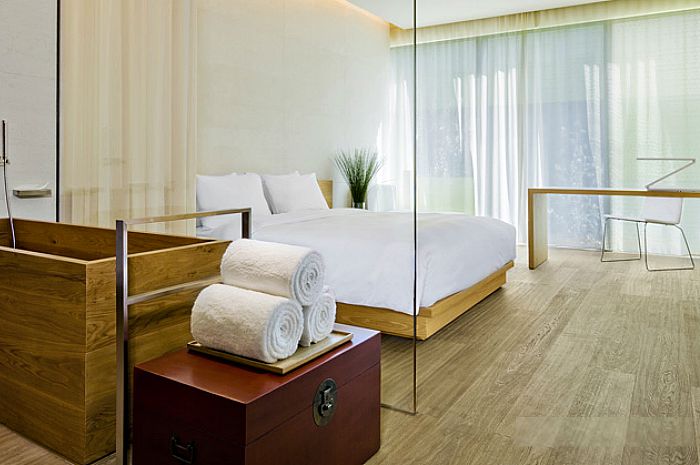
Modern comfort of an TOH hotel room
There are other details too. Our mini bar is all complimentary. Why hotels would want to charge $5 for a coke is beyond me. The actual base cost of a can of coke is very low but the goodwill you get from it is almost priceless. The same with wifi. We have the highest possible speed, complimentary for guests because that’s what the modern traveler wants. Charging for slow internet is an easy way to annoy customers and ensure that they don’t come back.
Where do you source the art pieces that define The Opposite House?
Some of the permanent pieces have been here since we first opened. We worked with a number of art consultants who purchased art for the hotel. They did a great job because this was pre-2008 and they managed to find a number of pieces that have become synonymous with The Opposite House.
We also do a quarterly installation that can be found in the foyer and the criteria for these installations are very simple – they are all contemporary Chinese art. We are a contemporary hotel, in China so those are the only two limitations. We have been approached by overseas artists and galleries and although we will always entertain ideas, we wish to keep the space for the local art community.
We’ve done video art, sculpture, and installation art. We are not limited to any one gallery or curator. We work with a number of people who know the art scene very well (much better than we do). Our current installation is one of the edgier that we have featured.
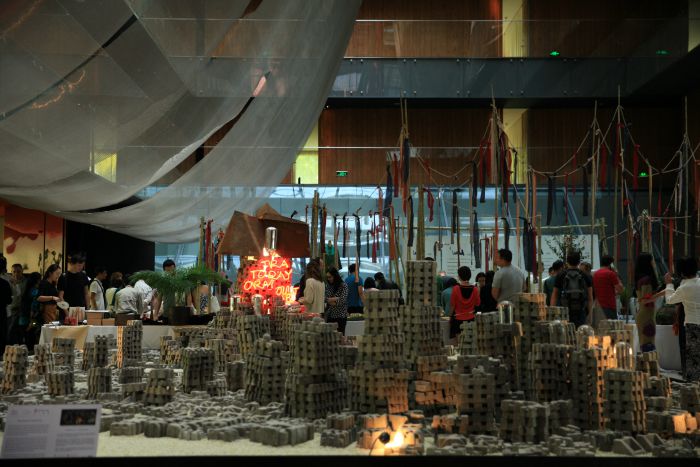 TOH’s latest exhibit, with AsiaTravel Beshan Gāi as the backdrop
How do you think the art installations affect the stay of the guests?
I think it has really been part of our branding. People have grown up in past 8 years with The Opposite House knowing that every time they come back there will be something else to engage them. A whole new visual engagement to have and that’s our DNA.
It happened almost by accident actually. Where those installations are, in the original design are meant to be reflecting ponds. Waterproofing wasn’t great in 2007/2008 so they didn’t hold the water very well. Also, in a residential area where there are kids around they can be a liability – they didn’t work practically. So the idea was to level it out, put some art in its place and keep that revolving. People love it.
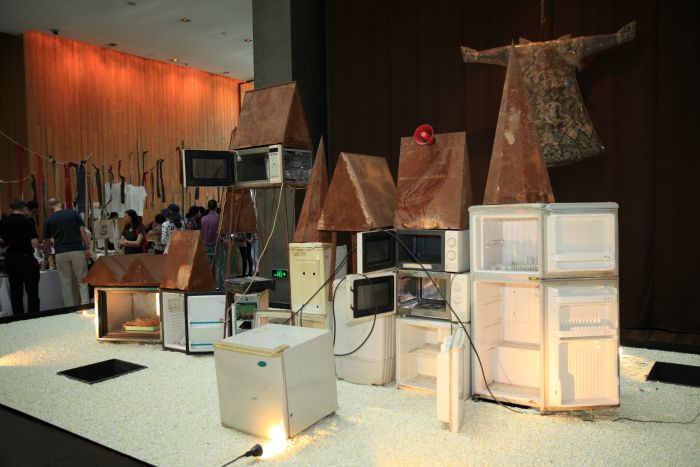 TOH’s latest art exhibit, from the Red Gate Gallery
Can you tell us what brought you to Beijing and what keeps you here?
I’ve lived in some pretty remote places. I ran Necker Island for Richard Branson for a couple of years, I’ve worked in the Maldives and in lots of remote, beautiful, idyllic places. These places are perfect for a spending a 2-week honeymoon but it becomes a little more challenging to live there.
In 2004 I got the opportunity to come to Beijing. At the time it seemed like the toughest decision in the world to leave this idyllic island and go to a big city like Beijing, but it was for a hotel that was going to be the host hotel for the Olympics so I couldn’t really say no.
I really enjoy the changes throughout the year in Beijing. You have seasonality here. The city is very creative too and that is something that resonates with the hotel. There has been big progress in art but also technology, fashion and design.
We have a great family life here too. We’ve got three boys and they’re busy, active and love being outside. Beijing is a great place to get that outdoor activity. Beijing is extremely modern, well provided and a great destination. We have a long way to go to get people to engage with the destination – not just the hotels here.
If you weren’t managing The Opposite House what would you be doing and where would you be?
Hmm… I‘ve got about 10 answers to this question.
I would probably be a marine biologist somewhere on a boat. I was a pearl diver in my younger days in Australia and I probably enjoyed that 12 months of pearl diving as much as any other time in my life.
Living on a boat and out to sea for literally months on end. What you experience is completely different to what you see in big cities like Beijing. I don’t get to dive often now but whenever I am near the sea I like to be in the water.
Ah, so that’s why the swimming pool is your favorite space in The Opposite House!
Yep I’m a water guy. I grew up sailing and surfing and later diving so that’s what I like to do. I started traveling when I was 21 with a hospitality degree under my belt and I haven’t really been back since.
—
Discover Beijing on a private Beijing tour and check out the latest art exhibit at The Opposite House.
What To Do About Altitude Sickness In Tibet
A journey to Tibet, one of the most remote regions in the world, can be an incredible experience, but you have to be ready to counter the unique atmospheric conditions that characterize the Tibetan plateau. Tibet has an average elevation of 4500 meters, and if you don’t regularly live at high altitude, you altitude sickness could put a real damper on your trip. Here are some things to remember before and during your trip to make your high-altitude Tibet travels more comfortable.
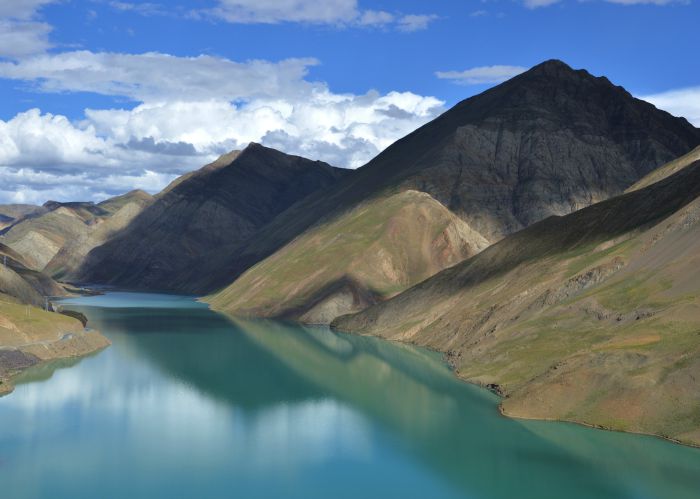
What is altitude sickness?
Altitude sickness occurs when you cannot get enough oxygen from the air because the “air is thinner” at high altitude. Common symptoms include headaches, nausea, loss of appetite, trouble sleeping, and weariness.
Who’s at risk?
Contrary to popular belief, risk is not affected by training or fitness. Children and adults are both equally susceptible to altitude sickness although travelers over the age of 50 are at slightly lower risk according to the CDC. Note that travelers with heart or lung problems should first consult with their doctor before traveling to Tibet.
 5 tips for staying safe
1. Don’t be a hero, get medication
Acetazolamide is a particularly effective treatment for altitude sickness because it does not simply mask the symptoms, but accelerates the body’s acclimatization to high altitude, but it is difficult to obtain in China so we recommend that you visit your doctor in your home country before you travel. There are other medications such as dexamethasone and nifedipine available, but they are usually only recommended by doctors if the patient is allergic to sulfa, a primary ingredient in Acetazolamide. All-natural alternatives such as Ginkgo biloba and Rhodiola rosea do exist but research on their effectiveness is conflicting. For more information on high-altitude medications, visit the CDC or NHS websites.
 2. Avoid alcohol and sleeping pills
Don’t do things to make altitude sickness worse. Alcohol and sleeping pills are prime culprits. These are both are respiratory depressants and can make it more difficult for your body to acclimatize. Furthermore, alcohol can dehydrate you and leave you even more vulnerable to the altitude. On that note…
3. Drink lots of water!
Getting dehydrated is probably the worst thing you can do when trying to adjust to a higher altitude, and Tibet’s dry climate makes that an even bigger possibility. Don’t make altitude symptoms worse – drink up! (and we water!)
4. Don’t forget to eat
Even though altitude sickness can make you loose your appetite, it’s important to keep eating and get your body the energy it needs. Carbohydrates are especially important, as they are a more efficient source of energy than fats or protein and can improve blood oxygenation.
5. Take it easy
This is perhaps the most difficult piece of advice for visitors to follow as there is so much to see and do in Tibet, but on your first couple of days in town, relax. Give your body time to acclimate to its new altitude.
If you have any other questions on traveling to Tibet, contact a AsiaTravel travel designer, and we’ll be happy to help. To begin your journey, view our award-winning Tibet tour.