Ready to Discover Kunming, China? – A City with Mild Climate All Year


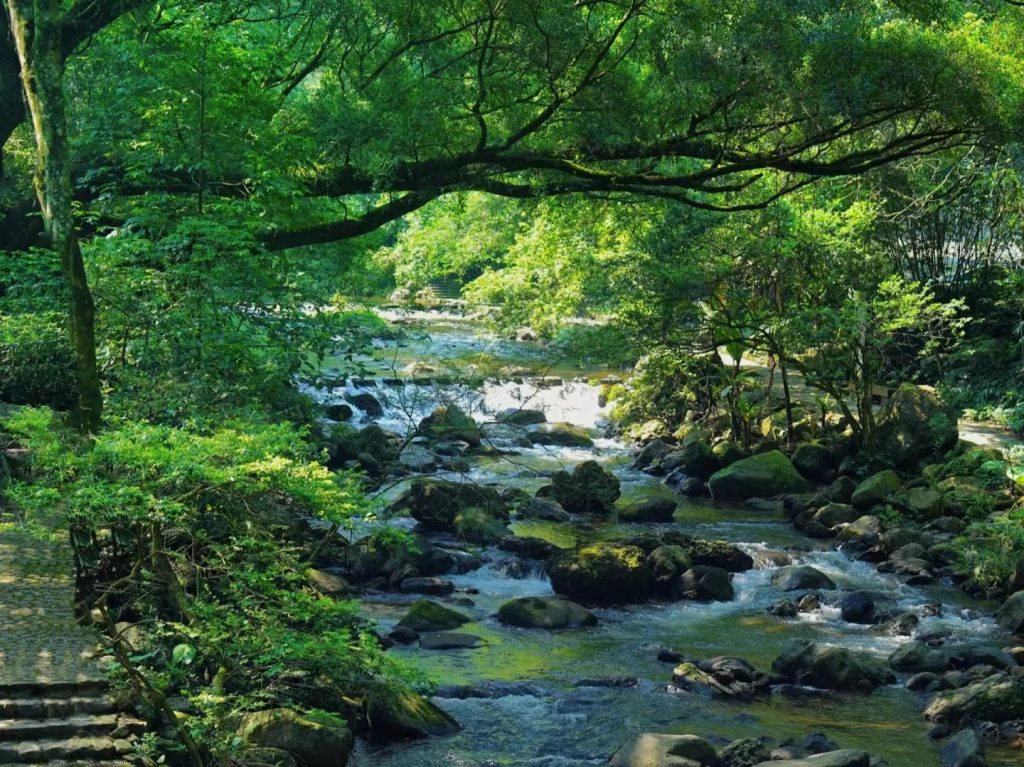
Kunming, the capital of Yunnan Province in Southwest China, is a vibrant city famous for its year-round spring-like climate, stunning landscapes, and rich cultural heritage. Whether you’re a nature lover, history buff, or foodie, Kunming has something special for you. In this travel guide, we’ll highlight the top things to do in Kunming, including the picturesque Dianchi Lake, the mesmerizing Stone Forest, and local culinary delights.


Top Things to Do & Best Attractions in Kunming

1. Explore the Beauty of Dianchi Lake

A Tranquil Escape at the Pearl of the Plateau

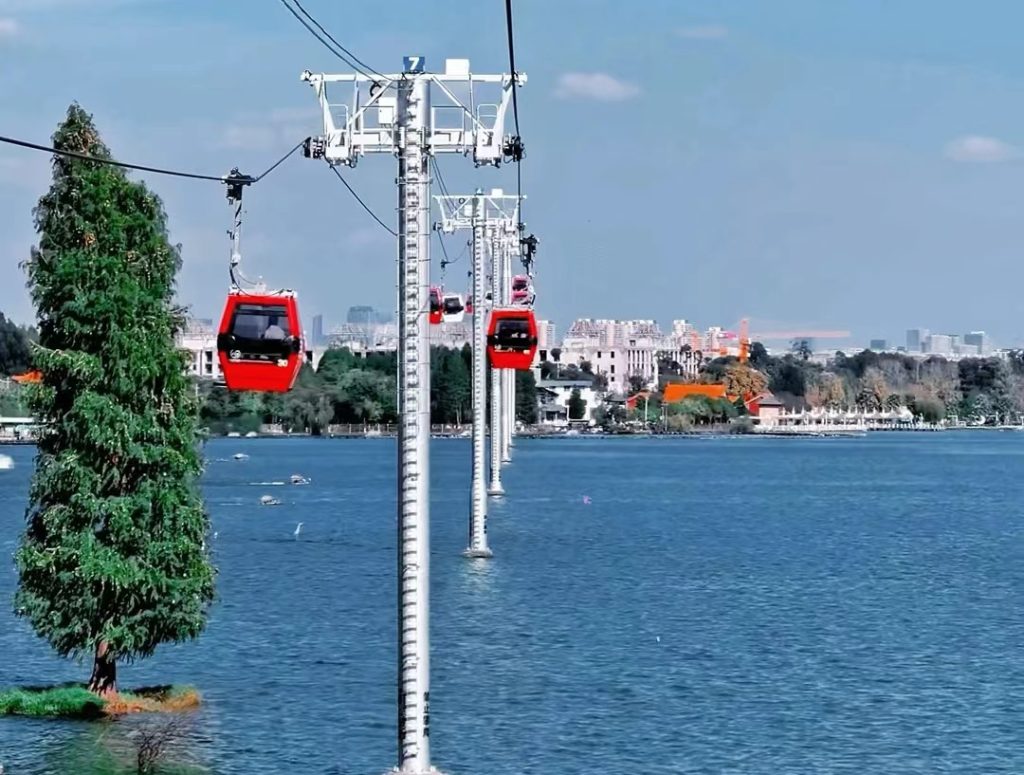
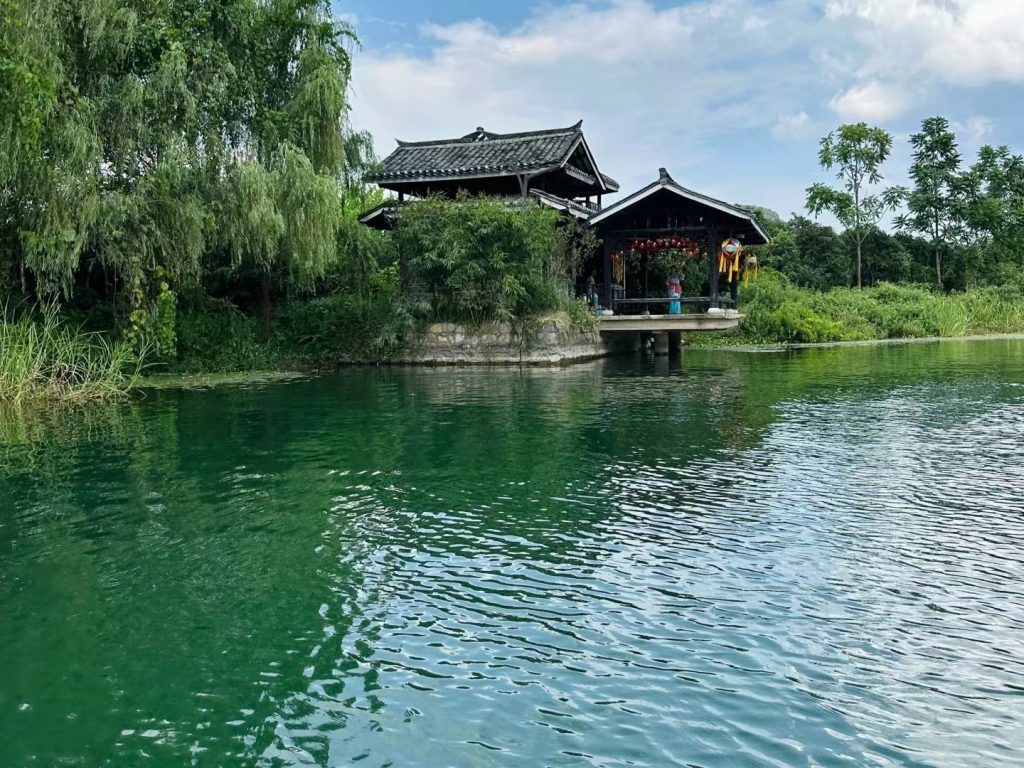
Dianchi Lake is the largest freshwater lake on the Yunnan-Guizhou Plateau, earning its title as the “Pearl of the Plateau.” This vast, tranquil lake is a must-visit for anyone traveling to Kunming. Take a relaxing boat ride across the lake and enjoy the surrounding lush hills, serene waters, and flocks of birds soaring overhead.

Tip: The nearby Dianchi Wetland Park is a great spot for birdwatching, especially in winter when migratory birds flock to the area.


2. The Stone Forest – A Natural Wonder

Walk Through the “First Wonder of the World”
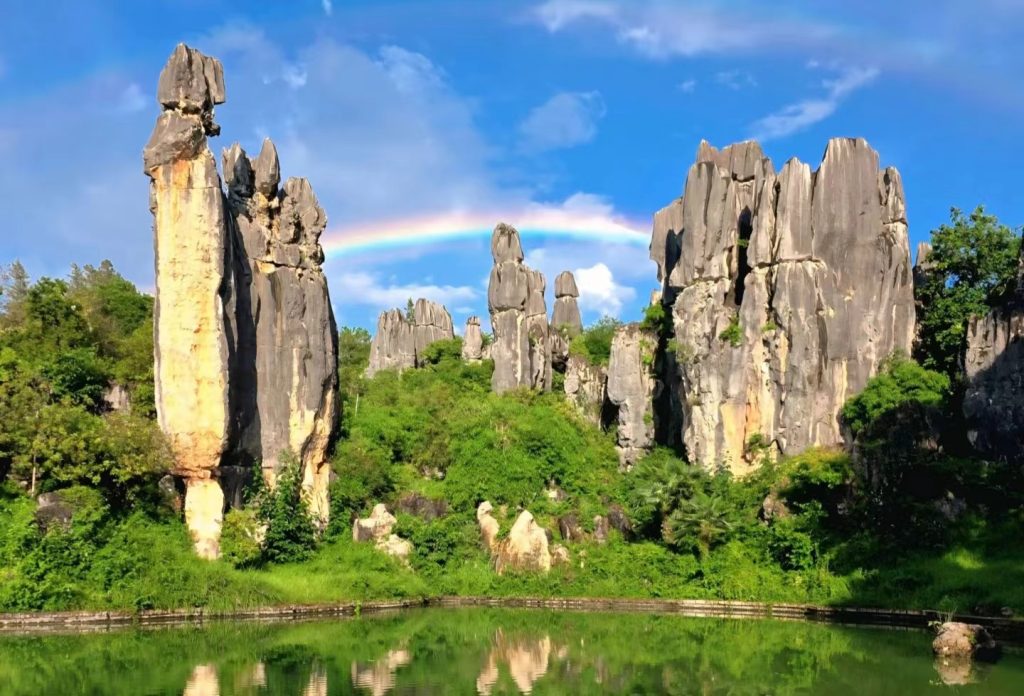
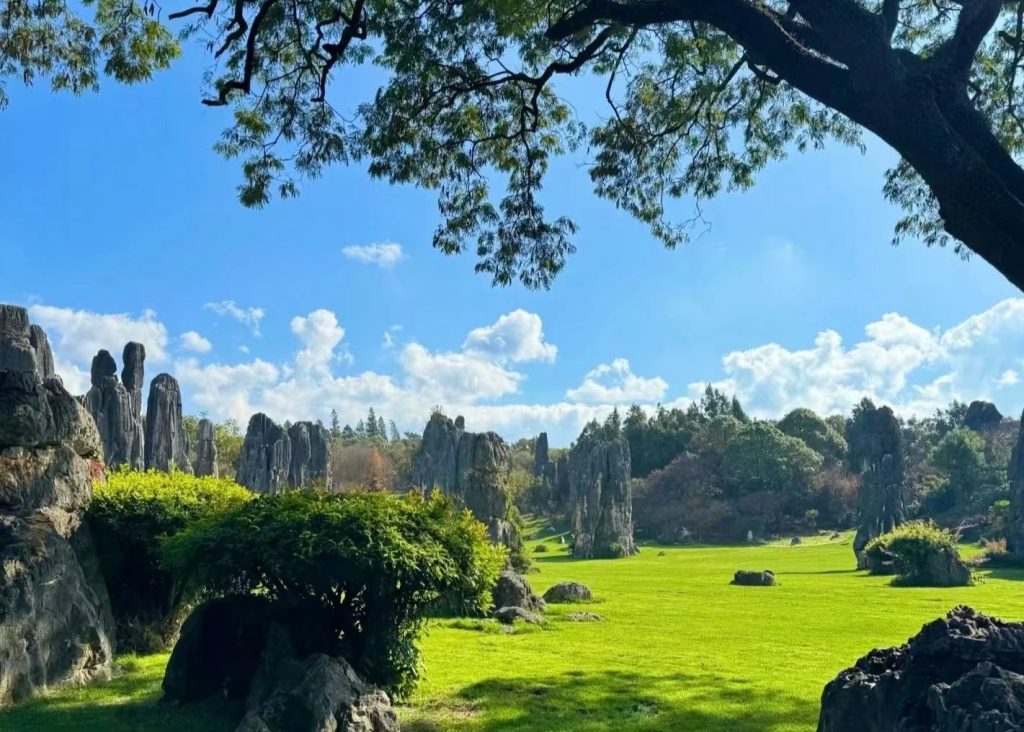
The Stone Forest (Shilin) is one of China’s most iconic landmarks, and it’s easy to see why. This UNESCO World Heritage site is a massive collection of limestone pillars that resemble a petrified forest. It’s like walking through a maze of giant, surreal stone formations—some look like trees, others like animals or even human figures.

Did you know? The Stone Forest is also an important cultural site for the Yi ethnic group. Here, you can explore traditional Yi architecture and culture, with occasional performances of local dances and music.


3. Visit the Dongnan Flower Market – Asia’s Largest Flower Market

A Burst of Color and Fragrance

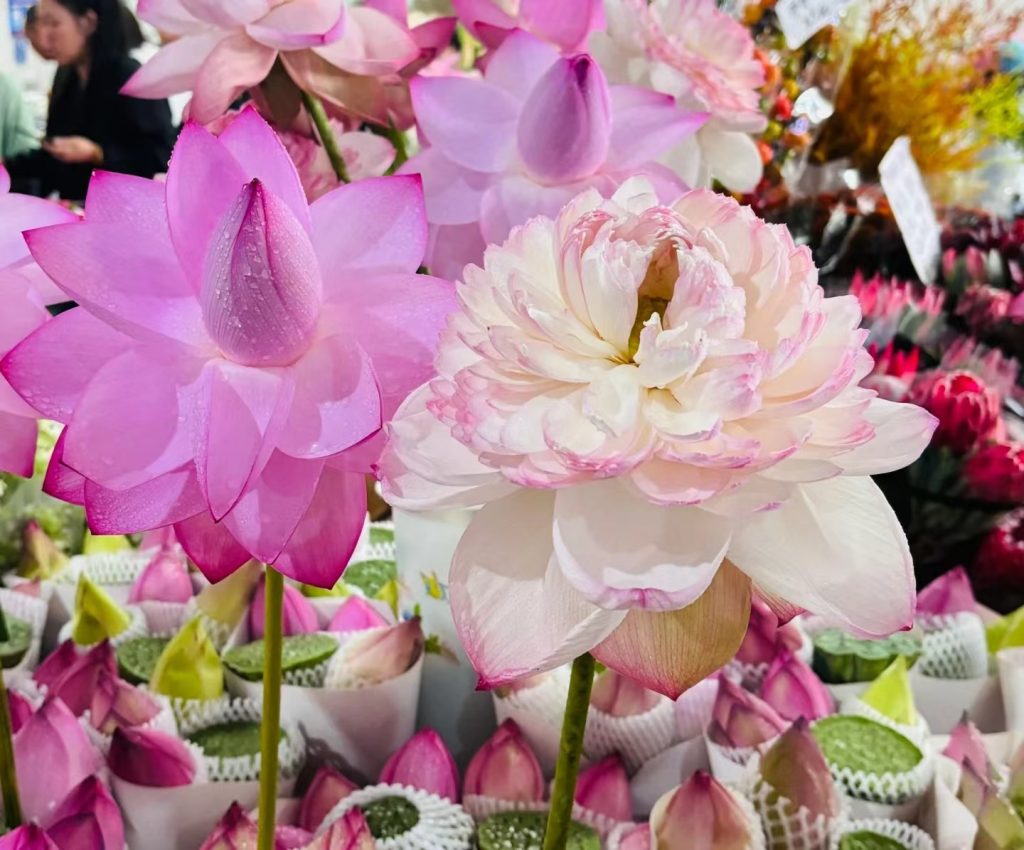
If you love flowers, the Dongnan Flower Market is a must-visit. Known as Asia’s largest flower market, this vibrant marketplace offers a stunning array of flowers, from seasonal blooms like lilies and roses to local favorites like chrysanthemums. The market is bustling year-round, with spring and autumn being especially beautiful.

Fun Fact: Kunming’s mild climate means flowers are available almost every day of the year!


4. Wander Through Kunming’s Historic Old Streets

A Peek Into Kunming’s Past
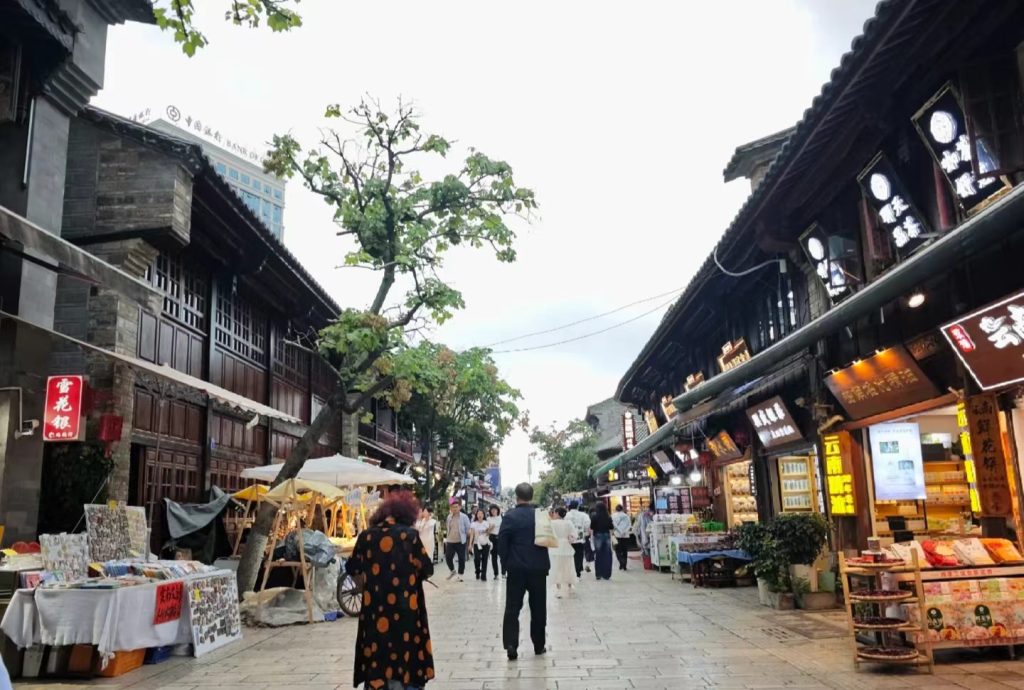
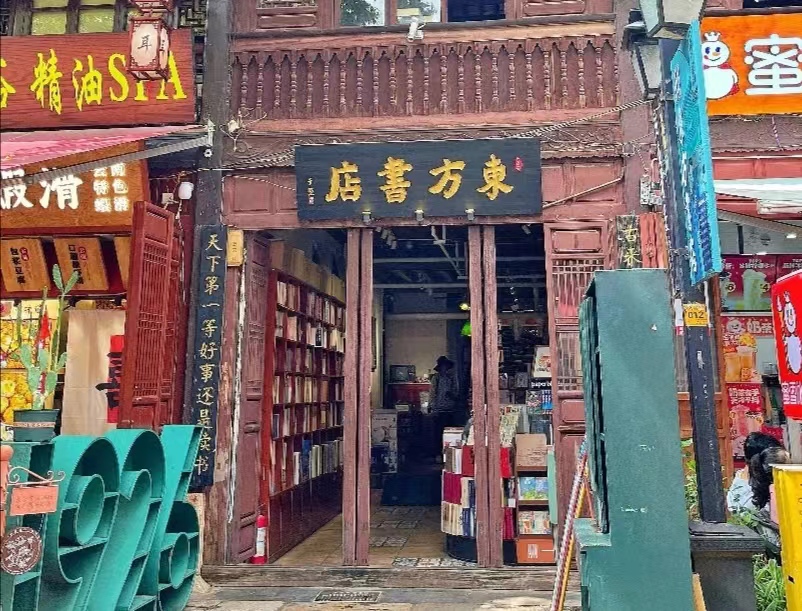
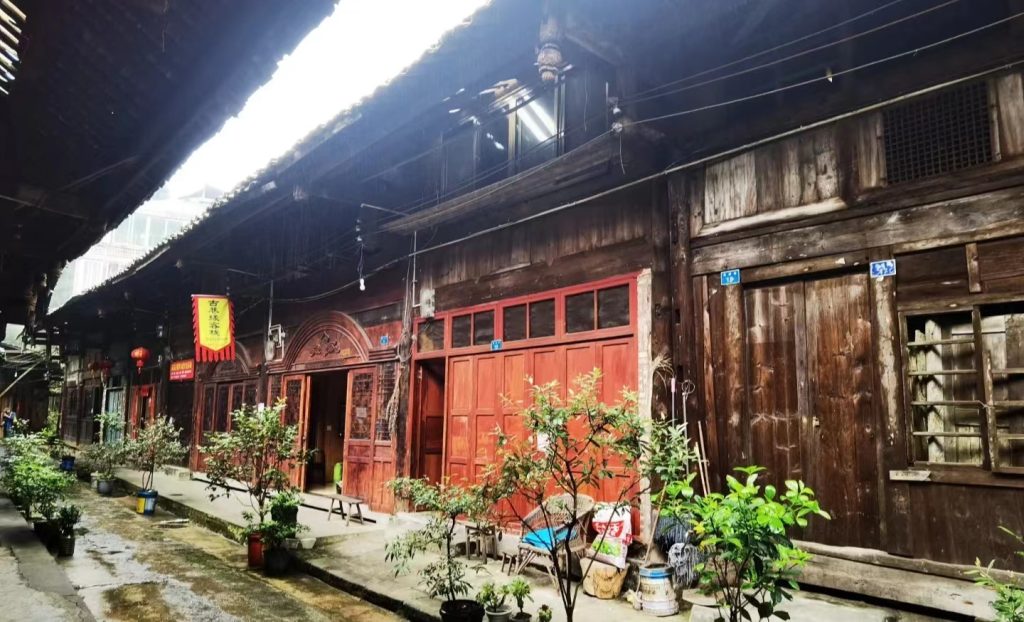
Kunming’s old streets are the perfect place to step back in time. Walk through Dianchi Road Ancient Street, Ximenkou Ancient Street, or Zhengyi Road to discover historical architecture from the Republic of China era. These streets are lined with traditional buildings featuring intricate wood carvings, making them perfect for history lovers and those who enjoy exploring local culture.

Pro Tip: Don’t forget to sample the local street food while you’re here!


5. Discover Yunnan’s Ethnic Culture at the Yunnan Ethnic Village

26 Ethnic Groups in One Place
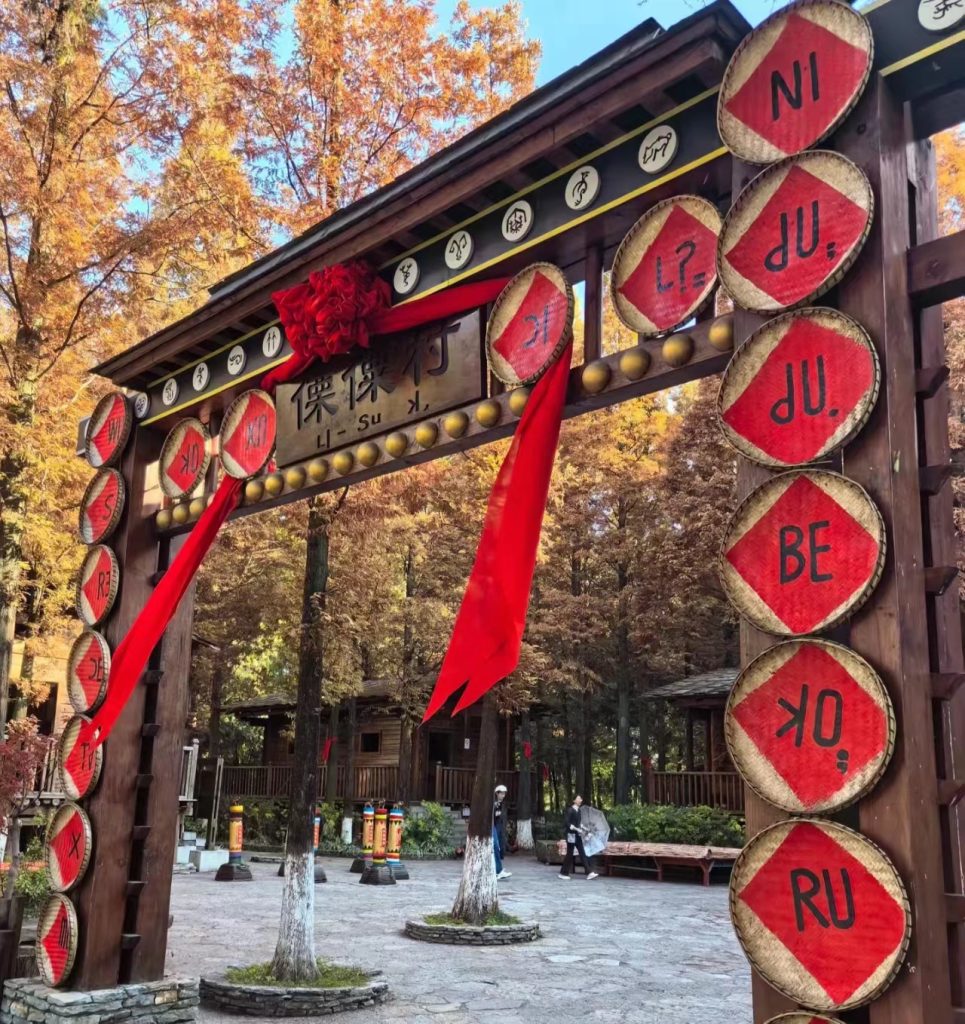
Yunnan is home to a diverse range of ethnic groups, and Yunnan Ethnic Village showcases the culture, architecture, and traditions of 26 minorities, including the Yi, Bai, Naxi, and Hani people. The village’s authentic architecture reflects each group’s cultural identity, and visitors can learn about local crafts such as silver jewelry making, embroidery, and pottery.

Cultural Insight: If you visit during a local festival, you’ll be treated to colorful performances featuring traditional dances and music.


6. Relax at Cuihu Park – Kunming’s Green Oasis

A Peaceful Retreat in the City
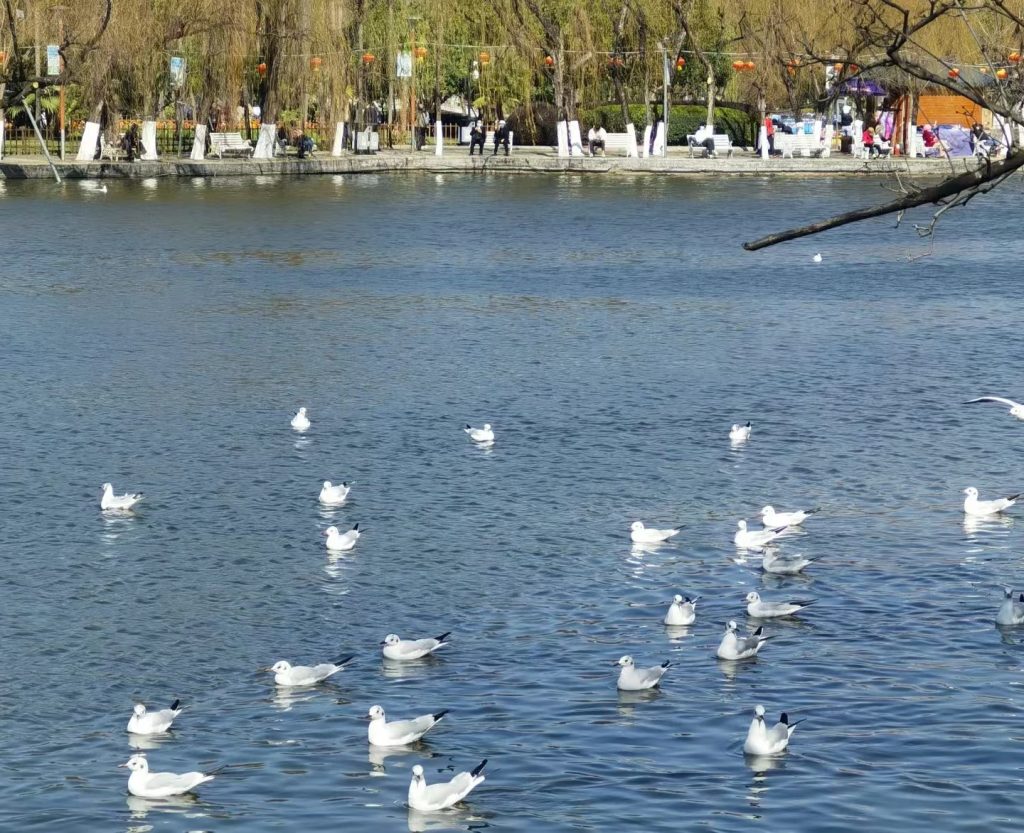
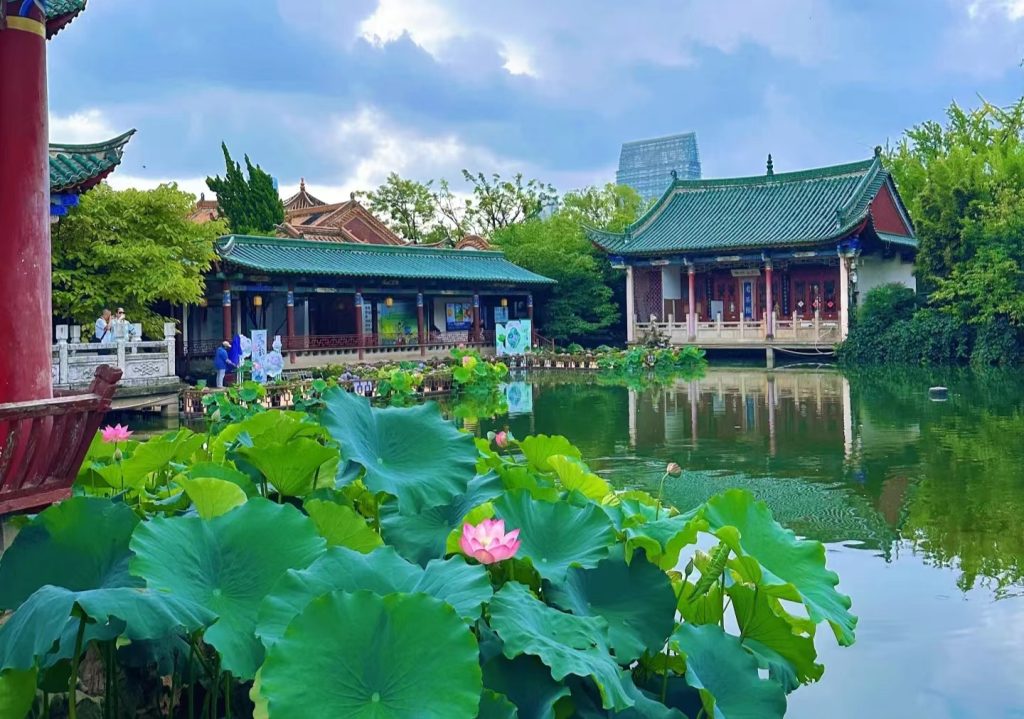
Located in the heart of Kunming, Cuihu Park (Green Lake Park) is a perfect place to unwind. The park features a beautiful lake surrounded by lush greenery, making it an ideal spot for a peaceful walk or a boat ride. In the summer, the lake is covered in stunning lotus flowers, creating a serene atmosphere.

Did You Know? The park also features typical Chinese garden landscapes, including bridges, pavilions, and rockeries.


Savor Kunming’s Delicious Local Cuisine

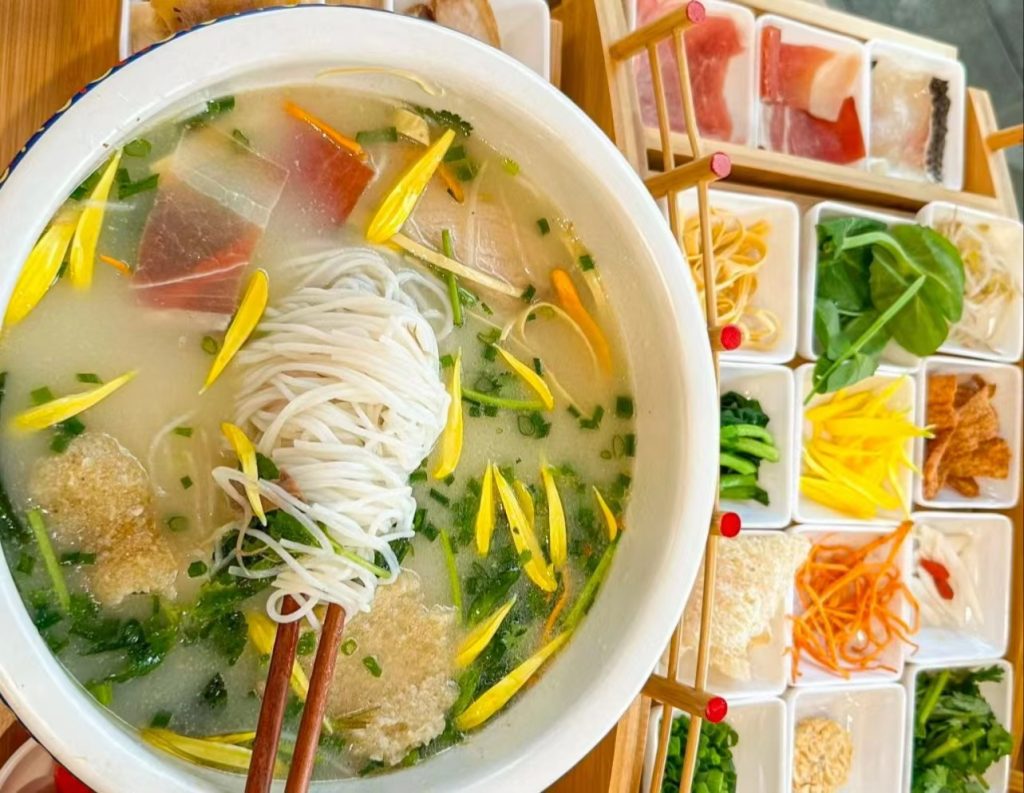
Guoqiao Mixian (Crossing the Bridge Rice Noodles): A flavorful rice noodle dish served with a variety of meats and vegetables in a rich broth.
Kunming Street Food: Kunming’s old streets are filled with street vendors offering stinky tofu, steam pot chicken, cold rice noodles, and more. Each bite is a taste of local tradition.

Food Tip: Don’t miss the opportunity to try Yunnan-style pickled vegetables or small pot rice noodles—both are local favorites.


Kunming is a destination that offers an unforgettable mix of nature, culture, and cuisine. From the tranquil beauty of Dianchi Lake to the surreal rock formations of the Stone Forest, Kunming is a place where adventure and relaxation go hand in hand. Whether you’re exploring the local culture in the old streets, admiring colorful flowers at the flower market, or sampling authentic Yunnan food, Kunming promises an enriching travel experience.
Explore Haikou: A Tropical Gem on Hainan Island

Haikou, located at the northern tip of Hainan Island, is a coastal city that blends rich history, stunning natural beauty, and vibrant local culture. Known as the political, economic, and cultural hub of Hainan, this city offers visitors a mix of outdoor adventures, historical landmarks, and delicious cuisine. Whether you’re seeking a relaxing beach holiday or an immersive cultural experience, Haikou has something for every traveler. Here’s a comprehensive guide to the best things to do in Haikou, perfect for your next Asia travel adventure.

A Journey Through Haikou’s Landmarks

Haikou Clock Tower: The City’s Historic Symbol

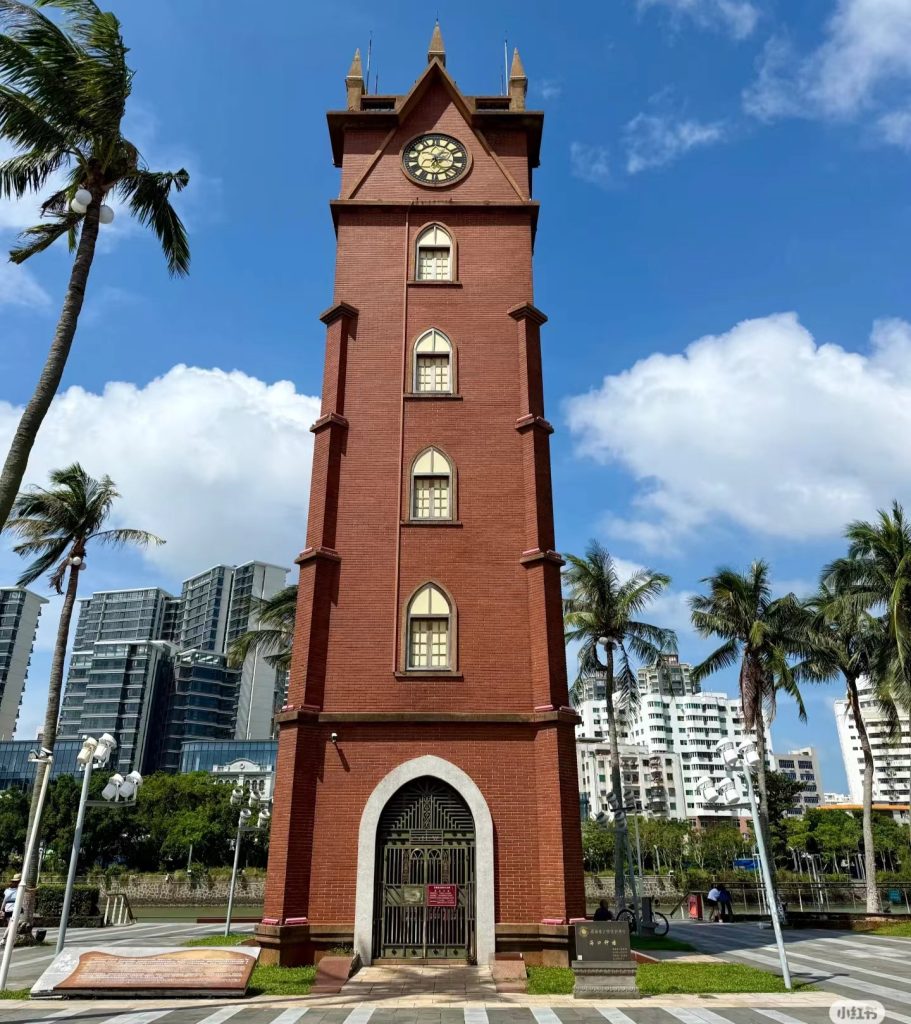
One of Haikou’s most iconic landmarks is the Haikou Clock Tower, a symbol of the city’s rich history and cultural heritage. Built in 1928, the clock tower was initially constructed to standardize time across the city. Today, it stands proudly in the heart of Haikou, surrounded by scenic riverside views and the vibrant city atmosphere. As the sun sets, the clock tower offers a picturesque view, perfect for a relaxing evening stroll.

The clock tower is located near Haikou’s Old Town, where visitors can explore traditional street markets and local eateries. Don’t miss out on sampling Hainanese specialties like Hainan noodles, qing bu liang (a cold dessert), and bao luo fen (a savory noodle dish).

Holiday Beach: A Tropical Haven

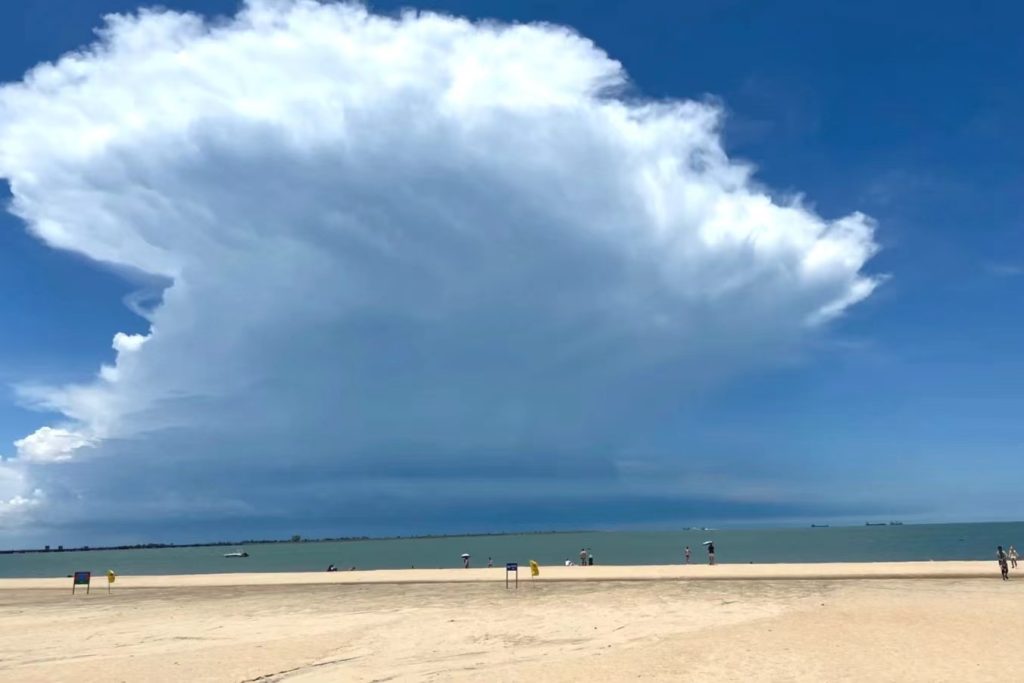
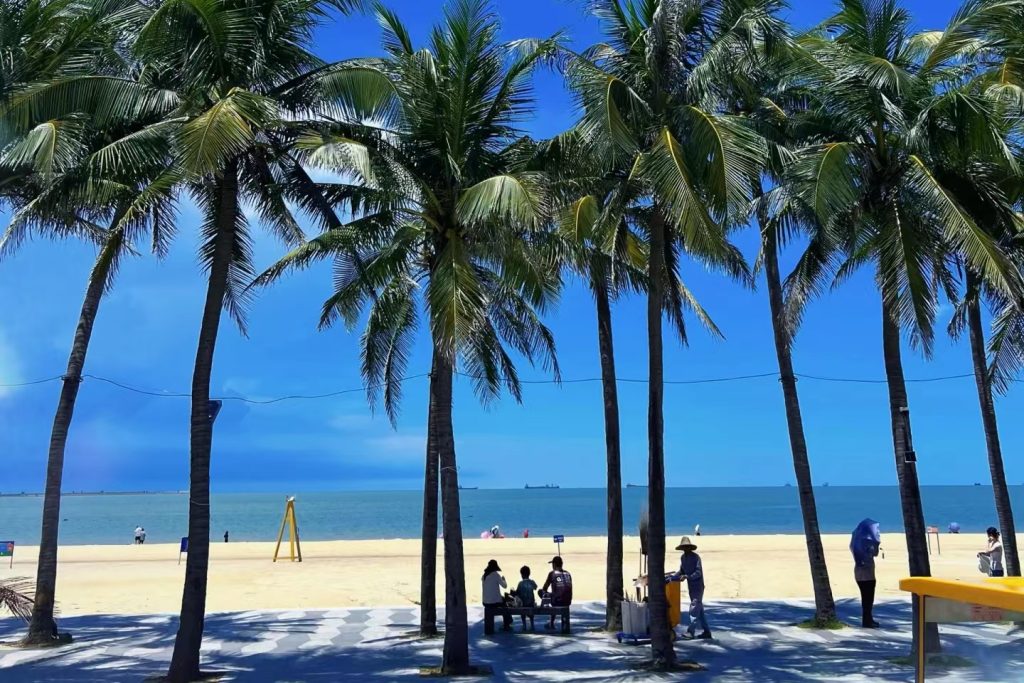
If you’re looking for sun, sea, and sand, Haikou’s Holiday Beach is the perfect destination. Spanning approximately 6 kilometers, this beachfront area is divided into four main zones: water sports, ocean dining, beach sunbathing, and a leisure vacation area. With its fine sand and clear waters, it’s an ideal spot for swimming, sunbathing, and various water activities.

Key Experiences at Holiday Beach:

  • Water Sports: Engage in thrilling activities like jet skiing, windsurfing, and surfing. Several local clubs, such as Yijing Surf Club, offer rental services and professional instructors for those new to the sport.
  • Leisure and Sightseeing: Enjoy a water ballet show at the Roman-style theater or indulge in local snacks such as Hainan noodles and coconut chicken at the food plaza. Bargain for beach toys and souvenirs at the stalls along the shore.

Qilou Old Street: A Cultural and Architectural Gem

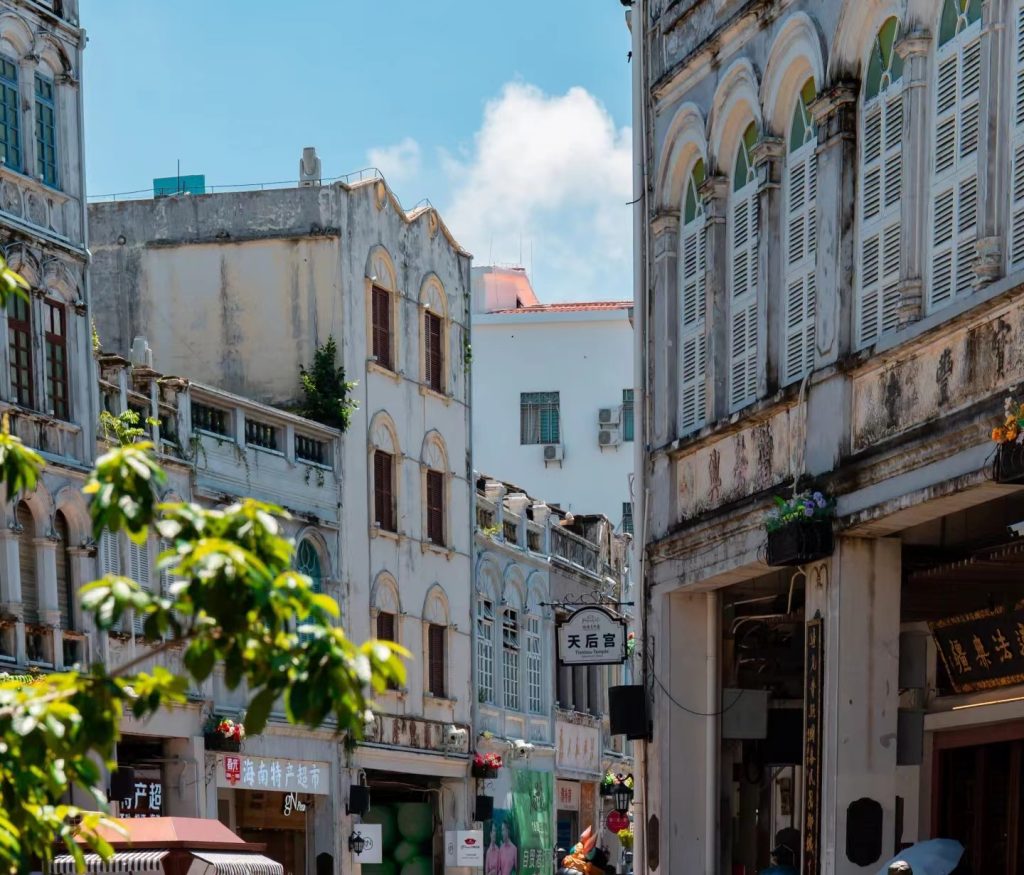
Haikou’s Qilou Old Street is a charming historical district with over 600 years of history. This area features an eclectic mix of South Asian and Baroque architectural styles and is renowned as one of China’s “Historic Cultural Streets.” The most prominent structure, the Si Pai Lou, was built during the Southern Song Dynasty and offers a glimpse into Haikou’s evolution from a fishing village to a bustling city.

While strolling through Qilou Old Street, you can experience Hainan’s rich cultural heritage. The area features the Intangible Cultural Heritage Display Center, where you can discover 36 traditional arts and crafts, including Hainan coconut carving, Li brocade weaving, and straw weaving.

The street also hosts cultural events like music festivals and parades, including the Zongqing Jiemi during the Dragon Boat Festival, offering visitors an immersive cultural experience.
Yun Dong Library: A Masterpiece of Modern Architecture

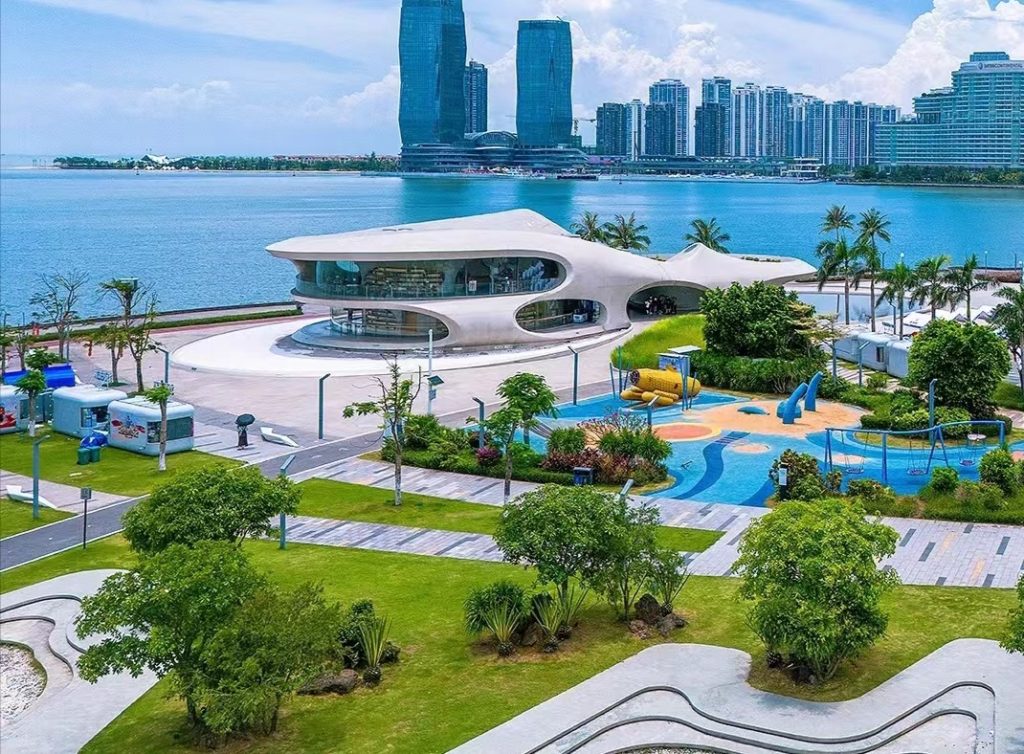
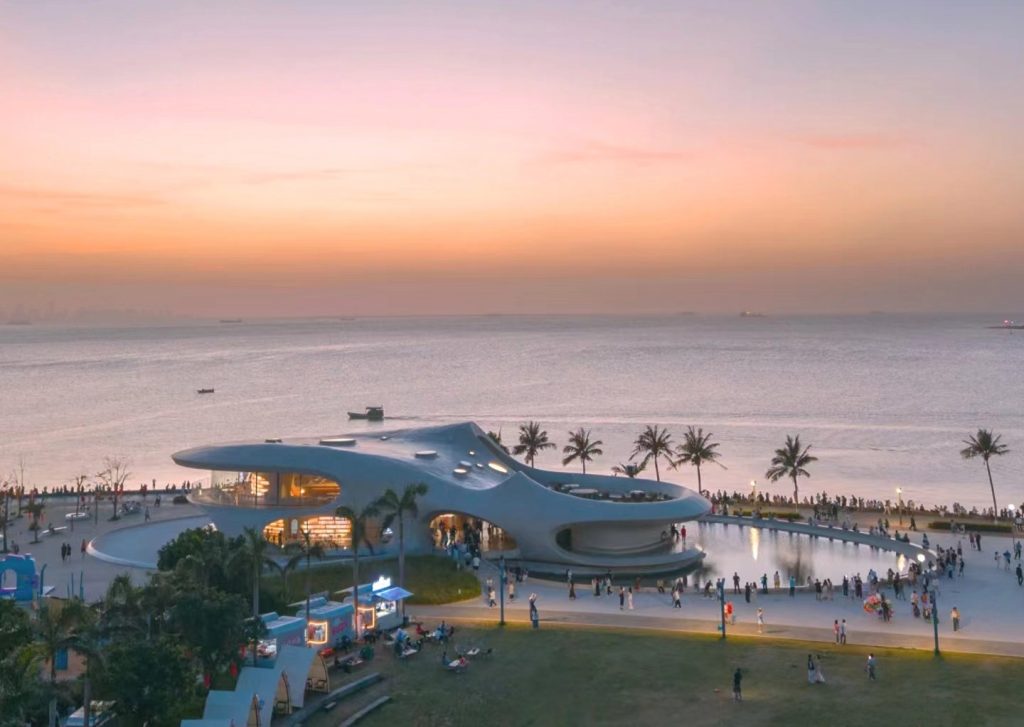
One of Haikou’s architectural wonders is the Yun Dong Library, designed by the renowned architect Ma Yansong. Inspired by the island’s cave landscapes, the library features a unique design with varying-sized holes that let in natural light and promote ventilation. This creates a “cave-by-the-sea” immersive experience.
The library is located near the Century Bridge and offers stunning views of the sea. It includes reading areas, a café, and a rooftop garden. The sunset view, with the golden hues of the setting sun blending with the lights from Century Bridge, makes for a romantic and tranquil atmosphere.

Discover Hainan’s Rich Cultural Heritage

Hainan Provincial Museum: A Deep Dive into Local History

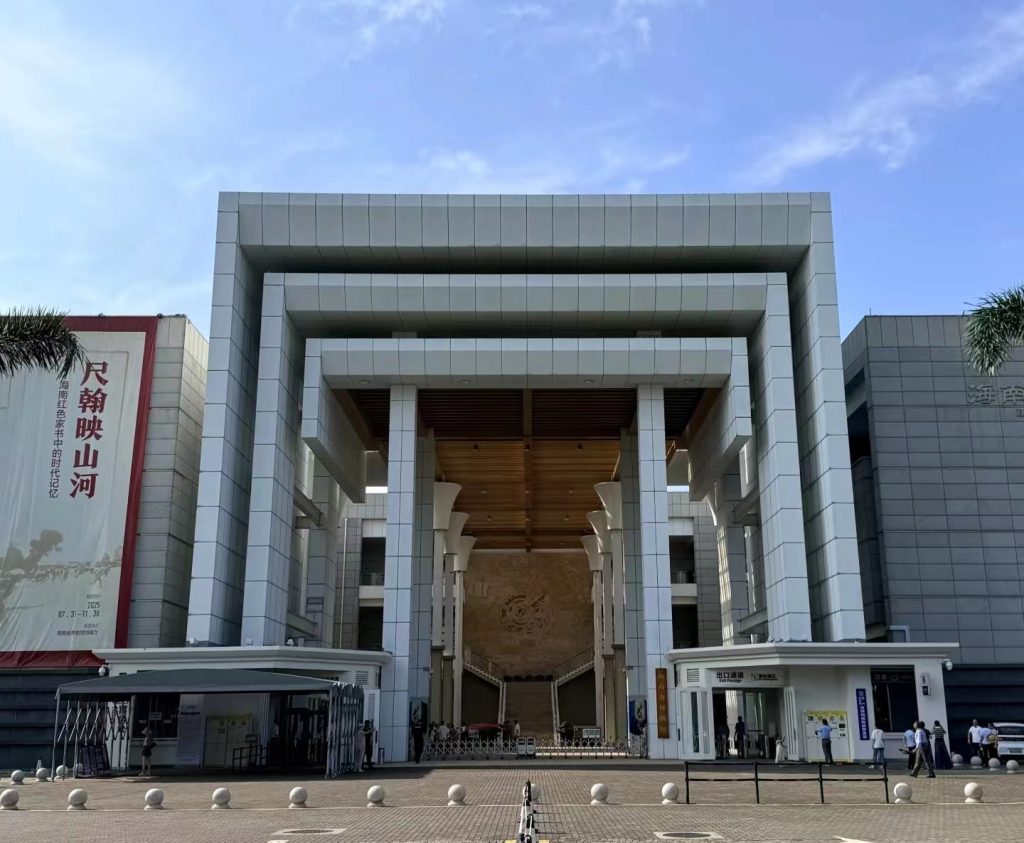
If you want to learn more about Hainan’s history, culture, and maritime heritage, the Hainan Provincial Museum is a must-visit. Known as a national first-class museum, it showcases the island’s history from ancient times to the present through a combination of permanent and special exhibitions.

The museum’s key exhibits include:

  • South China Sea Maritime Civilization: Features artifacts like shipwrecks and ancient trading goods from the Maritime Silk Road.
  • History of Hainan: A multimedia presentation takes you through the island’s transformation from prehistoric times to the Republic of China era.
  • Intangible Cultural Heritage: Exhibits highlight Hainan’s rich folk traditions, including traditional handcrafts, food, and performance arts.

Feng Xiaogang Movie Town: A Cinematic Experience

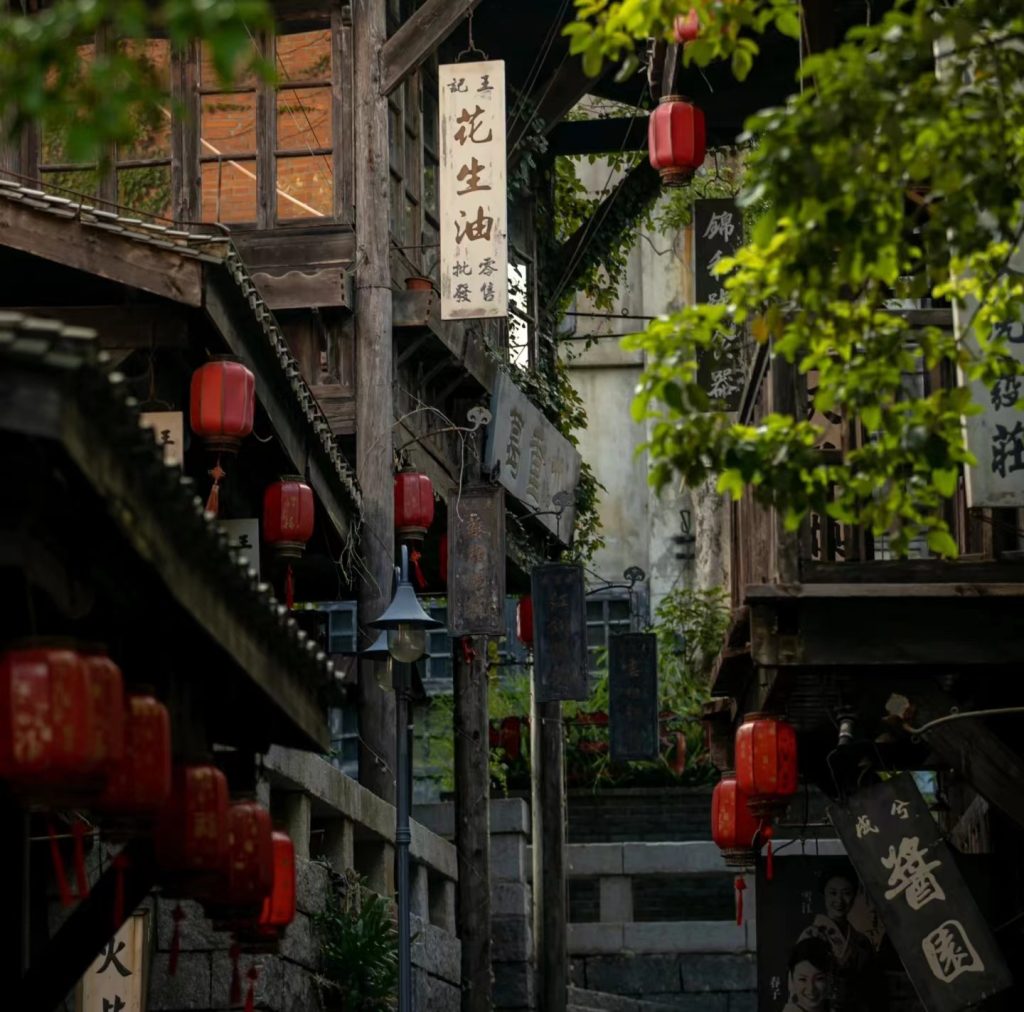
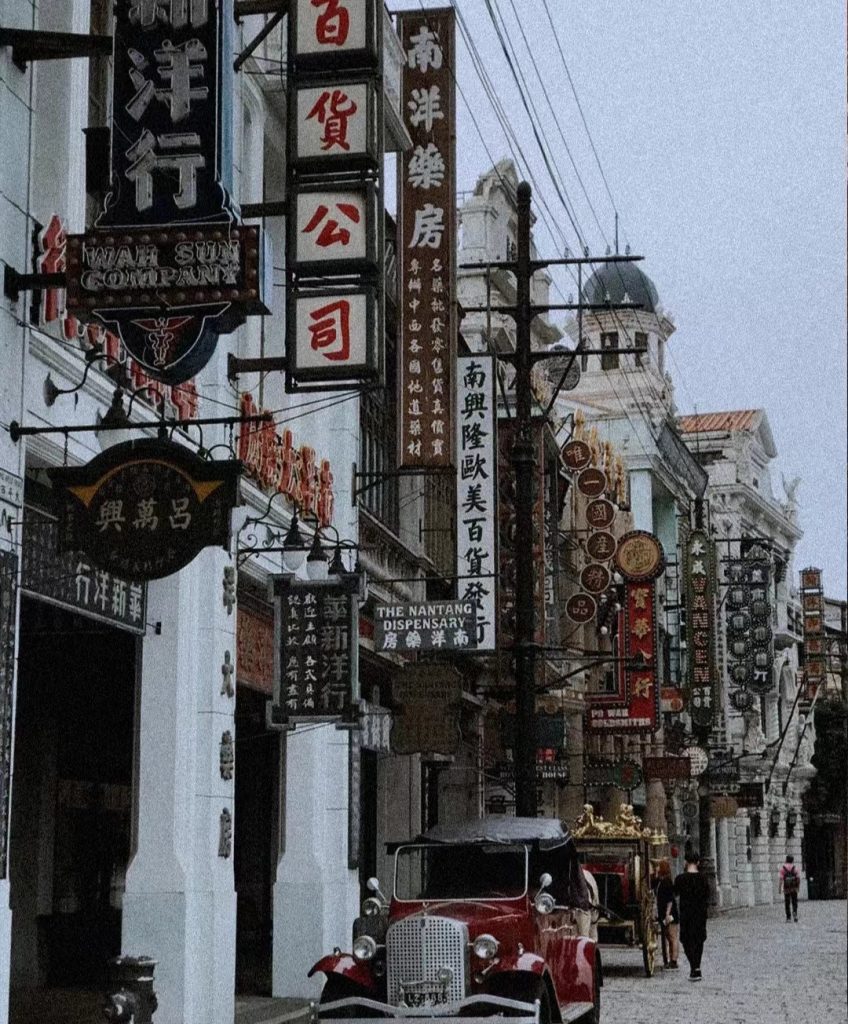
For movie buffs, Haikou offers a unique experience at the Feng Xiaogang Movie Town. This immersive, film-themed park recreates historical buildings and street scenes from different eras of Chinese cinema. Visitors can rent costumes, such as traditional qipao or military uniforms, and participate in filming or photography sessions to relive scenes from classic Chinese movies.

Highlights of the Movie Town:

  • Nanyang Chao District: Based on the 1920s–1940s architectural style from Guangzhou, Hong Kong, and Haikou, this area includes over 70 buildings, such as clock towers and churches.
  • Fanghua District: A set designed to replicate the 1980s, perfect for nostalgia-driven activities and performances like Fanghua Revisited.
  • Dongfanghong District: Showcases the mid-20th century’s industrial and urban landscape, great for period-specific photos.

Leiqiong Volcano Geological Park: Nature’s Masterpiece

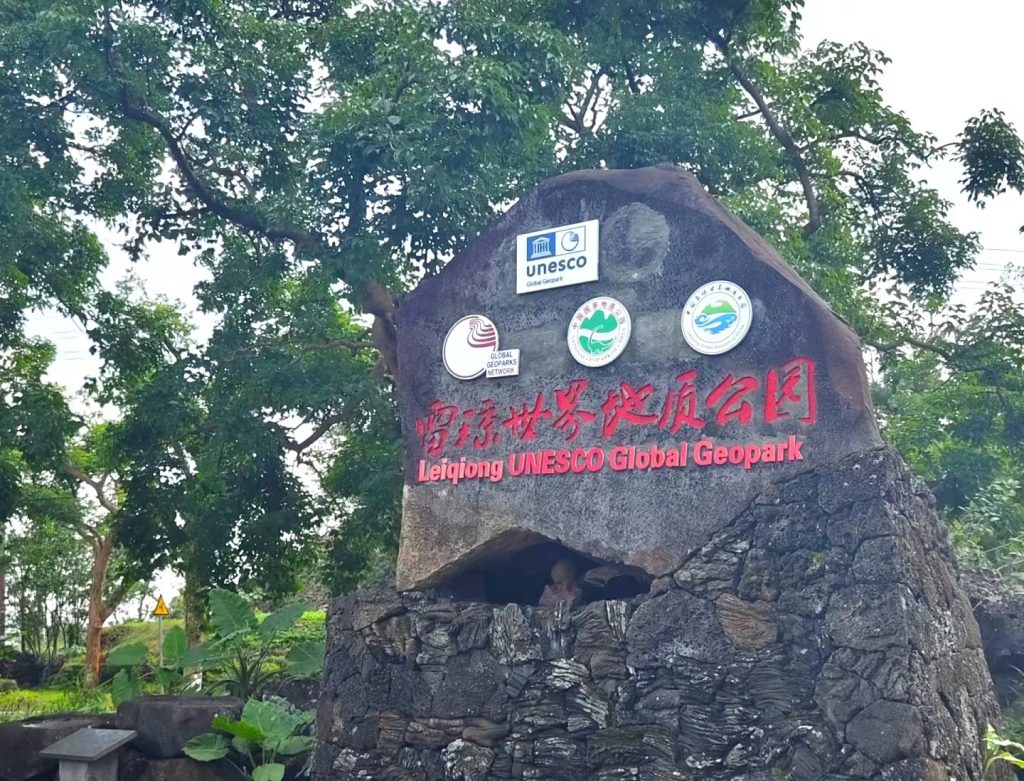
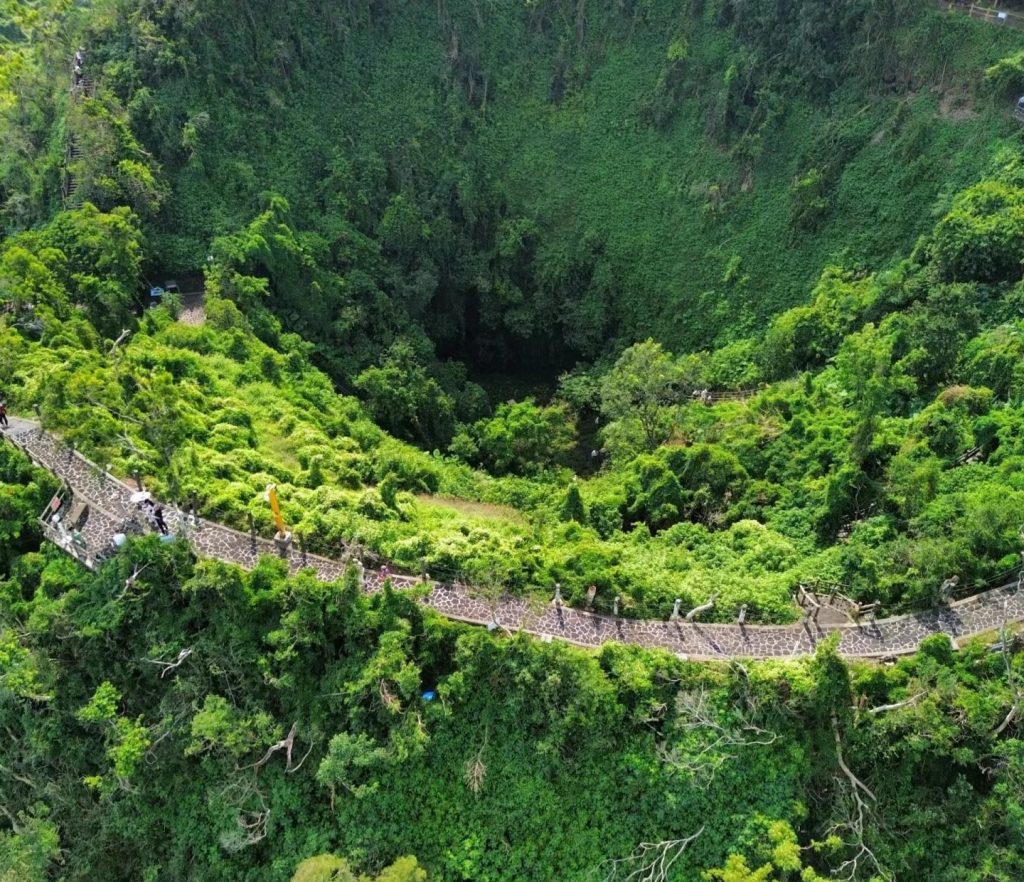
Haikou’s Leiqiong Volcano Geological Park is a natural wonder. This park is home to over 40 volcanic cones and 30 lava tunnels, making it a must-see for nature enthusiasts. The park features diverse volcanic landscapes, including basalt formations and preserved lava flows, earning it the nickname “Natural Geological Museum.”

Savor Haikou’s Unique Cuisine

No trip to Haikou is complete without tasting the local food. Hainan’s cuisine is famous for its fresh ingredients, especially seafood and tropical fruits. Here are some dishes you shouldn’t miss:

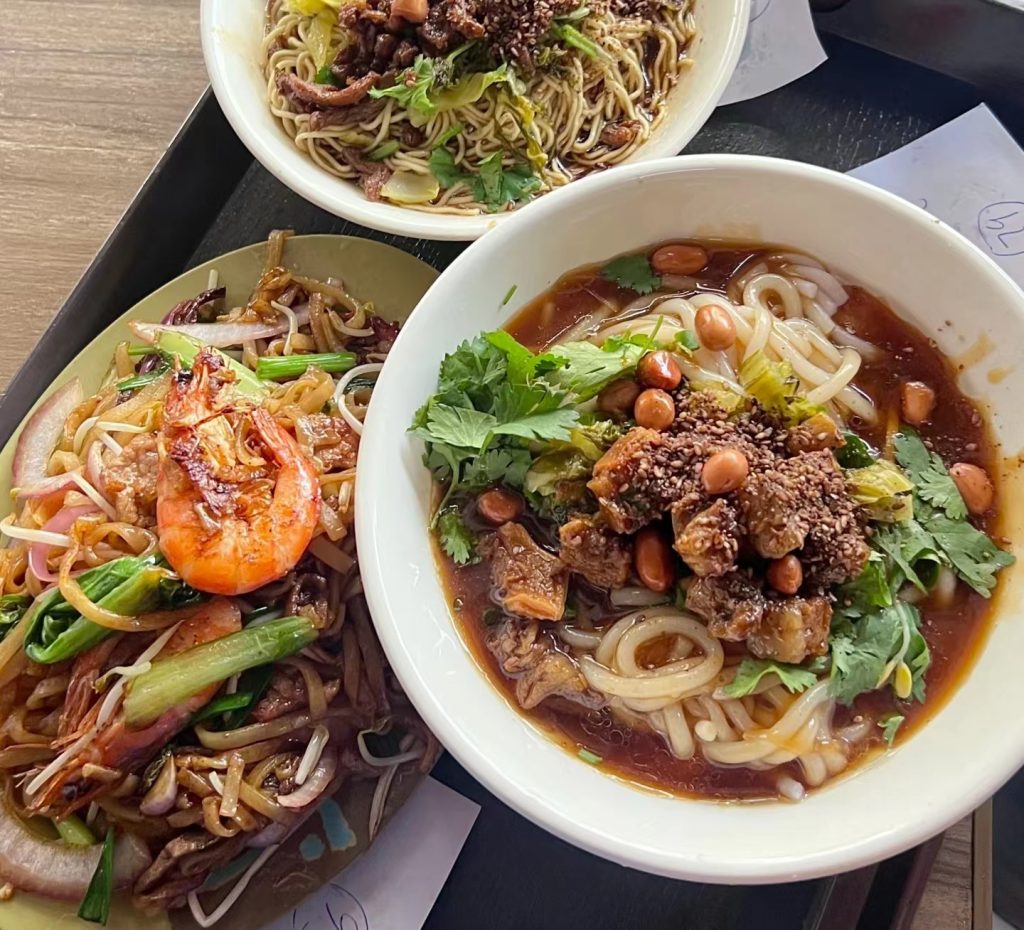
Hainan Noodles: Thin rice noodles served with dried beef, peanuts, and a flavorful broth.

Bao Luo Fen: A chewy noodle dish with a rich bone and seafood broth.

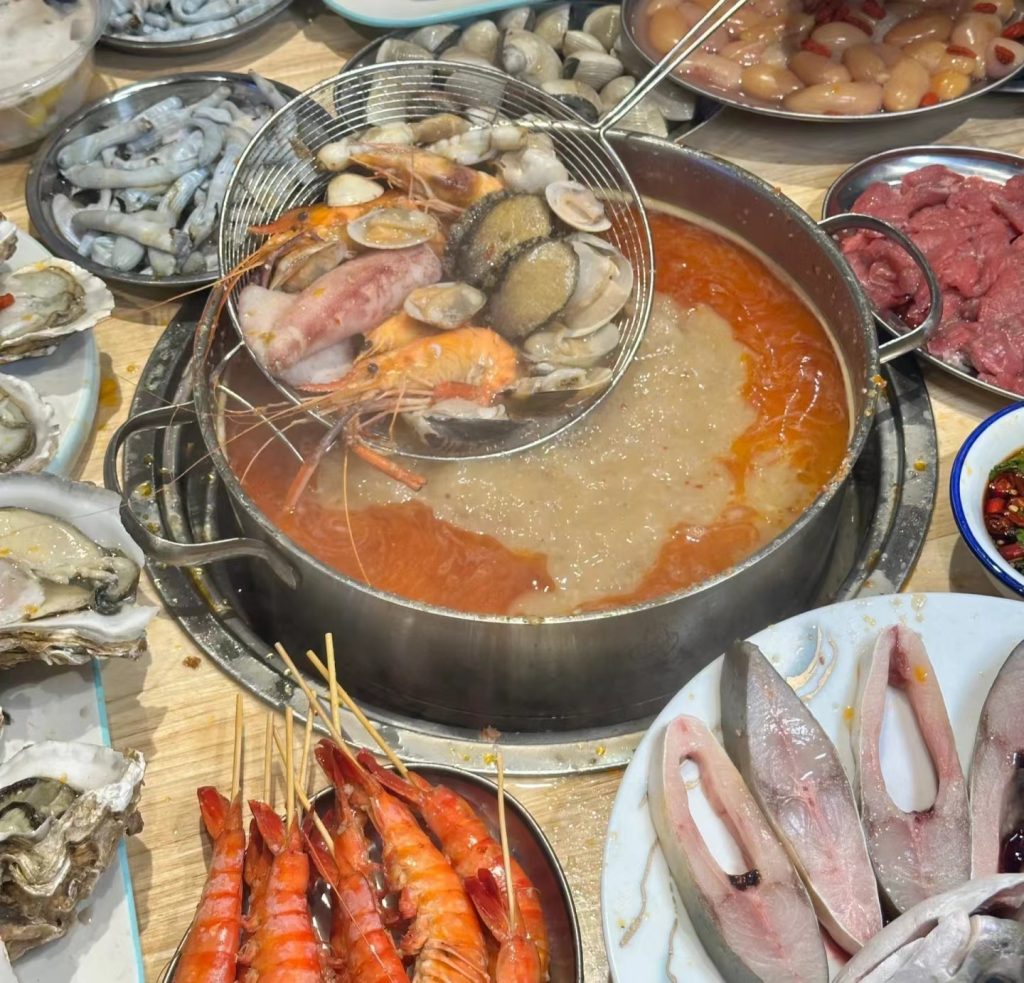
Zao Po Vinegar Hotpot: A spicy and sour broth with seafood, perfect for warming up on cool evenings.

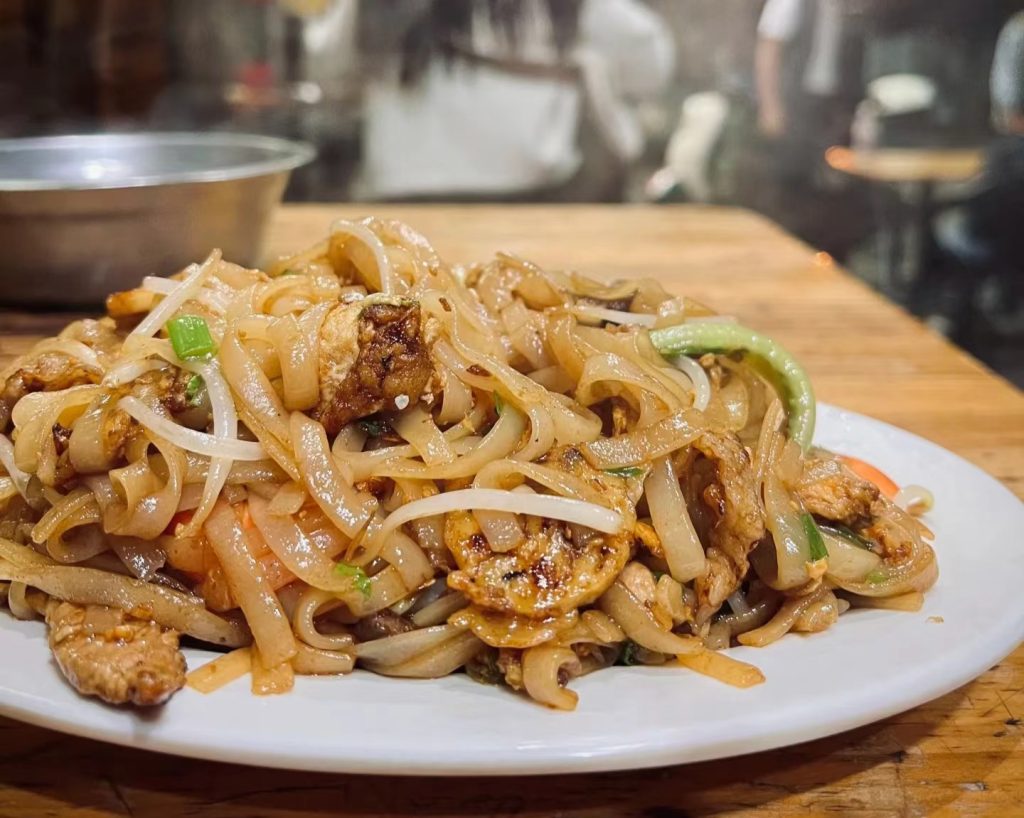
Stir-fried Noodles: A popular local dish featuring moist stir-fried noodles with various meats and vegetables.

Haikou offers an enriching blend of culture, history, nature, and modern attractions, making it a perfect destination for travelers looking to explore a unique corner of China. Whether you’re relaxing on the beach, exploring ancient streets, or diving into local traditions, Haikou is an unforgettable experience. Plan your next Asia travel adventure to Haikou, and discover all the exciting things to do in this tropical paradise.
Guilin City Travel Guide — A First-Time Explorer’s Adventure

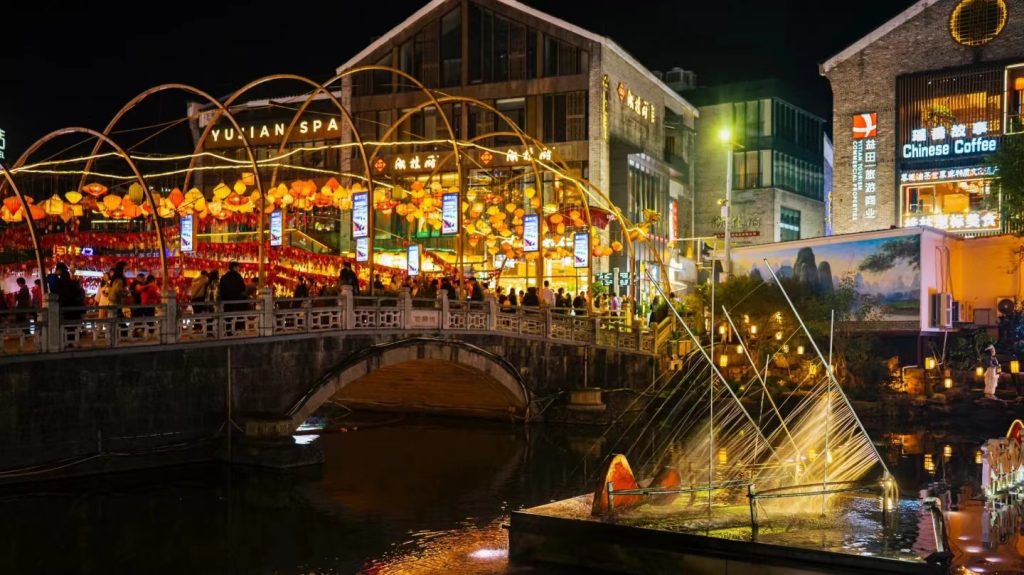
When I first arrived in Guilin China, I immediately understood why locals proudly say, “Guilin’s scenery is the best under heaven.” This compact city is surrounded by dramatic karst peaks, intersected by rivers, and layered with centuries of history. Wandering through Guilin feels like stepping inside a Chinese ink painting—only this one hums with modern energy, night lights, and the aroma of sizzling street food. Whether you’re on a Guilin travel tour, exploring independently, or adding it to your southern China itinerary, the city’s top attractions are easy to explore in a couple of days.

The 1st Part: Exploring the Central City Landmarks, Lakes & Nightlife

No.1 Elephant Trunk Hill | The Symbol of Guilin

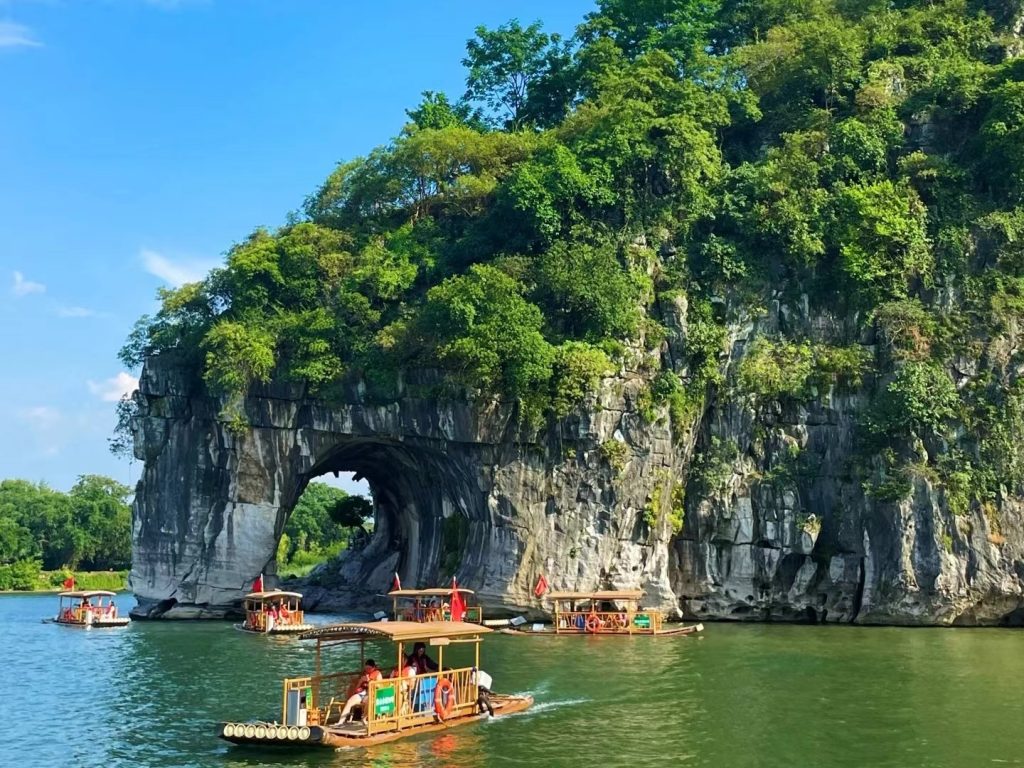
Elephant Trunk Hill, the city’s most famous landmark. Perched where the Li River and Taohua River meet, this natural karst formation resembles a giant elephant dipping its trunk into the water. 

You can experience a bamboo raft and slowly drifted past the hill, watching the soft sunlight ripple across the water’s surface. The reflections of the hill and surrounding peaks create a breathtaking panorama—especially on clear mornings or late afternoons.

Pro Tip: Arrive during daylight, The most photogenic spot is across the river, or from the raft itself. During peak season, tickets and raft rides should be booked in advance.

No.2 Ronghu Lake & The Sun and Moon Pagodas | Daytime Stroll, Nighttime Glow

Right in the city center lies Ronghu Lake, an elegant urban oasis lined with willows, stone bridges, and walking paths. This is one of my favorite places for a relaxed afternoon stroll.

Highlight: Sun and Moon Pagodas
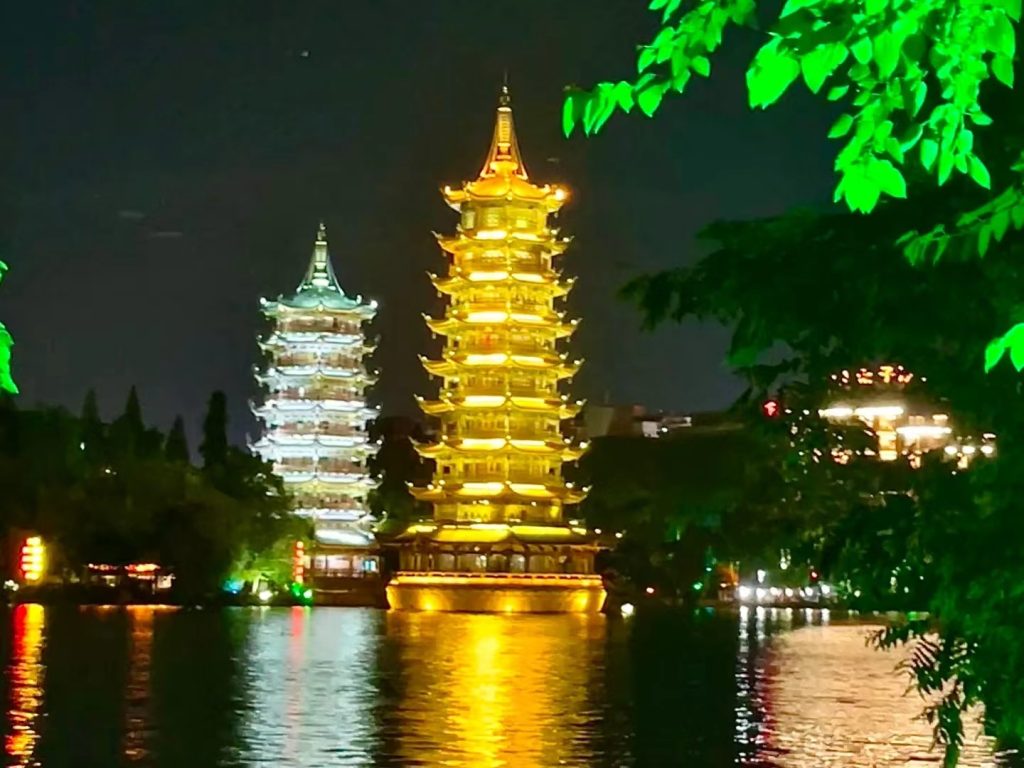
—the Sun Pagoda is built entirely of bronze, while the Moon Pagoda shines with glazed tiles. During the day, their shapes stand tall against Guilin’s blue skies. But at night, they light up brilliantly, their golden and silver hues shimmering across the water.

Magical experience — you can join a “Two Rivers and Four Lakes” night cruise. Floating past ancient pavilions, lit bridges, and modern city lights felt like drifting through two time periods at once.

No 3. Dongxi Alley & Jingjiang Prince’s Palace | A Walk Through Time

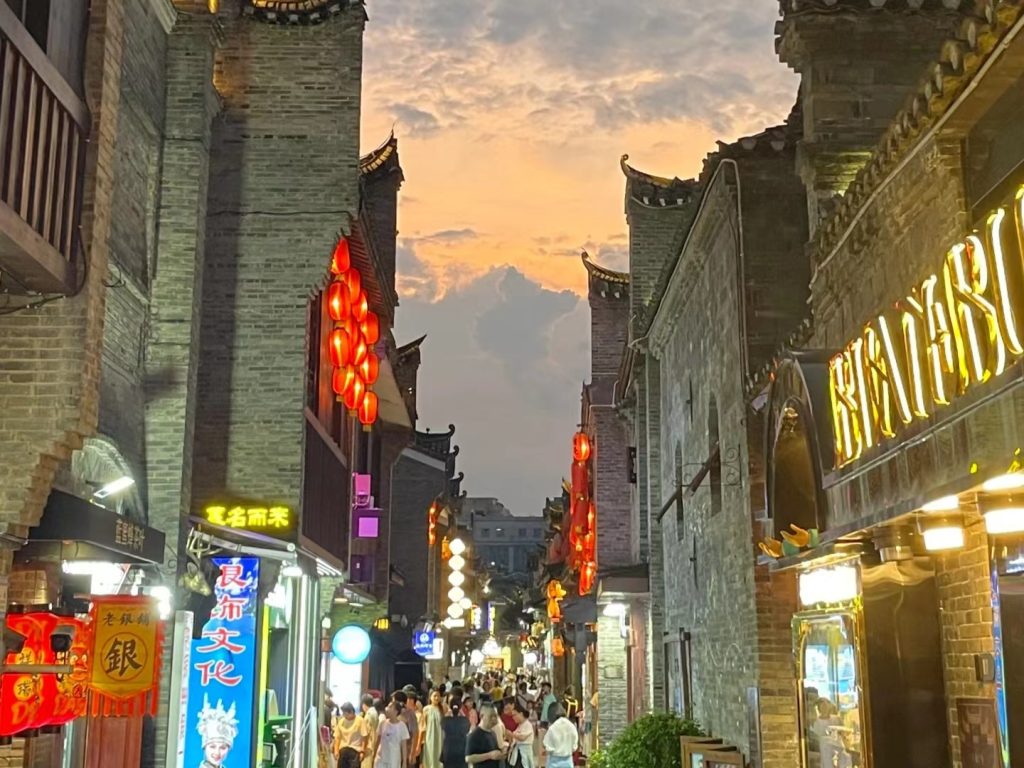
For travelers who love history, architecture, and Instagram-worthy spots, Dongxi Alley (East-West Alley) and the adjacent Jingjiang Prince’s Palace are must-sees. Dongxi Alley is Guilin’s best-preserved historical neighborhood, with narrow stone alleys, gray-brick houses, and traditional wooden lattices that make you feel like you’ve stepped into the Ming dynasty.

Wandering here is like time travel—except you’ll find chic teahouses, artisan craft shops, and plenty of local snacks tucked between the ancient walls.

No.4 Night Market & Pedestrian Street | Flavors and Lights After Dark

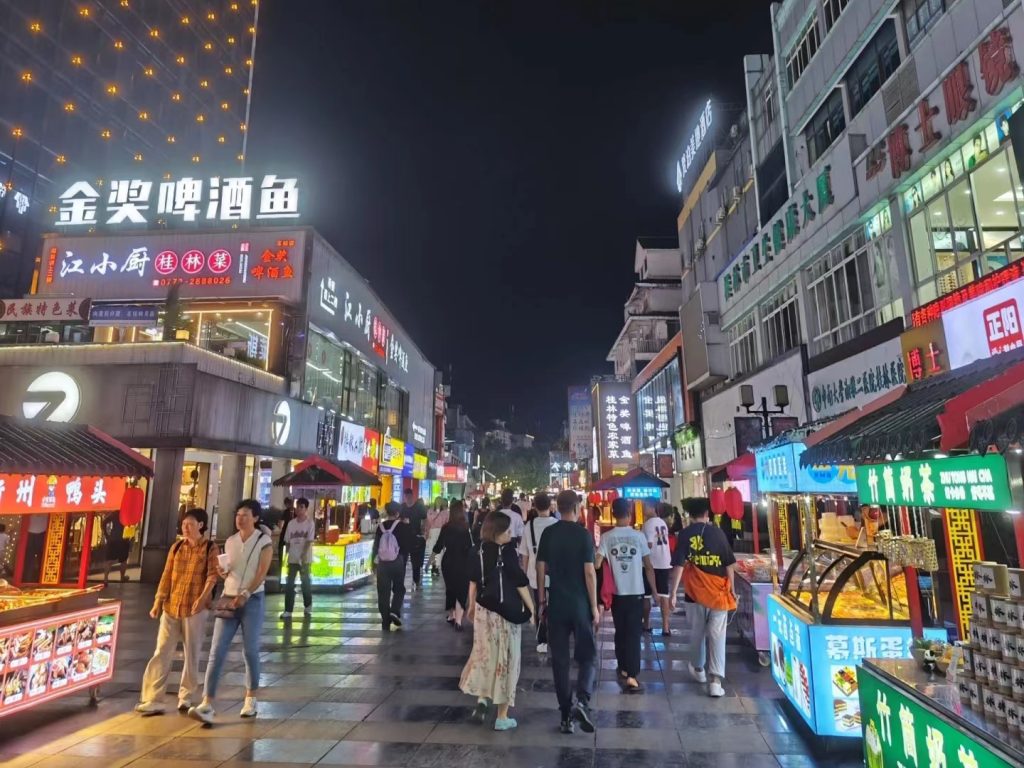
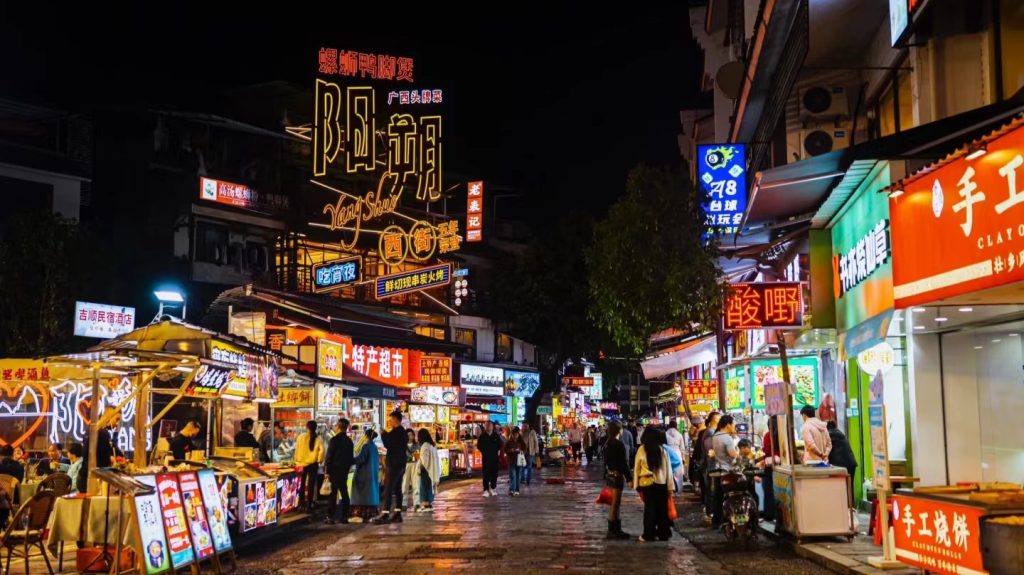
As night falls, Guilin transforms. The pedestrian street near Dongxi Alley comes alive with glowing lanterns, sizzling food stalls, and lively chatter. It’s the perfect place to dive into Guilin’s culinary scene.

Don’t miss:  Guilin rice noodles (米粉 Mǐfěn)  
Beer fish (啤酒鱼 Píjiǔyú) — a local specialty made with Li River carp, beer, and spices—fragrant, tangy, and addictive.  
Snail-stuffed tofu and spicy street snacks

The 2nd Part: Yangshuo Bamboo Rafting, Peaks, and Cultural Wonders

No.1 Encountering the Serenity of Yulong River

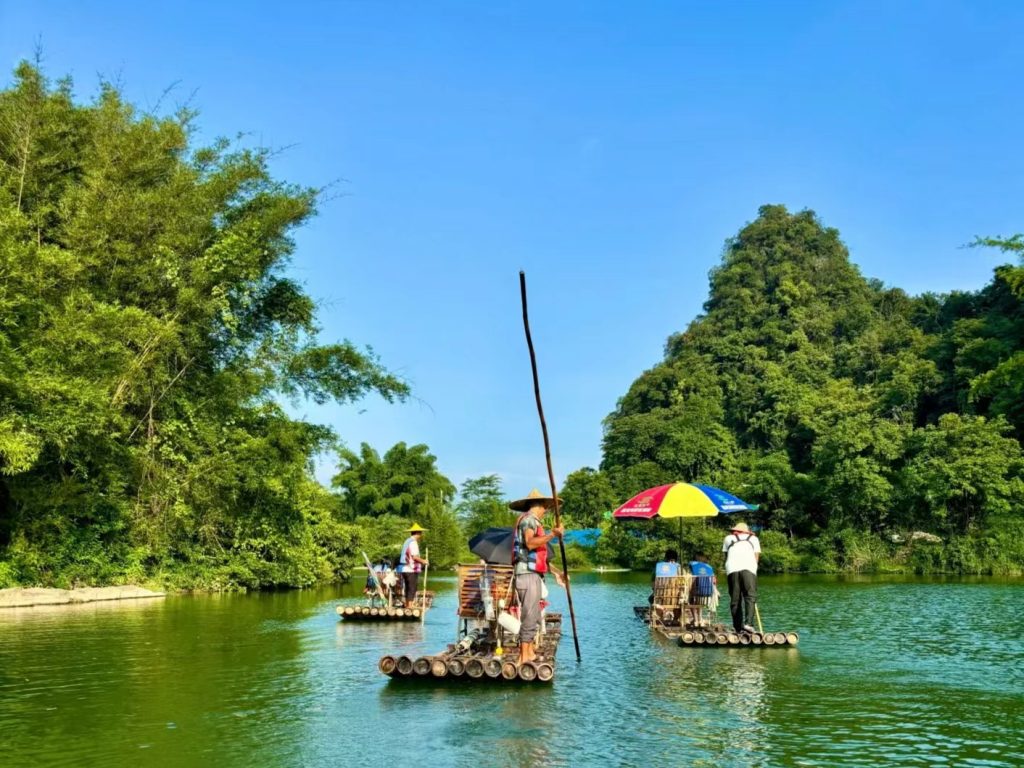
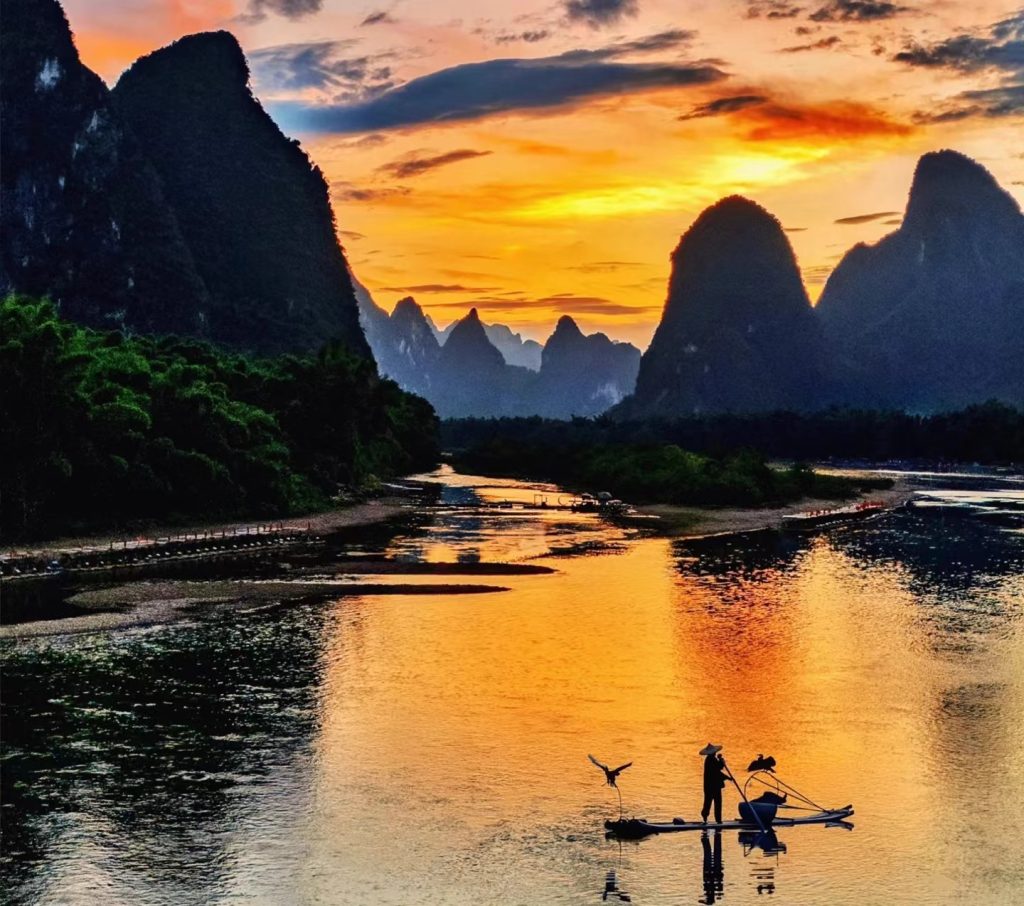
One of Yangshuo’s most famous experiences is the Yulong River bamboo rafting. Yulong River feels intimate and tranquil. Lush green hills rise on both sides, and bamboo groves dip their reflections into the clear waters.

Drifting along the river in a traditional bamboo raft, I passed charming stone bridges, rice paddies, and quaint villages. The peaks in the distance create a moving natural painting, and the gentle water flow makes you feel completely detached from the hustle of modern life.

No.2 Cycling Through the Ten-Mile Gallery

Yangshuo’s Ten-Mile Gallery is a scenic route stretching over ten kilometers, dotted with iconic peaks, rivers, and farmland. I rented a bicycle and meandered slowly, stopping at Moon Hill and Butterfly Spring, as well as charming cafés and small guesthouses.

No.3 20 RMB Scenic Spot & Nine-Horse Fresco Hill

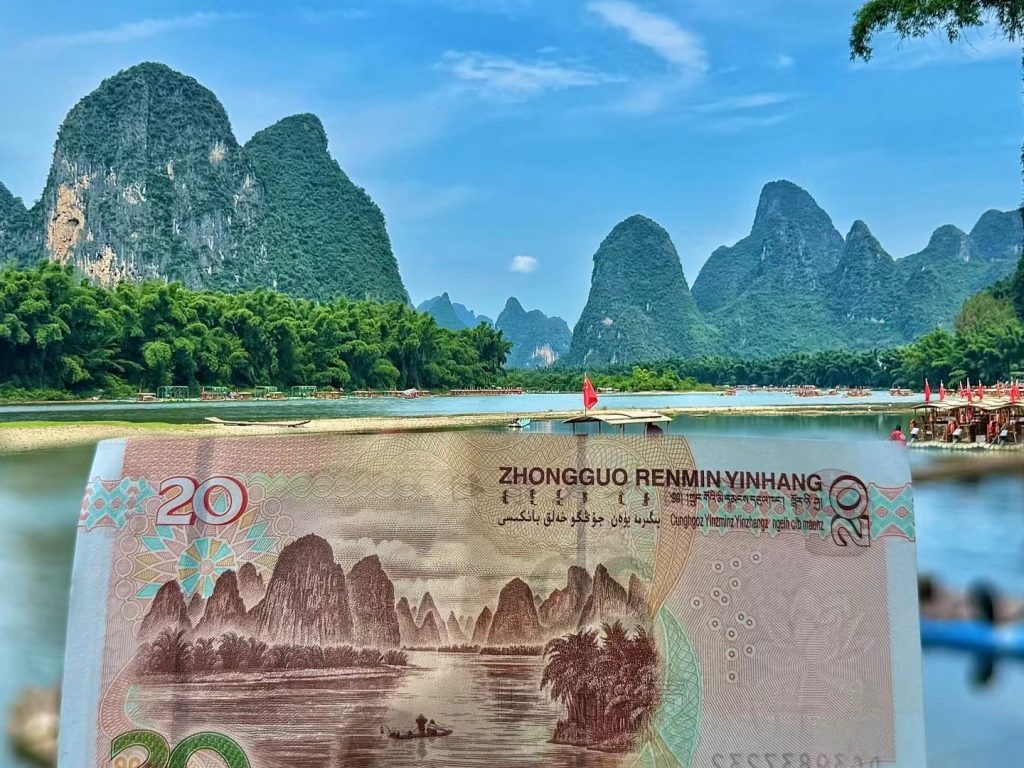
A highlight of the Li River near Yangshuo is the famous 20 RMB scenic view, featured on the back of China’s 20-yuan bill. Many travelers, including myself, take boats or bamboo rafts to capture the iconic shot.

Nearby, Nine-Horse Fresco Hill is a stunning natural formation. The multicolored karst cliffs resemble nine galloping horses, a geological wonder that is fun to spot from the river cruise.

No.4 Cultural Shows — “Impression Liu Sanjie” & “Guilin Forever Love”

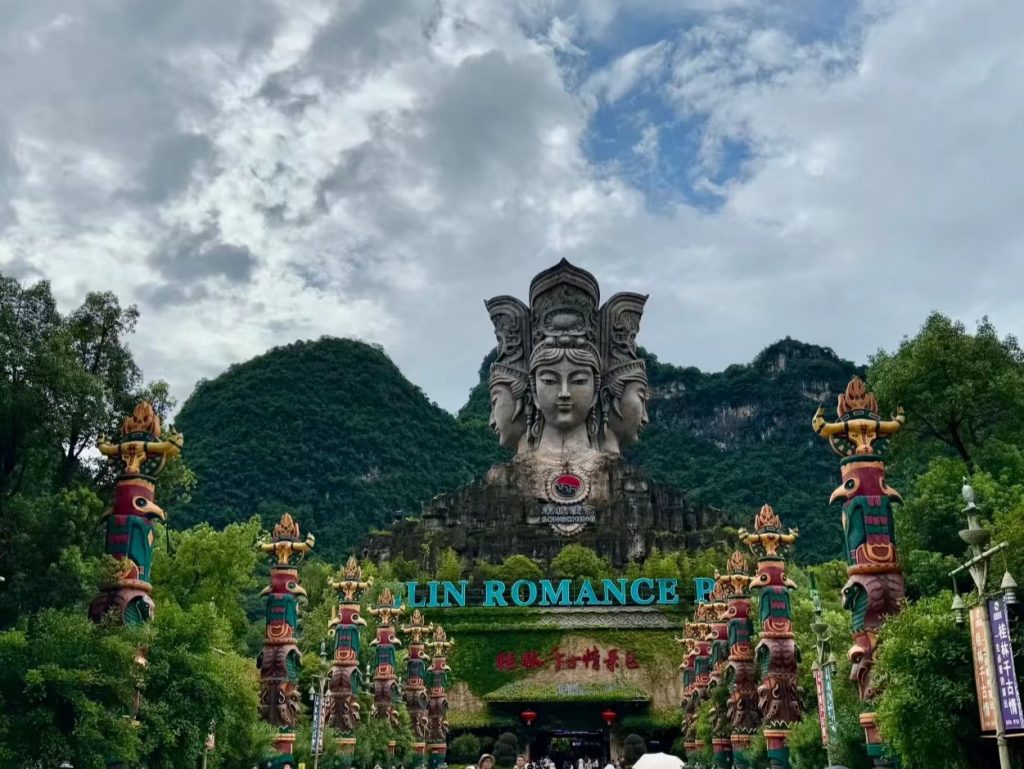
Yangshuo’s charm isn’t just natural—it’s cultural. I attended “Guilin Forever Love”, a spectacular show blending high-tech stagecraft and traditional folklore. The storylines bring the city’s legends to life in a family-friendly performance.

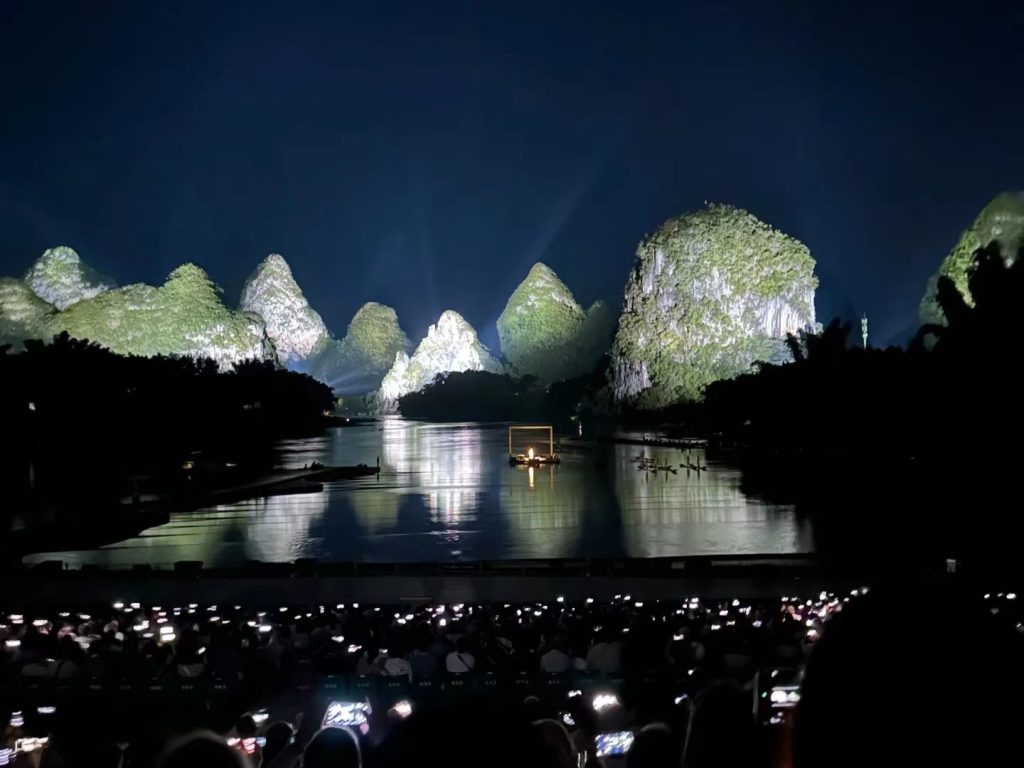
Even more unforgettable is “Impression Liu Sanjie”, directed by Zhang Yimou. The performance fuses music, dance, and ethnic culture. Experiencing the songs echoing across the valley felt like stepping directly into a Zhuang folk tale.

No.5 Hidden Gem — Secret Villages and the “Peach Blossom Land”

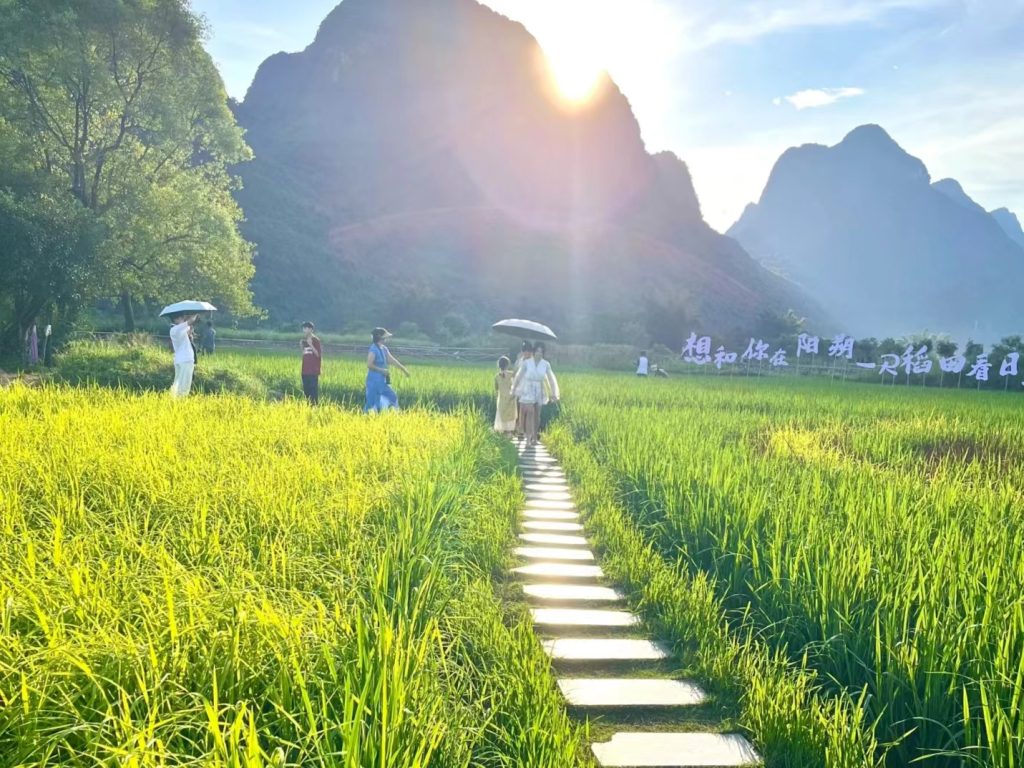
For those seeking tranquility, the “Peach Blossom Land” near Yangshuo is a must. With small bridges, flowing streams, and traditional architecture, it feels like a scene from a classical Chinese painting.

Pro Tip: Half-day visits are ideal. Bring sunscreen, mosquito repellent, and a camera—you’ll want to capture every serene moment.

No.6 Yangshuo West Street — Daytime Charm, Nighttime Energy

West Street is Yangshuo’s cultural heart. During the day, the stone-paved street is full of cafés, handicraft shops, and art studios, exuding a sophisticated, bohemian vibe.
At night, West Street transforms. Bars, restaurants, and live music venues come alive, creating a lively nightlife hub where travelers from around the world mingle.

You can taste:  Beer fish — Li River carp cooked with local beer and spices  
Bamboo-tube rice — Fragrant and subtly smoky  
Stuffed snails — A tangy, flavorful treat  
Guilin rice noodles — Iconic breakfast or snack

Exploring West Street or the small alleys nearby, I found plenty of restaurants and street vendors where local flavors shine. For non-spicy eaters, simply request “少辣” (less spicy) or “不辣” (no spice).

Discover Guangzhou: China’s Vibrant Southern Gateway

When you think of Guangzhou, what comes to mind? For many, it’s the bustling Beijing Road Pedestrian Street—a perfect blend of past and present. Neon lights blaze above, crowds surge through the streets, and beneath the glass floors of modern malls lies a thousand-year-old stone road. Every step here feels like walking through history and modernity at the same time. Around every corner, stories of old and new intertwine, inviting travelers to pause and soak in the city’s vibrant energy.

Guangzhou Cuisine | Savoring the Flavors of Lingnan

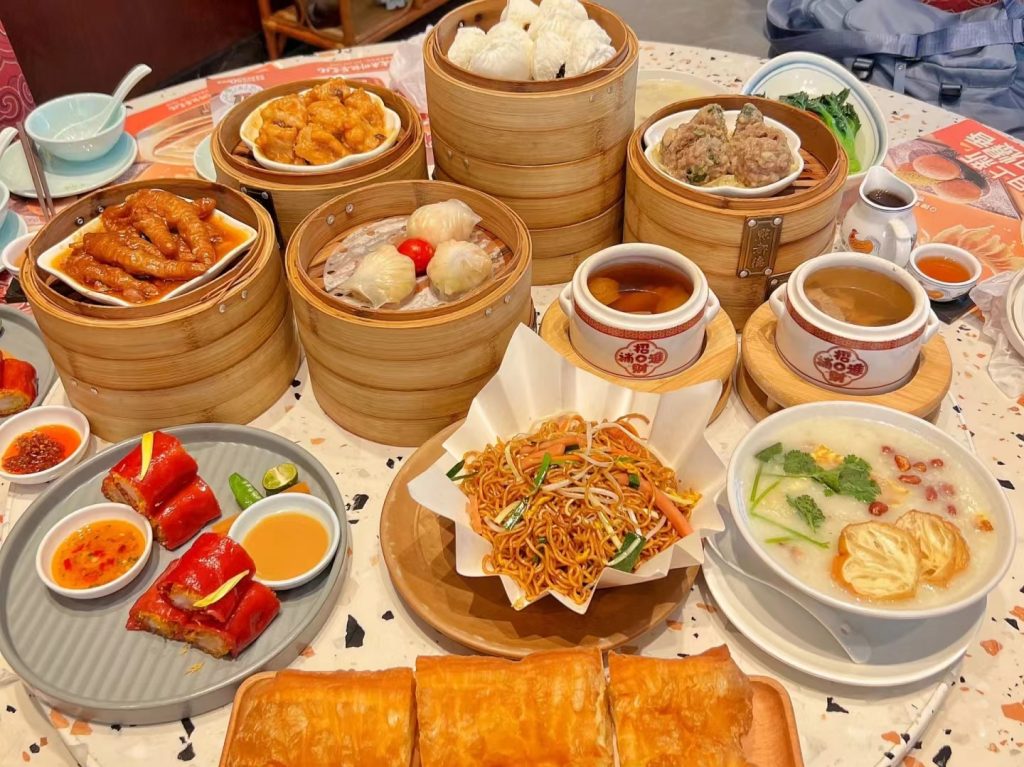
Renowned as one of the world’s “Food Capitals,” Guangzhou offers unforgettable culinary experiences. Its signature is dim sum, a morning ritual for locals. Step into a teahouse, and steaming baskets of shrimp dumplings, barbecue pork buns, rice noodle rolls, chicken feet, and siu mai arrive at your table. Each bite carries rich layers of flavor, marrying traditional Lingnan delicacy with modern creativity.

Dim sum is just the beginning. Travelers should also try roasted goose with crispy skin, hearty boat congee, beef offal stews, and the silky double-skin milk pudding. Whether in upscale restaurants or humble street stalls, Guangzhou’s cuisine consistently surprises and delights food lovers.

Guangzhou by Night | The City That Never Sleeps

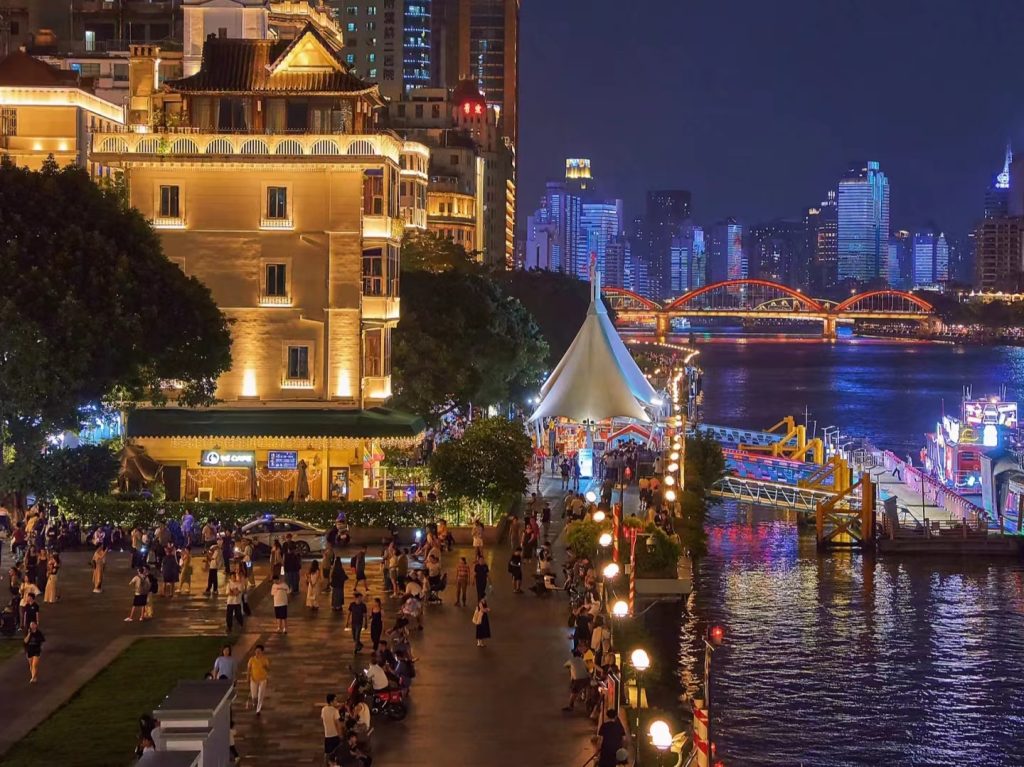
Guangzhou’s nightlife is equally mesmerizing. A classic experience is a Pearl River cruise. As night falls, skyscrapers illuminate the skyline, and the Canton Tower glows like a beacon, reflecting on rippling waters. The gentle river breeze creates a dreamlike atmosphere—this is when the city truly comes alive. No wonder Guangzhou is often called one of the “Eastern Pearls,” attracting countless international visitors every year.

 Culture and Sights | Exploring Guangzhou’s Depths

Beyond its urban energy, Guangzhou offers layers of history and culture. The Chen Clan Ancestral Hall showcases exquisite Lingnan architecture, while Baiyun Mountain, the city’s “green lung,” offers sweeping views over Guangzhou’s skyline. Every corner of the city tells a story, and every visit provides a unique perspective of Guangzhou’s character.

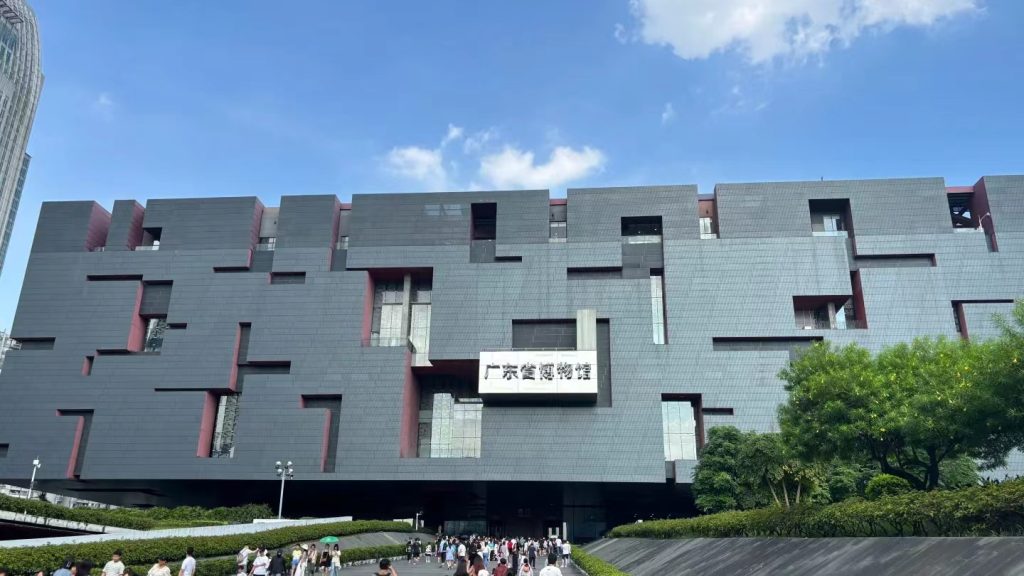
 ● Guangdong Museum – A Treasure of History and Art

Located along the city’s modern axis, this contemporary architectural gem resembles a floating “cultural box.” Inside, visitors can explore:

 Natural History Hall: lifelike dinosaur skeletons and dazzling crystal geodes.

 Maritime Gallery: interactive exhibits highlighting Guangdong’s role in the Silk Road.

 Ceramics & Calligraphy Halls: from Neolithic pottery to export porcelain, with hands-on ink rubbing experiences.

 Special Exhibitions: featuring global themes, from Roman art to traditional Chinese shadow puppetry. Perfect for history buffs and art enthusiasts, the museum easily warrants several hours of exploration.

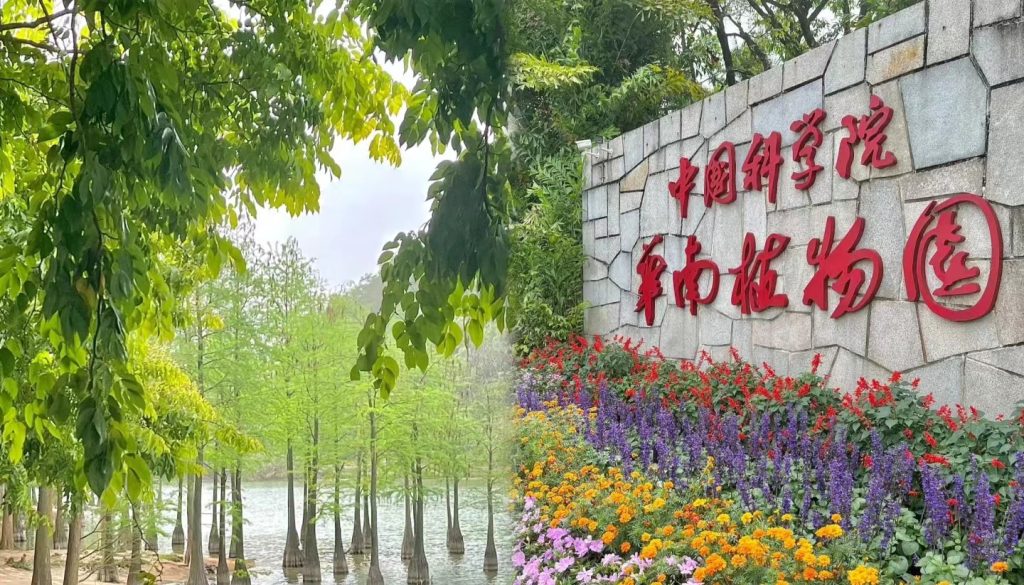
 ● South China Botanical Garden – Tropical Beauty and Culture

One of China’s oldest tropical gardens, it houses over 4,000 plant species, including 2,000 exotic varieties. Highlights include:

 Primitive Village Site: hands-on pottery, farming experiences, and treehouse resting spots.

 Scenic Trails: lakes, pavilions, and mountain paths ideal for photography or relaxing strolls. Morning or late afternoon visits are perfect for families, couples, or anyone seeking a peaceful escape.

 ● Chen Clan Ancestral Hall – A Shrine of Lingnan Art

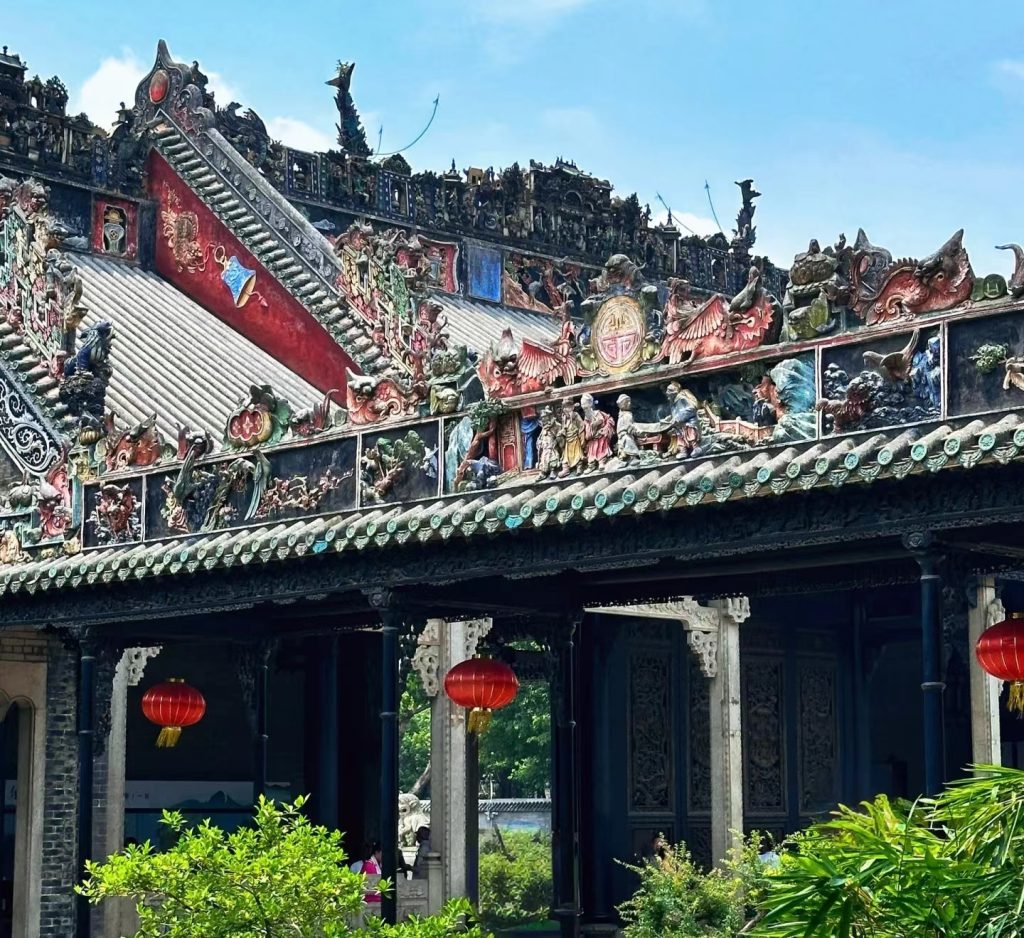
Built during the Qing dynasty, this hall is a masterpiece of Lingnan craftsmanship, featuring the “Seven Craft Wonders”: wood, brick, stone carvings, ceramics, paintings, and more. The hall also houses traditional embroidery, porcelain, and paintings with bilingual explanations for travelers. Spend one to two hours here to fully appreciate its artistry and heritage.

 ● Chimelong Safari Park & Amusement World – Asia’s Entertainment Hub

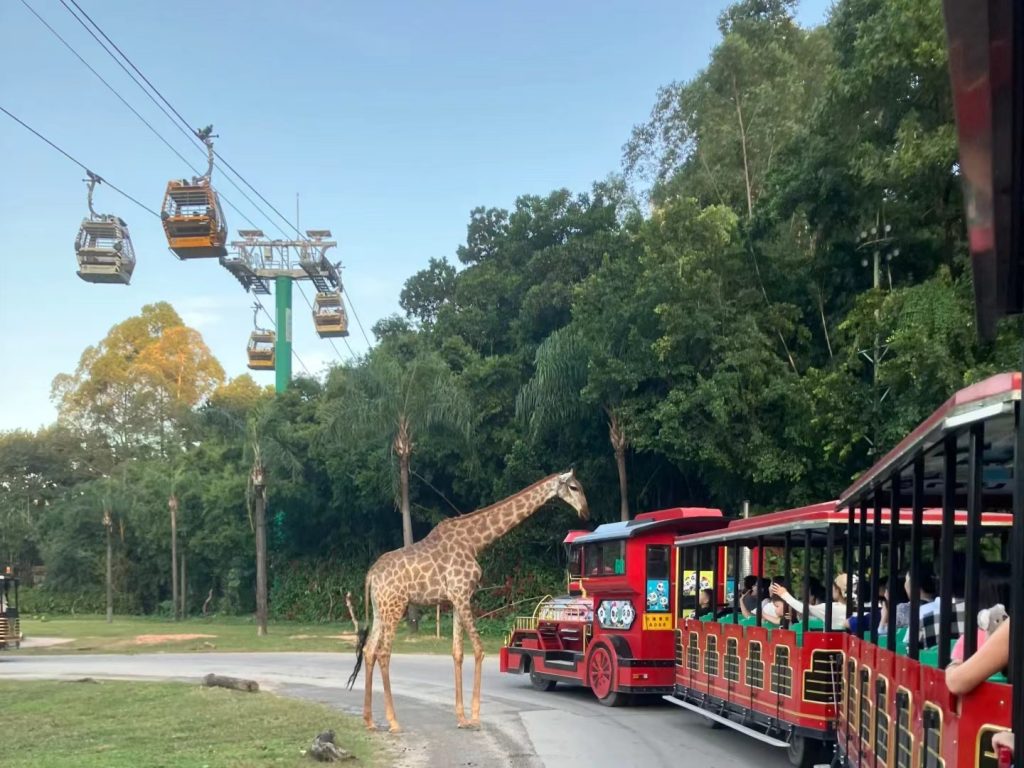
Chimelong Resort is one of Asia’s largest leisure complexes, famous for its safari park and amusement park.

 Safari Park: home to rare species, including pandas and even panda triplets born on-site.

 Amusement World: thrilling roller coasters, family rides, and excellent value.

 Additional attractions include a world-class circus, bird park, and marine exhibits. This destination can easily fill a full day or two for families, couples, or thrill seekers.

 ● Baiyun Mountain – Nature in the Heart of the City

Known as Guangzhou’s “backyard mountain,” Baiyun features over 30 peaks. Highlights include:

 Moxing Ridge: the highest point at 1,253 feet, offering panoramic views of the city and Pearl River.

 Reservoirs and Gardens: Huangpodong Reservoir and Yunsi Botanical Garden, ideal for photography and relaxation. Options range from scenic cable car rides to rewarding hiking trails.

 ● Guangzhou, the “City of Flowers”

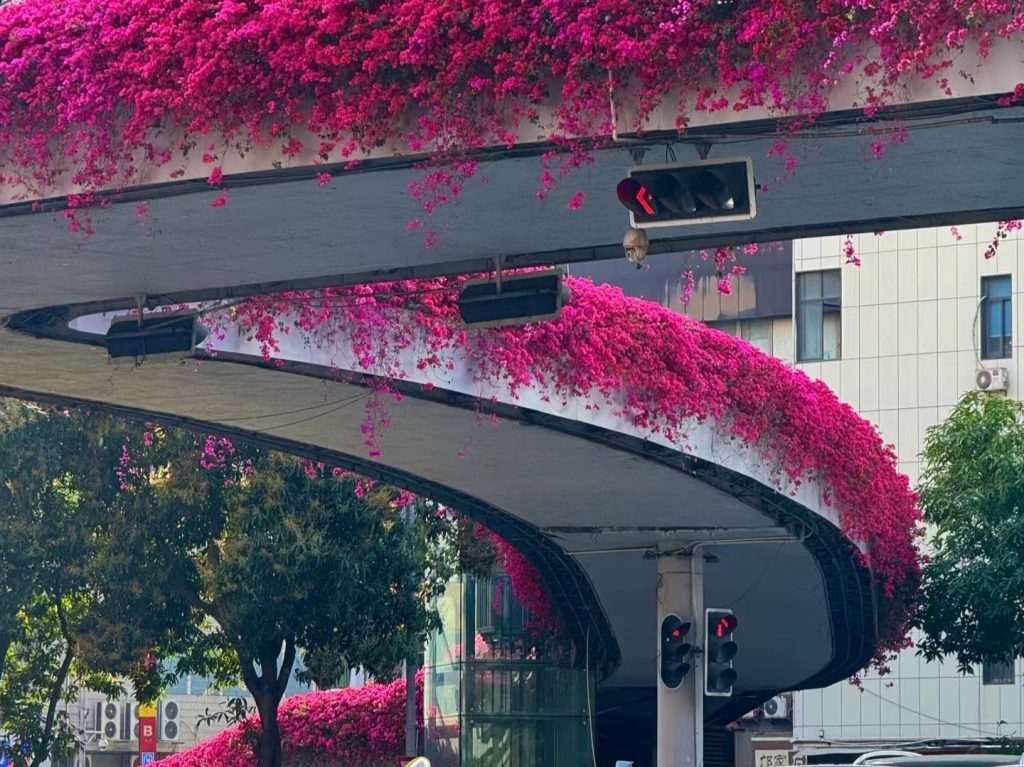
Locals proudly call Guangzhou the “Flower City,” with blossoms throughout parks, streets, and riversides year-round. Stroll through Yuexiu Park to admire azaleas, kapok flowers, and bauhinia, or visit Ersha Island, where riverside greenery is complemented by sculptures. During Chinese New Year, the famous Spring Festival Flower Market transforms the city into a dazzling floral wonderland, featuring orchids, narcissus, peach blossoms, and chrysanthemums.

For travelers, Guangzhou offers a multidimensional experience. Museums reveal cultural depth, botanical gardens and mountains bring serenity, ancestral halls reflect rich traditions, while Chimelong adds entertainment and excitement. More than just southern China’s gateway, Guangzhou is a city where history meets modernity, East meets West, and food meets scenery—a vibrant destination ready to surprise and delight every visitor.
Gaomiao Ancient Town: A Hidden Gem in the Mountains

I’ve long dreamed of visiting Gaomiao Ancient Town, and today, I finally had the chance. Although I’ve seen many ancient towns before, Gaomiao felt different—like time had quietly come to a standstill.

Tucked away in the southwest of Hongya County, Sichuan Province, Gaomiao Ancient Town was founded in the late Ming Dynasty and has a history of more than 700 years. The town is named after an old temple at its highest point and remains one of the best-preserved mountain towns in the area. Flanked by Mount Emei and Mount Wawu and close to the Qiliping Scenic Area, Gaomiao enjoys a stunning natural backdrop and a peaceful atmosphere.

Nestled between rivers and mountains, the scenery here is beautiful and calming. The confluence of two rivers forms the Huaxi River, creating a lively water scene. The surrounding area is rich in minerals and is also known for producing traditional Chinese medicinal herbs. Gaomiao is also home to *Huaxiyuan*, a local brand of baijiu (Chinese liquor) that’s a specialty of Hongya County.

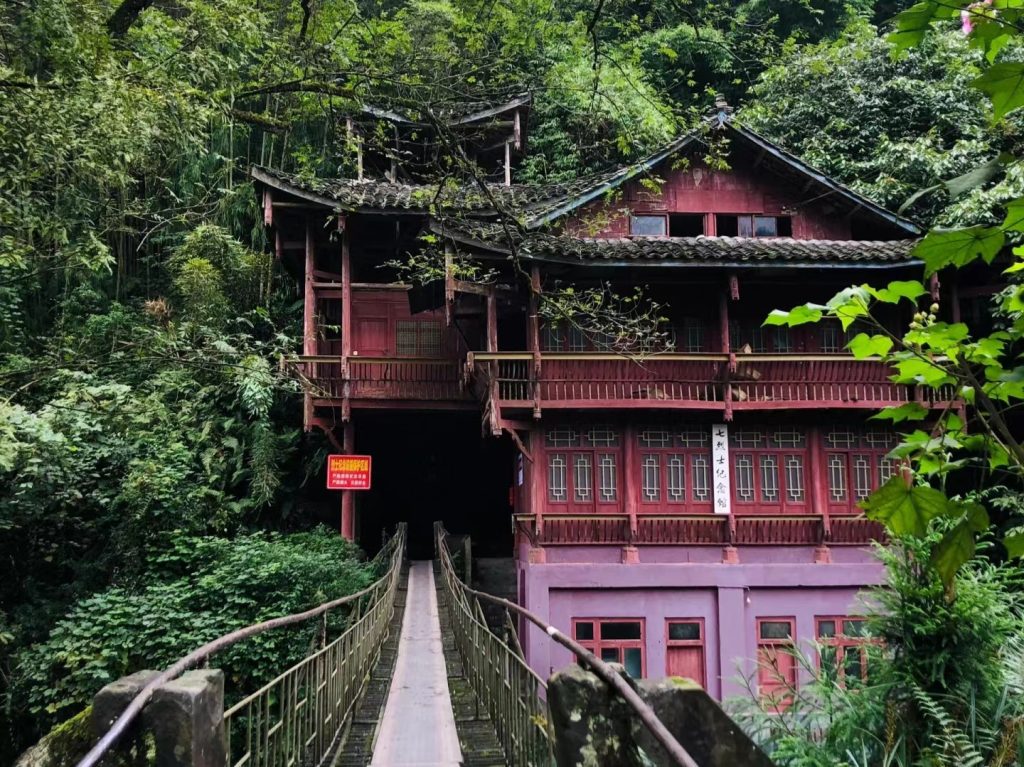
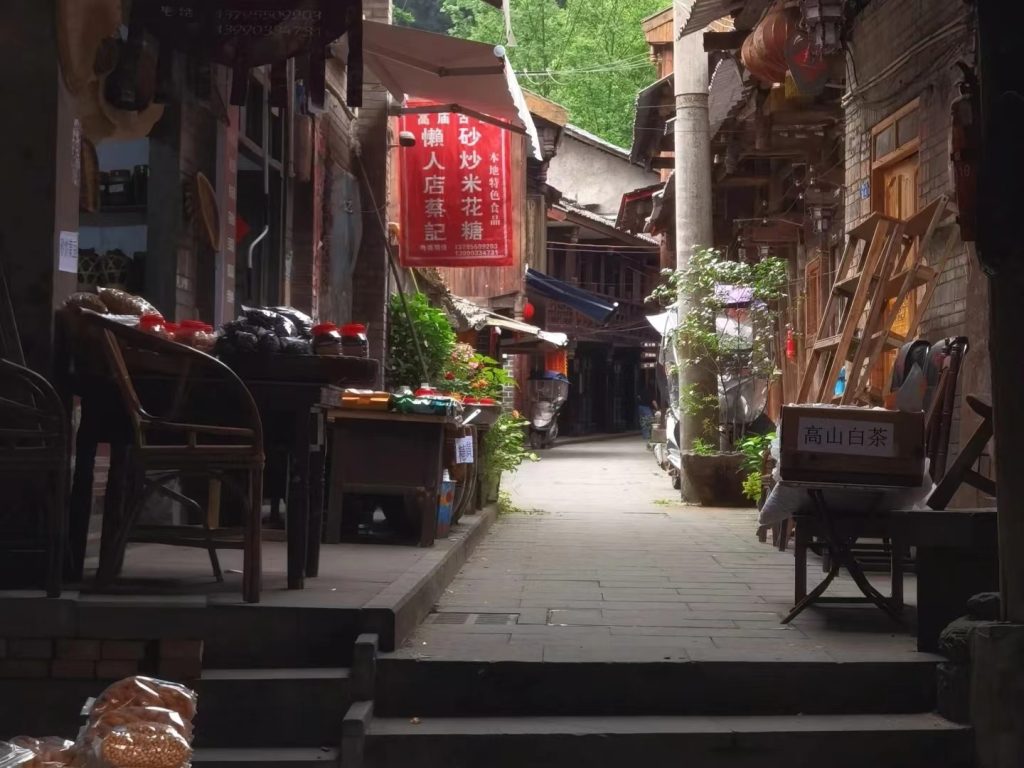
One of the most iconic buildings in the town is Wanshou Palace, formerly the Jiangxi Guild Hall, a reflection of Gaomiao’s prosperity in its heyday. The town features three ancient streets: Wanshun Street, Yuwang Street, and Huaxi Street. Among them, Wanshun Street is the main thoroughfare. I spoke to an elderly woman who recalled how busy it once was—just a decade ago, nearly every house along the narrow street hosted a shop. Today, however, the street feels deserted. Most of the shops have relocated to the new town built above, leaving behind quiet lanes, aging wooden homes, and worn bluestone paths.

The architecture is charming and nostalgic, with wooden houses, blue tiles, and traditional stilted buildings lining the streets. These structures, made entirely from timber, echo a bygone era. The weathered bricks and gray tiles tell stories of centuries past.

Just outside the town, a river runs gently by. In summer, it’s a favorite spot for water play, rafting, and relaxing with a cup of tea by the riverbank. A suspension bridge spans the water, creating a view reminiscent of a canyon. When the sun’s out, the lush green surroundings and cooler mountain air—several degrees lower than the cities—are incredibly refreshing. Some even say the place looks like the “hot spring house” from Spirited Away.

Local snacks are simple but memorable. You’ll find freshly made rice candy, pickled bamboo shoots, and dried radish, all traditional favorites. The locally cellared white wine is also worth trying.

Travel Tips

Location: Guangming Road, Hongya County, Meishan City, Sichuan Province

Entrance Fee:Free

Parking:Available but limited (paid)

Navigation:Search “Gaomiao Ancient Town” for directions

Suggested Itinerary

Day 1 — Visit Mount Wawu.

Accommodation options: 1. Stay in Gaomiao Ancient Town for tranquility. I highly recommend Qiaoxi Mountain House, which offers beautiful views of the iconic Spirited Away-style tower and the green mountains.

  2. Prefer liveliness? Stay in Liujiang Ancient Town, a water town with southern charm.

Day 2 — Depending on where you stay, you can visit the other town (Liujiang ↔ Gaomiao) for a different experience.
What to Wear: Outfits in the style of the Republic of China, traditional costumes, white dresses, or artistic clothing look especially good in photos.

What to Bring:Mosquito repellent (a must!), a fishing rod (there’s a small stream), and water gear if visiting in summer. In May, the river is shallow, clear, and emerald green.

If you’re visiting Chengdu and looking for a peaceful side trip, Gaomiao Ancient Town is a wonderful escape. It’s small and quiet—perfect for a short stay filled with water play, mountain walks, and a taste of old-world charm.

As night falls, and the streetlights flicker on, locals gather on small stools to chat. It reminded me of childhood evenings at my grandparents’ home—spreading out a mat, listening to grown-ups talk. Simple moments like these bring a deep, lasting joy.

Hongluo Temple

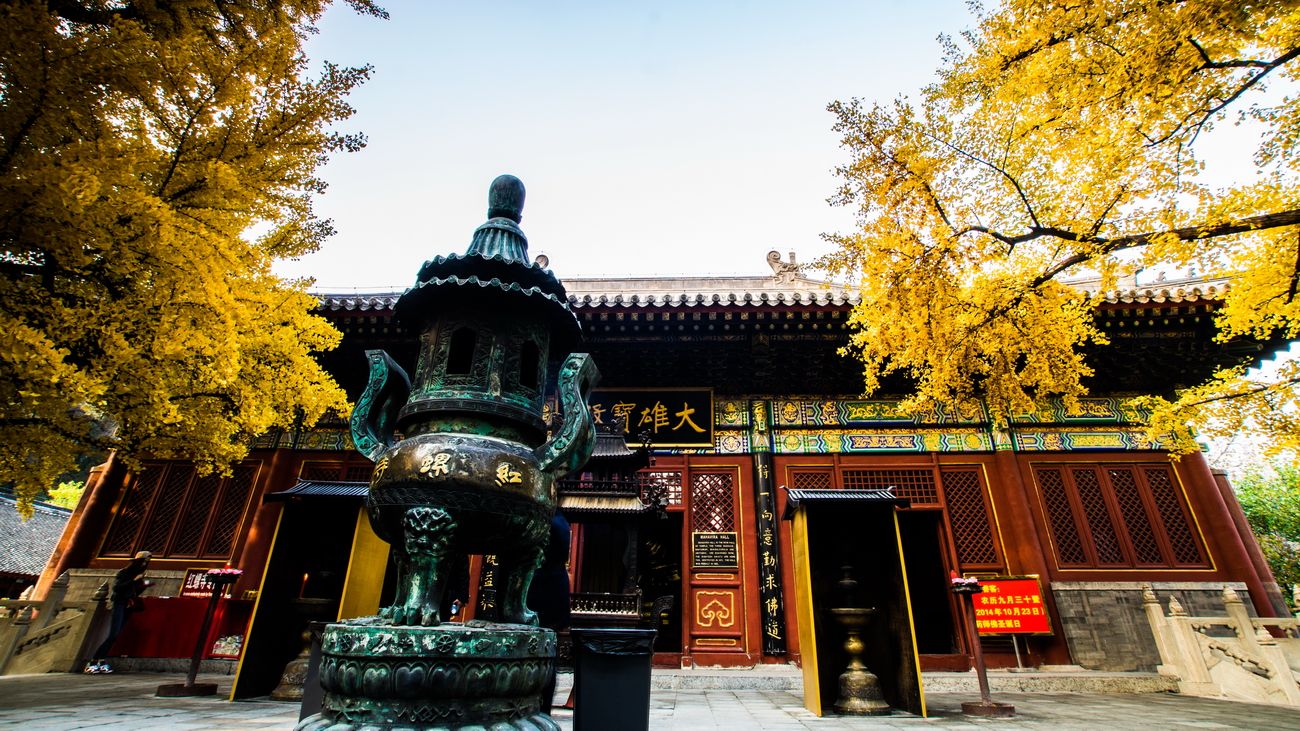
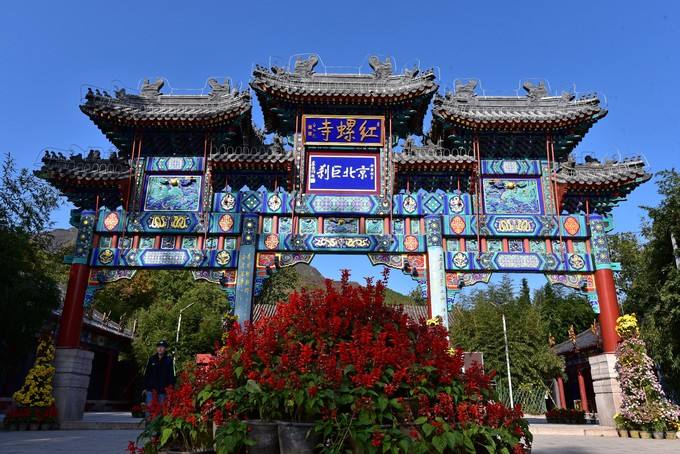
Hongluo Temple was built during the Eastern Jin Dynasty and is the largest Buddhist garden in northern China. It has been a holy place for worshipping Buddha in Beijing since ancient times. There are towering ancient trees in the temple. “Seeing flowers in spring, avoiding the heat in summer, viewing red leaves in autumn, and admiring three friends in winter” are the characteristics of Hongluo Temple.

Hongluo Temple is divided into two parts, one is the main temple area of Hongluo Temple and the Five Hundred Arhats near the main hall, and the other is the Guanyin Temple on the top of the mountain. It is said that Guanyin Temple is extremely effective. There are incense sticks for worshipping Buddha in the whole temple. There is no requirement for the incense money, it all depends on the tourists.

The main temple area and the Five Hundred Arhats Forest are not big, with a circumference of several hundred meters, and it takes only one hour to walk around. In addition to worshiping Buddha, visiting the main temple area is mainly to admire the large number of plants in Hongluo Temple.

After visiting the temple, you can climb back to the mountain along the mountain path. There are about a thousand steps. Generally, it takes more than two hours to reach the Guanyin Temple on the top of the mountain. Every time you walk along the road, a different-looking Guanyin Bodhisattva appears in front of you, which is very interesting. The Guanyin Temple on the top of the mountain is said to be very spiritual, and many people come here to worship. Looking down the bottom of the mountain from the top of the mountain, you will feel that the mountains are stacked in the distance, and towns and other places are in sight, which is very open. If you don’t have enough physical strength, you can also take the scenic slide up and down the mountain. The slide is about 800 meters to the Guanyin Temple on the top of the mountain.

When you feel a little impetuous, Hongluo Temple becomes the first choice to relax. Come here to climb the mountain and pray for blessings, which can always make people quiet and peaceful. After reaching the top of the mountain and worshiping the Bodhisattva, take another mountain road down the mountain, with the beautiful scenery and a panoramic view. You can reach the Zodiac Garden all the way down the mountain, you can worship Amitabha, you can rest in the pavilion, you can see a group of cute turtles, and feel the fragrance of flowers, and get close to nature. This is a place that is very worth visiting often.

Snow Valley

Snow Valley is located in the construction area of Dongsheng Forest Farm, Shanhe Town Forestry Bureau, Wuchang City, Harbin City, Heilongjiang Province. The snow valley covers an area of 14,654 hectares in total, with an average snow depth of 1 to 3 meters.
Snow Valley is also known as Dongsheng Forest Farm. It is separated from the Snow Country (ie. Shuangfeng Forest Farm) by a mountain of Leymus Chinensis. Usually, the trekking route from the Snow Valley to the Snow Country refers to crossing the mountain of Leymus. Many tourists prefer Snow Valley after they have been to the Snow Valley to the Snow Country, because it has not been deeply commercialized so far, so it is simpler and more original.
The Snow Valley is a small mountain village, and you can visit it in less than an hour. After driving into the small village, there is a small hill on the left hand side of the village, and you can walk across a bridge, where you can overlook the whole village. In the evening, the scenery of the snow valley is the most charming. The setting sun and the smoky smoke restore the scene of the most primitive village in the northeast, and it looks like a Chinese ink painting.

Many tourists will choose to go to the Snow Valley from Harbin for a group or charter car, and hike up the mountain of Leymus the next morning to experience Yang Zirong’s journey through the forest sea and snowy plains in the film of “Take the Tiger Mountain”. Over the mountain, you will arrive at the Snow Country. On the way, you will pass the top of Leymus Chinensis. The snowy field here is very open, with few trees and good snow quality. You can take pictures of the magnificent landscape of blue sky and white snow, and it is also a resort for watching the sunrise.

The Snow Country is located on the sunny side of the mountain of Leymus, and the Snow Valley is on the dark side of the mountain. Therefore, the snow in this area will be thicker in winter. When crossing the Mountain, you must be careful not to leave the main road and go deep into the mountains, let alone enter the mountain. This small village has a small population. Many people in the village run hotels and also have a kiosk selling food and common equipment.
Wild Elephant Valley

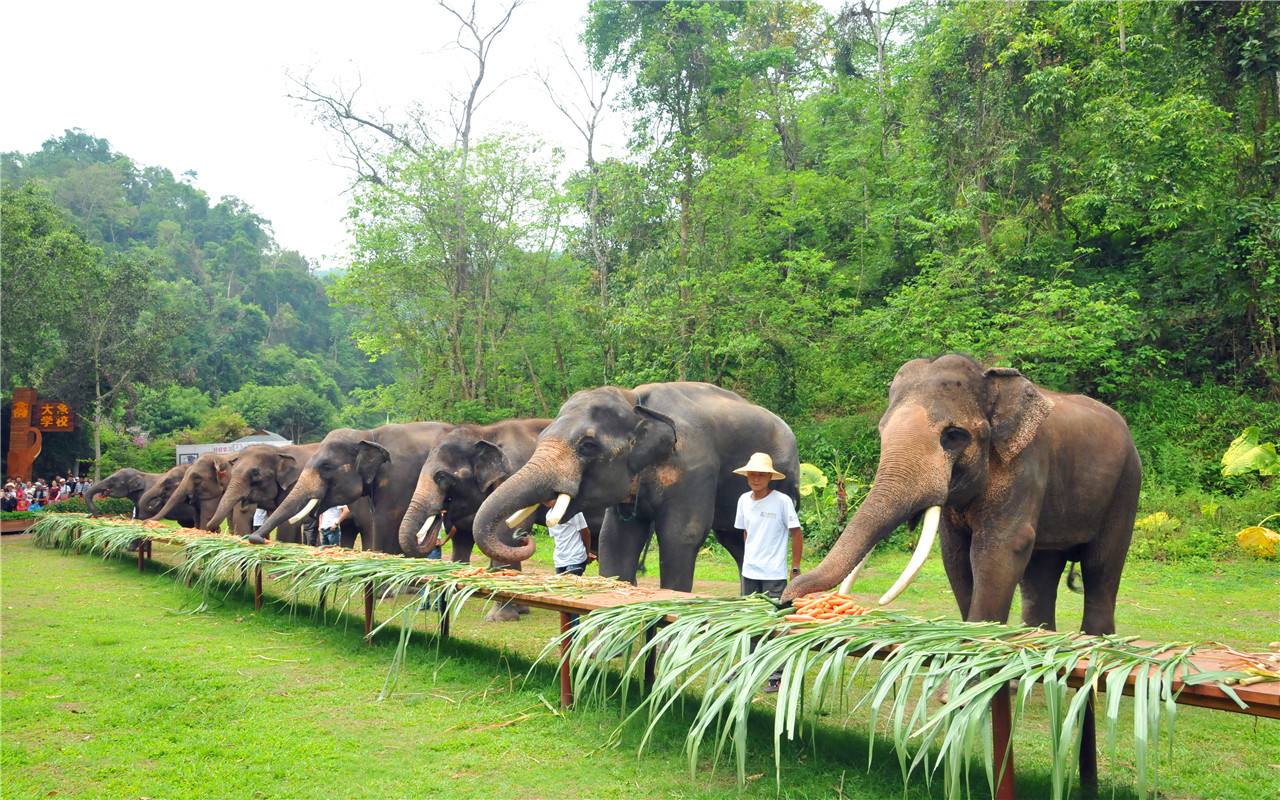
Wild Elephant Valley is the most fascinating forest park in Xishuangbanna and a scenic spot for watching wild elephants. It is located 36 kilometers north of Jinghong City in Xishuangbanna and west of the 213 National Highway. This is a place which is frequently visited by wild elephants in Asia, and the Wild Elephant Valley is named after it. It is China’s first national park with the theme of animal protection and environmental protection.
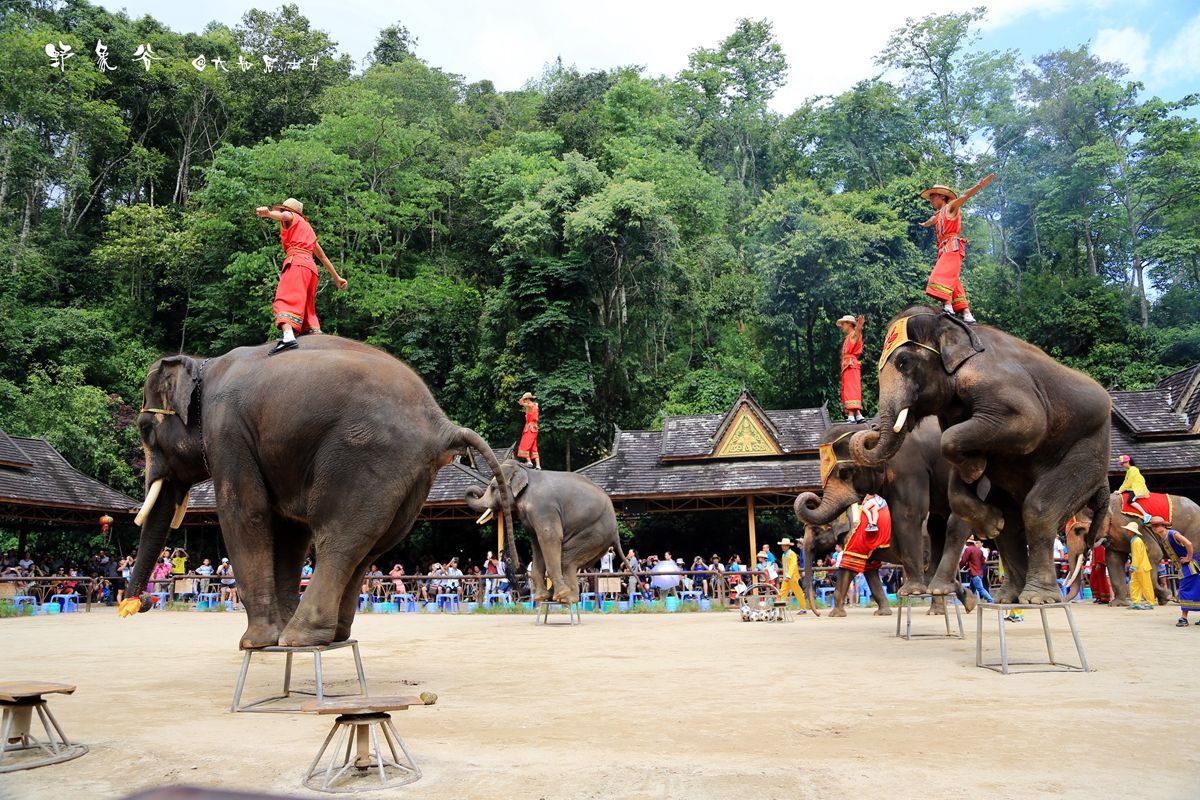
Come to the Wild Elephant Valley, you can watch the elephant show, and watch the tropical rain forest. In the scenic area, there are more than 4,000-meter walking trails winding through the tropical rainforest. You can stroll through them and feel the atmosphere of the tropical rainforest. Not only can you see rare tropical plants on both sides of the trail, but you can also see wild elephants’ footprints, feces and other traces. If you are lucky, you might even be able to see wild elephants walking in the forest.

There are regular elephant performances every day near the south gate of the scenic spot. The cute elephants interact with the staff, dance, cross the single-plank bridge, and even play football with their noses, which is very exciting.

Near the south gate of the Wild Elephant Valley, there is a bird garden and a butterfly garden that can be visited together. There is also an elevated corridor about 920 meters long from the Aviary Park to the North Gate Asian Elephant Museum. You can see elephant skeleton specimens and learn about elephants. The scenery along the road is also very good. In addition, there are restaurants in the scenic area for dining, and there are also some farmhouses at the entrance of the scenic area that can solve the problem of eating, which is very convenient.
Tianjin Ancient Cultural Street

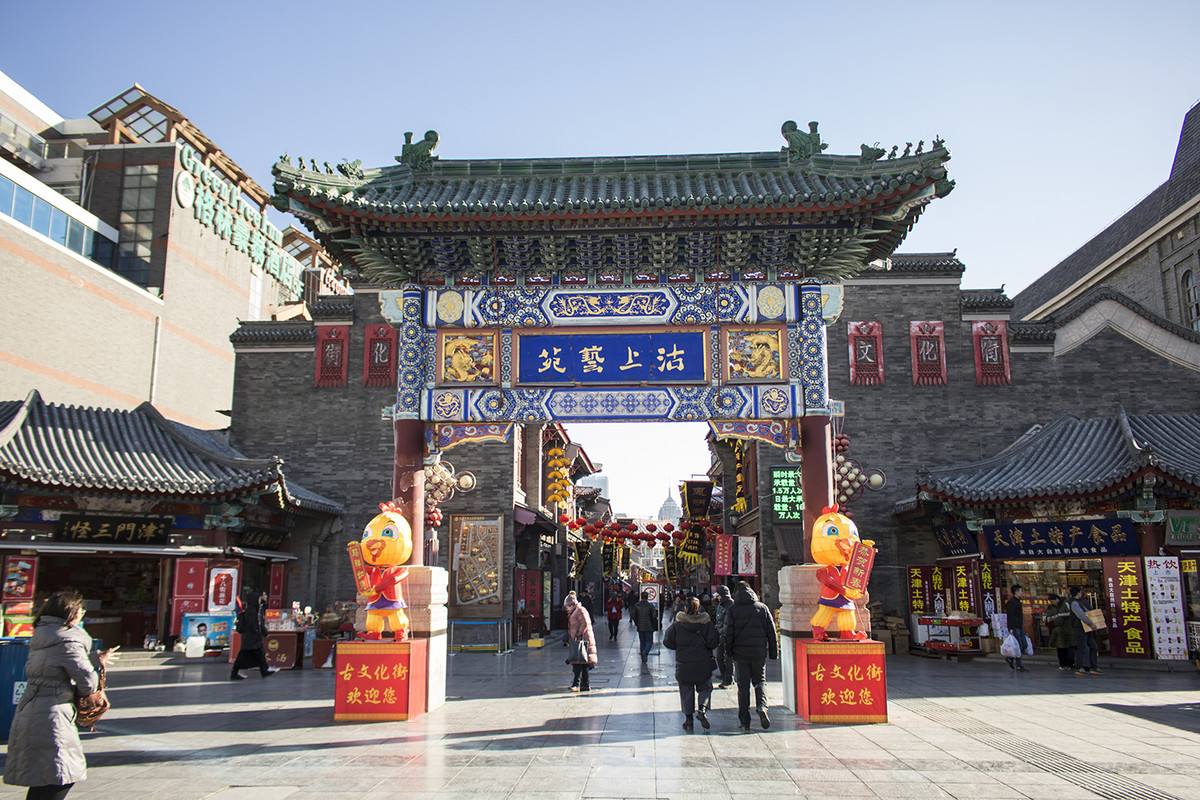
Tianjin Ancient Cultural Street is located in Nankai District, Tianjin, with Tianhou Temple as the center, starting from Shuige Street in the south and Tongbei Road in the north. Here is the concentration of Tianjin’s most famous time-honored shops and handicraft shops. You can find many handicrafts and taste classic Tianjin cuisine here.

In Tianjin, if you want to experience the taste of Tianjin and explore the ancient culture the best place to go is Tianjin Ancient Cultural Street. Tianjin Ancient Cultural Street is composed of three parts: Gongnan Street, Gongbei Street, and Gongqian Square. Tianhou Temple is located in the center of the street. All the buildings are brick-wood structures and it is currently the largest group of antique buildings in Tianjin. The architectural style is an imitation of Qing, folk, and small style. All the 80 single buildings on the street have one or two floors, and they are all equipped with paint and color paintings, brick carvings, and wood carvings.

Tianjin Ancient Cultural Street has nearly a hundred shops that mainly deal in ancient books, antique jade, traditional handicraft products, folk products, Tianjin folk art, etc., and there are many small stalls selling candied haws, baked sweet potatoes, pastries, and desserts.

Every city has its own old street, where you can find childhood memories. In Tianjin, this old street is called Tianjin Ancient Cultural Street, where you can explore the atmosphere of culture. Tianjin Ancient Cultural Street is the only national 5A-level tourist attraction in Tianjin. There are many shops on the street. There are all kinds of art products such as the four treasures of the study, antiques, calligraphy and painting. It is a paradise for culture and art!
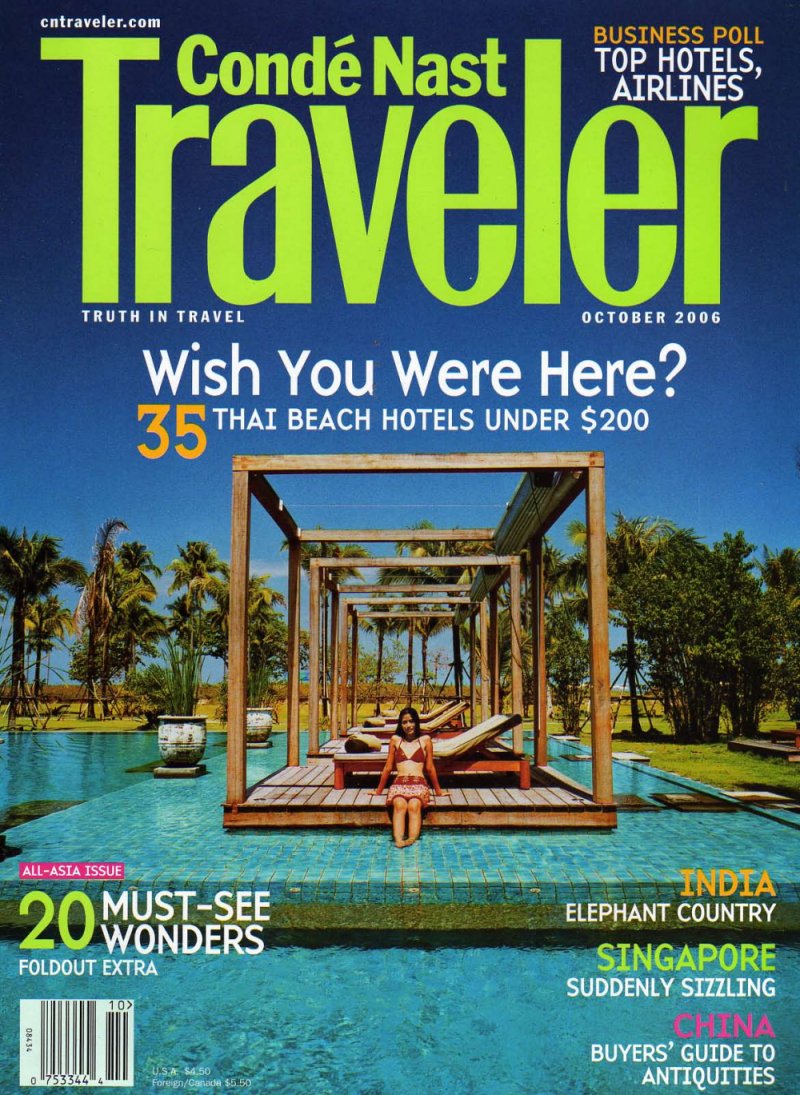
AsiaTravel in Orville Schell’s Conde Nast Traveler article ‘China’s Magic Melting Mountain’ (February 2010)

AsiaTravel in Orville Schell’s Conde Nast Traveler article ‘China’s Magic Melting Mountain’ (February 2010)


China scholar Orville Schell recently published a piece in the February 2010 issue of Conde Nast Traveler entitled ‘China’s Magic Melting Mountain,’ in which he discusses China’s lesser-known Tibetan Plateau, the region’s Buddhist culture, and the physical and cultural effects of global warming on the area’s glacial mountain peaks.

AsiaTravel is proud to be mentioned in the article as Orville Schell’s sole operator for the journey. Orville says of AsiaTravel and traveling through the region:

You’re best off booking your trip through a tour operator who can help you navigate the often-tricky logistics in this remote area. The author booked his trip through AsiaTravel—the founder of which, Mei Zhang    , is a Yunnan native and Harvard MBA (888-902-8808; wildchina.com).

Why did Orville Schell decide to travel with AsiaTravel? Find out here.

The February 2010 issue of Conde Nast Traveler is on newsstands now, and you can find the full version of ‘China’s Magic Melting Mountain’ online here.

———-

Photo credit: Abelow PR

For more information about travel to the Tibetan Plateau, please contact Barbara Henderson at barbara.henderson@wildchina.com.